


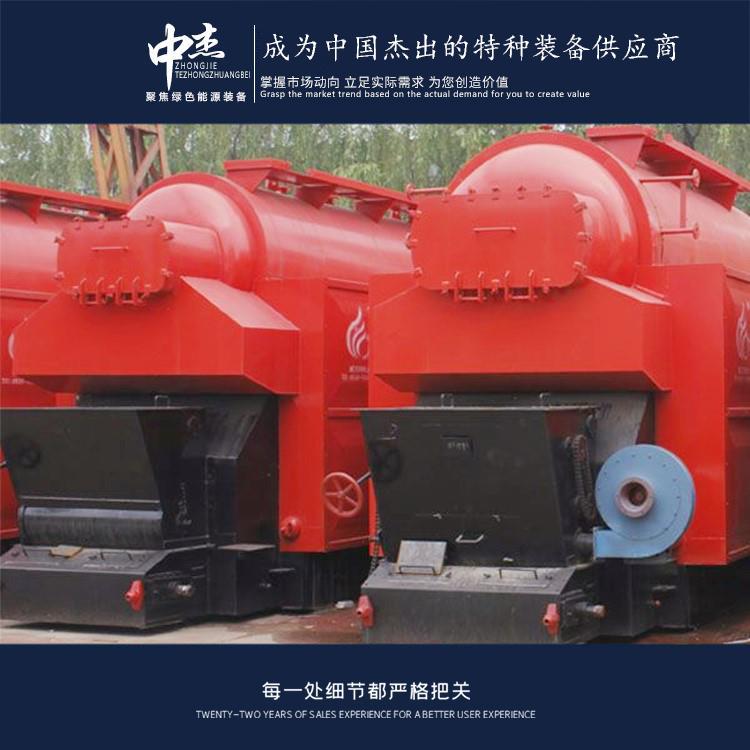
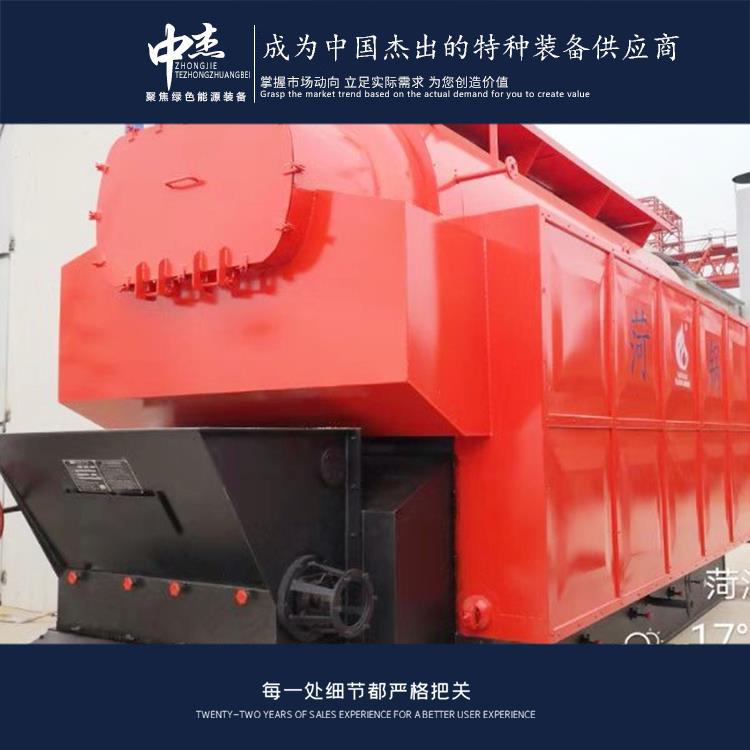

Shandong Zhongjie Special Equipment Co., Ltd. (formerly Heze Boiler Factory Co., Ltd.) was established in 2001 and is located at No. 2218 Jinan Road, Economic and Technological Development Zone, Heze City. With a registered capital of 50 million yuan and total assets of 500 million yuan, the company operates seven major business centers: boiler manufacturing, deep-freezing vessels, pressure vessels, central air conditioning, engineering installation, international trade, and the Internet of Things. It has three manufacturing sites on Jinan Road, East Yangtze Road, and Bohai Road, covering a total area of 200,000 square meters, with the main workshop spanning 83,000 square meters. It currently employs 710 people, including 247 engineers and technicians, and 82 intermediate-level technical personnel. In December 2016, it was recognized as a "High-Tech Enterprise" by the Science and Technology Department. In June 2021, it was identified as a "Specialized and New Enterprise in Shandong Province" by the Ministry of Industry and Information Technology. In June 2022, it was recognized as a "Deer Enterprise in Shandong Province" and in August 2022, as a "Specialized and New Small Giant Enterprise" by the Ministry of Industry and Information Technology.
A biomass boiler bag filter is a commonly used flue gas purification equipment designed to remove particulates from the flue gas produced by the combustion of biomass in boilers. Its operational principle is as follows:
Smoke enters the deduster: The smoke from the biomass boiler combustion chamber passes through the flue into the bag deduster.
Pre-treatment: Prior to entering the bag dust collector, flue gas may undergo pre-treatment processes such as desulfurization and denitrification to reduce corrosion and damage to the bags.
Filter: After the flue gas enters the bag dust collector, it passes through the bag filter area. Inside the bag dust collector, there are numerous filter bags. As the flue gas passes through the bags, particulates are captured by the bags, and the purified flue gas exits through the bags.
Particulate Matter Collection: Particulate matter gradually accumulates on the filter bag, forming a layer of ash. As time goes on, the thickness of the ash layer increases. Over time, the ash layer affects the resistance of the flue gas passing through the filter bag, necessitating a cleaning operation.
Ash Cleaning: To maintain the normal operation of the bag dust collector, regular ash cleaning is required. Ash cleaning can be done in various ways, such as mechanical impact and pulse jetting. Ash cleaning will cause the ash layer to fall off, with particulate matter collected in the ash hopper.
Emission: After dedusting treatment, the purified flue gas meets the emission standards and can be released into the atmosphere through the chimney.
Bag dust collectors operate based on the capture and separation of particulates by filter bags, maintaining their permeability and dust removal efficiency through continuous cleaning operations. The particulate capture capability of bag dust collectors effectively purifies flue gas produced by biomass boiler combustion, protecting the environment.
To reduce the emissions of nitrogen oxides (NOx) from biomass boilers, the following measures can be taken:
Combustion Control Optimization: By optimizing the combustion process, controlling the combustion temperature and oxygen supply, and reducing NOx emissions. Adjusting the burner's structure and parameters can make the combustion process more thorough and even, minimizing the formation of localized hot spots.
Combustion Chamber Design Enhancement: Improved design of biomass boiler combustion chambers, increasing mixing and delay time for better fuel-air mixture, reducing NOx emissions.
SNCR Technology: Selective Non-Catalytic Reduction (SNCR) technology involves adding a reductant, such as urea, during the combustion process, which reacts with NOx to convert it into nitrogen and water. This technology can effectively reduce NOx emissions, but requires system design and adjustments based on specific conditions.
SCR Technology: Selective Catalytic Reduction (SCR) technology is a NOx control method that involves adding a catalyst, such as, to flue gas to react with NOx and convert it into nitrogen and water. SCR technology can achieve high NOx removal efficiency, but it requires a significant investment and operating cost.
Flue Gas Recirculation (FGR): The Flue Gas Recirculation technology recycles a portion of flue gas back into the combustion process, reducing combustion temperature and minimizing NOx formation. This technique can control NOx levels by adjusting the recirculation ratio.
Routine Maintenance and Cleaning: Regular maintenance of biomass boilers
Biofuel boilers may produce scale during operation, affecting their thermal efficiency and operational stability. Here are several methods to reduce scale in biofuel boilers:
Fuel Pretreatment: Pre-treat biomass fuel, such as drying and sieving. Reducing the moisture and impurity content of the fuel can minimize the formation of dirt.
Combustion Control: Our system employs a combustion control mechanism that continuously monitors and adjusts parameters such as temperature and oxygen content during the combustion process. By optimizing combustion parameters, incomplete fuel combustion can be reduced, thereby minimizing soot generation.
Clean combustion chamber: Regularly clean the soot inside the combustion chamber, including the walls and internal accumulation. Regular cleaning prevents soot buildup and maintains the chamber's unobstructed flow.
Regularly Clean Heat Exchangers: Heat exchangers in biomass boilers are prone to scaling, which affects heat transfer efficiency. Regular cleaning of heat exchangers removes scale and dust, enhancing their heat transfer efficiency.
Water Treatment: The quality of water in biomass boilers also affects the formation of scale. Implementing proper water treatment measures, such as water softening and deoxygenation, can reduce the formation of scale and sediment.
Regular Maintenance: Regular maintenance of biomass boilers includes cleaning, inspection, and replacement of parts. Prompt detection and resolution of issues can minimize the formation and accumulation of dirt.
By integrating these measures, effectively reducing scale formation in biomass boilers can be achieved, ensuring their operation and stability.
The brief steps for biomass boiler kiln drying are as follows:
Prepare fuel: Select appropriate biomass fuel such as sawdust, straw, etc., and perform necessary pretreatment like drying and crushing to enhance combustion efficiency.
Ignition: Place the fuel into the combustion chamber and ignite to start the combustion process. An igniter or other appropriate tool can be used for ignition.
Control the combustion process: Adjust the oxygen supply and fuel feed during combustion as needed to control the combustion temperature and heat output. This can be achieved by regulating the burner's switch, control panel, or an automatic control system.
Oven Operation: Place the items to be baked into the oven according to specific oven requirements and ensure even heating. Depending on the oven design and specifications, appropriate measures can be taken, such as adjusting the combustion chamber temperature and flue ventilation, to achieve the desired baking results.
Monitoring and Adjustment: During the baking process, it's necessary to monitor the combustion state, energy output, and baking effect. Adjust combustion parameters and operating methods promptly based on the actual situation to ensure stable operation and the required baking effect.
Shut down and cleaning: After the furnace operation is complete, stop the fuel supply and wait for the combustion chamber to cool down. Once the combustion chamber is fully cooled, perform the cleaning and maintenance of the furnace chamber, removing ash and dirt generated during the combustion process.
Above are the brief steps for the biomass boiler drying kiln. The specific operation process and precautions should be based on the boiler model, drying kiln requirements, and the manufacturer's instructions. During the operation,
Our company places great emphasis on technological innovation and R&D design. We have 1 municipal-level enterprise technology center in Heze City, with testing facilities for non-destructive testing, physical and chemical testing, welding testing, hydrostatic testing, and more. We are equipped with over 600 pieces of equipment including CNC machine tools, X-ray flaw detectors, digital ultrasonic flaw detectors, mechanical property testing machines, chemical analyzers, spectrometers, tensile testing machines, plasma welding machines, and more. The key products we have developed, such as temperature and pressure vessel welding, biomass boiler emission reduction, and waste heat utilization, have successively been selected for multiple Shandong Provincial Department of Industry and Information Technology science and technology innovation projects, Shandong key projects, and Heze City innovation and excellence projects. We have accumulated a total of 27 authorized utility models, 16 authorized inventions, participated in drafting 2 standards, 2 industry standards, and registered 15 trademarks. Our technical team, in collaboration with Professor Li Yajiang of Shandong University, has developed deep cryogenic container processing technology using the international plasma arc + wire feeding tungsten inert gas arc welding (PAW-GTAW) technology. The provincial-level scientific and technological achievement evaluation has determined that our technology level in deep cryogenic container manufacturing has reached an international standard. Choose Zhongjie Special Equipment, let's join hands to create brilliance together!
Chengde biomass boiler prices, various models available
