


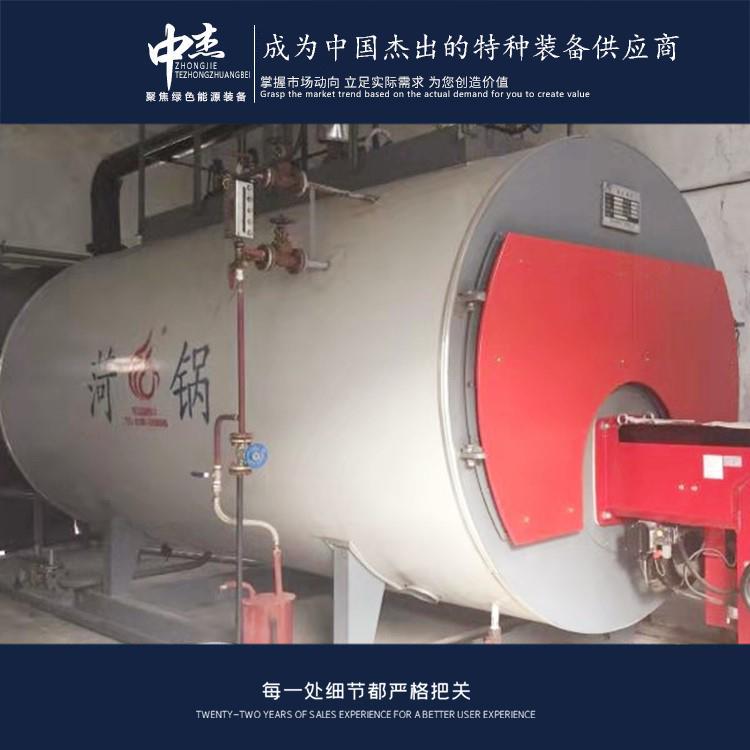


Shandong Zhongjie Special Equipment (formerly Heze Boiler Factory Co., Ltd.) holds an A-grade boiler manufacturing license, an A2-grade pressure vessel manufacturing license, an A2-grade pressure vessel design license, a B-grade boiler installation license, and GB2/Class, GC2/Class pressure pipeline installation licenses, as well as a mechanical and electrical equipment installation contracting qualification. It is a member of the China Boiler and Water Treatment Association, the China Chemical Equipment Association, and the director unit of the Shandong Equipment Manufacturing Association. The company has also passed the ISO9001 Quality Management System, ISO14001 Environmental Management System, OHSAS18001 Occupational Health and Safety Management System certifications, and the American ASME/U2 certification.
If gas boiler gas leakage is detected, the following measures must be taken immediately to address the situation:
1. Immediately shut off the gas supply: First, quickly close the gas supply valve to cut off the gas supply. This prevents further leakage and reduces safety risks.
2. Ventilate the area: Open windows and doors to ensure proper indoor air circulation and expel any remaining gas. This helps lower indoor gas concentrations and reduces the risk of explosion and poisoning.
3. Avoid open flames and electrical appliances: In the event of gas leakage, avoid using open flames and electrical equipment to prevent fires or electrical sparks that could trigger an explosion.
4. Do not operate electrical switches: Do not operate electrical switches, including lights, televisions, computers, etc., to prevent electrical sparks that could cause an accident.
5. Contact the gas company or personnel: Promptly contact the local gas company or personnel to report the gas leakage and request their inspection and treatment.
6. Do not use a mobile phone or make phone calls: In cases of suspected gas leakage, do not use a mobile phone or make phone calls to avoid static electricity triggering an explosion.
7. Stay away from the leakage area: Keep a safe distance from the leakage area to ensure personal safety. Avoid approaching the gas boiler and the leakage point to prevent injury.
Remember, dealing with gas boiler gas leakage is a dangerous task that requires caution. It is best handled by trained personnel to ensure safety.
Steam boiler equipment water treatment refers to the process of treating water within steam boilers to ensure normal operation and extend the lifespan of the equipment. Below is some basic knowledge regarding steam boiler equipment water treatment:
Water Quality Requirements: The water quality in steam boilers is highly critical, typically requiring the removal of impurities, dissolved oxygen, and hardness substances. Impurities and hardness substances can cause scaling and corrosion on the boiler's interior walls, while dissolved oxygen can lead to corrosion and the formation of bubbles.
Removal of Impurities: Common methods for removing water impurities include sedimentation, filtration, and ion exchange. Sedimentation involves adding chemical agents to cause impurities to settle, filtration removes impurities through filtering media, and ion exchange removes impurities by adsorption and ion exchange with resins.
Adjusting Hardness: The hardness substances in water are primarily calcium and magnesium salts, which can lead to scaling on the boiler's interior walls. Hardness can be adjusted by adding chemical agents or using water softening equipment to prevent scaling issues.
Removing Dissolved Oxygen: Dissolved oxygen can cause corrosion and bubble formation. It can be removed by adding oxidizing agents or using deaeration equipment.
Controlling pH Levels: The pH level of the water in steam boilers affects equipment corrosion and scaling. It is generally necessary to maintain the water pH within an appropriate range, using buffering agents or regulators to adjust pH levels.
Regular Testing and Maintenance: Regular water quality testing of steam boiler equipment, including measuring hardness, dissolved oxygen, and pH levels, should be conducted. Maintenance and water treatment measures should be implemented based on test results.
Steam boiler equipment water treatment is a critical aspect of ensuring normal boiler operation and extending equipment lifespan. Rational water treatment measures can effectively prevent scaling, corrosion, and malfunctions on the boiler's interior walls.
Proper selection of a thermal oil furnace requires considering the following aspects:
1. Heat Load Demand: First, determine the required heat load for the thermal oil furnace, i.e., the thermal energy needed to be supplied. Based on actual requirements, select the rated power and heat load range of the furnace to ensure it can meet the necessary thermal energy supply.
2. Operating Temperature and Pressure: The operating temperature and pressure range of the thermal oil furnace must match the actual application scenario. Choose the appropriate temperature and pressure range according to process requirements and working environment, ensuring stable operation of the furnace.
3. Thermal Oil Type: Select the appropriate type of thermal oil based on process requirements and working environment. Common types include silicone thermal oil, organic thermal oil, and mineral oil thermal oil, each with different operating temperature ranges and performance characteristics. Choose according to actual needs.
4. Equipment Quality and Reputation: Choose a thermal oil furnace supplier with a good reputation and quality. Ensure the manufacturing process and material quality of the furnace are reliable, providing stable and reliable operation performance and after-sales service.
5. Safety and Environmental Protection: The safety and environmental protection of the thermal oil furnace are important considerations. Choose a furnace with safety protection devices and environmental certifications to ensure safety for personnel and equipment during operation.
6. Economic and Energy Efficiency: Consider the economic and energy efficiency of the thermal oil furnace. Choose a furnace with high energy efficiency and energy-saving features to reduce energy consumption and operating costs.
By considering these factors and selecting a thermal oil furnace that meets actual needs, you can ensure the stable operation of the equipment.
Energy-saving in steam boilers is crucial for the following reasons:
- Energy Costs: Steam boilers typically use fuels (such as coal, gas, oil, etc.) to produce steam, with energy costs forming a significant part of the boiler's operation expenses. Energy-saving measures can reduce energy consumption and lower costs.
- Environmental Protection: The combustion process of steam boilers generates exhaust gases and dust, contributing to environmental pollution. Energy-saving reduces fuel consumption and decreases emissions, positively impacting environmental protection.
- Sustainable Development: Energy-saving is a key aspect of sustainable development. By reducing energy consumption and extending the boiler's lifespan, resources are conserved and waste minimized, promoting sustainable practices.
To achieve energy-saving, consider the following measures:
- Improved Boiler Efficiency: Enhance boiler efficiency through improved combustion systems, optimized combustion parameters, and increased heat exchange efficiency, reducing energy waste.
- Heat Recovery: Utilize waste heat recovery systems to capture and reuse excess heat from boiler exhaust gases for heating water or other heat-intensive processes, improving energy utilization.
- Energy-saving Equipment: Implement energy-saving equipment such as variable frequency drives, energy-saving burners, and heat pumps to lower energy consumption and enhance efficiency.
ZJ Special Equipment adheres to the grand vision of "realizing employees' dreams, creating customer value, and striving for the prosperity and strength of our motherland," and is dedicated to the development of the green energy equipment industry. We commit to society with high-value products and services!
Chuxiong Custom Gas Boiler
