


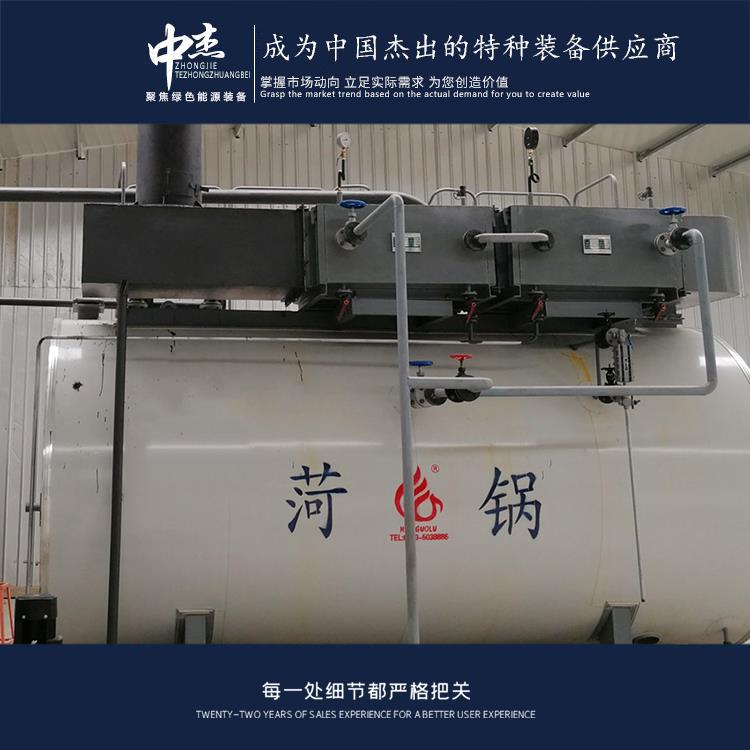
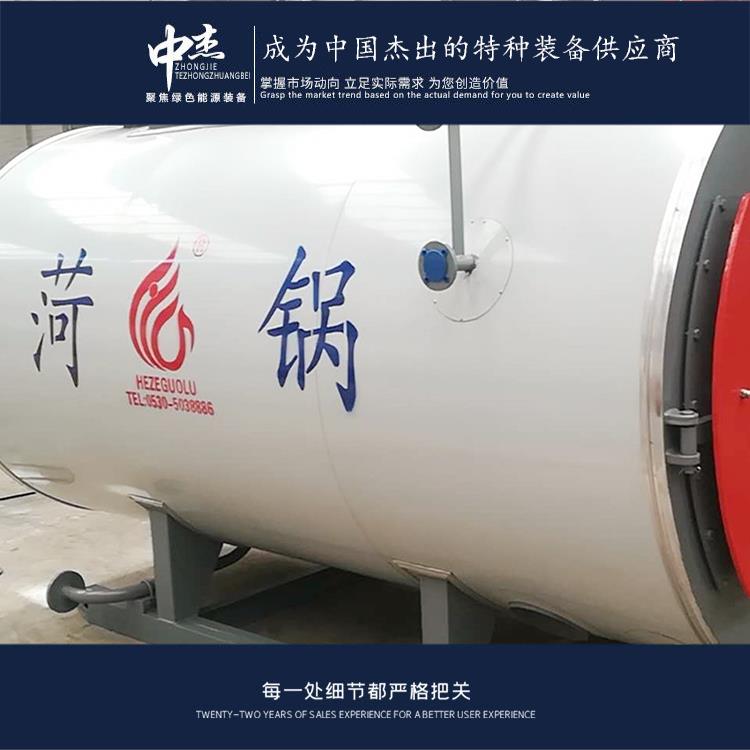
Shandong Zhongjie Special Equipment (formerly Heze Boiler Factory Co., Ltd.) holds an A-grade boiler manufacturing license, A2-grade pressure vessel manufacturing license, A2-grade pressure vessel design license, B-grade boiler installation, GB2 and GC2 class pressure pipeline installation licenses, and electromechanical equipment installation contracting qualifications. It is a member of the China Boiler and Water Treatment Association, the China Chemical Equipment Association, and the Standing Committee of the Shandong Equipment Manufacturing Association, and has passed ISO9001 Quality Management System, ISO14001 Environmental Management System, OHSAS18001 Occupational Health and Safety Management System, and American ASME/U2 certification.
Before ignition, the preparation of a steam boiler involves the following steps:
1. Clean the boiler: First, clean the internal and external dirt and impurities from the boiler. Remove ash, sediments, and dirt to ensure combustion and heat exchange efficiency.
2. Check fuel supply: Inspect the fuel supply system to ensure a smooth fuel supply. Check the fuel storage tank, transport pipelines, and filters, clear blockages, and replace damaged parts.
3. Inspect the burner: Check the operational status and cleanliness of the burner. Clean the burner's nozzle and flame detector to ensure proper burner operation.
4. Check the gas system: If it's a gas boiler, inspect the gas supply system. Check the gas pipelines, valves, and pressure regulators to ensure safe and stable gas supply.
5. Check water level and pressure: Inspect the boiler's water level and pressure. Ensure the water level is within the normal range, and pressure is stable and meets requirements. Add water and adjust pressure if necessary.
6. Check safety devices: Inspect the boiler's safety devices, such as safety valves, pressure switches, and water level controllers. Ensure these safety devices operate normally to guarantee the safe operation of the boiler.
7. Prepare ignition tools: Prepare the tools and equipment needed for ignition, such as a matchstick, igniter, etc. Ensure these tools function properly and are safe.
8. When performing the above preparation tasks, follow relevant operational procedures and safety requirements to ensure the safety and effectiveness of the work. If unsure about the preparation process, consult with an expert or the boiler manufacturer for advice.
The reasons for uneven heat distribution in steam boilers may include the following aspects:
- Uneven combustion: During the combustion process, uneven mixing of fuel and air, or an improperly designed and adjusted burner, can lead to uneven combustion. This results in some areas producing more heat while others produce less.
- Pipe blockage: In the steam boiler's transmission pipes, the presence of blockages or scale can cause uneven heat transfer. Blockages or scale impede steam flow, limiting heat transfer in certain areas while allowing it to be relatively better in others.
- Heat exchanger issues: If the heat exchangers in the steam boiler have scaling, corrosion, or blockages, it can lead to uneven heat transfer. These issues can affect the heat conduction efficiency of the heat exchangers, impacting heat transfer in some areas.
- Water level problems: Inaccurate or unstable water level control in the steam boiler can cause uneven steam production. Both high and low water levels can affect steam generation and distribution, leading to uneven heat distribution.
- Boiler load changes: Changes in the boiler load can also result in uneven heat distribution. Sudden increases or decreases in load may prevent the boiler from adjusting its heat generation and distribution in time, causing uneven heat distribution.
To address the issue of uneven heat distribution in steam boilers, regular inspections and maintenance of the boiler equipment are required to ensure the normal operation of combustion and heat exchange processes. Additionally, adjusting the burner and control systems, maintaining stable water levels, cleaning pipes and heat exchangers, and improving...
Steam boiler energy conservation is an urgent mission for the following reasons: Energy Consumption: Steam boilers typically use fuel to produce steam, and the consumption of fuel directly impacts energy usage. With the increasing scarcity of energy resources and rising energy prices, energy conservation has become a crucial task. Environmental Protection: The emissions and waste smoke from fuel combustion pollute the environment, including air pollution and greenhouse gas emissions. By reducing fuel consumption through energy conservation, the impact on the environment and carbon emissions can be minimized. Economic Benefits: Energy conservation can lower energy consumption and operational costs, improving energy utilization efficiency. By implementing energy-saving measures, companies can reduce energy expenses and enhance economic benefits. Sustainable Development: Energy conservation is a vital component of sustainable development. By reducing energy consumption, the lifespan of energy resources can be extended, providing more energy reserves for future development. Legal and Regulatory Requirements: Many regions have established laws, regulations, and policies on energy conservation and emission reduction, requiring companies to adopt energy-saving measures and reduce energy consumption and environmental pollution. Therefore, energy conservation for steam boilers is an urgent task. By implementing effective energy-saving measures, energy consumption can be reduced, environmental pollution can be minimized, economic benefits can be improved, and sustainable development can be achieved.
Properly utilizing fuel-gas boilers can enhance energy efficiency and reduce consumption. Here are some suggestions:
1. Select the appropriate boiler model: Choose a fuel-gas boiler model that meets your actual needs, considering factors like heat load, fuel type, and combustion efficiency.
2. Regular inspections and maintenance: Conduct regular checks and maintenance to ensure the boiler operates smoothly. This includes cleaning burners, inspecting the combustion system, adjusting combustion parameters, and promptly repairing or replacing damaged parts.
3. Control the combustion process: Manage the combustion process effectively to ensure complete, stable, and efficient burning. Adjust burner parameters like air flow and fuel supply to enhance combustion efficiency and minimize energy waste.
4. Heat recovery: Utilize waste heat recovery systems to capture and utilize the excess heat from the flue gases of fuel-gas boilers. This can be used for heating water or other heat-intensive processes, thus improving energy efficiency.
5. Control boiler operating parameters: Adjust boiler operating parameters such as water level, pressure, and temperature based on actual needs and operating conditions. Avoid excessive or low parameters to enhance efficiency and safety.
6. Regularly clean heat exchangers: Clean the heat exchangers of fuel-gas boilers regularly to remove dirt and deposits on the surface. This maintains heat transfer efficiency and reduces energy loss.
7. Energy management: Establish an energy management system to monitor and analyze energy consumption, develop reasonable energy use plans, and implement energy-saving measures. Through scientific management, improve energy efficiency and reduce consumption.
These are common methods and suggestions, but their application should be determined based on specific circumstances and boiler characteristics. Additionally, adhere to relevant laws, regulations, and safety procedures to ensure safe operation of fuel-gas boilers.
Our company attaches great importance to technological innovation and research and development. We have one municipal-level enterprise technology center in Heze City, equipped with testing facilities for non-destructive testing, physical and chemical testing, welding testing, hydrostatic testing, etc. We have over 600 types of equipment, including CNC machine tools, X-ray flaw detectors, digital ultrasonic flaw detectors, mechanical property testing machines, chemical analyzers, spectrometers, tensile testing machines, plasma welding machines, and more. Our key products and technologies, such as welding for temperature and pressure vessels, biomass boiler emission reduction, and waste heat utilization, have successively been selected for multiple Shandong Provincial Department of Industry and Information Technology Science and Technology Innovation projects, Shandong Provincial Key Projects, and Heze City Innovation and Excellence projects. We have accumulated a total of 27 authorized utility models, 16 authorized inventions, participated in drafting 2 standards, 2 industry standards, and registered 15 trademarks. The deep cryogenic vessel processing technology jointly developed by our technical team and Professor Yajiang Li of Shandong University, utilizing the international plasma arc + filler wire argon arc welding (PAW-GTAW) technology, has been appraised as reaching an international level in the field of deep cryogenic vessel manufacturing.
Choose ZJET customized solutions, let's create brilliance together!
Xiangtan Gas Boiler Prices
