


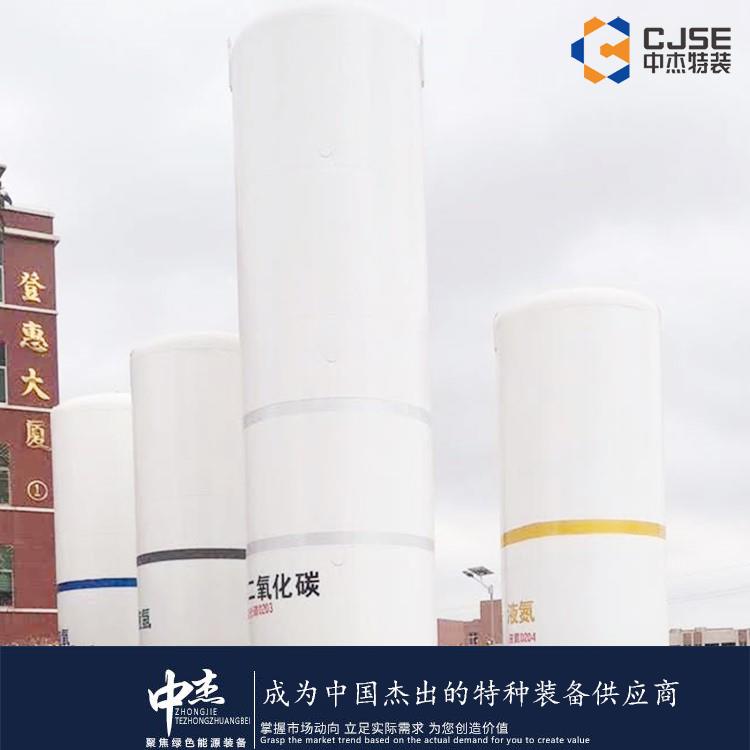


Shandong Zhongjie Special Equipment's main products include: fuel (gas) boilers, organic heat carrier boilers, biomass boilers, waste heat recovery boilers, and other boiler products; vacuum insulation cryogenic pressure vessels such as LNG tanks, oxygen/nitrogen/argon tanks, and CO2 tanks; pressure vessel products such as denitrification engineering equipment, heat storage and energy storage equipment, and complete chemical equipment; central air conditioning and HVAC equipment such as ground (water) source heat pumps, air source units, water-cooled screw units, and air-cooled modular units. Planned products include large-scale energy centers, LNG transport vehicles, LNG tank containers, and other green energy equipment.
Installation and operation of low-temperature carbon dioxide storage tanks must adhere to the following requirements:
Installation Location Selection: When selecting the installation location for the tank, consider its weight and dimensions to ensure a solid and stable foundation. Additionally, keep the tank away from flammable, explosive materials, and high-temperature sources to ensure safety.
Safety Distance: Maintain a certain safety distance around the tank for daily inspections, maintenance, and emergency response. The safety distance should comply with relevant safety regulations and standards.
Connection Pipes: The connection between the tank and the pipes should be made using appropriate methods to ensure tight and reliable connections without leaks. The connection pipes should meet relevant standards and specifications.
Pressure Relief Devices: The tank should be equipped with pressure relief devices, such as safety valves, to control internal pressure. The set pressure of the pressure relief devices should comply with relevant requirements and be inspected and maintained regularly.
Sealability Inspection: The tank's sealing performance should be checked regularly to ensure there are no leaks. Pay special attention to the sealing of valves, pipe connections, and the tank itself.
Temperature Control: Temperature control is required for low-temperature carbon dioxide storage tanks to maintain the internal低温 state. Ensure that the surrounding environmental temperature is suitable and take appropriate insulation measures.
Safety Protection: Appropriate safety protection facilities, such as guardrails and warning signs, should be set up around the tank to remind personnel of safety and prevent unauthorized access to the tank.
Storage Capacity Control: The storage capacity of the tank should be controlled according to actual needs to avoid exceeding the rated capacity. Exceeding the rated capacity may cause excessive pressure in the tank, increasing safety risks.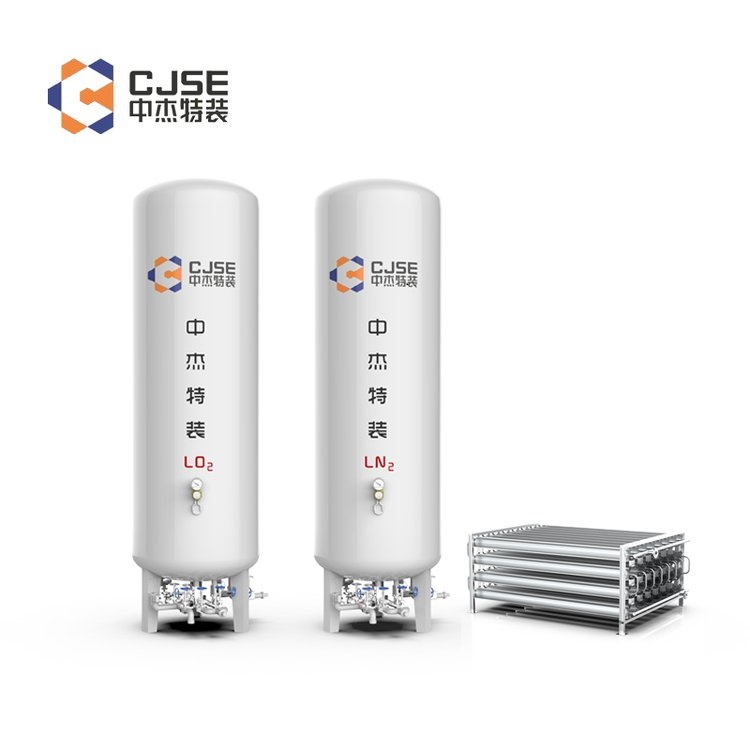
Before using a CO2 storage tank, certain inspection and filling points must be addressed. Here are some common precautions:
- Inspect the tank exterior: Check for any visible damage, corrosion, or leakage signs. Ensure the tank shell is undamaged.
- Check valves and fittings: Verify that the tank's valves and fittings are securely fastened and leak-free. Ensure their proper operation.
- Inspect the pressure gauge: Confirm that the tank's pressure gauge is functioning correctly and readings are accurate. Replace or repair as needed.
- Check the level indicator: Ensure the tank's level indicator is working properly and accurately displays the level. Repair or replace if abnormal.
- Inspect the pressure relief device: Check that the tank's pressure relief device (e.g., safety valve) is functioning correctly and the set pressure meets requirements. Repair or replace if abnormal.
- Inspect the filling equipment: Verify that the filling equipment (e.g., filling pipes, pumps) is operating correctly with no leakage or blockage. Ensure safety and reliability.
- Filling operations: During the filling process, note the following:
- Control the filling speed to avoid too fast or too slow.
- Control the filling pressure to prevent exceeding the tank's rated pressure.
- Monitor the level to ensure proper filling.
- Regularly inspect filling equipment and valves to ensure proper operation.
- Safety measures: Adhere to relevant safety regulations and procedures during the filling process. Operators should wear appropriate protective gear, such as static-resistant clothing, gloves, etc.
- Note that specific inspection and filling points may vary depending on tank type and application. Before using a CO2 storage tank, check and operate according to relevant specifications and standards, and consult with experts to ensure safety and effectiveness.
When using a 50-cubic-liter liquid oxygen tank, the following safety precautions should be observed: Fire and Explosion Prevention: Liquid oxygen is highly oxidizing and can support combustion. Therefore, avoid contact and ensure there are no open flames or other ignition sources nearby. Ventilation: When liquid oxygen evaporates, it produces a large amount of oxygen, so good ventilation around the tank is necessary to prevent oxygen accumulation and the risk of explosion. Avoid High Temperatures: Liquid oxygen may ignite or explode when in contact with high-temperature objects. Thus, avoid exposing the liquid oxygen tank to high-temperature environments and prevent contact with hot objects. Pressure Control: Use the liquid oxygen tank according to its designed pressure and flow rates, avoiding exceeding its load capacity. Regularly inspect and maintain the safety valve to ensure proper operation and prevent overpressure. Corrosion Prevention: Regular inspections and maintenance of the liquid oxygen tank are essential to prevent corrosion, especially on the tank surface and contact areas. Keep the areas dry and clean to avoid corrosion. Safe Operation: Operators should receive relevant training to understand the safety operating procedures and standards for the liquid oxygen tank. Adhere to the correct procedures, wear personal protective equipment, and ensure safe operations. Emergency Preparedness: Establish an emergency plan and equip with appropriate fire extinguishing and first aid equipment when using the liquid oxygen tank. Operators should be familiar with the emergency procedures and be able to respond quickly to emergencies. Note that the above safety precautions are general recommendations. Specific safety operations should be based on the design and usage requirements of the liquid oxygen tank. Before using the liquid oxygen tank, it is recommended to refer to relevant safety operation manuals and guidelines to ensure safety.
Carbon dioxide cylinder hydrostatic testing is a common quality inspection method used to verify the cylinder's sealing and pressure resistance. Below are the general steps for conducting a hydrostatic test on a carbon dioxide cylinder:
Preparation: Ensure the cylinder interior is clean and the cylinder is empty. Check the cylinder's valves, pipes, and connections to ensure they are sealed properly.
Filling with Water: Fill the cylinder with water, using tap water or another clean source. Ensure the water is evenly filled to avoid air bubbles or dead spots.
Applying Pressure: Use a pressure pump or another pressure device to gradually increase the water pressure until it reaches the predetermined test pressure. The test pressure is typically determined based on the cylinder's design requirements and relevant standards.
Maintaining Pressure: After reaching the test pressure, hold it for a period, usually 15-30 minutes. During this time, observe for any leakage from the cylinder, and check for leaks at the valves and connections.
Pressure Release: Release the water pressure inside the cylinder, ensuring it is done slowly and evenly to avoid sudden pressure release causing shock.
Inspection and Evaluation: After pressure release, inspect the cylinder's exterior and interior for any leakage. Evaluate the test results to ensure the cylinder's sealing and pressure resistance meet the requirements.
It is important to note that when conducting hydrostatic tests, follow relevant safety operation procedures and standards to ensure safety and reliability during the process. Additionally, based on the cylinder's design and usage requirements, other types of tests can be conducted, such as pneumatic testing, ultrasonic testing, etc., to comprehensively assess the cylinder's quality and performance. Seek advice and guidance from a consultant.
ZJ Special Equipment adheres to the great vision of "realizing employees' dreams, creating value for customers, and striving for the prosperity and strength of our motherland," focusing solely on the development of green energy equipment. We dedicate products and services with high cost-performance to society!
Yangchuan 10 cubic CO2 Storage Tank, Factory Direct Supply
