


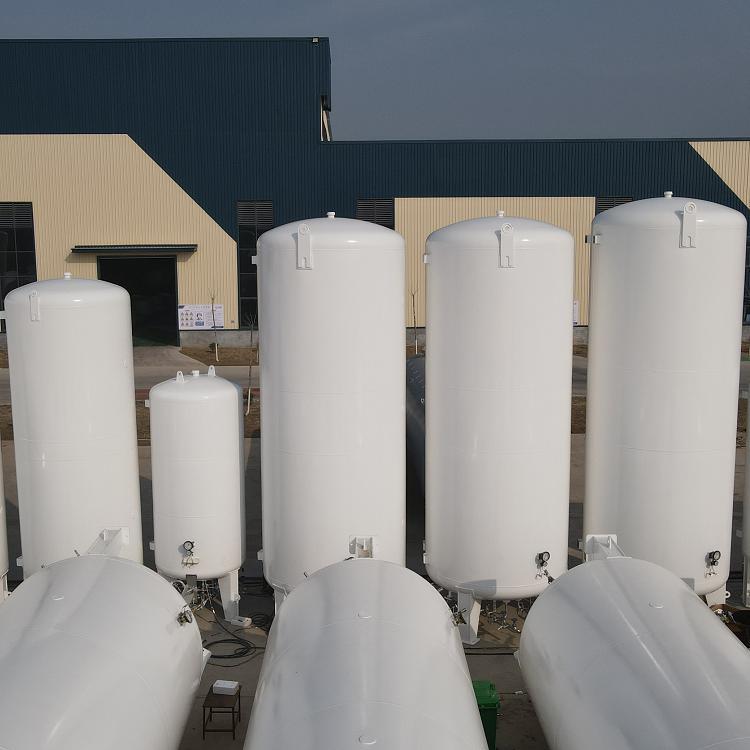
Shandong Zhongjie Special Equipment (formerly Heze Boiler Factory Co., Ltd.) was established in 2001, located at No. 2218 Jinnan Road, Economic and Technological Development Zone, Heze City. With a registered capital of 50 million yuan and total assets of 500 million yuan, the company has seven business centers: boilers, deep-freezing containers, pressure vessels, central air conditioning, engineering installation, international trade, and Internet of Things. It operates three factory sites at Jinnan Road, East Changjiang Road, and Bohai Road, covering a total area of 200,000 square meters, with the main workshop spanning 83,000 square meters. Currently, there are 710 employees, including 247 engineering and technical staff and 82 middle-level technical personnel. In December 2016, it was recognized as a "High-tech Enterprise" by the Science and Technology Department. In June 2021, it was named a "Specialized and New Enterprise of Shandong Province" by the Industry and Information Technology Department. In June 2022, it was identified as a "Gazelle Enterprise of Shandong Province" and in August 2022, as a "Specialized and New Small Giant Enterprise" by the Ministry of Industry and Information Technology.
When using carbon dioxide storage tanks, the following points should be noted:
Safety Operation: When using carbon dioxide storage tanks, it is mandatory to follow relevant safety operation procedures and standards. Operators should receive training to understand the tank's characteristics, operational requirements, and safety measures, and operate strictly according to the procedures.
Tank Inspection: Regularly inspect the tank's appearance, sealing, valves, and pipeline connections to ensure the tank's integrity and safety. If any abnormalities or damage are found, they should be repaired or replaced promptly.
Tank Pressure Control: The tank's pressure should be controlled within a safe range. Regularly check and calibrate pressure sensors and safety valves to ensure the normal operation of the pressure control system.
Temperature Control: Carbon dioxide storage tanks typically need to be kept at low temperatures. Ensure the proper operation of cooling equipment, regularly check and calibrate temperature sensors to maintain appropriate storage temperatures.
Leak Protection: Carbon dioxide is a gas prone to leakage, which can lead to safety risks and environmental pollution. Ensure the tank and pipeline sealing, regularly inspect and replace seals, and promptly address any leakage situations.
Fire and Explosion Prevention: Avoid open flame operations near the tank to prevent fire sources from contacting carbon dioxide. Maintain good ventilation around the tank to prevent the accumulation of carbon dioxide.
Waste Disposal: Disposed carbon dioxide storage tanks or residues should be handled in accordance with relevant regulations and standards. Adhere to environmental protection requirements to ensure the safe disposal of waste and environmental protection.
Regular Maintenance: Regularly maintain and inspect the tank, including cleaning and painting, to ensure its proper functioning.
Carbon dioxide storage tanks are categorized into various types and structures based on their design and application:
- Vertical Tanks: Commonly used carbon dioxide storage tanks, these are cylindrical in shape and placed vertically. They typically have larger capacities and are used for large-scale storage and supply.
- Horizontal Tanks: Another common type, these tanks are rectangular or cylindrical and placed horizontally. They are usually used for smaller-scale storage and supply, suitable for limited spaces.
- Spherical Tanks: A specialized type of carbon dioxide storage tank with a spherical shape. They offer high strength and pressure containment, ideal for high-pressure storage and transportation.
- Vertical Tanks (Small Capacity): Smaller capacity tanks with a cylindrical shape and vertical placement. They are commonly used for small-scale storage and supply, such as for commercial and residential use.
- Underground Tanks: A unique structure where the carbon dioxide storage tank is buried underground. These tanks save space, reduce visual impact, and offer enhanced safety and environmental protection.
These tanks are typically made of pressure-resistant materials (like carbon steel or stainless steel) with certain insulation properties and accessories such as safety valves, pressure gauges, and level indicators. The interior usually features baffles or partitions to separate different liquids or gases. Additionally, the tanks are equipped with safety systems, including pressure maintenance systems, leak detection systems, and fire detection systems.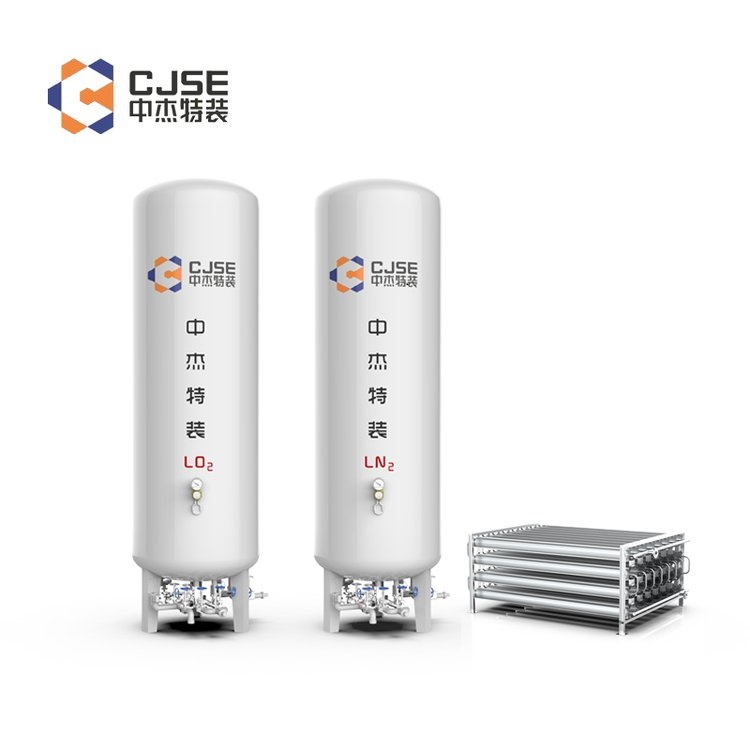
When handling CO2 storage tanks, static electricity is a safety issue that needs attention. Here are some methods to avoid static:
- Grounding: Ensure the tank and related equipment are properly grounded. Grounding releases static to the ground, reducing the likelihood of static buildup. Use specialized grounding devices and cables to ensure reliable grounding.
- Static-Discharge Equipment: Use static-discharge equipment such as static-free clothing, shoes, and gloves. These devices help eliminate or reduce static buildup and protect the operator's safety.
- Avoid Friction: Prevent friction during operation, especially when in contact with flammable or combustible gases. Friction generates static, increasing the risk of fire or explosion.
- Control Humidity: Maintain an appropriate humidity level in the operating environment; higher humidity can reduce static generation and accumulation. Use humidifiers or other humidity control devices to adjust the environmental humidity.
- Avoid Plastic or Rubber Materials: Plastic and rubber materials are prone to static buildup; try to avoid using these materials during operation. Choose materials with better antistatic properties for handling.
- Static Eliminators: Use static eliminators to eliminate or reduce static buildup. Static eliminators neutralize static by releasing charges, reducing the danger of static.
- Tank Cleaning: Regularly clean the interior of the tank to remove accumulated impurities and dirt. Be mindful of preventing static generation and accumulation during cleaning.
Note that static avoidance methods should be determined based on specific operating conditions and tank characteristics. During operation, follow relevant safety regulations and standards, and consult with experts as needed.
When planning a CO2 storage tank, the following requirements should be considered:
Safety Distance: The tank should maintain an adequate distance from surrounding buildings, equipment, and personnel to prevent injuries and losses in case of unexpected accidents. Specific requirements for safety distance can be determined based on local regulations and standards.
Tank Capacity: Determine the tank's capacity based on actual needs and usage. The selection should consider factors such as CO2 usage, storage cycle, and supply demands.
Tank Layout: The layout of the tank should consider ease of operation and maintenance, as well as safety and environmental requirements. There should be sufficient spacing between tanks for operation and maintenance.
Tank Material: Choose appropriate materials for manufacturing the tank to ensure its corrosion and pressure resistance. Common materials include carbon steel, stainless steel, etc.
Safety Equipment: The tank should be equipped with necessary safety equipment, such as safety valves, pressure and temperature sensors, to ensure safe operation.
Leak Prevention: Measures should be taken to prevent CO2 leakage, such as sealed valves and leak detection systems. Appropriate leak handling procedures and emergency response plans should also be in place.
Environmental Impact Assessment: An environmental impact assessment should be conducted when planning the tank to evaluate its impact on the surrounding environment and implement corresponding measures for environmental protection.
Regulations and Standards: Compliance with local regulations and standards is required when planning the tank, including building codes, safety specifications, and environmental protection requirements.
It is important to note that planning a CO2 storage tank should be carried out by engineers or relevant institutions to ensure compliance with safety and environmental requirements. Consulting local authorities for advice and guidance is also necessary.
Our company highly values technological innovation and R&D design, boasting one municipal-level enterprise technology center in Heze City. We have established testing facilities for non-destructive testing, physical and chemical testing, welding testing, hydrostatic testing, and more. Equipped with over 600 units of various equipment such as CNC machine tools, X-ray flaw detectors, digital ultrasonic flaw detectors, mechanical property testing machines, chemical analyzers, spectrometers, tensile testing machines, and plasma welding machines, our R&D of key products such as temperature and pressure vessel welding, biomass boiler emissions reduction, and waste heat utilization has been selected for several Shandong Provincial Department of Industry and Information Technology scientific and technological innovation projects, Shandong key projects, and Heze City innovation and excellence projects. We have累计 obtained 27 authorized utility model patents, 16 authorized invention patents, participated in drafting 2 standards, 2 industry standards, and registered 15 trademarks. The technical team of our company, in collaboration with Professor Li Yajiang of Shandong University, has developed deep cryogenic container processing technology using the internationally recognized plasma arc + filled wire argon arc welding (PAW-GTAW) technology. This technology has been appraised as internationally competitive at the provincial level in the field of deep cryogenic container manufacturing. Choose Zhongjietech, let's create brilliance together!
Haidong 15 cubic CO2 storage tank, in stock supply
