


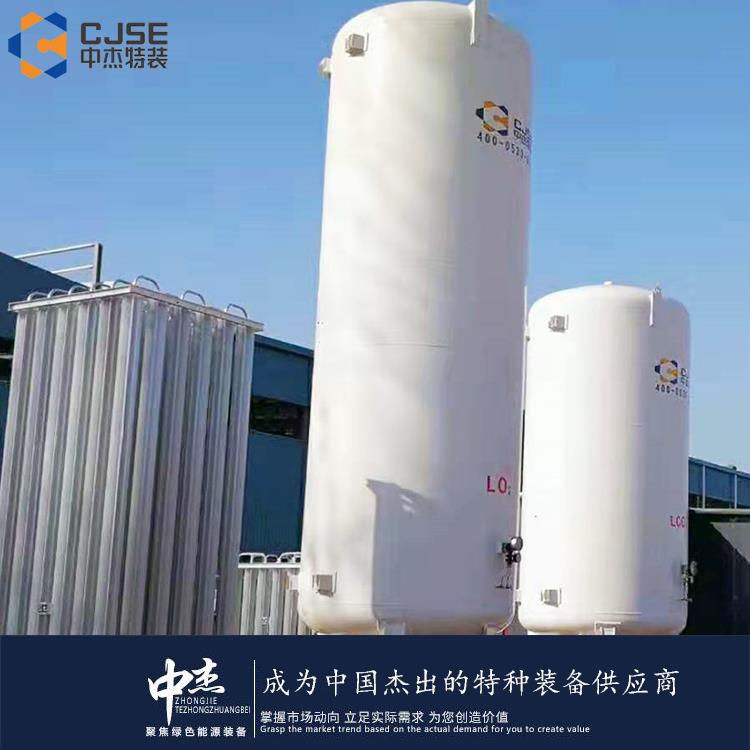

Shandong Zhongjie Special Equipment (formerly Heze Boiler Factory Co., Ltd.) was established in 2001, located at No. 2218 Jinnan Road, Development Zone, Heze City, with a registered capital of 50 million yuan and total assets of 500 million yuan. The company has 7 business centers: boiler, deep-freeze container, pressure vessel, central air conditioning, engineering installation, international trade, and Internet of Things. It has three manufacturing sites on Jinnan Road, East Changjiang Road, and Bohai Road, covering a total area of 200,000 square meters, with the main workshop area being 83,000 square meters. It currently employs 710 staff, including 247 engineers and technicians and 82 intermediate-level technicians. In December 2016, it was recognized as a "High-tech Enterprise" by the Science and Technology Department. In June 2021, it was named a "Specialized and New Enterprise in Shandong Province" by the Department of Industry and Information Technology. In June 2022, it was identified as a "Gazelle Enterprise in Shandong Province" and in August 2022, it was recognized as a "Specialized and New Small Giant Enterprise" by the Ministry of Industry and Information Technology.
Carbon dioxide cylinders are safe when used and maintained correctly, but they can pose certain dangers if safety procedures are not followed or there are incorrect operations. Below are some potential hazards associated with carbon dioxide cylinders:
- High-pressure hazard: Carbon dioxide cylinders are typically used to store high-pressure CO2 gas, thus posing a high-pressure risk. If the cylinder is damaged, overheated, or over-pressurized, it may explode or leak, causing personal injury and property damage.
- Asphyxiation hazard: Carbon dioxide is an asphyxiating gas, and high concentrations can displace oxygen in the air, leading to asphyxiation. When using carbon dioxide cylinders in enclosed spaces, ensure adequate ventilation and oxygen supply to avoid asphyxiation hazards.
- Freezing hazard: Liquid CO2 is very cold, and contact with it can cause cold injury. Proper operational procedures and the use of appropriate personal protective equipment must be followed to prevent cold injury.
- Fire hazard: Although CO2 itself is not flammable, at high concentrations it can suppress oxygen supply, potentially extinguishing fires. However, if CO2 leaks into the air, it may form flammable mixtures, increasing the risk of fire.
To ensure safety, it is essential to adhere to the relevant safety operating procedures and guidelines when using carbon dioxide cylinders and to receive necessary training. Regular inspections and maintenance of the cylinder, following the manufacturer's recommendations and local regulations, can reduce potential hazards. In the event of abnormal conditions or leaks, appropriate emergency measures should be taken immediately, and relevant personnel should be notified.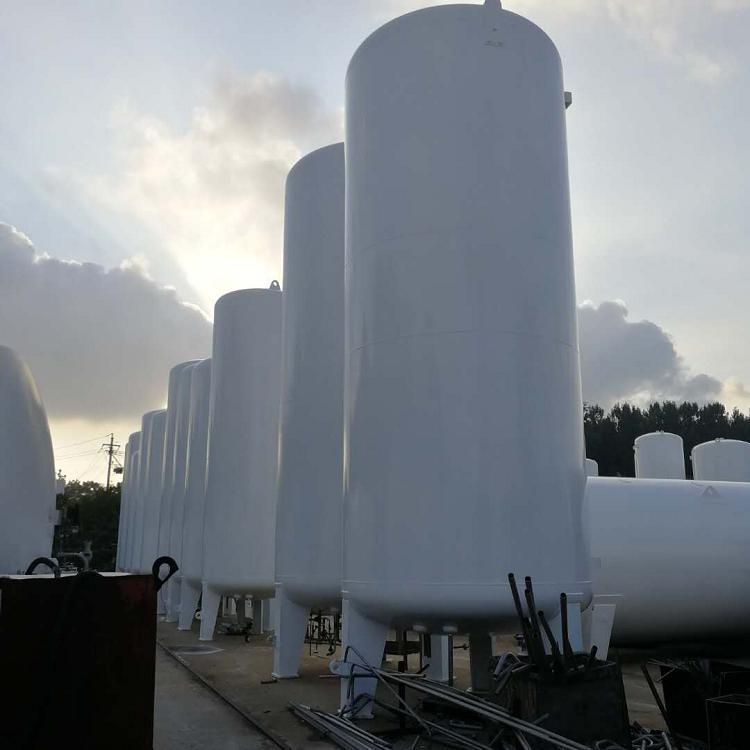
When planning carbon dioxide storage tanks, the following requirements should be considered:
- Safety Distance: Tanks should maintain adequate safety distances from surrounding buildings, equipment, and personnel to prevent injuries and losses in the event of accidents. Specific safety distance requirements can be determined according to local regulations and standards.
- Tank Capacity: Determine the tank's capacity based on actual needs and usage. The capacity selection should consider factors such as the amount of carbon dioxide used, storage cycles, and supply demands.
- Tank Layout: The layout should facilitate operation and maintenance while meeting safety and environmental protection requirements. There should be sufficient spacing between tanks for ease of operation and maintenance.
- Tank Material: Choose appropriate materials for tank construction to ensure corrosion and pressure resistance. Common materials include carbon steel and stainless steel.
- Safety Equipment: Tanks should be equipped with necessary safety equipment, such as safety valves, pressure sensors, and temperature sensors, to ensure safe operation.
- Leak Protection: Measures should be taken to prevent carbon dioxide leaks, such as sealed valves and leak detection systems. Corresponding leak handling measures and emergency response plans should also be in place.
- Environmental Impact Assessment: An environmental impact assessment should be conducted when planning tanks to evaluate their impact on the surrounding environment and implement measures for environmental protection.
- Regulations and Standards: Adhere to local regulations and standards when planning tanks, including building codes, safety regulations, and environmental protection requirements.
- Note: The planning of carbon dioxide storage tanks should be carried out by engineers or relevant institutions to ensure compliance with safety and environmental protection requirements. Consulting with local authorities for advice and guidance is also necessary.
The internal structure of a carbon dioxide storage tank typically includes the following main components:
Tank Shell: The tank shell serves as the primary container for storing carbon dioxide and is commonly made of carbon steel or stainless steel. It is designed to have sufficient strength and密封性 to withstand the internal pressure and loads of the tank.
Lining Layer: To prevent direct contact between carbon dioxide and the tank shell, which can lead to corrosion and contamination, the interior of the tank is often coated with a lining layer. This lining is usually made of corrosion-resistant materials such as glass fiber reinforced plastic or polyester resin.
Support Structure: To support the weight of the tank and maintain stability, an internal support structure is typically installed. This can include support feet, brackets, etc., designed to support the bottom and side walls of the tank.
Internal Accessories: The tank is also equipped with essential accessories such as level gauges, pressure sensors, temperature sensors, and safety valves. These accessories are used to monitor and control the liquid level, pressure, and temperature inside the tank to ensure safe operation.
Pressure Relief Device: To prevent excessive internal pressure, the tank is usually fitted with a pressure relief device such as a safety valve. When the internal pressure exceeds the set value, the relief device automatically opens to release pressure, safeguarding the tank.
Inlet and Outlet Piping: The tank also features inlet and outlet piping for the injection and discharge of carbon dioxide. These pipes are typically connected to external supply or consumption systems to facilitate the storage and use of carbon dioxide.
The above description outlines the general internal structure of a carbon dioxide storage tank. Specific structural design and configurations may vary depending on the tank's intended use and specifications. Proper use and maintenance of the tank are required.
When cooling carbon dioxide storage tanks, be mindful of the following considerations and familiarize yourself with the basic steps of the cooling process:
**Considerations:**
- **Safety:** Pay attention to safety during the cooling process, ensuring the safety of operators and the surrounding environment. Adhere to relevant safety operating procedures and standards, and use appropriate personal protective equipment.
- **Equipment Selection:** Choose the appropriate cooling equipment and tools, such as cooling mediums (e.g., liquid nitrogen), coolers, and cooling systems. Select suitable cooling equipment based on the tank's size and requirements.
- **Temperature Control:** Control the temperature during the cooling process to avoid overcooling or insufficient cooling. Determine the appropriate cooling temperature range based on the tank's design requirements and operating conditions.
**Cooling Process Breakdown:**
- **Preparation:** Ensure there are no residual gases or impurities inside the tank to avoid affecting the cooling effect. Check the tank's sealing and the operation of the safety valve.
- **Cooling Medium Injection:** Inject the cooling medium (e.g., liquid nitrogen) into the tank to lower the tank's temperature. Control the injection speed and amount during the process to avoid overinjection and excessive pressure.
- **Cooling Time:** Determine the cooling time based on the tank's size and requirements. The cooling time typically needs to be long enough to ensure that the carbon dioxide inside the tank is fully cooled and liquefied.
- **Temperature Monitoring:** Regularly monitor the tank's temperature during the cooling process to ensure it remains within the appropriate range. Use temperature sensors or infrared thermometers for monitoring.
- **Cooling Completion:** The cooling process is complete when the tank reaches the predetermined cooling requirements. At this point, the carbon dioxide inside the tank should be in a liquid state.
Note that the specific cooling process and steps may vary depending on different tank designs and usage scenarios. When conducting cooling operations, follow relevant safety operating procedures and standards to ensure safety and effectiveness.
Zhongjie Special Equipment adheres to the great vision of "realizing employees' dreams, creating customer value, and striving for the prosperity and strength of our motherland," focusing solely on the development of green energy equipment. We dedicate high-value products and services to society!
Jinchang 5-cubic-meter CO2 storage tank, on-site installation
