


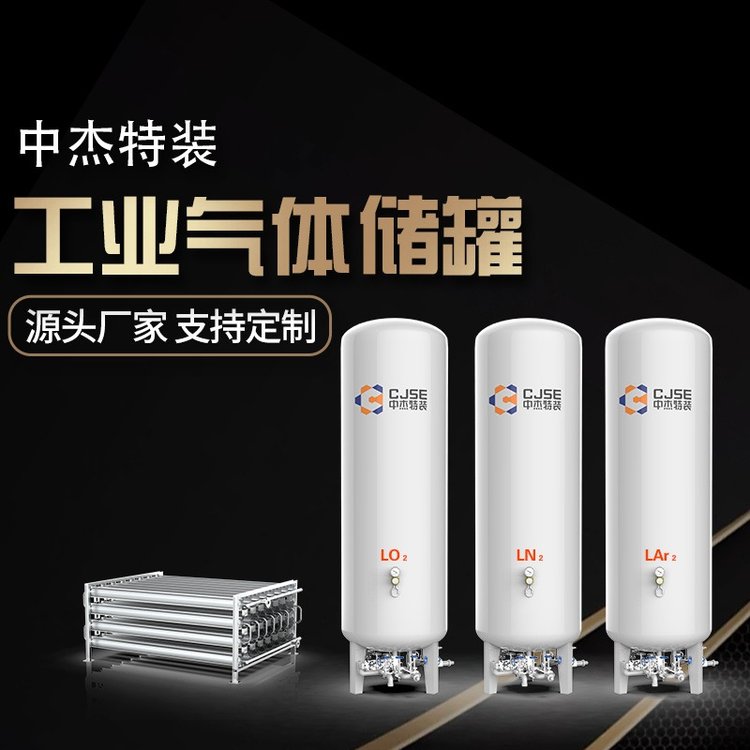
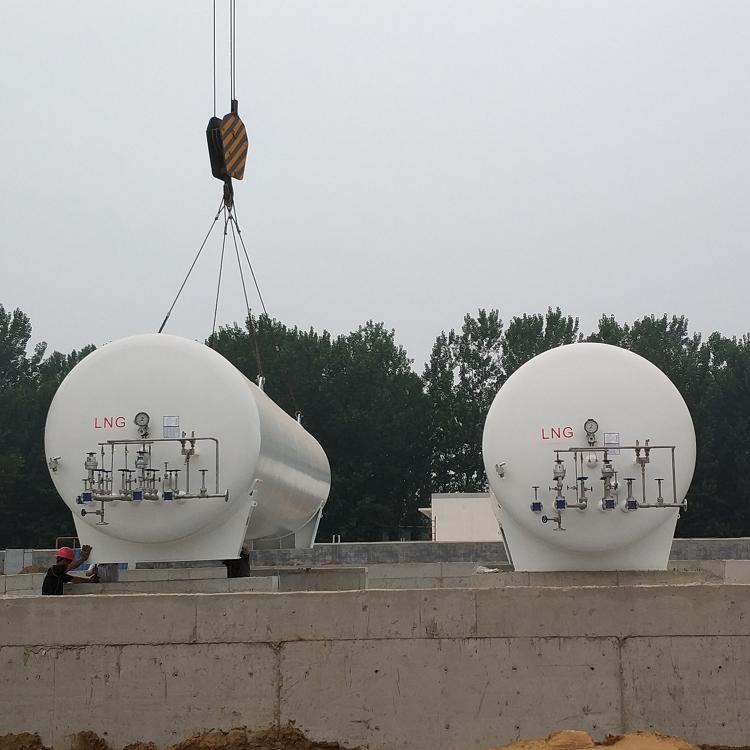

Shandong Zhongjie Special Equipment Co., Ltd. specializes in: fuel (gas) boilers, organic heat carrier boilers, biomass boilers, waste heat recovery boilers, and other boiler products; vacuum insulation cryogenic pressure vessels such as LNG tanks, oxygen/nitrogen/argon tanks, and CO2 tanks; pressure vessel products including denitrification engineering equipment, heat storage and energy storage equipment, and complete chemical equipment sets; central air conditioning and HVAC equipment such as ground (water) source heat pumps, air source units, water-cooled screw units, and air-cooled modular units. Planned products include large-scale energy centers, LNG transport vehicles, LNG tank containers, and other green energy equipment.
CO2 flooding is a commonly used enhanced oil recovery technique, employed to increase the recovery rate of oil fields. It works by injecting CO2 gas into the reservoir to alter its physical and chemical properties, thereby promoting flow and enhancing recovery rates. The working principle of CO2 flooding is as follows:
Dissolution Principle: CO2 has a high solubility in oil. When CO2 gas is injected into the reservoir, it dissolves in the oil, reducing its viscosity and surface tension, making it easier to flow.
Expulsion Drive Principle: After CO2 gas is injected into the reservoir, it expands to form a gas phase, increasing the reservoir's internal pressure and pushing the oil towards the wellbore. Additionally, CO2's high permeability can improve the reservoir's permeability, enhancing flowability.
Chemical Reaction Principle: CO2 reacts with certain components in the oil, producing soluble substances that further reduce viscosity and improve flowability.
CO2 flooding technology offers certain advantages in oil field development, such as:
Environmental Friendliness: CO2 is a natural, non-toxic, and renewable gas. Using CO2 flooding can reduce environmental pollution.
Economic Viability: CO2 flooding can increase the recovery rate of oil fields, boost production, and thereby enhance economic benefits.
Sustainability: CO2 can be separated from air or captured and stored from industrial flue gases, enabling the recycling of CO2 and demonstrating sustainability.
It is important to note that the application of CO2 flooding technology requires consideration of reservoir characteristics, geological conditions, and economic feasibility. Before implementing CO2 flooding, a comprehensive reservoir evaluation and engineering design are necessary to ensure the effectiveness and safety of the technology.
For accessories of carbon dioxide storage tanks, such as valves, pipes, and pressure relief devices, maintenance and protection are crucial. Here are some suggestions:
Regular Inspections: Conduct regular inspections of the accessories' appearance and operational status to ensure no damage, loose parts, or leaks. Pay special attention to the sealing performance and operational flexibility of valves.
Cleaning and Maintenance: Regularly clean the accessories to remove dirt and impurities on the surface. Use appropriate cleaning agents and tools, avoiding corrosive substances.
Lubrication Maintenance: For accessories requiring lubrication, such as valve pistons and stems, perform regular lubrication maintenance. Use suitable lubricants to ensure the normal operation and sealing performance of valves.
Sealing Inspection: Regularly check the sealing performance of accessories, such as valve seals and sealing surfaces. Replace any damaged or aged sealing parts promptly.
Corrosion Protection: For accessories prone to corrosion, such as pipes and valves, take anti-corrosion measures, such as applying anti-corrosion coatings or wrapping with anti-corrosion materials.
Regular Calibration: Calibrate measurement devices such as level sensors and pressure sensors regularly to ensure their accuracy and reliability.
Regular Maintenance: Develop a regular maintenance plan based on the usage and requirements of the accessories, including cleaning, lubrication, and repairs. Ensure the long-term stable operation of accessories.
Storage and Transportation Precautions: For spare parts or parts requiring replacement, pay attention to moisture-proof, shockproof, and damage-proof during storage and transportation to avoid affecting their normal use.
The above suggestions are for the maintenance and protection of carbon dioxide storage tank accessories. Specific operations should be based on the characteristics and requirements of the accessories and comply with relevant regulations.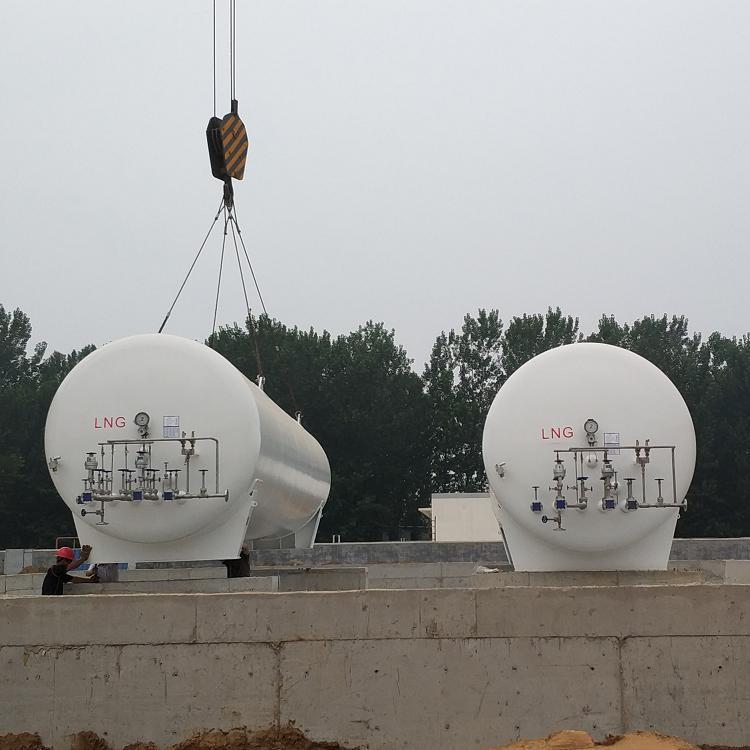
Standard parameters for CO2 storage tanks can vary depending on design and application requirements. Here are some common standard parameters:
- Tank Capacity: The capacity of CO2 storage tanks is typically expressed in kiloliters (L) or cubic meters (m), ranging from a few thousand to tens of thousands of liters.
- Working Pressure: The working pressure of CO2 storage tanks is usually around 20 to 25 MPa at room temperature, with specific pressure determined by application needs and design standards.
- Design Temperature: The design temperature of CO2 storage tanks is generally in the low-temperature range, typically between -40℃ to -60℃, to accommodate the liquefaction and storage requirements of CO2.
- Material: CO2 storage tanks are commonly made from high-strength steel or alloy materials to withstand the stresses and loads under high pressure and low-temperature conditions.
- Insulation: The tanks are internally insulated to reduce heat transfer and liquid evaporation. Insulation is usually a multi-layer structure, including thermal insulation material and an external protective layer.
- Safety Valve and Pressure Relief Devices: Tanks are equipped with safety valves and pressure relief devices to control internal pressure and prevent overpressure and explosion.
- Level Monitoring and Control: Tanks are fitted with level monitoring devices to monitor the liquid level within. Timely monitoring and control of the level ensure the liquid storage is within a safe range.
Note that specific standard parameters for CO2 storage tanks may vary due to different design standards, application requirements, and manufacturers. When selecting and using CO2 storage tanks, it is important to consider these factors.
Installation and operation of low-temperature carbon dioxide storage tanks must comply with the following requirements:
Installation Location Selection: When selecting the installation location for the tank, consider the tank's weight and dimensions to ensure a solid and stable foundation. Additionally, keep the tank away from flammable and explosive materials and high-temperature sources to ensure safety.
Safety Distance: Maintain a certain safety distance around the tank for routine inspections, maintenance, and emergency response. The safety distance should meet relevant safety regulations and standards.
Connection Pipes: Use an appropriate connection method between the tank and the pipes to ensure a tight and reliable connection with no leaks. The connection pipes should comply with relevant standards and specifications.
Pressure Relief Device: The tank should be equipped with a pressure relief device, such as a safety valve, to control internal tank pressure. The set pressure of the pressure relief device should meet relevant requirements and be inspected and maintained regularly.
Sealability Inspection: Regularly inspect the tank's sealing performance to ensure no leaks. Pay special attention to the sealing of valves, pipe connections, and the tank itself.
Temperature Control: Temperature control is required for low-temperature carbon dioxide storage tanks to maintain the internal低温 state. Ensure the surrounding environmental temperature is suitable and take corresponding insulation measures.
Safety Protection: Set up appropriate safety protection facilities around the tank, such as guardrails and warning signs, to remind personnel of safety and prevent unauthorized access to the tank.
Storage Capacity Control: Control the storage capacity of the tank according to actual needs to avoid exceeding the rated capacity. Exceeding the rated capacity may cause excessive tank pressure, increasing safety risks.
Storage
Zhongjie Special Equipment adheres to the grand vision of "Realizing employees' dreams, creating value for customers, and striving for the prosperity and strength of our motherland," wholeheartedly committed to the development of green energy equipment. We dedicate high-value products and services to society!
Lanzhou 20 Cubic Meter Carbon Dioxide Storage Tank, High Product Safety
