


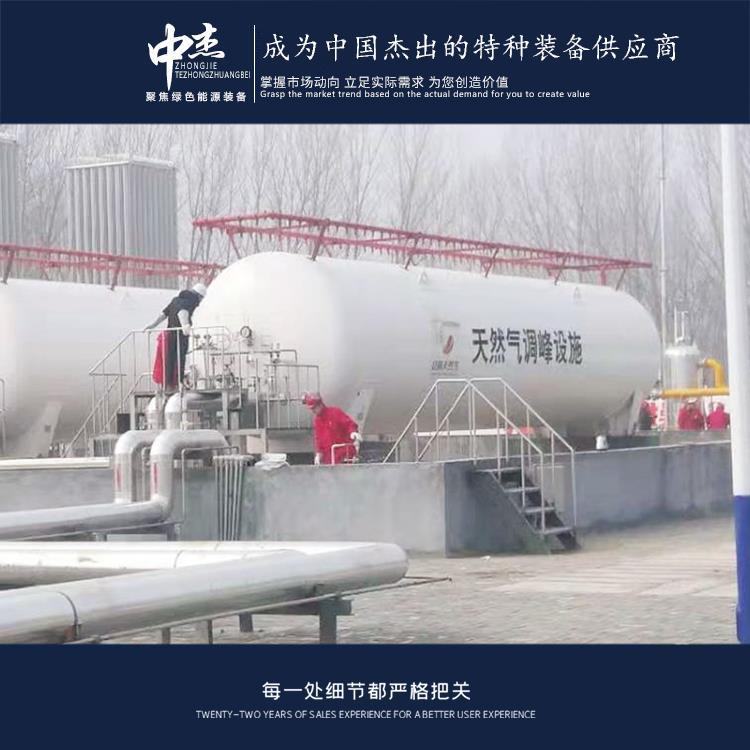
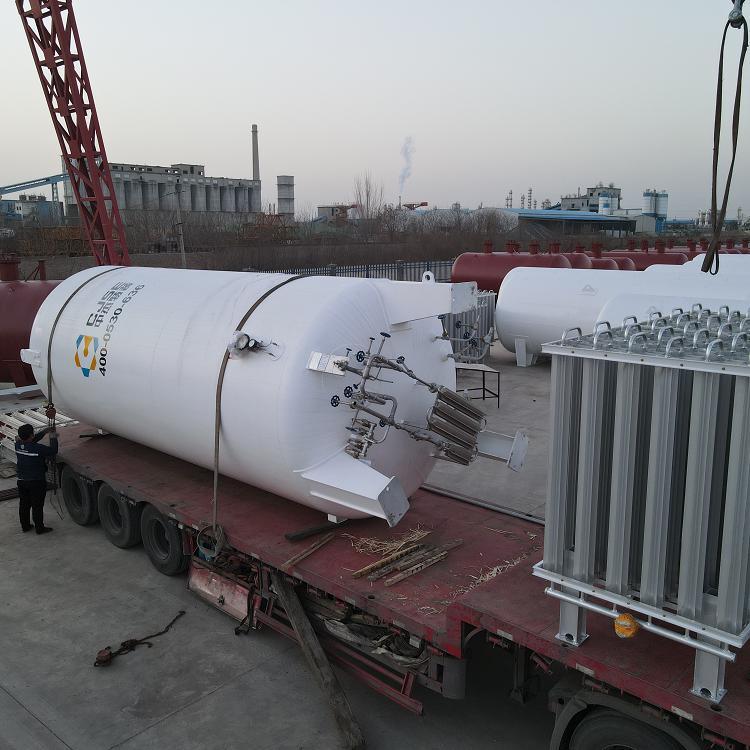
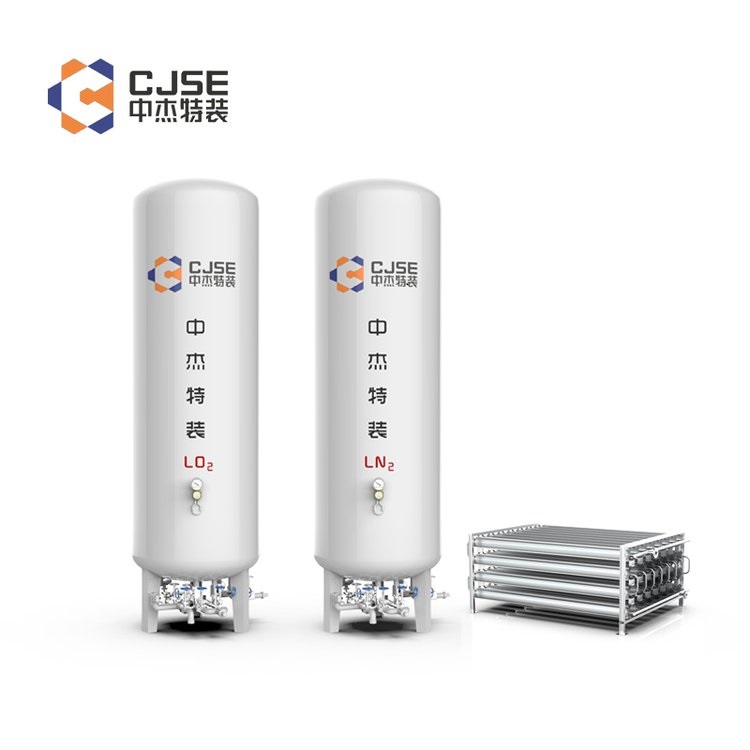
Shandong Zhongjie Special Equipment specializes in: fuel (gas) boilers, organic heat carrier boilers, biomass boilers, waste heat boilers, and other boiler products; vacuum insulation cryogenic pressure vessels such as LNG tanks, oxygen/nitrogen/argon tanks, and CO2 tanks; pressure vessel products including denitrification engineering equipment, heat storage and energy storage equipment, complete chemical equipment sets, etc.; central air conditioning and heating equipment such as ground (water) source heat pumps, air source units, water-cooled screw units, and air-cooled modular units. Planned products include large-scale thermal energy centers, LNG transport vehicles, LNG tank containers, and other green energy equipment.
Construction features of carbon dioxide storage tanks mainly include the following aspects: Material selection: Carbon dioxide storage tanks are typically made of carbon steel or stainless steel to ensure their corrosion resistance and pressure-bearing properties. Welding process: The welding process of the tank is crucial for its quality and safety. The welding process should comply with relevant standards and specifications to ensure the quality and strength of the welds. Corrosion prevention measures: Due to the corrosive nature of carbon dioxide, both the internal and external surfaces of the tank should be treated for corrosion prevention. Common corrosion prevention measures include spraying corrosion-resistant paint, applying a corrosion-resistant coating, or using corrosion-resistant coatings. Safety valves and pressure sensors: The tank should be equipped with safety valves and pressure sensors to monitor and control the internal pressure of the tank, ensuring safe operation. Steps for correctly installing a carbon dioxide storage tank are as follows: Site preparation: Select a suitable site for installation, ensuring the site is level, stable, and meets safety distance requirements. Clear the site to ensure there are no obstacles or sources of fire. Foundation construction: Construct the foundation according to the size and weight of the tank. The foundation should have sufficient strength and stability to support the weight and pressure of the tank. Tank installation: Place the tank on the foundation, ensuring there is appropriate padding and fastening devices between the tank and the foundation. Connect and secure the tank according to its design requirements. Pipe connection: Connect the tank to the piping system as needed. Ensure the connections are sealed properly to prevent leaks. Safety equipment installation: Install the required safety equipment for the tank, such as safety valves, pressure sensors, temperature sensors, etc. Ensure these facilities are correctly installed and connected.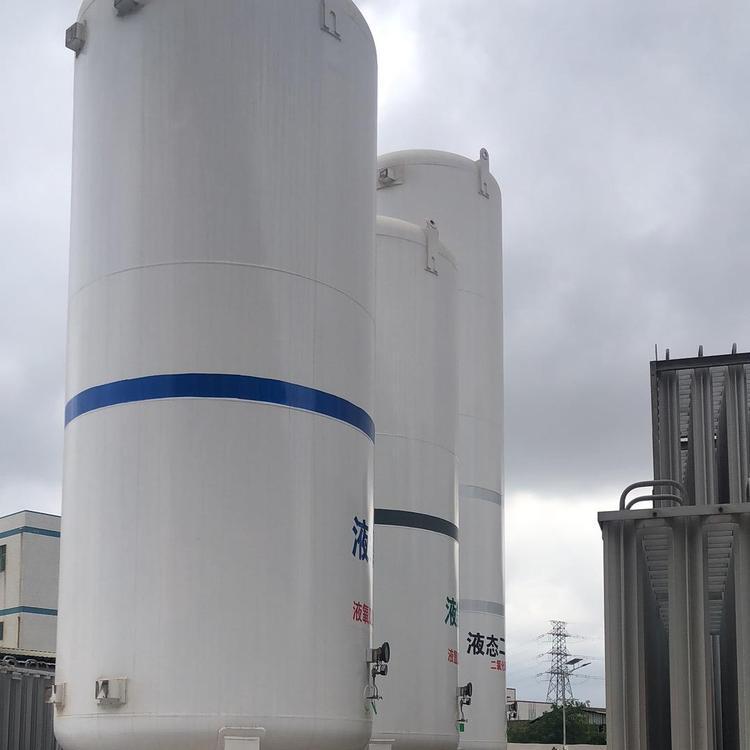
The safe operation of low-temperature carbon dioxide storage tanks is primarily key in the following aspects: Design and Manufacturing: The tank's design and construction must comply with relevant standards and regulations to ensure they can withstand working conditions under low temperatures and high pressures. The tank should have sufficient strength and sealing performance to prevent leaks and ruptures. Safety Valves and Pressure Control: The tank should be equipped with safety valves and pressure control devices to ensure internal pressure remains within safe limits. Safety valves should be regularly inspected and tested to ensure proper functioning. Temperature Control: Effective temperature control is necessary for low-temperature carbon dioxide storage tanks to prevent freezing or embrittlement due to excessively low temperatures. Appropriate insulation materials and equipment should be used to maintain the tank and pipeline temperatures within safe ranges. Leak Detection and Alarm: The tank should be fitted with leak detection devices and alarm systems, along with corresponding monitoring equipment. These devices can detect leaks promptly and trigger alarms for appropriate action. Safe Operation and Training: Operators should receive relevant training to understand the safe operation procedures and standards for low-temperature carbon dioxide storage tanks. Operators should be familiar with the tank's characteristics, working principles, and emergency response measures. Regular Inspection and Maintenance: Tanks should be regularly inspected and maintained, including visual inspections, anti-corrosion coating maintenance, and leak detection. Regular inspections can identify potential issues early and allow for timely repair measures. Emergency Preparedness: Establish an emergency response plan and equip with appropriate fire-fighting and first-aid equipment. Operators should be familiar with emergency procedures and be able to respond quickly to emergencies. Please note that the above points are general recommendations. Specific safe operation should be based on the design and usage requirements of the low-temperature carbon dioxide storage tank. Before using the tank, it is recommended to refer to relevant safety operation manuals and guidelines to ensure operational safety.
The filling process for CO2 storage tanks typically includes the following steps: Preparation: Ensure that the tank and filling equipment are in good working order. Inspect the tank's exterior and valves for damage or leaks. Check the filling equipment's connection pipes and valves for looseness or leaks. Prepare liquid CO2: Extract liquid CO2 from the source and transfer it to the storage tank of the filling equipment. Ensure the liquid CO2 meets the required quality and purity standards. Connect the filling equipment: Link the outlet pipe of the filling equipment to the inlet valve of the tank. Ensure the connection is secure and there are no leaks. Open valves: Activate the valves of both the filling equipment and the tank to allow liquid CO2 to flow from the equipment into the tank. Adjust the flow rate and pressure as needed by regulating the valves. Monitor level: Use a level sensor or other level measuring equipment to monitor the liquid CO2 level in the tank in real time. Ensure the level stays within safe limits and avoid over-filling. Completion of filling: When the tank reaches the predetermined filling level, close the valves of the filling equipment and the tank to stop the CO2 filling. Inspection and cleanup: Check the valves and pipe connections during the filling process for leaks. Clean up any remaining liquid CO2 around the filling equipment and tank. Documentation and reporting: Record the relevant information of the filling process, including the filling date, amount, and level monitoring results. If necessary, submit the filling report to relevant departments or management. The above is a general CO2 storage tank filling process. Specific operations should be carried out according to the characteristics and requirements of the tank. When performing filling operations, follow the relevant safety operation procedures and have them carried out by trained professionals.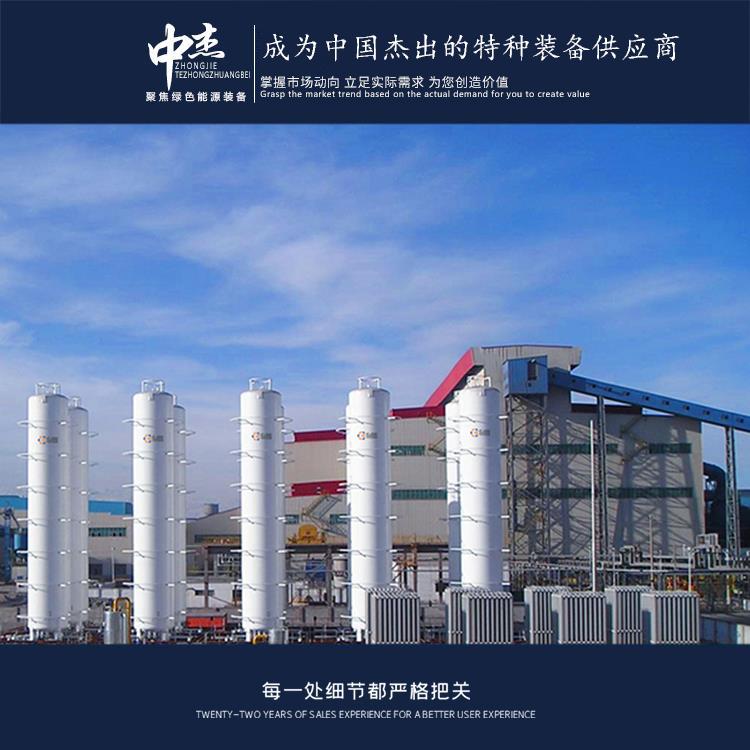
There are several types of carbon dioxide storage tanks: Atmospheric Storage Tanks: These are containers designed for storing carbon dioxide at pressures close to atmospheric pressure. They are suitable for low-pressure applications such as the beverage industry and gas fire suppression systems. High-Pressure Storage Tanks: These tanks store carbon dioxide at pressures above atmospheric pressure. They are commonly used in industrial applications like chemical processing and refrigeration. Liquefied Storage Tanks: These tanks are for liquefying and storing carbon dioxide at temperatures below room temperature. They are typically used for large-scale storage needs of liquid carbon dioxide, such as in food freezing and pharmaceutical manufacturing. Vaporization Storage Tanks: These tanks store liquid carbon dioxide in a gaseous state, with temperatures and pressures suitable for the vaporization process. They are often used for supplying gaseous carbon dioxide, such as in carbonation of beverages and welding. Insulated Storage Tanks: These tanks have excellent thermal insulation properties to minimize heat transfer and liquid evaporation. They are usually used for long-term storage of liquid carbon dioxide, such as in scientific research and refrigeration. It is essential to select the appropriate type of carbon dioxide storage tank based on specific application needs and scenarios, and to operate and manage them in accordance with relevant regulations and standards.
Shandong Zhongjie Special Equipment, welcome customers to our factory for business discussions.
Jade Tree 50 Cubic CO2 Storage Tank, Genuine Manufacturer
