


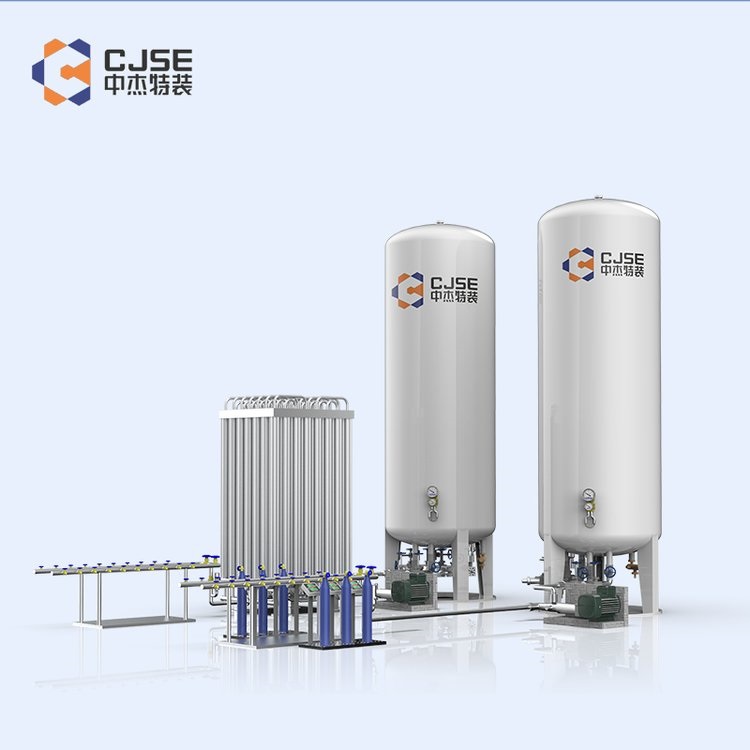
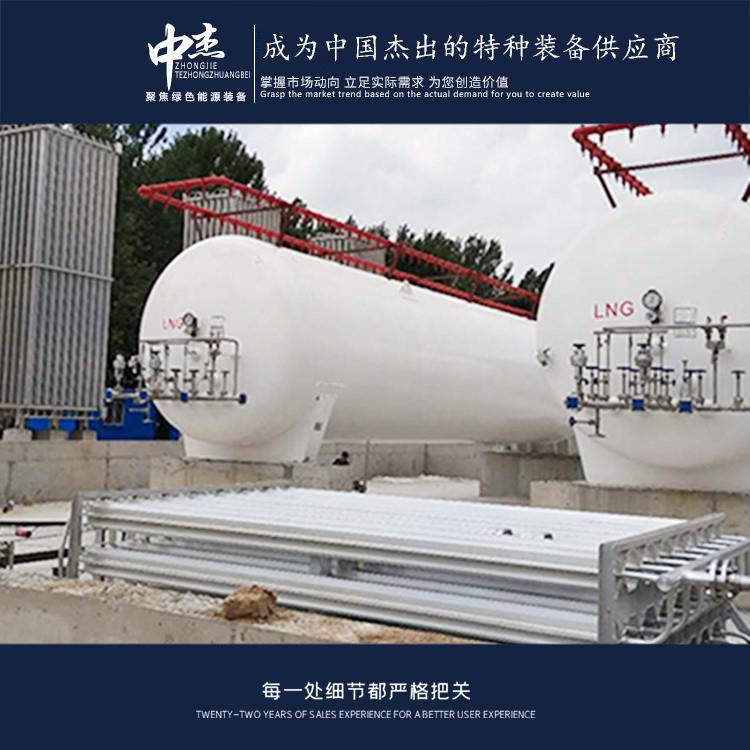

Shandong Zhongjie Special Equipment (formerly Heze Boiler Factory Co., Ltd.) was established in 2001, located at No. 2218 Jinnan Road, Development Zone, Heze City, with a registered capital of 50 million yuan and total assets of 500 million yuan. The company has 7 business centers: boilers, deep-freeze containers, pressure vessels, central air conditioning, engineering installation, international trade, and Internet of Things. It has three factory sites on Jinnan Road, East Changjiang Road, and Bohai Road, covering a total of 200,000 square meters, with the main workshop spanning 83,000 square meters. It currently employs 710 people, including 247 engineers and technicians, and 82 intermediate-level technicians. In December 2016, it was recognized as a "High-tech Enterprise" by the Science and Technology Department. In June 2021, it was identified as a "Specialized and New Enterprise in Shandong Province" by the Ministry of Industry and Information Technology. In June 2022, it was recognized as a "Gazelle Enterprise in Shandong Province" and in August 2022, it was identified as a "Specialized and New Small Giant Enterprise" by the Ministry of Industry and Information Technology.
When storing carbon dioxide tanks, the following requirements must be followed to ensure safety and effectiveness:
Ventilation: Tanks should be stored in well-ventilated areas to prevent the accumulation of carbon dioxide gas. Ensure there is sufficient air circulation around the tank to avoid gas buildup and asphyxiation risks.
Fire and Explosion Prevention: Keep tanks away from fire sources, high-temperature areas, and flammable materials. Avoid open flame operations near the tank to prevent fire and explosion risks.
Avoid Direct Sunlight: Store tanks in locations shielded from direct sunlight to prevent overheating and pressure increase. Direct sunlight can raise tank temperatures, increasing the risk of leaks and explosions.
Prevent Mechanical Damage: Keep tanks away from machinery and heavy objects to avoid collisions and damage. Mechanical damage can lead to tank leaks or ruptures, causing safety hazards.
Labeling and Warning Signs: Clearly label tanks with information such as the type of gas stored and pressure. Set up warning signs around the tanks to remind personnel of their presence and related safety precautions.
Regular Inspections: Conduct regular inspections of the tank's exterior, valves, and connections to ensure they are intact. Take prompt corrective actions if any abnormalities are found.
Storage Capacity Control: Control the storage capacity of the tank to prevent exceeding the rated capacity. Overfilling can lead to excessive tank pressure, increasing safety risks.
Storage Records: Keep records of the tank's usage, including filling dates, quantities, and inspection records. Regularly inspect and maintain the tank, and retain relevant records.
Note that specific storage requirements may vary depending on tank type and application. When storing carbon dioxide tanks, operate according to relevant regulations and standards, and consult with experts to ensure safety and effectiveness.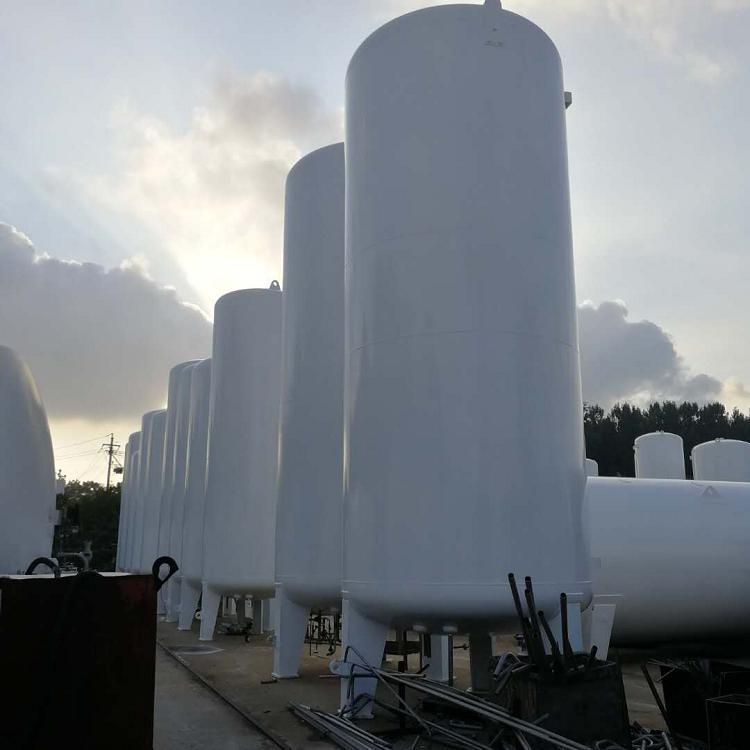
The reasons for not leaving a CO2 storage tank empty for long periods are mainly as follows:
1. Safety Risks: CO2 is a high-pressure gas that must be maintained at a certain pressure within the tank to remain in a liquid state. Releasing CO2 from the tank into the atmosphere over a long period can lead to a drop in internal pressure, potentially causing structural failure or explosions, posing safety risks.
2. Resource Waste: CO2 is a valuable resource with wide applications in industries and other sectors. Leaving a CO2 storage tank empty for long periods is a waste of resources and goes against the principles of sustainable development.
3. Environmental Impact: CO2 is a greenhouse gas, and releasing it into the atmosphere over a long period increases its concentration, exacerbating climate change and environmental issues.
Therefore, to ensure safety, conserve resources, and protect the environment, CO2 storage tanks should be used and managed in accordance with prescribed procedures and requirements, avoiding long-term idleness. When CO2 in the tank is no longer needed, appropriate disposal methods such as recycling, reuse, or safe discharge should be employed.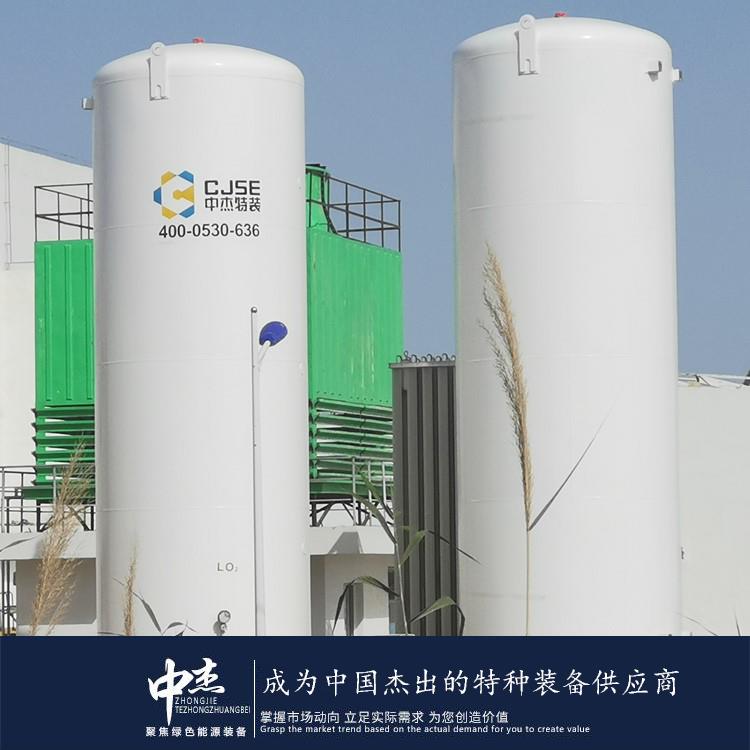
When spraying a carbon dioxide storage tank, the following issues should be taken into consideration:
- Surface Preparation: Prior to spraying, thorough preparation of the tank's surface is essential. This involves cleaning the surface, removing oils, dirt, and old coatings to ensure adhesion and quality of the spray.
- Paint Selection: Choosing the right paint for carbon dioxide storage tanks is crucial. The paint should be corrosion-resistant, heat-resistant, and chemically-resistant to protect the tank surface from corrosion and damage.
- Spraying Techniques: The choice and operation of spraying techniques are critical for the quality and uniformity of the coating. Appropriate spraying equipment and methods should be selected to ensure even coverage of the entire tank surface and to avoid drips and runs of the paint.
- Coating Thickness: The thickness of the coating is crucial for the protective effect of the tank. The thickness should be controlled according to the paint requirements and the tank's operating environment to ensure the protective performance and lifespan of the coating.
- Drying and Curing: After the coating is applied, sufficient time for drying and curing must be allowed. Follow the correct drying time and conditions as required by the paint to ensure the quality and performance of the coating.
- Safety Measures: Appropriate safety measures must be taken during the spraying process, including wearing protective goggles, respirators, and protective clothing to ensure the safety of the operators.
- Quality Inspection: After spraying, a quality inspection should be conducted, including the appearance, adhesion, and thickness of the coating. Any issues or defects should be addressed and repaired promptly.
It should be noted that spraying a carbon dioxide storage tank should be carried out by professionals.
Carbon dioxide recovery is a technology designed to capture carbon dioxide from industrial emission sources or the atmosphere and store or utilize it to reduce CO2 emissions. Here are some common carbon dioxide recovery techniques:
1. Coal-fired power plant CO2 recovery: In coal-fired power plants, the CO2 produced by burning coal can be captured and recovered. Common methods include carbon capture technologies, which separate CO2 from flue gas and store or utilize it.
2. Industrial emission source CO2 recovery: CO2 produced by many industrial processes can be treated through capture and recovery techniques. For instance, CO2 emitted during the production processes of industries like steel, cement, and chemicals can be recovered to reduce emissions.
3. Atmospheric CO2 capture: CO2 in the atmosphere can also be recovered using direct air capture technologies. This technology employs adsorbents or chemical reactions to capture and separate atmospheric CO2, then store or utilize it.
4. CO2 utilization: Captured CO2 can be used to produce valuable chemicals and fuels. For example, through CO2 catalytic conversion technology, CO2 can be converted into fuels like ethanol or other chemical raw materials.
The development of carbon dioxide recovery technologies aims to reduce greenhouse gas emissions and mitigate climate change. However, these technologies are still in development and research, requiring further technological breakthroughs and practical verification to achieve large-scale application.
Shandong Zhongjie Special Equipment, welcome customers to our factory for business talks.
Wuxi 80 cubic CO2 storage tank, various models available.
