


Shandong Zhongjie Special Equipment Co., Ltd. (formerly Heze Boiler Factory Co., Ltd.) was established in 2001, located at No. 2218 Jinnan Road, Development Zone, Heze City, with a registered capital of 50 million yuan and total assets of 500 million yuan. The company has 7 business centers: boilers, deep-freezing vessels, pressure vessels, central air conditioning, engineering installation, international trade, and Internet of Things. It has three manufacturing sites on Jinnan Road, East Changjiang Road, and Bohai Road, covering a total area of 200,000 square meters, with the main workshop spanning 83,000 square meters. Currently, there are 710 employees, including 247 engineers and technicians and 82 intermediate-level technicians. In December 2016, it was recognized as a "High-tech Enterprise" by the Science and Technology Department. In June 2021, it was identified as a "Specialized and New Enterprise in Shandong Province" by the Ministry of Industry and Information Technology. In June 2022, it was named a "Gazelle Enterprise in Shandong Province" and in August 2022, it was recognized as a "Specialized and New Small Giant Enterprise" by the Ministry of Industry and Information Technology.
Liquid Oxygen Storage Tanks feature the following safety technical characteristics:
High-pressure Vessel: Liquid Oxygen Storage Tanks are high-pressure vessels capable of withstanding high pressure. Their design and manufacturing must comply with relevant standards and regulations to ensure the tank's strength and sealing integrity.
Low-Temperature Storage: Liquid oxygen tanks are used for storing liquid oxygen, with operating temperatures typically around -183 degrees Celsius. The materials and insulation of the tank must be able to withstand low-temperature environments to prevent evaporation of the liquid oxygen and the penetration of external heat.
Fireproof Design: Liquid oxygen contains a high oxygen concentration, which is prone to cause fires. The design of liquid oxygen storage tanks must incorporate fire prevention measures, such as setting up firewalls and using fire-resistant coatings, to prevent the occurrence and spread of fires.
Leakage Control: Leaks in liquid oxygen tanks can lead to increased oxygen concentrations, heightening the risk of fires and explosions. Tanks must be equipped with leak detection and alarm systems to promptly identify and control leaks, and to implement appropriate emergency measures.
Static protection: The accumulation of static electricity in liquid oxygen tanks may cause sparks, increasing the risk of fire. Tanks must be equipped with static-conductive materials and anti-static devices to reduce the accumulation and release of static electricity.
Safety valves and pressure control: Liquid oxygen storage tanks must be equipped with safety valves and pressure control devices to ensure the internal pressure of the tank remains within a safe range. When the pressure exceeds the set value, the safety valve will automatically release pressure to protect the tank's safety.
Regular inspections and maintenance: Liquid oxygen tanks require regular inspections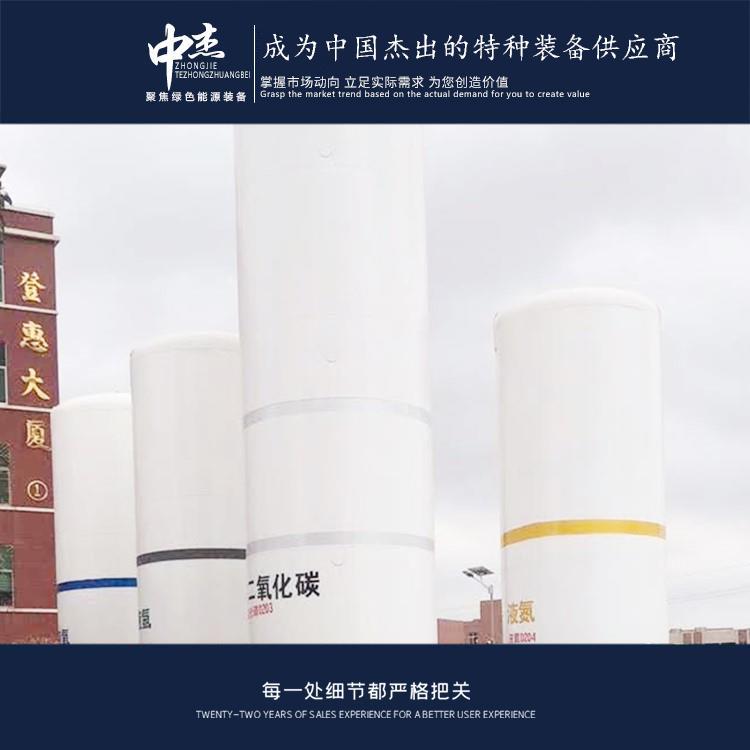
The methods for dealing with air leakage in liquid argon storage tanks primarily include the following steps:
Identified Air Leaks: Detected through odors, gas detection equipment, or abnormal pressure in liquid argon storage tanks, indicating air leaks in the liquid argon storage tank.
Confirm air leakage location: Use gas detection equipment or foam leak detection agents, etc., to pinpoint the exact location of air leakage. Inspect tank interfaces, valves, pipe connections, and other areas to locate the air leakage points.
Seal Air Leaks: Take appropriate measures to stop air leaks based on their location. For instance, for leaks at joints, inspect and adjust gaskets or tighten bolts; for valve leaks, check and replace seals.
Isolate Wind Leaks: During the process of dealing with wind leaks, it is necessary to isolate the leaky areas to ensure personnel safety. Set up warning signs, restrict access to the area, and take necessary protective measures, such as wearing protective masks, gloves, etc.
Emptying liquid argon: If a leak cannot be repaired immediately or the leak rate is significant, consider emptying the liquid argon. By gradually reducing the pressure of liquid argon in the storage tank, convert it into gas to minimize the risk of leakage.
Ventilation Treatment: During the air leakage treatment, ensure good ventilation and promptly exhaust the gases produced by the evaporation of liquid argon. Natural ventilation or the use of ventilation equipment can be employed to expel the evaporated gases of liquid argon outdoors.
Safety Assessment and Repairs: After the air leakage treatment is completed, conduct a safety assessment to ensure the tank's safety. Based on the assessment results, perform any necessary repairs and maintenance to prevent further air leakage.
Note that liquid argon is a low-temperature liquid with a low boiling and freezing point. Caution is required when dealing with air leaks to prevent contact with liquid argon, which can cause coldness. When handling air leaks in liquid argon storage tanks, the operation should be performed by personnel and in accordance with relevant safety operating procedures and standards.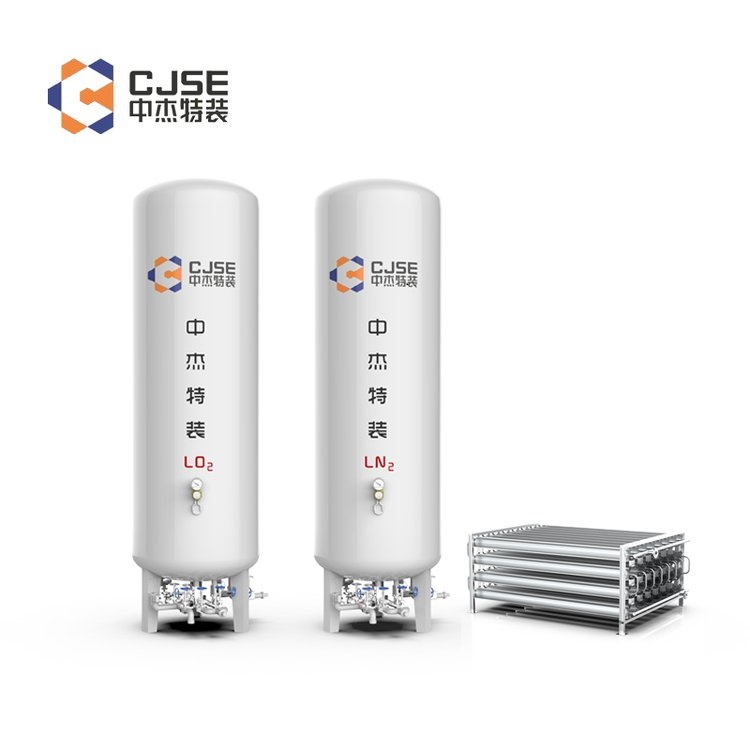
Liquid nitrogen tanks are equipment used for storing liquid nitrogen, widely applied in the following fields: Frozen Food and Cold Chain Logistics: Liquid nitrogen tanks are utilized in the frozen food and cold chain logistics industry to freeze or chill food and other perishable items, extending their shelf life and maintaining freshness. The low temperature of liquid nitrogen allows for rapid freezing of food, preventing bacterial growth and spoilage. Scientific Research and Laboratories: Liquid nitrogen tanks are used in scientific research and laboratories to provide liquid nitrogen as a coolant and freezing medium. The low temperature of liquid nitrogen is suitable for cooling laboratory equipment, material research, superconducting electronics, and low-temperature physics. Metalworking and Welding: In the field of metalworking and welding, liquid nitrogen tanks are used for cooling and controlling the temperature of metal. Liquid nitrogen can rapidly cool metal, enhance its hardness and strength, and reduce deformation and stress. Gas Storage and Supply: Liquid nitrogen tanks are also used for storing and supplying nitrogen gas. Liquid nitrogen can be converted into gaseous nitrogen through evaporation and used in applications such as gas shielded welding, gas fire suppression systems, gas analysis, and laboratory gas supply. In summary, liquid nitrogen tanks are extensively used in the fields of frozen food, laboratory research, metalworking, and gas supply, providing storage and supply functions for liquid nitrogen at application sites.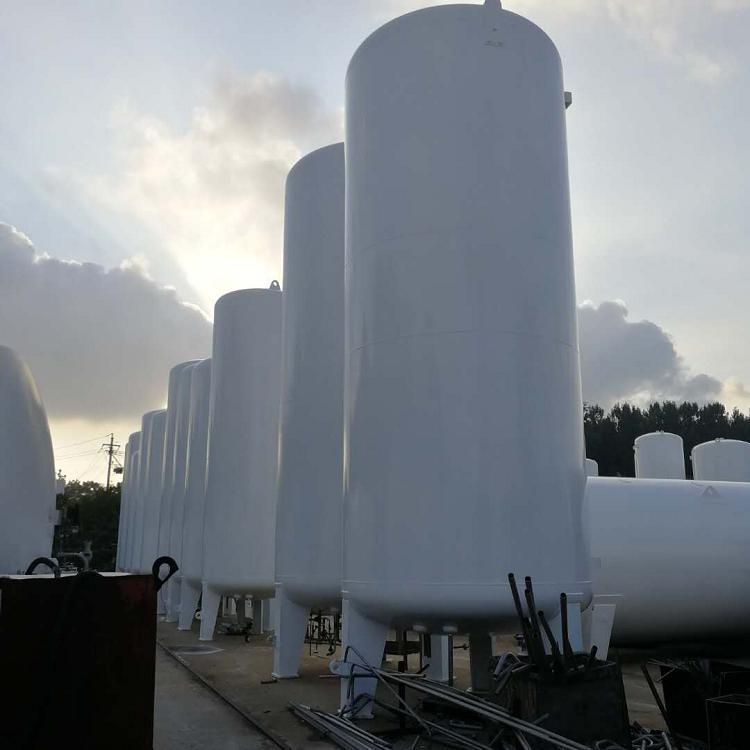
Standard parameters for liquid oxygen storage tanks typically include the following:
Capacity: The capacity of liquid oxygen tanks is typically expressed in liters or cubic meters, with common ranges varying from a few liters to several thousand liters.
Working Pressure: The working pressure of liquid oxygen tanks is typically expressed in megapascals (MPa) or bars (bar), with a common working pressure range varying from 0.2 MPa to 2.5 MPa.
Design Temperature: The design temperature for liquid oxygen tanks is typically expressed in degrees Celsius, with a common range varying from -196°C to -150°C.
Material: The main material for liquid oxygen storage tanks is typically stainless steel, which offers excellent corrosion resistance and low-temperature properties.
Insulation Layer: Liquid oxygen tanks are typically equipped with an insulation layer to minimize evaporation losses of liquid oxygen. The material for the insulation layer is usually a multi-layer composite material or foam glass.
Safety valve: Liquid oxygen storage tanks must be equipped with a safety valve to control internal pressure within the tank, preventing excessive pressure from causing the tank to burst.
Leak Detectors: Liquid oxygen tanks are typically equipped with leak detectors to promptly detect and alert of any liquid oxygen leaks.
Appearance Design: The appearance design of liquid oxygen storage tanks typically complies with relevant standards and regulations, including color, markings, and safety warning signs.
It's important to note that the specific parameters of liquid oxygen tanks may vary depending on the manufacturer and application requirements. The above information merely represents general, common standard parameters. In actual use, one should select the appropriate liquid oxygen tank based on the specific circumstances.
Shandong Zhongjie Special Equipment, welcome customers to visit our factory for business discussions.
Jingmen 5 cubic oxygen storage tank, in stock supply
