


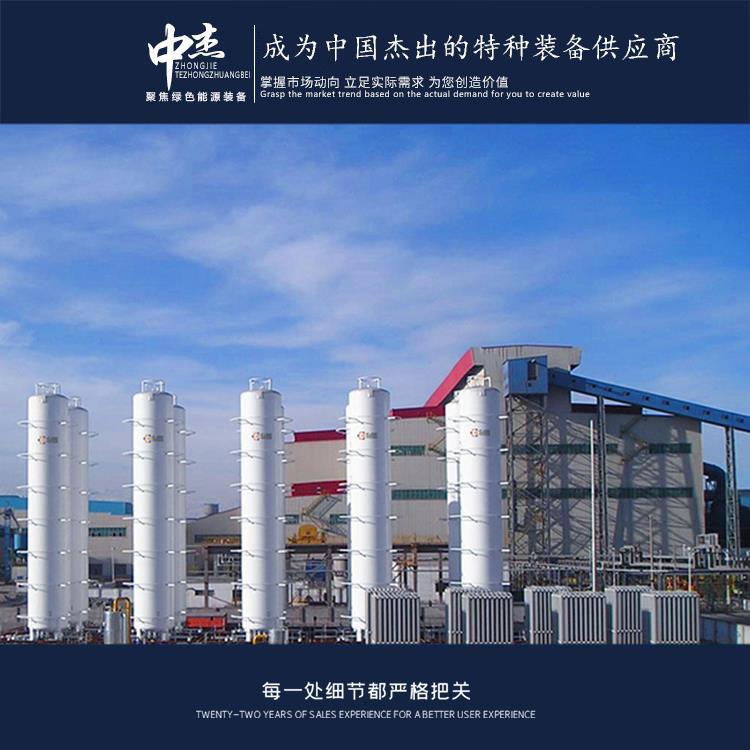
Shandong Zhongjie Special Equipment (formerly Heze Boiler Factory Co., Ltd.) was established in 2001, located at No. 2218 Jinnan Road, Development Zone, Heze City. With a registered capital of 50 million yuan and total assets of 500 million yuan, the company has 7 business centers: boilers, deep-freezing vessels, pressure vessels, central air conditioning, engineering installation, international trade, and the Internet of Things. It operates three factory sites on Jinnan Road, East Changjiang Road, and Bohai Road, covering a total of 200,000 square meters. The main workshop spans 83,000 square meters. It currently employs 710 staff, including 247 engineers and technicians and 82 intermediate-level technical personnel. In December 2016, it was recognized as a "High-Tech Enterprise" by the Science and Technology Department. In June 2021, it was named a "Specialized and New Enterprise in Shandong Province" by the Department of Industry and Information Technology. In June 2022, it was identified as a "Gazelle Enterprise in Shandong Province" and in August 2022, it was recognized as a "Specialized and New Small Giant Enterprise" by the Ministry of Industry and Information Technology.
Carbon dioxide synthesis is a chemical reaction that utilizes carbon dioxide to create compounds. This process has several applications:
- Fertilizer production: It is an essential raw material for manufacturing fertilizers, and carbon dioxide synthesis represents a sustainable production method. By reacting with carbon dioxide, it can synthesize compounds used in the production of nitrogen fertilizers, such as urea. This approach reduces reliance on fossil fuels used in traditional production methods and decreases greenhouse gas emissions.
- Energy storage: Carbon dioxide synthesis can also serve as a form of energy storage. By reacting carbon dioxide, energy can be stored in the form of chemical bonds. When energy is needed, the stored energy can be released by reversing the reaction into carbon dioxide and other compounds.
- Fuel cells: It can act as a clean fuel for fuel cells. By synthesizing carbon dioxide into compounds suitable for fuel cells, electricity can be generated, with only water and nitrogen as byproducts, reducing environmental pollution.
- Chemical synthesis: It is a vital raw material for the synthesis of many chemicals. Carbon dioxide synthesis can provide a sustainable supply for the chemical industry, used to synthesize other chemicals, such as etc.
The development of carbon dioxide synthesis technology aims to reduce dependence on fossil fuels used in traditional production methods, decrease greenhouse gas emissions, and promote the development of sustainable energy and the chemical industry. However, this technology is still in continuous development and research, requiring further technological breakthroughs and practical verification to achieve large-scale application.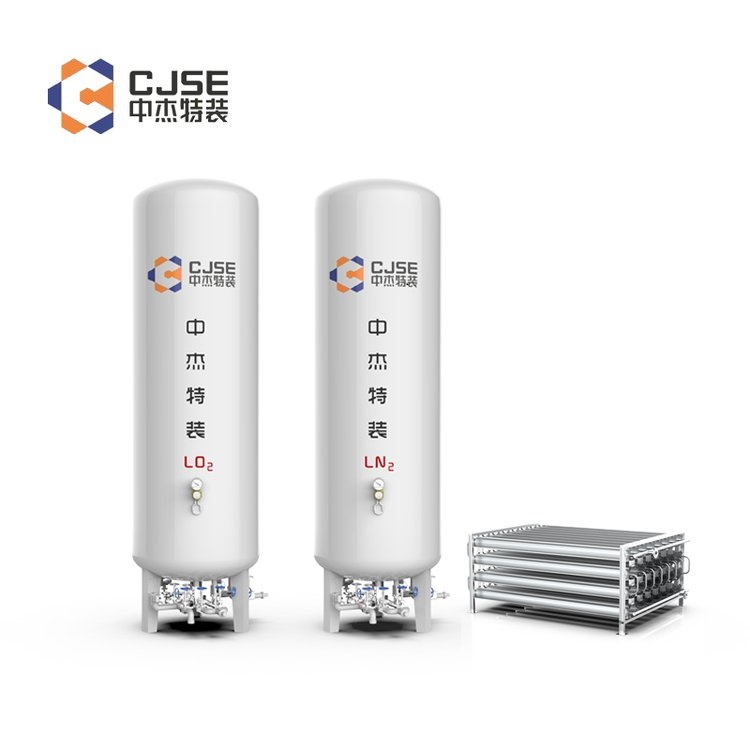
The safe operation of low-temperature carbon dioxide storage tanks is primarily key in the following aspects: Design and Manufacturing: The tank's design and construction must comply with relevant standards and regulations to ensure they can withstand working conditions under low temperatures and high pressures. The tank should have sufficient strength and sealing performance to prevent leaks and ruptures. Safety Valves and Pressure Control: The tank should be equipped with safety valves and pressure control devices to ensure internal pressure remains within safe limits. Safety valves should be regularly inspected and tested to ensure proper functioning. Temperature Control: Effective temperature control is necessary for low-temperature carbon dioxide storage tanks to prevent freezing or embrittlement due to excessively low temperatures. Appropriate insulation materials and equipment should be used to maintain the tank and pipeline temperatures within safe ranges. Leak Detection and Alarm: The tank should be fitted with leak detection devices and alarm systems, along with corresponding monitoring equipment. These devices can detect leaks promptly and trigger alarms to take appropriate actions. Safe Operation and Training: Operators should receive relevant training to understand the safe operation procedures and standards for low-temperature carbon dioxide storage tanks. Operators should be familiar with the tank's characteristics, operating principles, and emergency response measures. Regular Inspection and Maintenance: Tanks should be regularly inspected and maintained, including visual inspections, anti-corrosion coating maintenance, and leak detection. Regular inspections can identify potential issues early and allow for appropriate repair measures. Emergency Preparedness: Establish an emergency response plan and equip with appropriate fire-fighting and first-aid equipment. Operators should be familiar with emergency procedures and be able to respond quickly to emergencies. Please note that the above points are general recommendations. Specific safe operation should be based on the design and usage requirements of the low-temperature carbon dioxide storage tank. It is recommended to refer to relevant safety operation manuals and guidelines before using the tank to ensure operational safety.
Common protection techniques for carbon dioxide storage tanks include:
- Fire and Explosion Prevention Measures: A fire-resistant isolation zone should be established around the tank, keeping it away from fire sources and flammable materials. The tank itself should be equipped with fire and explosion prevention measures, such as fire-resistant coatings and explosion-proof devices, to prevent fires and explosions.
- Leak Detection and Alarm Systems: The tank should be equipped with leak detection and alarm systems to promptly detect and alert of any leakage. Regularly inspect and maintain the leak detection equipment to ensure proper functioning.
- Regular Inspections and Maintenance: Regularly check the tank's exterior, valves, fittings, etc., to ensure they are intact. Conduct regular leak detection and pressure tests to ensure the tank's safety performance meets requirements.
- Waste Gas Treatment: Treat the waste gases produced by the carbon dioxide storage tank to prevent environmental pollution. Implement appropriate waste gas treatment measures, such as collecting and treating the waste gases.
- Static Protection: Take static protection measures to avoid static buildup and discharge. Use anti-static equipment and tools to ensure static safety during operations.
- Safety Training and Awareness: Train operators on safety procedures to enhance their awareness and ability to safely handle carbon dioxide storage tanks. Conduct regular safety training and drills to prepare for emergencies.
- Management Records and Documentation: Establish comprehensive management records and documentation, including the tank's usage, inspection, and maintenance records. Regularly review and update management records to ensure proper safety and maintenance management.
Note that these are common protection techniques, and specific measures may vary depending on the type and application of the tank. When using carbon dioxide storage tanks, operate according to relevant regulations and standards and consult experts to ensure safety and effectiveness.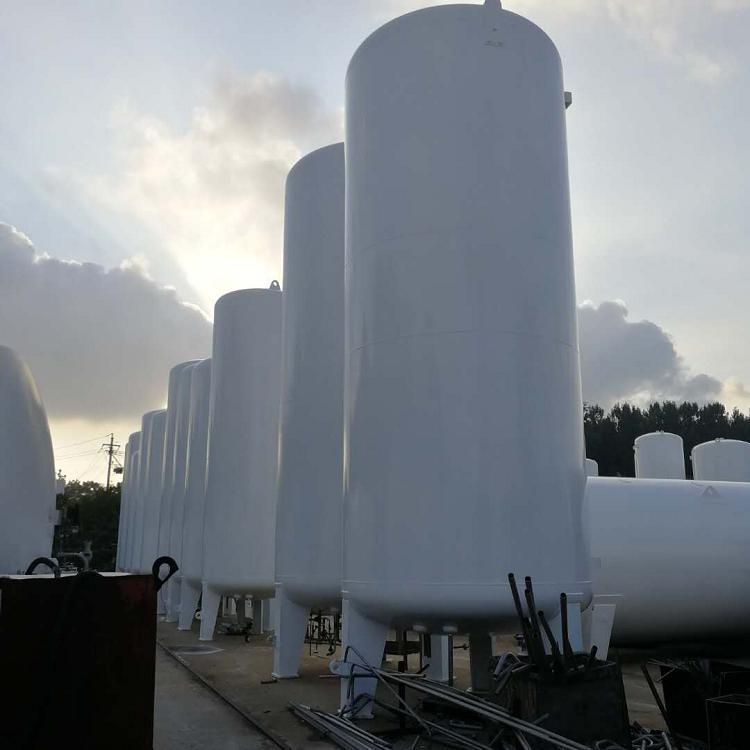
Low-temperature CO2 storage tanks are equipment used for storing and transporting low-temperature liquid CO2. Here are some facts related to low-temperature CO2 storage tanks: Tank Structure: These tanks typically have a double-walled design, with the inner wall for liquid CO2 storage and the outer wall for insulation. The interior is usually made of stainless steel or aluminum alloy, offering excellent corrosion resistance. Storage Temperature: The storage temperature of low-temperature CO2 tanks usually ranges from -40°C to -196°C, depending on specific application requirements. Temperature control is crucial for maintaining the stability and safety of the liquid CO2. Storage Capacity: The capacity of low-temperature CO2 storage tanks can be selected based on actual needs, typically ranging from a few thousand to tens of thousands of liters. Capacity selection should consider storage requirements, supply frequency, and space limitations. Safety Protection: These tanks require safety protection devices such as pressure relief valves, pressure sensors, and temperature sensors to ensure internal pressure and temperature are within safe limits. Transportation: Low-temperature CO2 storage tanks can be transported by road, rail, or ship. Proper insulation measures must be taken during transportation to maintain the low-temperature state of the liquid CO2 inside. Safe Operation: Operation of low-temperature CO2 storage tanks requires training and adherence to safety operation procedures. Operators should be familiar with the tank's characteristics and safety considerations to ensure safe and effective operation. Regular Inspection and Maintenance: Regular inspection and maintenance are necessary for low-temperature CO2 storage tanks, including visual inspections, valve and pipe checks, and pressure relief device checks. Regular maintenance ensures normal operation and safety. The above are some facts related to low-temperature CO2 storage tanks. When using and operating these tanks, follow relevant safety regulations and standards, and consult experts to ensure safety and effectiveness.
Shandong Zhongjie Special Equipment, welcome customers to our factory for business discussions.
Xiangyang 150 cubic CO2 storage tank, high cost-performance ratio
