


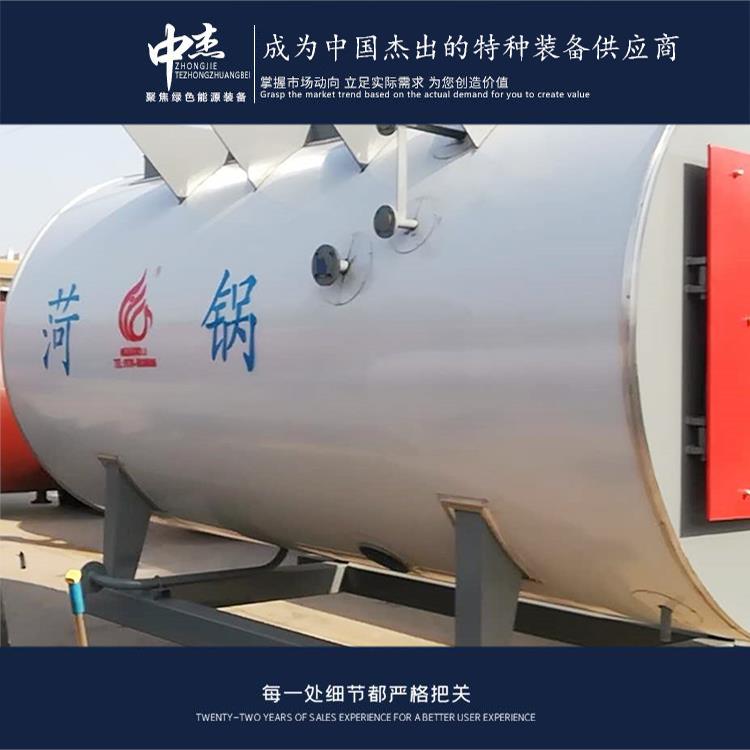
Shandong Zhongjie Special Equipment (formerly Heze Boiler Factory Co., Ltd.) holds an A-grade boiler manufacturing license, an A2-grade pressure vessel manufacturing license, an A2-grade pressure vessel design license, B-grade boiler installation, and GB2/Class, GC2/Class pressure pipeline installation licenses, as well as a mechanical and electrical equipment installation contracting qualification. It is a member of the China Boiler and Water Treatment Association, the China Chemical Equipment Association, and the理事 unit of the Shandong Equipment Manufacturing Association. The company has also passed certifications for the ISO9001 Quality Management System, ISO14001 Environmental Management System, OHSAS18001 Occupational Health and Safety Management System, and the American ASME/U2 certification.
In the burner of a thermal oil furnace, adjusting the air shutter under low flame conditions is crucial. Here are some common sense tips and注意事项: The function of the air shutter: The air shutter is a key component in the burner that controls the supply of combustion air. By adjusting the opening of the air shutter, the flow of combustion air can be controlled, thereby affecting the oxygen supply and combustion effect during the combustion process. Adjusting under low flame conditions: Under low flame conditions, the burner needs to maintain stable combustion to ensure combustion efficiency and heat output. In this case, it is necessary to adjust the opening of the air shutter appropriately to maintain an adequate supply of combustion air. Typically, the opening of the air shutter is relatively small during low flame conditions to maintain an appropriate oxygen supply and avoid incomplete combustion or instability. The ratio of combustion air to fuel: Under low flame conditions, it is necessary to ensure that the ratio of combustion air to fuel is appropriate. Excessive combustion air can lead to incomplete combustion and energy waste, while insufficient combustion air can cause instability in combustion and the production of harmful gases. By adjusting the opening of the air shutter, the ratio of combustion air to fuel can be controlled to achieve a stable combustion effect. Burner tuning and optimization: During the installation and tuning of the burner of a thermal oil furnace, appropriate tuning and optimization are required. Through actual operation and monitoring, adjust the opening of the air shutter and other parameters to achieve the best combustion effect and energy efficiency performance. This requires...
The management system for gas heat-conducting oil furnace equipment mainly includes the following aspects:
1. Equipment Safety Management System: Establish and improve the safety management system for gas heat-conducting oil furnace equipment, clarify responsibilities and authorities, and ensure the safe operation of the equipment. This includes safety operation procedures, emergency response plans, equipment inspection and maintenance schedules, etc.
2. Equipment Maintenance Management System: Establish an equipment maintenance management system, clarifying maintenance responsibilities and plans. This includes regular equipment inspections, maintenance, and repairs to ensure normal and safe operation of the equipment.
3. Equipment Operation Management System: Establish an equipment operation management system, clarifying operation procedures and requirements. This includes start-up, shutdown, adjustment, and monitoring processes to ensure equipment safety and operation.
4. Equipment Accident Management System: Establish an equipment accident management system, clarifying reporting, investigation, and handling procedures for accidents. This includes reporting requirements for equipment accidents, responsibility追究, analysis of causes, and improvement measures to reduce accidents and minimize losses.
5. Equipment Training and Assessment System: Establish a training and assessment system for equipment operators to ensure they possess the necessary skills and knowledge. This includes operation training, safety training, and technical training, along with regular assessments and evaluations of operators.
6. Equipment Inventory and Record Management System: Establish an equipment inventory and record management system, recording equipment operation, maintenance, and accident records. This includes inventory management, completion and preservation of maintenance records, and organization and analysis of accident records for equipment management and issue tracing.
The above are some basic contents of the management system for gas heat-conducting oil furnace equipment incidents. Specific management systems should be formulated and improved based on actual conditions. At the same time, relevant laws and regulations and standards must be followed to ensure the safety and environmental performance of the equipment.
Properly utilizing fuel-gas boilers can enhance energy efficiency and reduce consumption. Here are some suggestions:
1. Select the right boiler model: Choose a suitable fuel-gas boiler model based on actual needs, considering factors like heat load, fuel type, and combustion efficiency.
2. Regular inspection and maintenance: Conduct regular checks and maintenance to ensure the boiler operates smoothly. This includes cleaning burners, inspecting the combustion system, adjusting parameters, and promptly repairing or replacing damaged parts.
3. Control the combustion process: Manage the combustion process to ensure complete, stable, and efficient burning. Adjust parameters like air flow and fuel supply to improve efficiency and reduce waste.
4. Heat recovery: Utilize heat recovery systems to capture and reuse waste heat from flue gases, heating water or other processes, and boost energy efficiency.
5. Control operating parameters: Adjust boiler operating parameters like water level, pressure, and temperature based on actual needs and conditions, avoiding extremes to enhance efficiency and safety.
6. Regularly clean heat exchangers: Clean the heat exchangers of fuel-gas boilers regularly to remove dirt and deposits, maintaining heat transfer efficiency and reducing energy loss.
7. Energy management: Establish an energy management system, monitor and analyze consumption, and develop reasonable usage plans and energy-saving measures to improve efficiency and reduce consumption.
These are common methods and suggestions, but specific applications should be determined based on actual conditions and boiler characteristics. Also, adhere to relevant laws, regulations, and safety procedures to ensure safe operation of fuel-gas boilers.
In textile processing factories, common types of boilers include the following:
- Steam Boilers: Steam boilers are a commonly used type in textile processing factories. They produce high-temperature, high-pressure steam, used for thermal treatments, dyeing, boiling, and other processes in textile manufacturing. Steam boilers offer fast heating, high efficiency, and good stability.
- Hot Water Boilers: Suitable for low-temperature textile processing techniques like washing and drying, hot water boilers provide a stable supply of hot water. They are characterized by high temperature control accuracy and low energy consumption.
- Hot Air Boilers: Designed for drying processes in textile manufacturing, hot air boilers transfer heat to textiles through the hot air produced by combustion, achieving quick drying. They have the advantages of fast heating and high thermal efficiency.
When selecting the appropriate boiler type for a textile processing factory, consider the following factors:
- Processing Requirements: Determine the required heat medium (steam, hot water, hot air) and parameters such as working temperature and pressure based on the specific processing needs of the factory.
- Energy Costs and Efficiency: Consider the energy consumption and efficiency of different boiler types, choosing one that meets processing demands and has high energy utilization efficiency.
- Environmental Requirements: Pay attention to the emission standards and environmental performance of the boilers to select the appropriate type.
Our company highly values technological innovation and R&D design, boasting 1 municipal-level enterprise technology center in Heze City. We have established testing facilities for non-destructive testing, physical and chemical testing, welding testing, hydrostatic testing, etc., and are equipped with over 600 various instruments and equipment, including CNC machine tools, X-ray flaw detectors, digital ultrasonic flaw detectors, mechanical property testing machines, chemical analyzers, spectrometers, tensile testing machines, plasma welding machines, and more. The key products and technologies we have developed, such as temperature and pressure vessel welding, biomass boiler emission reduction, and waste heat utilization, have successively been selected for multiple Shandong Provincial Department of Industry and Information Technology innovation projects, Shandong Provincial key projects, and Heze City innovation and excellence projects. We have accumulated 27 authorized utility model patents, 16 authorized invention patents, participated in drafting 2 standards, 2 industry standards, and registered 15 trademarks. Our technical team, in collaboration with Professor Yajiang Li from Shandong University, has developed deep cryogenic vessel processing technology using the international plasma arc + filler wire tungsten inert gas arc welding (PAW-GTAW) technology. After provincial-level scientific and technological achievement evaluation, the technology level has reached international standards in the field of deep cryogenic vessel manufacturing.
Choose ZJET Customized Solutions, let's join hands to create brilliance!
Beijing 3-ton gas boiler
