


Shandong Zhongjie Special Equipment (formerly Heze Boiler Factory Co., Ltd.) holds an A-grade boiler manufacturing license, an A2-grade pressure vessel manufacturing license, an A2-grade pressure vessel design license, a B-grade boiler installation license, and GB2/Class, GC2/Class pressure pipeline installation licenses, as well as a mechanical and electrical equipment installation contracting qualification. It is a member of the China Boiler and Water Treatment Association, the China Chemical Equipment Association, and the director unit of the Shandong Equipment Manufacturing Association. The company has also passed the ISO9001 Quality Management System, ISO14001 Environmental Management System, OHSAS18001 Occupational Health and Safety Management System certifications, and the American ASME/U2 certification.
The use of liquid oxygen storage tanks requires particular attention to the following safety precautions:
Training: Operators of liquid oxygen tanks must undergo training to understand the properties of liquid oxygen, safety operating procedures, and emergency response measures. Only trained personnel are authorized to operate liquid oxygen tanks.
Safety Operating Procedures: Establish and adhere to the safety operating procedures for liquid oxygen storage tanks, including proper operational procedures, protective measures, and emergency response plans. Ensure operators follow the procedures to minimize accident risks.
Protection Measures: When using liquid oxygen tanks, necessary protective measures must be taken, such as wearing protective gloves and suits. Avoid direct contact with liquid oxygen to prevent coldness.
Leakage Control: Conduct regular inspections of liquid oxygen tanks for leakage and equip with leak detection and alarm systems. In case of a leak, take immediate measures to control the leakage and proceed with repairs.
Fire Prevention Measures: Liquid oxygen contains a high concentration of oxygen, which is prone to cause fires. Measures such as installing fire barriers around liquid oxygen storage tanks and using fire-resistant coatings are taken to prevent the occurrence and spread of fires.
Static protection: The accumulation of static electricity in liquid oxygen tanks may cause sparks, increasing the risk of fire. Measures such as using static-conductive materials and anti-static equipment should be taken to reduce the accumulation and release of static electricity.
Ventilation Requirements: Ensure adequate ventilation within the enclosed space of the liquid oxygen storage tank to expel vaporization from the liquid oxygen.
To prevent dangers associated with liquid oxygen tanks, the following preventive measures can be taken:
Safety Operations and Management: Establish and enforce stringent safety operations and management systems, including proper use of storage tanks, operational procedures, and safety training. Ensure operators possess the necessary safety awareness and skills, adhere to operational procedures, and minimize operational errors and the likelihood of accidents.
Regular inspections and maintenance: Conduct regular checks and maintenance on liquid oxygen tanks, including visual inspections, pressure tests, and leak detection. Promptly identify and address any tank issues to ensure safety and reliability.
Safety devices and protective equipment: Tanks should be equipped with necessary safety devices such as pressure relief valves, level alarms, and protective equipment like firewalls and explosion-proof devices. These devices and equipment can take timely measures in abnormal situations to ensure the safety of the tank.
Fire Prevention Measures: Liquid oxygen contains a high oxygen content and is highly flammable. Therefore, fire prevention measures such as fire walls and fire extinguishers should be set up around the storage tank to prevent the spread and expansion of fires.
Leakage Control and Emergency Response Plan: Establish a liquid oxygen tank leakage control and emergency response plan, including leakage control measures, emergency response procedures, and evacuation plans for personnel. In the event of a leakage incident, the plan allows for prompt action to control the leak and ensure personnel safety.
Training and Awareness Enhancement: Conduct regular safety training for personnel operating liquid oxygen tanks to enhance their safety awareness and emergency response capabilities. Strengthen safety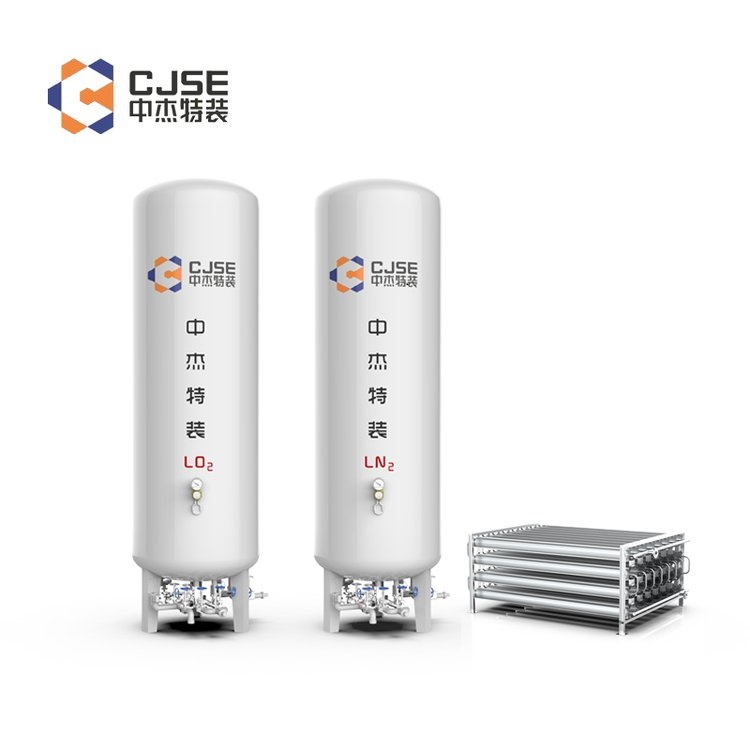
When selecting insulation materials for low-temperature liquid storage tanks, consider the following factors:
Thermal Conductivity: The lower the thermal conductivity of insulating materials, the better their insulation performance. Therefore, materials with lower thermal conductivity, such as polyethylene foam (EPS), polyester foam (PUR), and silicate fibers, should be chosen.
Density: The density of thermal insulation materials also affects their insulating performance. Generally speaking, the higher the density, the better the insulating performance. However, excessively high density may increase the weight and cost of the storage tank. Therefore, a balance needs to be struck between insulating performance and the requirements of the tank structure.
Corrosion Resistance: Due to the special working environment of low-temperature liquid storage tanks, the insulation material must have excellent corrosion resistance to withstand the erosion of low-temperature liquids. For instance, glass fiber and silicate fiber offer good corrosion resistance.
Reliability and durability: Insulation materials must possess excellent reliability and durability, maintaining their insulating properties over the long term. Choose verified and tested materials to ensure their quality and performance.
Construction convenience: The ease of installation and maintenance of the insulating material is also a factor to consider. Choosing materials that are easy to install and maintain can enhance construction efficiency and reduce costs.
Environmental Friendliness: Consider selecting environmentally friendly insulation materials, such as recyclable ones, to minimize environmental impact.
Considering these factors, select an appropriate insulation material to provide excellent thermal insulation and durability, ensuring the safety and efficient operation of low-temperature liquid storage tanks. When choosing insulation materials, it's advisable to consult with engineers or consulting agencies for more accurate advice and guidance.
Protection techniques for liquid nitrogen tanks include the following:
Wear protective gear: When operating liquid nitrogen tanks, it is mandatory to wear appropriate protective gear, including gloves, protective clothing, and non-slip shoes. This equipment protects the skin from the low temperature of liquid nitrogen and other hazards.
Avoid direct contact: Liquid nitrogen is extremely cold and can cause chilling. Hence, it is crucial to avoid direct contact with liquid nitrogen, especially with the skin. Use tools or equipment for handling, and prevent direct hand contact with liquid nitrogen.
Note ventilation: In the operational area of the liquid nitrogen tank, ensure adequate ventilation to expel gases produced by the evaporation of liquid nitrogen. Maintain air circulation to avoid excessive oxygen concentration, reducing the risk of fire and explosion.
Prevent Leaks: Regularly inspect liquid nitrogen tanks for leaks and equip with leak detectors and alarm systems. In case of a leak, take immediate action to control and repair it. Avoid hazards to personnel and the environment caused by liquid nitrogen leaks.
Fire Prevention Measures: Liquid nitrogen has a low boiling and freezing point, which makes it prone to causing fires. To prevent and contain fires, firewalls should be set up around liquid nitrogen storage tanks and fire-resistant coatings should be used.
Static Dissipation: The accumulation of static electricity in liquid nitrogen tanks can cause sparks, increasing the risk of fire. Measures such as using static-conductive materials and anti-static equipment are taken to reduce the accumulation and release of static electricity.
Regular inspections and maintenance: Conduct regular checks on the status of liquid nitrogen storage tanks and related equipment, including valves, pipelines, pressure gauges, etc. Ensure the equipment is intact and damage-free, and promptly repair or replace any damaged parts.
Waste Gas Treatment: Liquid nitrogen tanks produce waste gas during operation, and appropriate waste gas treatment measures must be taken.
Zhongjie Special Equipment upholds the grand vision of "realizing employees' dreams, creating value for customers, and striving for the prosperity and strength of our motherland," and is dedicated to the development of the green energy equipment industry. We commit to society with high-quality, cost-effective products and services!
Changji Low Temperature Liquid Oxygen Storage Tank – Over 20 Years of Experience for Added Reassurance
