


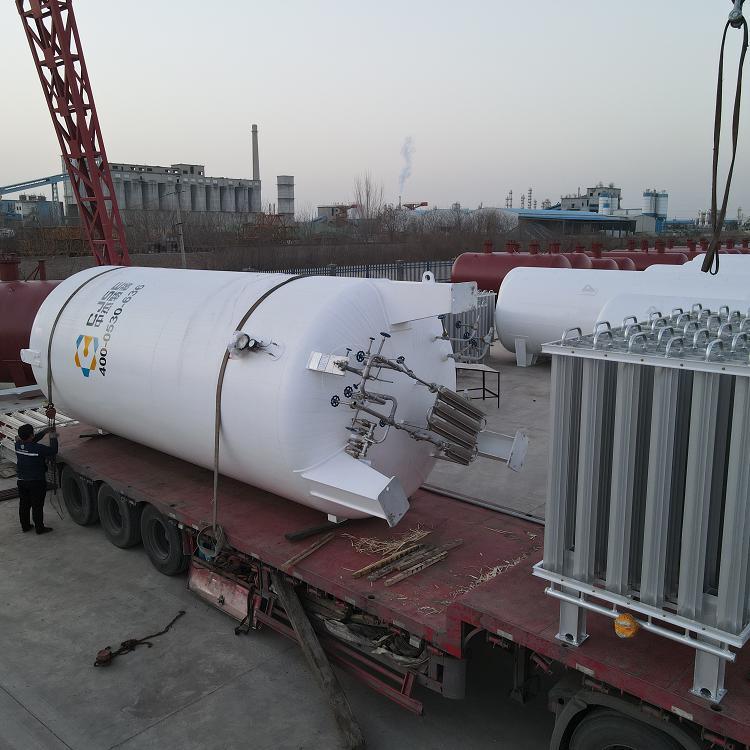

Shandong Zhongjie Special Equipment (formerly Heze Boiler Factory Co., Ltd.) holds an A-grade boiler manufacturing license, an A2-grade pressure vessel manufacturing license, an A2-grade pressure vessel design license, B-grade boiler installation and GB2, GC2 class pressure pipeline installation licenses, and a qualification for electromechanical equipment installation contracting. It is a member of the China Boiler and Water Treatment Association, the China Chemical Equipment Association, and a director unit of the Shandong Equipment Manufacturing Association. The company has also passed certifications for ISO9001 Quality Management System, ISO14001 Environmental Management System, OHSAS18001 Occupational Health and Safety Management System, and the U.S. ASME/U2 certification.
Liquid nitrogen cylinders are widely used in various industries, primarily in the following aspects:
Industry: Liquid nitrogen tanks are used in the field for storing and supplying liquid nitrogen, which is essential for low-temperature cryopreservation of biological samples, cells, tissues, and vaccines. They are widely applied in biopharmaceutical research institutions and biobanks, among other organizations.
Research Studies: Liquid nitrogen tanks are used to provide low-temperature environments in scientific research and laboratories, for purposes such as cryopreservation and cryogenic experiments. They play a significant role in experimental research across fields like physics, chemistry, biology, and materials science.
Metalworking Industry: Liquid nitrogen tanks are used in the metalworking and welding industries for low-temperature cooling, serving processes such as metal cutting, welding, and heat treatment. These tanks provide low temperatures to achieve the required hardness and toughness of metals during processing.
Food Industry: Liquid nitrogen tanks are used in the food industry for freezing and refrigeration of food items such as frozen meats, fruits, and seafood. The low temperature of liquid nitrogen can quickly freeze food, preserving its freshness and quality.
Semiconductor Industry: Liquid nitrogen tanks are used in semiconductor manufacturing and the electronics industry to provide low-temperature environments, for the freezing and preparation of semiconductor materials. The low temperature of liquid nitrogen can enhance the purity and performance of semiconductor materials.
The configuration of liquid nitrogen tanks typically includes the following aspects:
Vessel Structure: Liquid nitrogen vessels typically feature a double or multi-layered design, filled with insulating material in the middle to minimize heat transfer and evaporation of the liquid nitrogen. The material commonly used is stainless steel or aluminum alloy, offering excellent corrosion resistance and low-temperature performance.
Insulation Layer: The insulation layer of liquid nitrogen tanks commonly uses multi-layer insulation materials, such as polyethylene foam, glass fiber, and vacuum layers, to reduce heat transfer and evaporation of liquid nitrogen.
Temperature Control System: Liquid nitrogen tanks are typically equipped with a temperature control system to regulate the tank's temperature, ensuring the maintenance of the liquid's state.
When cleaning low-temperature liquid storage tanks, the following steps should be taken:
Safety Preparations: Prior to cleaning, ensure there are no remaining liquids or gases inside the tank, and that the tank has been emptied and vented. Wear appropriate personal protective equipment, such as protective suits, gloves, and safety shoes.
Cleaning Agent Selection: Choose a cleaner suitable for low-temperature environments and liquid storage tank materials. Common cleaners include acidic and alkaline solutions, organic solvents, or specialized cleaning agents. Select an appropriate cleaner based on the tank material and the nature of the contaminants.
Cleaning Process: Inject the cleaning agent into the tank and use appropriate tools (such as sprayers, brushes, or high-pressure water) to clean the interior walls of the tank. Multiple cleanings can be performed as needed to ensure contamination is removed.
Washing and Discharging: After cleaning, rinse with clean water or an appropriate solvent to remove all cleaning agents and residues. Ensure the tank is dry and discharge the rinse water into an appropriate treatment system.
Inspection and Verification: After cleaning, inspect the tank to ensure no residual contaminants remain inside. Appropriate detection equipment or methods, such as optical inspection, chemical analysis, or ultrasonic testing, can be used to verify the cleaning effectiveness.
Be mindful that when cleaning low-temperature liquid storage tanks, it's crucial to adhere to relevant safety regulations and operational guidelines. Liquid storage tanks typically possess high flammability and low-temperature characteristics, so operators must strictly follow safety procedures to ensure the safety of personnel and equipment. During the cleaning process, attention should be given to prevent leaks of cleaning agents and contaminants, and appropriate measures should be taken for their handling and disposal.
Maintaining and caring for liquid nitrogen tanks is crucial for ensuring their safe operation and extending their lifespan. Here are the maintenance and care methods for liquid nitrogen tanks:
Regular Inspections: Conduct regular inspections of the liquid nitrogen tank's exterior and interior, checking for leaks, corrosion, wear, or any other damage. Pay special attention to the tank's interfaces, valves, and piping to ensure they are functioning properly.
Cleaning and Defrosting: Regularly clean the external surface of the liquid nitrogen tank to remove dust and dirt. If there is ice or frost inside the tank, defrosting is required to maintain the normal operation of the tank.
Level Monitoring: Regularly monitor the liquid nitrogen tank's level to ensure the storage is within a safe range. If the level is abnormal, adjust or replenish the liquid nitrogen promptly.
Regular inspection and replacement of parts: Conduct regular inspections and replacements of critical components of liquid nitrogen storage tanks, such as safety valves, pressure sensors, and temperature sensors, to ensure their proper operation and accuracy.
Inspect the insulation layer: Regularly check the liquid nitrogen tank's insulation layer to ensure its integrity and insulating performance. If any damage or aging is found in the insulation layer, it should be repaired or replaced promptly.
Regular Calibration: Regularly calibrate the gauges and sensors of liquid nitrogen tanks to ensure accuracy and reliability. Calibration should be conducted according to relevant standards and specifications.
Safety Training and Operating Procedures: Conduct regular safety training for liquid nitrogen tanks to ensure operators are familiar with the safe operating procedures and emergency response measures.
It's important to note that maintenance of liquid nitrogen tanks should be conducted by trained and authorized personnel. Adhere to the relevant safety regulations and operational guidelines to ensure the safety and effectiveness of the maintenance work.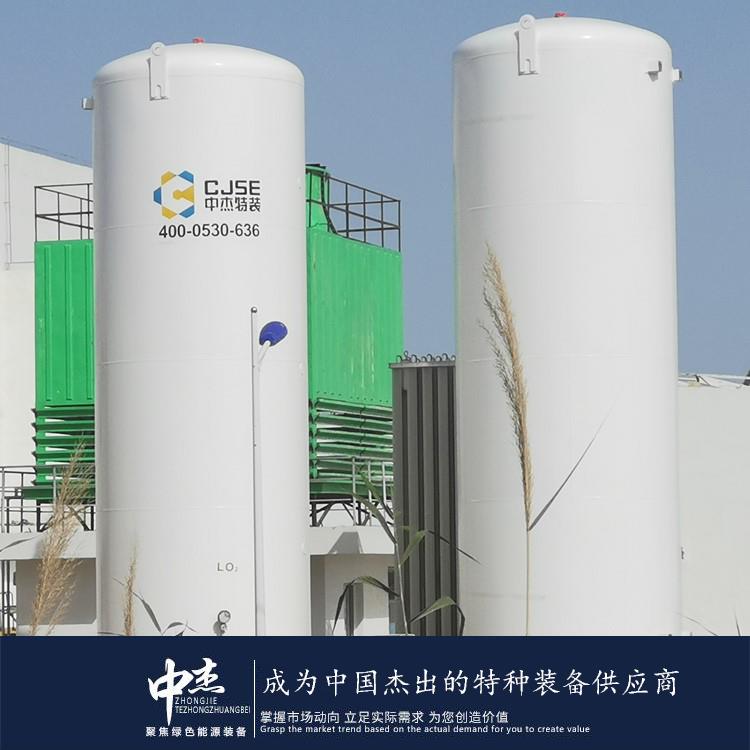
The normal pressure range for liquid oxygen tanks typically falls between 2-5 bar. This range refers to the oxygen pressure inside the tank, which is necessary to maintain the liquid oxygen in its liquid state. The design and manufacture of liquid oxygen tanks should comply with relevant standards and specifications to ensure the tank can safely withstand this pressure range under normal operating conditions. It should be noted that the pressure in liquid oxygen tanks can be affected by various factors, such as the temperature of the liquid oxygen, the tank's design, and materials. In actual use, the normal pressure range of the tank should be determined based on specific tank design and operational requirements, and operations and maintenance should adhere to relevant regulations and standards. Additionally, liquid oxygen tanks should be equipped with pressure control devices, such as pressure valves or relief devices, to ensure the internal pressure of the tank remains within a safe range. These devices can automatically release gas when pressure exceeds the set value, ensuring the safety of the tank. Regular inspections and maintenance of these pressure control devices should be conducted when using liquid oxygen tanks to ensure they function properly.
Shandong Zhongjie Special Equipment, welcome clients to visit our factory for cooperation negotiations.
Wenshan 5 cubic meter liquid nitrogen tank, manufacturer
