


Shandong Zhongjie Special Equipment's main products include: fuel (gas) boilers, organic heat carrier boilers, biomass boilers, waste heat recovery boilers, and other boiler products; vacuum insulation cryogenic pressure vessels such as LNG tanks, oxygen/nitrogen/argon tanks, and CO2 tanks; pressure vessel products like denitrification engineering equipment, heat storage and energy storage equipment, and complete chemical equipment sets; central air conditioning and HVAC equipment such as ground (water) source heat pumps, air source units, water-cooled screw units, and air-cooled modular units. Planned products include large-scale energy centers, LNG transport vehicles, LNG tank containers, and other green energy equipment.
Liquid Oxygen Storage Tanks are equipment used for storing and supplying liquid oxygen. Liquid oxygen is the state of oxygen cooled below its boiling point, converting it into a liquid. Liquid oxygen storage tanks are typically designed with double or multi-layer structures, filled with insulating material in between to minimize heat transfer and evaporation of the liquid oxygen.
Liquid Oxygen Storage Tanks Feature the Following Characteristics:
High Purity: The liquid oxygen tanks store high purity liquid oxygen, typically achieving a purity of over 99.5%. This makes the liquid oxygen tanks essential in applications requiring high purity oxygen, such as medical, industrial, and research fields.
Low Temperature: As the boiling point of liquid oxygen is -183°C, the liquid oxygen storage tank must have excellent insulation properties to maintain its low temperature. Tanks are typically designed with double or multi-layer structures, filled with insulating material in between to minimize heat transfer and evaporation of the liquid oxygen.
High Pressure: Liquid oxygen tanks typically need to withstand high pressure to maintain their liquid state. The design and material selection of the tank must consider the pressure requirements of liquid oxygen to ensure the tank's safety and reliability.
Flammability: Liquid oxygen is highly flammable and can support combustion. Consequently, during the design and use of liquid oxygen storage tanks, fire prevention measures must be implemented to ensure there are no ignition sources nearby, and appropriate fire extinguishing equipment is provided.
High Density: Liquid oxygen has a higher density, allowing liquid oxygen tanks to store more oxygen than gas oxygen. This gives liquid oxygen tanks an advantage in applications requiring large amounts of oxygen supply, such as in the field.
The use of liquid oxygen tanks must strictly adhere to relevant safety regulations and operating guidelines to ensure safe operation and usage of the tanks.
Liquid Argon Storage Tank is a device used for storing and transporting liquid argon, featuring the following characteristics:
Low-temperature Retention Performance: The liquid argon tank is equipped with special insulating materials and structural design, effectively maintaining the low-temperature state of liquid argon. The tank is internally insulated to minimize heat transfer and loss, ensuring long-term storage of liquid argon.
High-sealing performance: The liquid argon tank boasts excellent sealing properties, effectively preventing leakage and evaporation of liquid argon. The tank's valves, fittings, and seals, etc., are designed and manufactured with precision, ensuring reliable sealing performance.
High strength and corrosion resistance: The liquid argon tank is manufactured from high-strength materials, capable of withstanding the high pressure and low temperature of liquid argon. Both the internal and external surfaces of the tank are specially treated, offering excellent corrosion resistance to withstand the corrosion and oxidation of liquid argon.
Safety Performance: The liquid argon tank is equipped with multiple safety protection measures, including safety valves, pressure sensors, and level monitoring devices. These devices monitor and control the tank's pressure, temperature, and level, ensuring the tank operates within a safe range.
Reliability and Stability: The liquid argon storage tank has undergone rigorous design, manufacturing, and testing, offering excellent reliability and stability. The tank is capable of long-term stable storage and transportation of liquid argon, ensuring that the quality and performance of the liquid argon remain unaffected.
Easy to operate and maintain: The liquid argon tank is relatively simple to operate and maintain, equipped with valves and connectors that are easy to use. The maintenance work mainly includes regular inspections, cleaning, and repairs, which can extend the lifespan of the tank.
The performance features of liquid argon tanks make them an essential storage and transportation device for liquid argon, widely used in scientific research, industry, and other fields. When using liquid argon tanks, it is necessary to strictly comply with relevant operational specifications and safety requirements to ensure safe usage.
The inspection of liquid nitrogen storage tanks refers to regular checks and maintenance to ensure their safe operation and efficient use. Here is a common sense introduction to the inspection of liquid nitrogen storage tanks:
Visual Inspection: Regularly inspect the appearance of the tank, including the body, insulation layer, valves, and pipes, etc. Note any cracks, corrosion, wear, or other damage. Also, check if the insulation layer is intact, without any damage or detachment.
Level Inspection: Regularly check the liquid nitrogen tank's level to ensure it stays within the normal range. This can be done using a level gauge or level scale and other equipment.
Pressure Check: Inspect the tank's pressure to ensure it is within the safe range. Pressure gauges or pressure sensors can be used for the check.
Leakage Inspection: Check for signs of liquid nitrogen leakage around the tank, such as vapor mist, frost, or freezing. If leakage is detected, take immediate action to repair it.
Valve and pipeline inspection: Verify that the tank's valves and pipelines are functioning properly without any leakage or blockages. Ensure the tightness and unobstructed flow of the valves and pipelines.
Safety Device Inspection: Check the safety devices of the storage tank, such as pressure relief valves, temperature sensors, and level alarms, to ensure they are functioning properly.
Maintenance Records: Timely record the inspection results and maintenance records of the storage tank, including liquid levels, pressure, insulation status, leakage conditions, etc. These records help monitor the tank's operational condition and identify issues promptly.
Note that the inspection of liquid nitrogen tanks should adhere to relevant safety regulations and operational guidelines. Liquid nitrogen is highly flammable at low temperatures, so operators must wear appropriate personal protective equipment and ensure there are no ignition sources in the operating environment. Regular inspections can promptly identify issues and take corrective actions, ensuring the safe and effective operation of the tanks.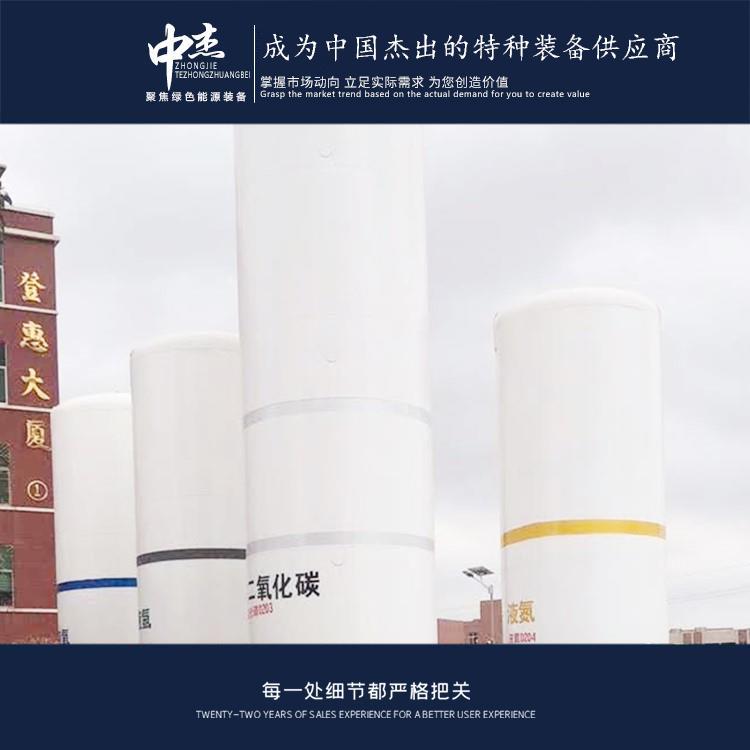
The liquid nitrogen tank boasts the following features during the construction process:
Low-Temperature Construction: The construction of liquid nitrogen tanks must be carried out in low-temperature conditions, as liquid nitrogen has a low boiling point of approximately -196 degrees Celsius. Construction personnel must take appropriate protective measures, such as wearing thermal protective clothing and gloves, to safeguard against low-temperature injuries.
Welding Technology: A substantial amount of welding is required during the manufacturing process of liquid nitrogen tanks, including the connections of tank walls, bottom plates, top plates, and welds. Welding technology is crucial for the quality and safety of the tanks, necessitating the use of appropriate welding methods and materials to ensure the strength and sealability of the welds.
Insulation Layer Construction: Liquid nitrogen tanks must have excellent insulation properties to reduce heat conduction and maintain the low temperature of liquid nitrogen. The construction of the insulation layer requires materials such as polyester foam and glass wool, ensuring the thickness and quality of the insulation layer.
Proper installation steps for a liquid nitrogen tank are as follows:
Site Preparation: Select a suitable location for tank installation, ensuring the site is level, sturdy, and capable of adequate load-bearing capacity. The site should be kept away from flammable, explosive materials, and other hazardous sources.
Basic Construction: Construction of the foundation is based on the tank's dimensions and weight, including excavation of the foundation pit and pouring concrete foundation. The design and construction of the foundation should comply with relevant standards and regulations.
Tank Installation: Transport the tank to the site and perform vertical installation. Appropriate lifting equipment and safety measures are required during the installation process to ensure stability and safety of the tank.
Pipe Connections: Connect the storage tank to the relevant pipeline system as required, including intake pipes, exhaust pipes, and liquid supply pipes, etc. Sealing and testing must be conducted during the connection process to ensure the safety of the pipes.
Our company attaches great importance to technological innovation and R&D design. We have one municipal-level enterprise technology center in Heze City, equipped with non-destructive testing, physical and chemical testing, welding testing, hydrostatic testing, and other testing facilities. We have over 600 various instruments and equipment, including CNC machine tools, X-ray flaw detectors, digital ultrasonic flaw detectors, mechanical property testing machines, chemical analyzers, spectrometers, tensile testing machines, plasma welding machines, etc. The key products we have developed, such as temperature and pressure vessel welding, biomass boiler emission reduction, and waste heat utilization, have successively been shortlisted for multiple Shandong Provincial Department of Industry and Information Technology science and technology innovation projects, Shandong Provincial key projects, and Heze City innovation and excellence projects. We have accumulated a total of 27 authorized utility models, 16 authorized inventions, participated in drafting 2 standards, 2 industry standards, and registered 15 trademarks. The technical team of our company, in collaboration with Professor Yajiang Li of Shandong University, has developed deep cryogenic container processing technology using the international plasma arc + filler wire tungsten inert gas arc welding (PAW-GTAW) technology. The provincial-level scientific and technological achievement identification has confirmed that the technology level has reached an international standard in the field of deep cryogenic container manufacturing. Choose Zhongjie Special Equipment, let's create brilliance together!
Nanning Liquid Argon Storage Tank - Available for Customization
