


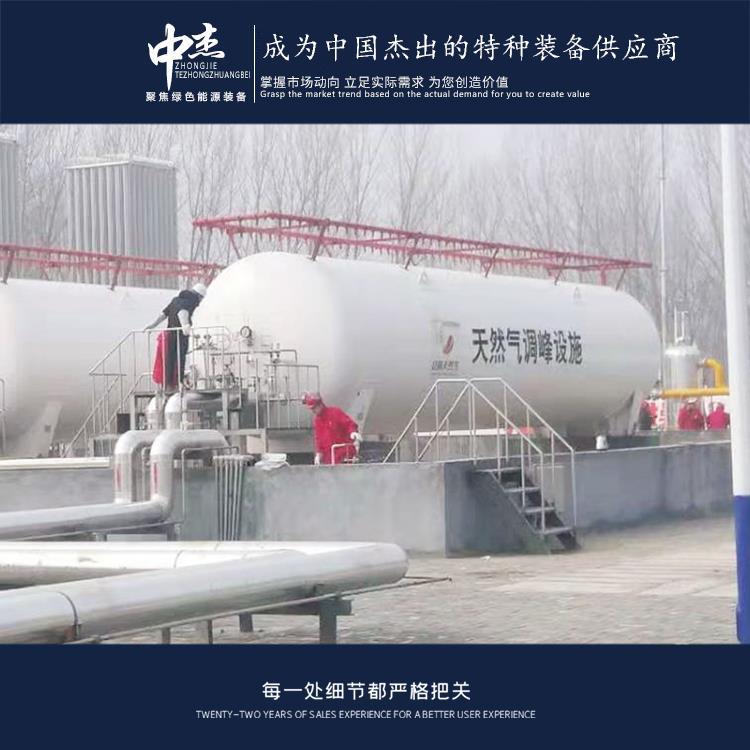
Shandong Zhongjie Special Equipment (formerly Heze Boiler Factory Co., Ltd.) was established in 2001, located at No. 2218 Jinnan Road, Economic and Technological Development Zone, Heze City. With a registered capital of 50 million yuan and total assets of 500 million yuan, the company has seven business centers: boilers, deep-freeze containers, pressure vessels, central air conditioning, engineering installation, international trade, and Internet of Things. It operates three factory sites on Jinnan Road, East Changjiang Road, and Bohai Road, covering a total area of 200,000 square meters, with the main workshop spanning 83,000 square meters. It currently employs 710 staff, including 247 engineering and technical personnel and 82 intermediate-level technicians. In December 2016, it was recognized as a "High-tech Enterprise" by the Science and Technology Department. In June 2021, it was identified as a "Specialized and New Enterprise in Shandong Province" by the Department of Industry and Information Technology. In June 2022, it was recognized as a "Gazelle Enterprise in Shandong Province" and in August 2022, as a "Specialized and New Small Giant Enterprise" by the Ministry of Industry and Information Technology.
The oxygen-filling process for liquid oxygen storage tanks must adhere to specific operational procedures and safety measures. Below are the steps for filling a liquid oxygen storage tank:
Preparation: Ensure the tank and oxygen-filling equipment are in good working condition, check the tank's sealing and the proper functioning of the safety valve.
Connect equipment: Link the oxygenation equipment to the storage tank, ensuring the connection is sealed reliably.
Prepare liquid oxygen: Transfer liquid oxygen from the storage container to the oxygen storage tank of the filling equipment. During the transfer, be cautious to avoid any leakage or contact with the liquid oxygen.
Oxygen Filling Operation: Open the valve of the oxygen filling equipment and fill liquid oxygen from the storage tank into the storage tank. During the filling process, control the filling speed and pressure to prevent excessive pressure and temperature rise in the tank.
Monitoring and Control: During the aeration process, it is necessary to monitor the tank's pressure and temperature to ensure they remain within safe limits. In case of any anomalies, oxygenation should be stopped immediately and appropriate measures taken.
Oxygen Filling Complete: Close the valve of the oxygen filling equipment and cease the oxygen filling operation once the tank reaches the required oxygen level or pressure.
Safety Handling: After the oxygenation is complete, safety handling is required, including closing relevant valves and emptying any remaining liquid oxygen from the oxygenation equipment.
Note that liquid oxygen is highly oxidizing and flammable; the oxygen-filling process must strictly adhere to relevant safety operation procedures and standards. Operators should receive training and strictly follow the operational procedures and safety measures to ensure the safety and reliability of the oxygen-filling process.
A liquid oxygen station is a facility for storing and supplying liquid oxygen, with the liquid oxygen storage tank being a crucial component of the station. The liquid oxygen storage tank has several important functions and characteristics:
Store Liquid Oxygen: Liquid oxygen tanks are primarily used for storing liquid oxygen, cooling gaseous oxygen below its critical temperature to convert it into a liquid state. The storage density of liquid oxygen is high, allowing for a large amount of oxygen to be stored in a relatively small space.
Maintain Low Temperature: Liquid oxygen tanks are typically double-walled, with a vacuum layer between the inner and outer walls to minimize heat transfer and maintain low temperatures. This helps keep the liquid oxygen at a低温, preventing premature vaporization.
Safety Design: Liquid oxygen tanks must be designed and manufactured with safety in mind. They are typically made from high-strength materials such as stainless steel or aluminum alloy to withstand high pressure and low-temperature conditions. Additionally, liquid oxygen tanks are equipped with safety valves, pressure sensors, and temperature sensors to ensure that the internal pressure and temperature of the tank remain within safe limits.
Supply System Connection: Liquid oxygen tanks are typically connected to the supply system to transport liquid oxygen to the required locations. The supply system includes liquid oxygen pumps, pipelines, and valves, etc., which are used to extract liquid oxygen from the tank and deliver it to the user's end.
Liquid oxygen tanks play a crucial role in storing and maintaining liquid oxygen at liquid oxygen stations. Their design and use must strictly adhere to relevant safety regulations and operational procedures to ensure the safety and reliability of the storage and supply process.
To ensure the quality of liquid oxygen storage tanks, the following measures can be taken:
选择可靠的供应商:选择有资质和经验的储罐制造商或供应商,确保其具备良好的声誉和可靠的质量管理体系。
Comply strictly with relevant standards and regulations: The design, manufacturing, and installation of liquid oxygen storage tanks should adhere to relevant standards and regulations, such as standards, industry standards, or.
Quality Control and Inspection: Rigorous quality control and inspection are conducted throughout the manufacturing process, including raw material inspections, process monitoring, and finished product testing. Ensure that the materials, welding, and sealing of the storage tanks meet the required standards.
Comprehensive Quality Management System: Establish and implement a comprehensive quality management system, including quality control plans, quality inspection records, and quality training, to ensure every stage meets quality standards.
Regular maintenance and inspection: Conduct regular maintenance and inspections on liquid oxygen storage tanks, including cleaning, coating protection, and anti-corrosion treatment, to extend the tank's service life and maintain its optimal operational condition.
Safe Operation and Management: Establish and implement a comprehensive system for safe operation and management, encompassing proper use of storage tanks, operational procedures, safety training, etc., to ensure the safety and reliability of tanks during use.
Regular inspections and evaluations: Conduct regular inspections and evaluations of liquid oxygen tanks, including visual inspections, pressure tests, and leak detection, as well as non-destructive testing and material analysis as required, to ensure the tank's quality and safety.
By implementing these measures, the quality of liquid oxygen tanks can be effectively ensured, enhancing their reliability and safety, and meeting usage requirements and standards.
The cooling process and precautions for liquid argon cylinders are as follows:
Cooling Process Analysis:
Clean the tank: Prior to cooling the liquid argon tank, ensure the interior is clean and free of impurities and contaminants. Use an appropriate cleaner for washing and rinse thoroughly.
Drain and vent: Empty the gas inside the tank and expel it through the exhaust system to reduce the gas content within the tank.
Add Liquid Nitrogen: Inject liquid nitrogen into the tank, which can rapidly cool the air and walls inside the tank, thereby lowering the tank's temperature.
Wait for cooling: Liquid nitrogen will gradually lower the temperature inside the tank through the process of heat conduction until it reaches the required low temperature.
Cautionary Notes:
Safety Protection: Necessary safety precautions must be taken during the cooling process of liquid argon tanks. Liquid argon has low temperatures and high flammability, so operators should wear protective suits, gloves, and other personal protective equipment to ensure safe operation.
Fire Prevention Measures: Liquid argon is highly flammable; therefore, during the cooling process of the liquid argon tank, it is essential to ensure there are no ignition sources in the surrounding environment and to have appropriate fire extinguishing equipment on hand.
Temperature Control: During the cooling process of the liquid argon tank, it is necessary to control the tank's temperature to avoid overcooling or insufficient cooling. Temperature sensors and a temperature control system can be used to monitor and control the tank's temperature.
Insulation and Heat Retention: Liquid argon tanks are typically constructed with double or multi-layered structures, filled with insulating material in the middle to reduce heat transfer and evaporation of liquid argon. Ensure the integrity and good insulation of the insulating layer.
Our company attaches great importance to technological innovation and R&D design. We have one municipal-level enterprise technology center in Heze City, equipped with testing facilities for non-destructive testing, physical and chemical testing, welding testing, hydrostatic testing, etc. We have over 600 types of equipment, including CNC machine tools, X-ray flaw detectors, digital ultrasonic flaw detectors, mechanical property testing machines, chemical analyzers, spectrometers, tensile testing machines, plasma welding machines, and more. The key products we have developed, such as temperature and pressure vessel welding, biomass boiler emission reduction, and waste heat utilization, have successively been selected for multiple Shandong Provincial Department of Industry and Information Technology science and technology innovation projects, Shandong Provincial key projects, and Heze City innovation and excellence projects. We have accumulated 27 authorized utility models, 16 authorized inventions, participated in drafting 2 standards, 2 industry standards, and registered 15 trademarks. Our technical team, in collaboration with Professor Yajiang Li of Shandong University, has developed deep cryogenic container processing technology using the international plasma arc + filler wire tungsten inert gas arc welding (PAW-GTAW) technology. This technology has been appraised as reaching international standards in the field of deep cryogenic container manufacturing at the provincial level. Choose Zhongjie Special Equipment, and let's create brilliance together!
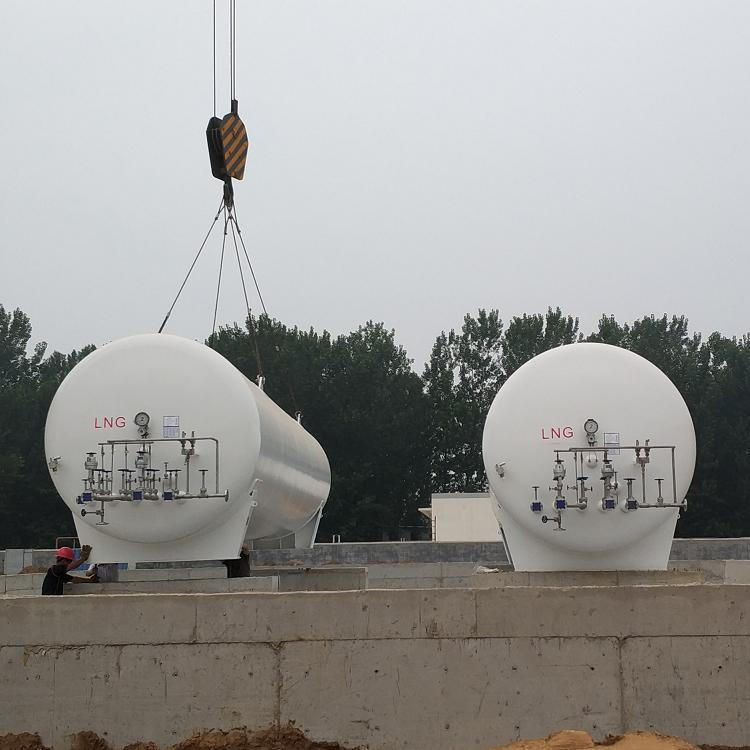
Hebi Oxygen Storage Tank, made of 304 stainless steel
