



Shandong Zhongjie Special Equipment (formerly Heze Boiler Factory Co., Ltd.) was established in 2001, located at No. 2218 Jinnan Road, Development Zone, Heze City, with a registered capital of 50 million yuan and total assets of 500 million yuan. The company has 7 business centers: boilers, deep-freeze containers, pressure vessels, central air conditioning, engineering installation, international trade, and Internet of Things. It has three factory sites on Jinnan Road, East Changjiang Road, and Bohai Road, covering a total of 200,000 square meters, with the main workshop spanning 83,000 square meters. It currently employs 710 people, including 247 engineers and technicians, and 82 intermediate-level technicians. In December 2016, it was recognized as a "High-tech Enterprise" by the Science and Technology Department. In June 2021, it was identified as a "Specialized and New Enterprise in Shandong Province" by the Ministry of Industry and Information Technology. In June 2022, it was recognized as a "Gazelle Enterprise in Shandong Province" and in August 2022, it was identified as a "Specialized and New Small Giant Enterprise" by the Ministry of Industry and Information Technology.
To make biomass boilers adaptable to the market, consider the following aspects:
Technological Innovation: Continuously innovating in technology, enhancing the combustion efficiency, heat recovery efficiency, and environmental performance of biomass boilers. For instance, the adopted combustion system, flue gas purification technology, and automatic control system improve the energy efficiency and operational convenience of the boiler.
Diverse Product Range: Develop a variety of biomass boiler products to meet market demands, catering to different user needs. Consider biomass boilers of various scales, fuel adaptability, and application scenarios to offer a wider selection.
Reduced: By technological improvements and production optimization, we have lowered the manufacturing costs of biomass boilers, making them more competitive. Additionally, we have optimized the fuel supply chain and transportation methods, reducing fuel costs and enhancing market competitiveness.
Establish a comprehensive after-sales service system: Offer timely after-sales support, including installation and debugging, maintenance, and troubleshooting, to enhance users' trust and satisfaction in biomass boilers.
Enhance market promotion and publicity: Strengthen the promotion and advertising of biomass boilers through means such as advertising, exhibitions, and technical training, to increase users' awareness and understanding of biomass boilers.
Policy Support: Actively seek government policy support to promote and encourage the application of biomass boilers, boosting market demand.
In summary, through measures such as technological innovation, product diversification, cost reduction, enhanced after-sales service, market promotion, and policy support, biomass boilers can adapt to the market, meet customer needs, and promote the sustainable development of biomass energy.
The application of biomass boilers holds significant importance for energy conservation and emission reduction:
Reducing Carbon Emissions: Fuel for biomass boilers comes from organic matter such as plants, animals, and microorganisms. The carbon dioxide released during combustion can be absorbed by plants, creating a cycle. Compared to traditional fossil fuels, biomass fuel emits less carbon, effectively reducing greenhouse gas emissions and is crucial in combating climate change.
Reduce Energy Consumption: Biomass boilers, equipped with combustion technology and a heat recovery system, enhance energy utilization efficiency and minimize waste. By conserving energy, energy costs can be reduced and the benefits of energy use can be improved.
Reduce dependence on fossil fuels: Biomass, as a domestic renewable energy source, can decrease reliance on imported fossil fuels and enhance energy security. In regions with limited resources, the use of biomass boilers can provide a reliable energy supply and reduce dependence on external energy sources.
Promoting Agriculture and Forestry Development: Fuel for biomass boilers primarily comes from agricultural by-products like straw and wood, fostering sustainable development in agriculture and forestry. By effectively utilizing agricultural and forestry waste, resource wastage can be reduced and the comprehensive benefits of the agriculture and forestry industry can be enhanced.
Promote Environmental Protection: Biomass boilers emit relatively less exhaust and ash during combustion, resulting in less environmental impact. Moreover, the use of biomass boilers helps reduce the exploitation and destruction of natural resources, safeguarding the ecological environment.
In summary, utilizing biomass boilers is of great significance for energy conservation and emission reduction.
slagging in biomass boiler furnace is caused by the accumulation of ash and other impurities generated during the combustion process of biomass fuel, forming deposits within the furnace. The following are some operating factors that influence slagging in biomass boiler furnaces:
Fuel Characteristics: Different types of biomass fuel have varying ash content, ashing temperature, and ashing properties. Fuel with high ash content tends to produce a large amount of ash residue, while fuel with a lower ashing temperature is prone to slagging inside the furnace.
Combustion Temperature: Combustion temperature is a significant factor affecting slagging in biomass boiler furnace. Excessively low combustion temperatures can lead to incomplete fuel combustion and insufficient melting of ash, increasing the likelihood of slagging.
Air Supply: Excessive air supply can lower combustion temperature, increase the fuel's residence time in the furnace, and raise the risk of slagging. At the same time, insufficient air supply can also lead to incomplete fuel combustion, increasing the generation of ash and slag.
Furnace Chamber Design: The design of the furnace chamber significantly impacts the airflow distribution and temperature distribution within. A well-designed furnace chamber promotes complete combustion of fuel and the expulsion of ash, reducing the likelihood of slagging.
Dust Removal System: The performance and operation of the dust removal system also affect the slagging condition inside the furnace. Regularly clean the ash and dust inside the furnace to maintain good ventilation.
To prevent and mitigate corrosion issues in biomass boilers, the following methods can be adopted:
Regular cleaning and maintenance: Regularly clean the accumulated dust and dirt inside the boiler to keep it clean. During the cleaning process, use appropriate cleaning agents and tools to remove internal dirt from the boiler, preventing corrosion from occurring.
Controlling Water Quality: The quality of water in biomass boilers significantly affects corrosion. It is essential to regularly test and adjust the chemical composition of the boiler water to maintain appropriate levels of pH, hardness, and oxygen content. Water treatment equipment, such as water softeners and deaerators, can be used to improve water quality.
Prevent Oxygen Corrosion: Oxygen corrosion is one of the common corrosion forms in biomass boilers. It can be reduced by installing a deaerator in the boiler's feedwater pipes to remove oxygen from the water. Additionally, corrosion inhibitors and other chemical measures can be used to prevent oxygen corrosion.
Control the combustion process: High temperatures during combustion and acidic substances in the flue gas can also cause corrosion. To control the combustion process, ensure that the combustion temperature and acidic substances in the flue gas are within the appropriate range. The combustion process can be controlled by adjusting the combustion air volume, fuel supply quantity, and fuel distribution.
To prevent localized corrosion: Some parts of the boiler, such as the furnace and flue, are prone to corrosion. These areas can be reinforced or coated with corrosion-resistant materials to extend their service life.
Regular inspections and maintenance: Regularly inspect and maintain biomass boilers to promptly identify and address corrosion issues. Delegate maintenance personnel to conduct regular inspections and maintenance work.
Shandong Zhongjie Special Equipment, welcome customers to visit our factory for business discussions.
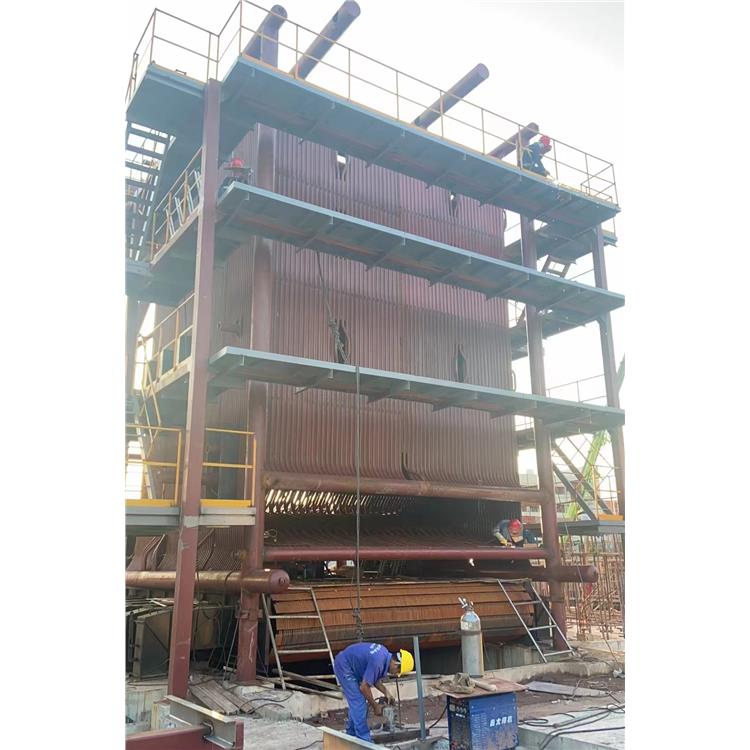
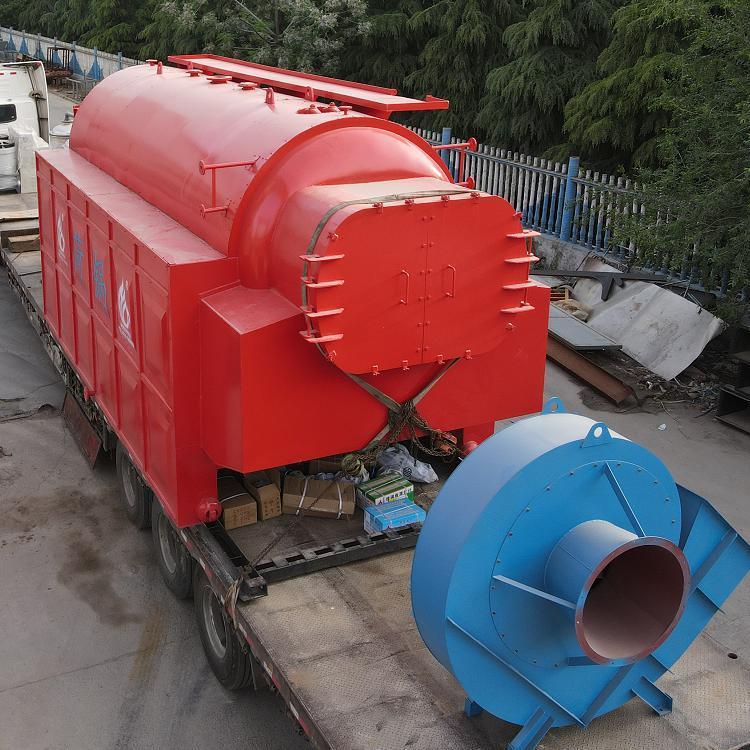
Tianming 35-ton biomass boiler, available for customization
