


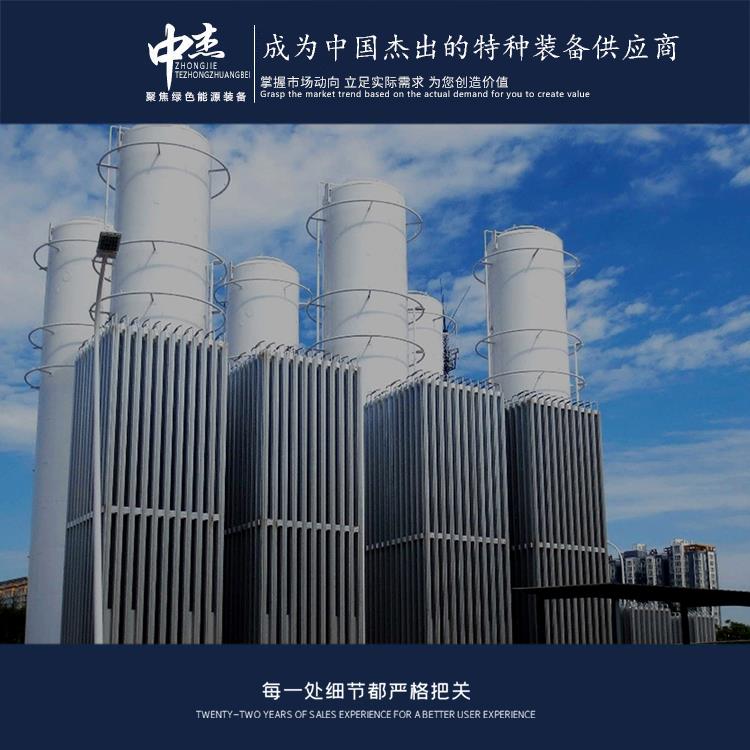
Shandong Zhongjie Special Equipment (formerly Heze Boiler Factory Co., Ltd.) was established in 2001, located at No. 2218 Jinnan Road, Development Zone, Heze City, with a registered capital of 50 million yuan and total assets of 500 million yuan. The company has 7 business centers: boiler, deep-freeze container, pressure vessel, central air conditioning, engineering installation, international trade, and Internet of Things. It has three factory sites on Jinnan Road, East Changjiang Road, and Bohai Road, covering a total of 200,000 square meters, with the main workshop area being 83,000 square meters. It currently employs 710 people, including 247 engineers and technicians, and 82 intermediate-level technicians. In December 2016, it was recognized as a "High-Tech Enterprise" by the Science and Technology Department. In June 2021, it was identified as a "Specialized and New Enterprise in Shandong Province" by the Department of Industry and Information Technology. In June 2022, it was recognized as a "Gazelle Enterprise in Shandong Province" and in August 2022, as a "Specialized and New Small Giant Enterprise" by the Ministry of Industry and Information Technology.
The safety distance between liquid oxygen storage tanks and structures is typically specified by relevant safety standards and regulations to ensure a safe distance and fire separation between the tank and the structure. The following is a reference for the general safety distance between liquid oxygen storage tanks and structures:
Horizontal Clearance: The horizontal distance between the liquid oxygen storage tank and the structure is typically required to maintain a certain distance to prevent danger to the structure in case of tank leakage or accidents. The specific clearance distance should be determined based on factors such as the tank's capacity, pressure, and the nature of the structure, with a general recommendation to maintain a safe distance.
Vertical Clearance: The vertical clearance between the liquid oxygen tank and the structure must also meet relevant safety requirements. This is to prevent the tank from posing a danger to the structure in the event of a leak or accident. Specific clearance requirements will be determined based on factors such as the tank's capacity, pressure, and the height of the structure, generally recommending maintaining a certain safety distance.
Fire Separation: Liquid oxygen has a high oxygen content and flammability. In the event of a leak or accident, it may cause a fire. Therefore, a certain fire separation distance must be maintained between liquid oxygen storage tanks and buildings to ensure that the fire does not spread or pose a danger to the buildings. Specific fire separation requirements
Proper placement of liquid oxygen tanks is a crucial measure to ensure they do not pose a danger to the surrounding environment and personnel during use. The following are the safety requirements for the placement of liquid oxygen tanks:
Safety Distance: Liquid oxygen tanks should maintain a certain distance from other buildings and equipment. This is to ensure effective control and minimize the impact on the surrounding environment in the event of a tank leak or fire.
Fire and Explosion Prevention Measures: Liquid oxygen tanks should be placed in a fire-resistant area, away from open flames, high-temperature sources, and flammable materials. The surrounding area should be equipped with fire and explosion prevention facilities, such as fire extinguishers and foam sprinkler systems, to address potential fire risks.
The liquid oxygen tank should be placed on a solid, flat foundation to ensure stability. The bottom of the tank should make full contact with the ground to avoid tilting or shaking.
Ventilation Requirements: Liquid oxygen tanks should be placed in a well-ventilated area to ensure normal circulation of gas emissions and oxygen supply. There should be no obstructions around the tank that could impede gas flow.
Identification and Warnings: The liquid oxygen tank should be clearly labeled with information such as the storage medium, capacity, and pressure. Warning signs and safety alerts should be placed in the surrounding area to remind personnel of the presence and potential hazards of the liquid oxygen tank.
Regular Inspections and Maintenance: Liquid oxygen tanks should be regularly inspected and maintained, including checking the tank's appearance, sealing, and corrosion prevention measures. Any issues found should be addressed promptly by repairing or replacing the tank to ensure proper operation and safety.
It's important to note that the safety requirements for the placement of liquid oxygen tanks may vary depending on different regions and industries. When placing liquid oxygen tanks, you should comply with relevant regulations, standards, and safety procedures, and formulate suitable safety measures based on the actual situation. If you are unfamiliar with or have doubts about the safety placement requirements, it is recommended to consult with experts or relevant institutions.
The liquid nitrogen tank boasts the following features during the construction process:
Low Temperature Construction: The construction of liquid nitrogen tanks must be carried out in low-temperature environments due to the low boiling point of liquid nitrogen, approximately -196 degrees Celsius. Construction personnel must take appropriate protective measures, such as wearing insulated clothing and gloves, to protect themselves from低温 injuries.
Welding Technology: Extensive welding is required during the manufacturing process of liquid nitrogen tanks, including the connections of tank walls, bottom plates, top plates, and welds. Welding technology is crucial for the quality and safety of the tanks, necessitating the use of appropriate welding methods and materials to ensure the strength and sealability of the welds.
Insulation Layer Installation: Liquid nitrogen tanks must have excellent insulation properties to minimize heat conduction and retain low temperatures. The installation of the insulation layer requires materials such as polyester foam and glass wool, ensuring the thickness and quality of the insulation.
Proper installation steps for liquid nitrogen tanks are as follows:
Site Preparation: Select an appropriate site for tank installation, ensuring it is level, sturdy, and has adequate load-bearing capacity. The site should be located away from flammable, explosive materials, and other hazards.
Foundation Construction: Construction of the foundation based on the tank's dimensions and weight, including excavation of the foundation pit and pouring concrete. The design and construction of the foundation should comply with relevant standards and specifications.
Tank Installation: Transport the tank to the site and perform a vertical installation. Appropriate lifting equipment and safety measures must be used during the installation process to ensure the stability and safety of the tank.
Pipe Connections: As required, connect the tank to the related pipeline system, including intake pipes, exhaust pipes, and liquid supply pipes. Sealing and testing must be conducted during the connection process to ensure pipeline safety.
Tanks are specialized storage equipment that requires regular inspections and maintenance to ensure safe operation. Here are common inspection methods for tanks:
Appearance Inspection: Regularly inspect the tank's exterior for leaks, corrosion, deformation, cracks, and other issues. Pay special attention to the integrity of the tank's joints, welds, and valves.
Pressure Test: Conduct pressure tests to assess the tank's sealing performance and pressure resistance. Use a pressure gauge or pressure sensor to perform pressure tests on the tank to ensure it can withstand the designed pressure.
Ultrasonic Testing: Ultrasonic testing is used to detect corrosion, cracks, and other issues in tank walls. By scanning the tank with an ultrasonic detection instrument, potential defects and problems can be identified.
Magnetic Particle Inspection: Magnetic particle inspection is used to detect cracks and weld quality in tank walls. By applying magnetic particles to the tank surface and then using a magnetic particle inspection device to observe for particle accumulation, it can be determined if there are any cracks or weld issues.
Environmental Monitoring: Regularly conduct environmental monitoring around storage tanks, including parameters such as gas concentration and temperature, to ensure the safety of the surrounding environment.
Note that tank inspections should be conducted by a certified inspection agency or qualified inspectors. The frequency and methods of inspection should be determined based on the tank's usage, size, and relevant regulatory requirements. Regular inspections and maintenance can help identify potential issues early on, ensuring the safe operation of the tank.
Shandong Zhongjie Special Equipment, welcome customers to our factory for business talks.
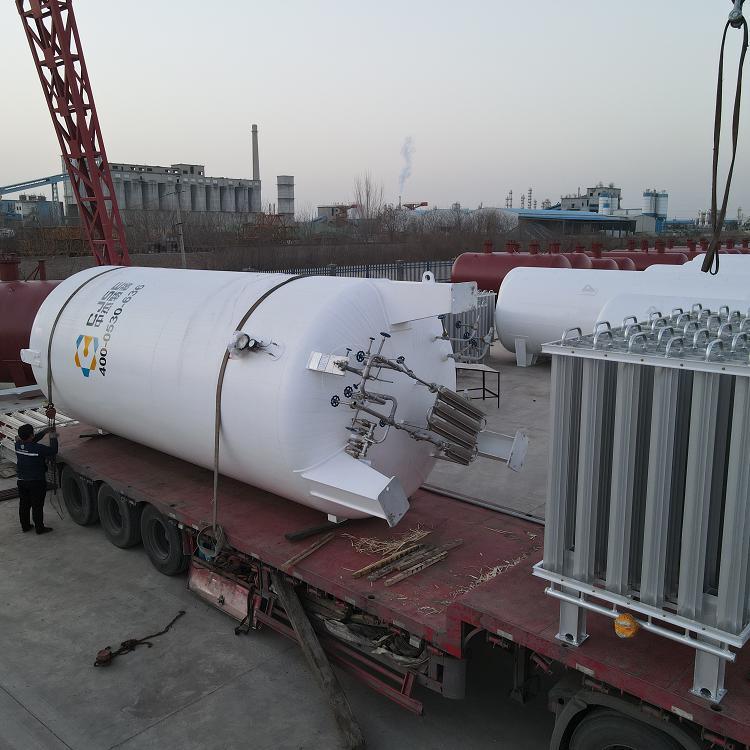
Ganzhou 5 cubic meter liquid argon storage tank, on-site installation
