



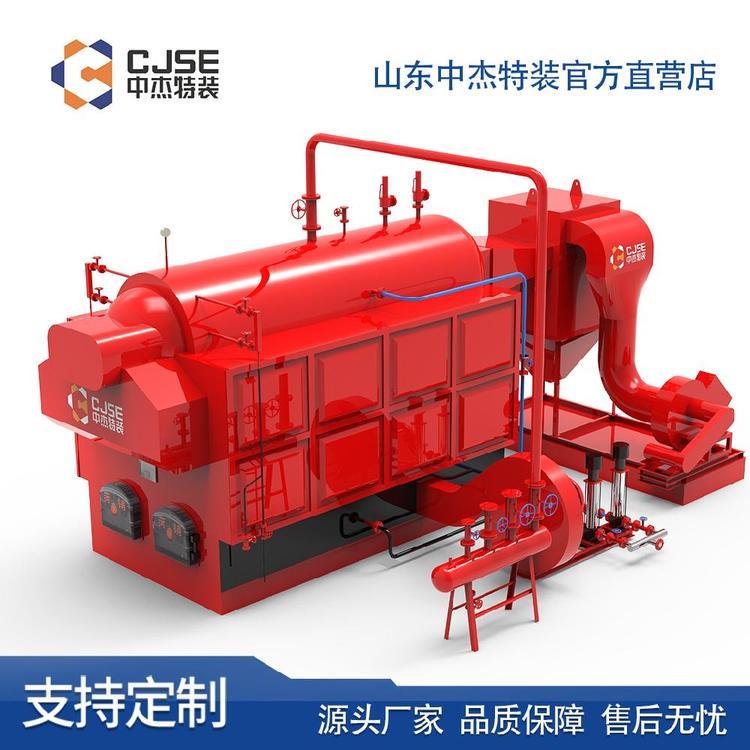
Shandong Zhongjie Special Equipment Co., Ltd. (formerly Heze Boiler Factory Co., Ltd.) was established in 2001, located at No. 2218 Jinnan Road, Development Zone, Heze City, with a registered capital of 50 million yuan and total assets of 500 million yuan. The company has 7 business centers: boilers, deep-freeze containers, pressure vessels, central air conditioning, engineering installation, international trade, and the Internet of Things. It has three factory sites on Jinnan Road, East Changjiang Road, and Bohai Road, covering a total area of 200,000 square meters, with the main workshop spanning 83,000 square meters. It currently employs 710 people, including 247 engineers and technicians, and 82 intermediate-level technical personnel. In December 2016, it was recognized as a "High-tech Enterprise" by the Science and Technology Department. In June 2021, it was identified as a "Specialized and New Enterprise in Shandong Province" by the Ministry of Industry and Information Technology. In June 2022, it was recognized as a "Gazelle Enterprise in Shandong Province" and in August 2022, it was identified as a "Specialized and New Small Giant Enterprise" by the Ministry of Industry and Information Technology.
To prevent and alleviate corrosion issues in biomass boilers, the following methods can be adopted:
Regular Cleaning and Maintenance: Regularly clean the boiler's interior of accumulated dust and dirt to keep it clean. During the cleaning process, use appropriate cleaning agents and tools to remove interior dirt, preventing corrosion.
Water Quality Control: The quality of water in biomass boilers significantly affects corrosion. Regular testing and adjustment of the chemical composition of the boiler water are necessary to maintain the pH, hardness, and oxygen content within appropriate ranges. Water treatment equipment, such as water softeners and deaerators, can be used to improve water quality.
Prevent Oxygen Corrosion: Oxygen corrosion is one of the common forms of corrosion in biomass boilers. This can be mitigated by installing an oxygen scavenger in the boiler's feedwater pipes to remove oxygen from the water, thereby reducing the occurrence of oxygen corrosion. Additionally, chemical measures such as corrosion inhibitors can also be used to prevent oxygen corrosion.
Control the combustion process: High temperatures during combustion and acidic substances in the flue gas can also cause corrosion. To control the combustion process, ensure that the combustion temperature and acidic substances in the flue gas are within the appropriate range. This can be achieved by adjusting the combustion air flow, fuel supply, and fuel distribution.
Prevent Local Corrosion: Certain parts of the boiler, such as the furnace and flue, are prone to corrosion. Reinforcement or protective coatings made from corrosion-resistant materials can be applied to these areas, extending their service life.
Regular Inspections and Maintenance: Regularly inspect and maintain biomass boilers to promptly identify and address corrosion issues. Entrust a maintenance professional to conduct routine inspections and maintenance tasks.
Biomass boilers offer several advantages:
Renewable Energy: Fuel for biomass boilers comes from organic matter such as plants, animals, and microorganisms, making it a renewable energy source. Compared to traditional fossil fuels, biomass fuel has lower carbon emissions and environmental impact, contributing to the reduction of greenhouse gas emissions and being more environmentally friendly.
Diverse fuel sources: Biomass fuel is sourced from a wide range, including wood, straw, waste crops, food scraps, and municipal solid waste. This diversity of fuel sources provides flexibility and adaptability to biomass boilers, enabling the utilization of waste and by-products from plants and animals.
Environmental friendliness: The carbon dioxide emitted during the combustion process of biomass boilers can be absorbed by plants, forming a cycle and reducing air pollution. Moreover, the emissions and ash produced during the combustion process of biomass boilers are relatively low, resulting in minimal environmental impact.
Energy Security: Biomass, as a local renewable energy source, can reduce dependence on imported energy and enhance energy security. In regions with scarce resources, the use of biomass boilers can provide a reliable energy supply.
Economic Efficiency: Biomass fuel is relatively cost-effective, enabling a reduction in energy costs. Moreover, the technology and equipment for biomass boilers are continuously advancing and maturing, making them increasingly competitive economically.
Waste Utilization: Biomass boilers can utilize agricultural by-products such as crop straw, wood waste, etc., effectively utilizing waste resources and reducing resource waste.
In summary, biomass boilers offer advantages such as renewable energy, diverse fuel sources, environmental friendliness, energy security, economic viability, and waste utilization, making them a sustainable energy option.
Biomass boilers feature the following characteristics:
Renewable Energy: The fuel used in biomass boilers comes from organic materials such as plants, animals, and microorganisms, making it a renewable energy source. Compared to traditional fossil fuels, biomass fuel has lower carbon emissions and environmental impact.
Diverse fuel sources: Biomass fuel sources are varied, including wood, straw, waste crops, food scraps, and urban solid waste, etc. This diversity in fuel sources allows biomass boilers to be flexible and adaptable, utilizing waste and by-products from plants and animals.
Environmental Friendliness: The carbon dioxide emitted during the combustion of biomass can be absorbed by plants, forming a cycle that reduces air pollution. Additionally, the emissions and ash from biomass boilers are relatively low, resulting in less environmental impact.
Energy Security: Biomass, as a domestic renewable energy source, can reduce dependence on imported energy and enhance energy security. In regions with scarce resources, the use of biomass boilers can provide a reliable energy supply.
Economic viability: Biomass fuel is relatively cost-effective, helping to reduce energy costs. Moreover, the technology and equipment for biomass boilers are continuously evolving and maturing, making them increasingly competitive economically.
In summary, biomass boilers feature renewable energy, diverse fuel sources, environmental friendliness, energy security, and economic viability, making them a crucial component in the sustainable energy sector.
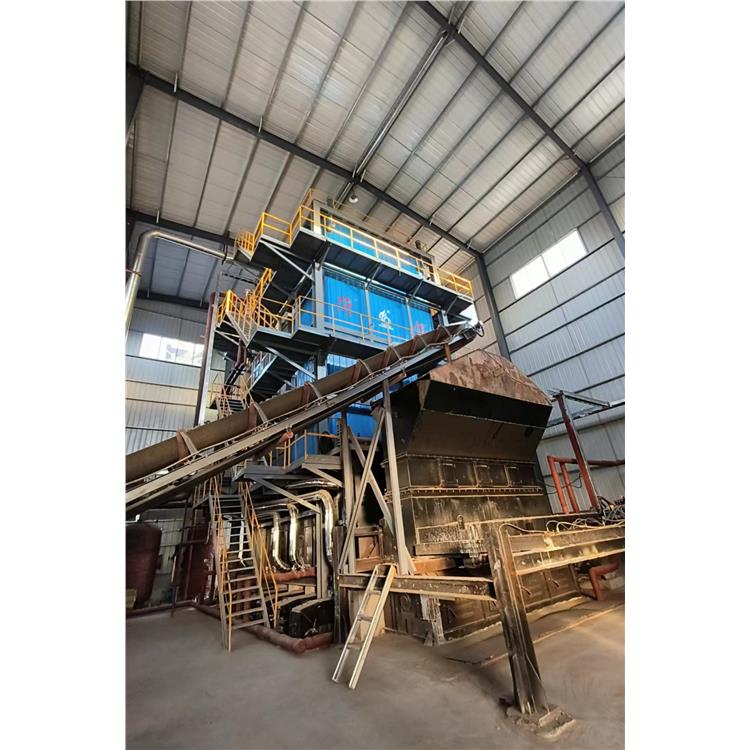
The internal structure of an automatic biomass boiler typically includes the following main components:
Combustion Chamber: The combustion chamber is the area within the biomass boiler where combustion takes place. It typically consists of the burner, combustion chamber walls, top, and bottom. The combustion chamber provides the space and oxygen necessary for the biomass fuel to burn, producing thermal energy.
Chimney System: The chimney system is designed to guide flue gases produced by combustion out of the combustion chamber. It includes flue pipes, chimneys, and flue gas purification equipment, etc. The design and layout of the chimney system can effectively enhance both the flue gas emission efficiency and the thermal energy utilization efficiency.
Heat Exchangers: Heat exchangers are a critical component in biomass boilers, used to transfer thermal energy from the flue gas produced by combustion to water or other working substances. Common types of heat exchangers include water tube heat exchangers and flue tube heat exchangers. The design and material selection of heat exchangers are crucial for improving
Shandong Zhongjie Special Equipment, welcome customers to visit our factory for business talks.
Zhuzhou 45-ton biomass boiler, comprehensive after-sales service
