


Shandong Zhongjie Special Equipment Co., Ltd. (formerly Heze Boiler Factory Co., Ltd.) was established in 2001, located at No. 2218 Jinnan Road, Economic and Technological Development Zone, Heze City, with a registered capital of 50 million yuan and total assets of 500 million yuan. The company has 7 business centers: boilers, deep-freeze containers, pressure vessels, central air conditioning, engineering installation, international trade, and the Internet of Things. It has three manufacturing sites on Jinnan Road, East Changjiang Road, and Bohai Road, covering a total area of 200,000 square meters, with the main workshop spanning 83,000 square meters. It currently employs 710 people, including 247 engineers and technicians, and 82 middle-level technical personnel. In December 2016, it was recognized as a "High-tech Enterprise" by the Science and Technology Department. In June 2021, it was identified as a "Specialized and New Enterprise in Shandong Province" by the Ministry of Industry and Information Technology. In June 2022, it was recognized as a "Gazelle Enterprise in Shandong Province" and in August 2022, as a "Specialized and New Small Giant Enterprise" by the Ministry of Industry and Information Technology.
Chongjie Special Equipment Co., Ltd. is a company engaged in the production of low-temperature liquid storage tanks. They offer low-temperature liquid storage tanks in various specifications and capacities, including liquid nitrogen tanks, liquid oxygen tanks, liquid argon tanks, and more.
The Zhongjie customized low-temperature liquid storage tanks are constructed with high-quality materials and advanced manufacturing processes, ensuring the tank's strength and sealing integrity. The interior employs special insulation materials and structural design, effectively reducing liquid evaporation losses.
The Zhongjie special-purpose low-temperature liquid storage tank features the following characteristics:
High safety: The tanks are made of materials with excellent pressure resistance and sealing properties, capable of safely storing low-temperature liquids.
Low evaporation loss: Insulation materials and structural design used inside the tank effectively reduce liquid evaporation loss, enhancing the tank's economic efficiency.
A variety of specifications and capacities available: Zhongjie provides a range of specifications and capacities for low-temperature liquid storage tanks to meet different customer requirements.
Customized Design: According to the specific requirements of our clients, ZJET can offer customized design and manufacturing services to cater to various application scenarios.
Volume Manufacturing Process: Zhongjie is equipped with advanced manufacturing equipment and a skilled technical team, ensuring the quality and performance of the storage tanks.
In summary, Zhongjie's custom-made low-temperature liquid storage tanks offer high safety, low evaporation loss, and a wide range of specifications, suitable for storage and transportation needs of low-temperature liquids.
The primary reason for pre-cooling a liquid oxygen tank before use is to lower the tank's internal temperature to below the boiling point of liquid oxygen, facilitating the conversion of oxygen into a liquid state.
The boiling point of liquid oxygen is -183°C, and at room temperature, oxygen exists in a gaseous state. Liquid oxygen tanks require cooling the oxygen below its boiling point to convert it into a liquid form for storage and supply.
The pre-cooling process typically involves the following steps:
Clean Storage Tank: First, the tank must be thoroughly cleaned to ensure no impurities or contaminants are present inside, to avoid affecting liquid oxygen.
Drainage and Exhaust: Empty the gas from the storage tank and expel it through the exhaust system to reduce the gas content within the tank.
Add Liquid Nitrogen: Inject liquid nitrogen into the tank, which can rapidly cool the air and walls inside the tank with its low temperature, thereby reducing the tank's temperature.
Waiting for cooling: The liquid nitrogen inside the tank will gradually lower the temperature of the tank through heat conduction until it reaches below the boiling point of liquid oxygen.
The purpose of pre-cooling is to ensure that the temperature inside the storage tank is low enough to meet the storage and supply requirements for liquid oxygen. Pre-cooling can reduce the evaporation and loss of liquid oxygen, while also helping to maintain the safety and stability of the tank.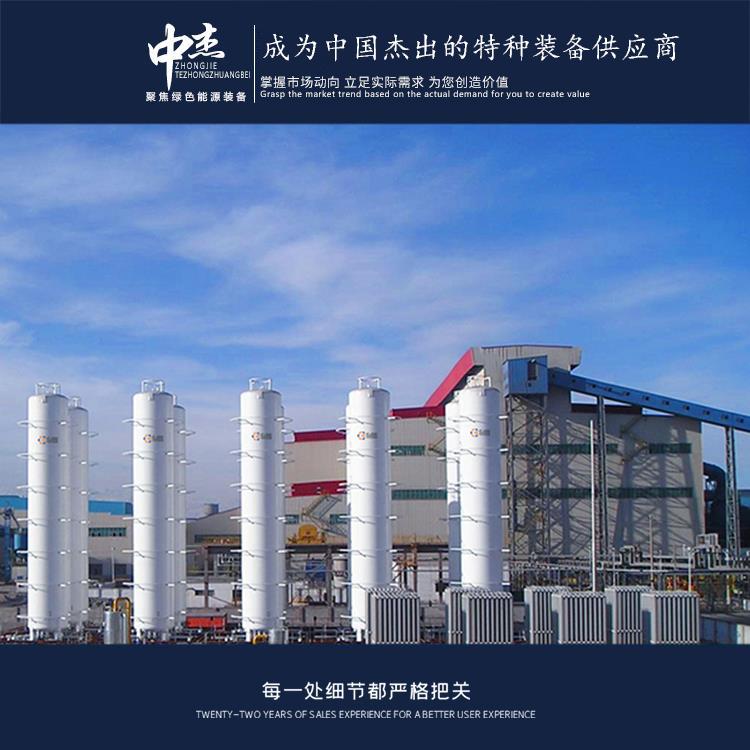
The filling process for liquid nitrogen tanks typically includes the following steps:
Preparation: Ensure that the storage tank and filling equipment are in good condition with no damage or leaks. Check that the insulation layer of the tank is intact and undamaged.
Safety Inspection: Check the tank and its surrounding environment for safety. Ensure there are no flammable materials or other hazardous items around the tank.
Connect equipment: Link the filling equipment to the storage tank. Ensure the connection is secure and reliable, with no leaks.
Prepare Liquid Nitrogen: Provide liquid nitrogen supply, ensuring the quality and purity meet the required standards.
Open Valves: Follow the operational instructions of the filling equipment to gradually open the corresponding valves, allowing liquid nitrogen to flow from the supply source into the storage tank.
Regulate Flow: Adjust the flow control valve of the filling equipment as needed to control the inflow rate of liquid nitrogen. Ensure a moderate flow rate to avoid being too fast or too slow.
Monitor Liquid Level: Continuously monitor the liquid nitrogen level in the storage tank through a liquid level gauge or other level monitoring devices. Ensure the level remains within a safe range.
Cease Filling: Once the liquid nitrogen is filled to the storage tank or reaches the desired level, close the valve of the filling equipment to stop the addition of liquid nitrogen.
Disconnect: Disconnect the filling equipment from the storage tank, ensuring there are no leaks at the connection point.
Safety Inspection: Conduct a secondary check of the tank and its surrounding environment to ensure there are no leaks or other safety hazards.
For general reference only, the actual filling process may vary depending on the specific type of tank and filling equipment. When performing filling operations on liquid nitrogen tanks, please adhere to relevant operational specifications and safety requirements, and ensure that operators are trained and skilled in safety measures.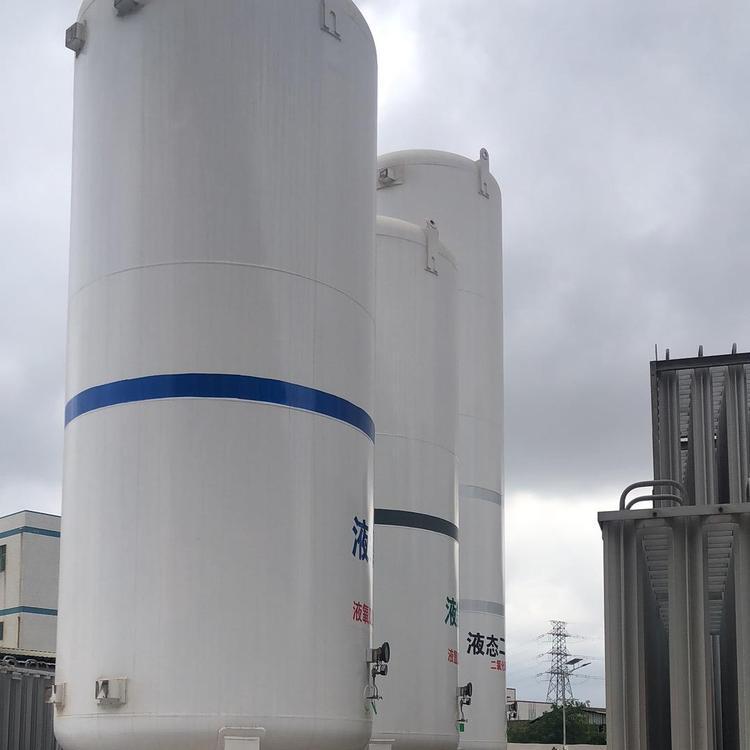
In the degreasing process of high-vacuum pipelines in low-temperature liquid storage tanks, the following steps can be taken:
Preparation: Ensure the cleanliness and readiness of the defatting equipment and tools. Check the pipeline system's connections and sealing, ensuring there are no leaks.
Pipe Cleaning: Clean the pipes using suitable cleaning agents and tools to remove surface dirt and grease. Methods such as mechanical brushing, high-pressure water jetting, or chemical cleaning can be employed.
De-greasing Process: Select an appropriate de-greaser and inject it into the pipeline system. The de-greaser can be an organic solvent or an alkaline solution, the specific choice depending on the pipeline material and the type of dirt. Ensure the de-greaser fully covers the interior wall of the pipeline and maintains a certain contact time.
Pipe flushing: Drain the degreaser from the pipeline system and flush with clean water to remove any residual degreaser and dirt. During flushing, high-pressure water or gas can be used for scouring to ensure the cleanliness of the pipeline inner wall.
Drying Pipelines: Utilize drying equipment or a ventilation system to evaporate or exhaust moisture from within the pipeline, ensuring the interior walls are dry. Drying can be achieved with hot air or nitrogen.
Inspection and Testing: After degreasing, inspect and test the pipeline to ensure cleanliness and sealing integrity. Visual inspection, pressure testing, or other relevant tests can be conducted.
Be mindful that during the degreasing process of high vacuum pipelines in low-temperature liquid storage tanks, it is essential to follow relevant safety operating procedures and guidelines. Ensure that operators are equipped with the necessary safety awareness and operational skills to prevent any accidental incidents.
Chongjie Special Equipment upholds the grand vision of "realizing employees' dreams, creating value for customers, and striving for the prosperity and strength of our motherland," and is dedicated to the development of the green energy equipment industry. We offer the society products and services with high cost-performance!
Huangshan Liquid Argon Storage Tank, On-Site Installation
