


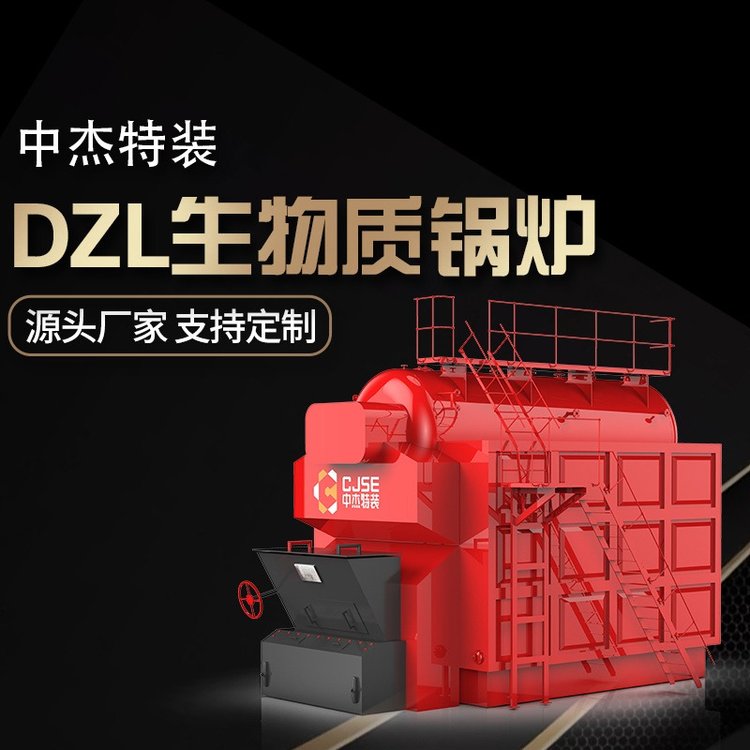
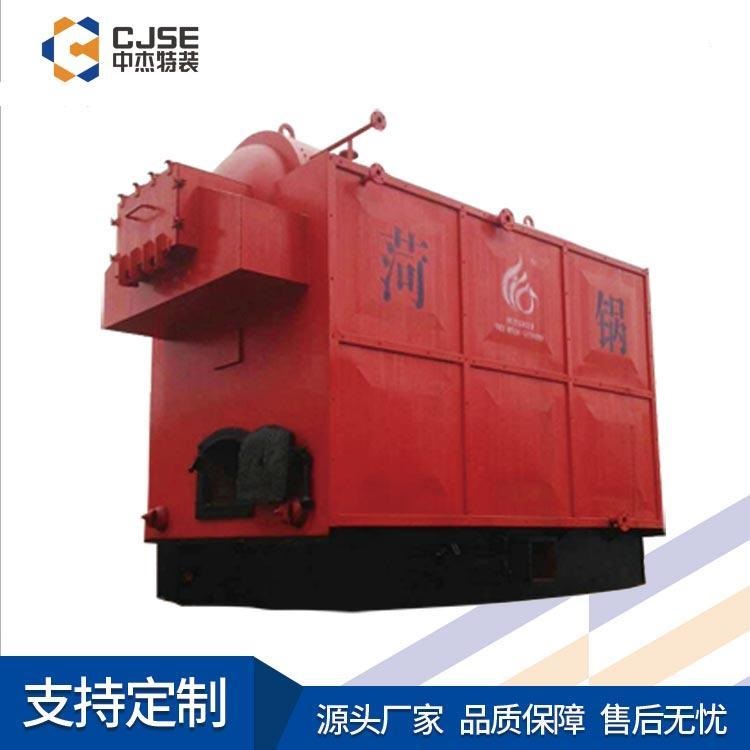
Shandong Zhongjie Special Equipment's main products include: fuel (gas) boilers, organic heat carrier boilers, biomass boilers, waste heat boilers, and other boiler products; vacuum insulation cryogenic pressure vessels such as LNG tanks, oxygen/nitrogen/argon tanks, CO2 tanks; pressure vessel products like denitrification engineering equipment, heat storage and energy storage equipment, complete chemical equipment sets; central air conditioning and HVAC equipment such as ground (water) source heat pumps, air source units, water-cooled screw units, and air-cooled modular units. Planned products include large-scale energy centers, LNG transport vehicles, LNG tank containers, and other green energy equipment.
To prevent and mitigate corrosion issues in biomass boilers, the following methods can be adopted:
Regular cleaning and maintenance: Regularly clean the boiler's interior of accumulated dust and dirt to maintain its cleanliness. During the cleaning process, use appropriate cleaning agents and tools to remove interior dirt, preventing corrosion from occurring.
Control Water Quality: The quality of water in biomass boilers significantly affects corrosion. Regularly test and adjust the chemical composition of the boiler water to maintain the pH value, hardness, and oxygen content within appropriate ranges. Use water treatment equipment, such as water softeners and deaerators, to improve water quality.
Prevent Oxygen Corrosion: Oxygen corrosion is one of the common types of corrosion in biomass boilers. It can be mitigated by installing an oxygen scavenger in the boiler's feedwater pipes to remove oxygen from the water, thereby reducing the occurrence of oxygen corrosion. Additionally, chemical measures such as corrosion inhibitors can also be used to prevent oxygen corrosion.
Regulate Combustion Process: High temperatures during combustion and acidic substances in the flue gas can also lead to corrosion. To regulate the combustion process, ensure that the combustion temperature and acidic substances in the flue gas are within the appropriate range. This can be achieved by adjusting the combustion air flow, fuel supply, and fuel distribution.
Prevent Local Corrosion: Certain areas of a boiler, such as the furnace and flue, are prone to corrosion. Reinforcement or coating protection with corrosion-resistant materials can be applied to these areas, extending their service life.
Regular inspections and maintenance: Regularly inspect and maintain biomass boilers to promptly identify and address corrosion issues. Delegate maintenance personnel for regular inspections and maintenance tasks.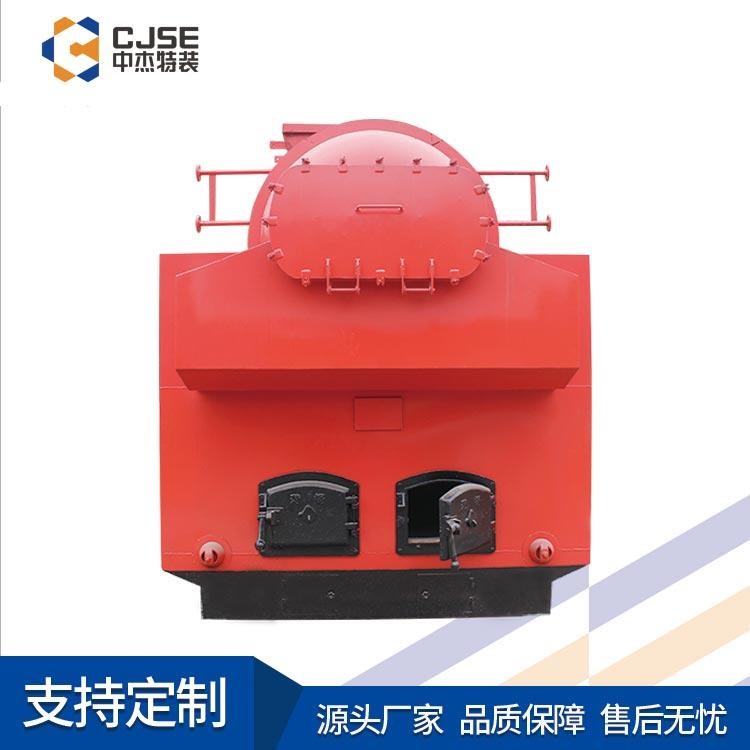
When selecting an appropriate atmospheric pressure hot water boiler, consider the following factors:
Heating Area: First, determine the size of the area that requires heating, which will decide the heat power of the required hot water boiler. Generally, the larger the heating area, the greater the required heat power.
Heat Load Calculation: Conduct a heat load calculation, taking into account the insulation performance of the heating area, indoor temperature requirements, and external climatic conditions, to determine the required heat power. You may request a heat load calculation to ensure the selected hot water boiler meets the heating needs.
Fuel Type: Atmospheric pressure hot water boilers can use various fuels such as gas, oil, etc. Choose the appropriate fuel type based on the local fuel supply and cost considerations.
Boiler Efficiency: Focus on the energy efficiency level of hot water boilers and choose products with higher efficiency. High-efficiency hot water boilers can provide superior heating effects while reducing energy consumption and operational costs.
Boilers and Quality: Choose hot water boilers produced by manufacturers with a good reputation to ensure reliable product quality and comprehensive after-sales service.
Safety and Environmental Protection: Focus on the safety and environmental performance of hot water boilers, choosing products with safety protection devices and low emissions.
Budget Considerations: Select an appropriate hot water boiler based on budget constraints. Consider not only the purchase cost but also the subsequent operation and maintenance costs.
Considering the above factors, a suitable atmospheric pressure hot water boiler can be chosen to meet heating requirements, while achieving good performance in terms of energy efficiency, safety, and environmental protection. It is recommended to consult professionals or hot water boiler experts during the selection process.
To reduce the emissions of nitrogen oxides (NOx) from biomass boilers, the following measures can be taken:
Combustion Control Optimization: By optimizing the combustion process, controlling the combustion temperature and oxygen supply, the generation of NOx can be reduced. Adjustments can be made to the burner's structure and parameters to ensure a more thorough and even combustion process, minimizing the formation of hotspots.
Combustion Chamber Design Enhancement: Improved design of biomass boiler combustion chambers, increasing mixing and residence time for more thorough fuel and air blending, thereby reducing NOx emissions.
SNCR Technology: Selective Non-Catalytic Reduction (SNCR) technology involves adding a reductant, such as urea, during the combustion process to react with NOx and convert it into nitrogen and water. This technology can effectively reduce NOx emissions, but requires system design and adjustment based on specific conditions.
SCR Technology: Selective Catalytic Reduction (SCR) technology is a NOx control method that involves adding a catalyst, such as, to flue gas to cause NOx to react and convert into nitrogen and water. SCR technology achieves a high NOx removal efficiency, but requires significant investment and operating costs.
Flue Gas Recirculation (FGR): Flue gas recirculation technology recycles a portion of the flue gas back into the combustion process, lowering combustion temperatures and reducing NOx formation. This technique allows for NOx control by adjusting the recirculation ratio.
Regular maintenance and cleaning: Regular maintenance of biomass boilers
Energy-saving methods for biomass hot water boilers mainly include the following aspects:
Fuel Selection: Choose biomass fuels in bulk, such as wood chips and straw, ensuring the moisture content and particle size meet the boiler's requirements. Low moisture content and appropriate particle size of the fuel can enhance combustion efficiency and reduce energy waste.
Combustion Optimization: Enhance combustion efficiency by optimizing the combustion process. Adjust combustion parameters such as temperature and duration to achieve more complete combustion and reduce fuel waste.
Reclaimed Heat Utilization: Utilize waste heat from flue gas for heat recovery. By installing flue gas waste heat recovery equipment, reclaim and utilize the waste heat from flue gas for other heat requirements, such as heating and hot water, to improve energy utilization efficiency.
Boiler Insulation: Enhance the insulation of the boiler to minimize heat loss. Apply insulation to the boiler's outer shell and pipes to reduce heat dissipation, thereby improving the boiler's thermal efficiency.
Control System Optimization: Optimize the boiler control system to achieve precise temperature and pressure control. Through reasonable control strategies, reduce energy waste and enhance the operational efficiency of the boiler.
Regular Maintenance: Perform regular maintenance on biomass hot water boilers to ensure their normal operation. Clean the combustion chamber, heat exchanger, and other components, inspect and replace worn parts, to guarantee the boiler's performance.
Energy Management: Establish a scientific energy management system, monitor and analyze energy consumption, and formulate reasonable energy-saving measures. Continuously optimize the operation of boilers through energy management practices to achieve energy-saving goals.
By integrating the above energy-saving methods, the energy utilization efficiency of biomass hot water boilers can be enhanced, reducing energy waste, and achieving the goal of energy conservation and environmental protection.
Chungjie Special Equipment adheres to the grand vision of "realizing employees' dreams, creating value for customers, and striving for the prosperity and strength of our motherland," and is dedicated to the development of green energy equipment. We commit to society with high-quality products and services at competitive prices!
Lijiang 4-ton Biomass Boiler Manufacturer
