


Shandong Zhongjie Special Equipment (formerly Heze Boiler Factory Co., Ltd.) was established in 2001, located at No. 2218 Jinnan Road, Economic Development Zone, Heze City. With a registered capital of 50 million yuan and total assets of 500 million yuan, the company operates seven business centers: boilers, deep-freezing containers, pressure vessels, central air conditioning, engineering installation, international trade, and Internet of Things. It has three factory sites on Jinnan Road, East Changjiang Road, and Bohai Road, covering a total of 200,000 square meters. The main workshop spans 83,000 square meters. It currently employs 710 staff, including 247 engineers and technicians, and 82 intermediate-level technical personnel. In December 2016, it was recognized as a "High-Tech Enterprise" by the Science and Technology Department. In June 2021, it was named a "Specialized, Fine, and New Enterprise in Shandong" by the Department of Industry and Information Technology. In June 2022, it was identified as a "Gazelle Enterprise in Shandong" and in August 2022, it was recognized as a "Specialized, Fine, and New Small Giant Enterprise" by the Ministry of Industry and Information Technology.
Installation and Operation Requirements for Low-Temperature Carbon Dioxide Storage Tanks: Installation Location Selection: When choosing the installation location for the storage tank, consider the tank's weight and dimensions to ensure a solid and stable foundation. Additionally, keep the tank away from flammable or explosive materials and high-temperature sources to ensure safety. Safety Distance: Maintain a certain safety distance around the tank for routine inspections, maintenance, and emergency response. The safety distance should comply with relevant safety regulations and standards. Connecting Pipes: Use an appropriate connection method between the tank and pipes to ensure a tight and reliable connection with no leaks. The connecting pipes should meet relevant standards and specifications. Pressure Relief Devices: The tank should be equipped with pressure relief devices, such as safety valves, to control internal tank pressure. The set pressure of the pressure relief devices should meet relevant requirements and be inspected and maintained regularly. Sealability Inspection: Regularly inspect the tank's sealing performance to ensure no leaks. Pay special attention to the sealing of valves, pipe connections, and the tank itself. Temperature Control: Low-temperature carbon dioxide storage tanks require temperature control to maintain the internal low-temperature state. Ensure the surrounding environmental temperature is suitable and take appropriate insulation measures. Safety Protection: Set up appropriate safety protection facilities around the tank, such as guardrails and warning signs, to remind personnel of safety and prevent unauthorized access to the tank. Storage Capacity Control: Control the storage capacity of the tank according to actual needs to avoid exceeding the rated capacity. Exceeding the rated capacity may cause excessive pressure in the tank, increasing safety risks.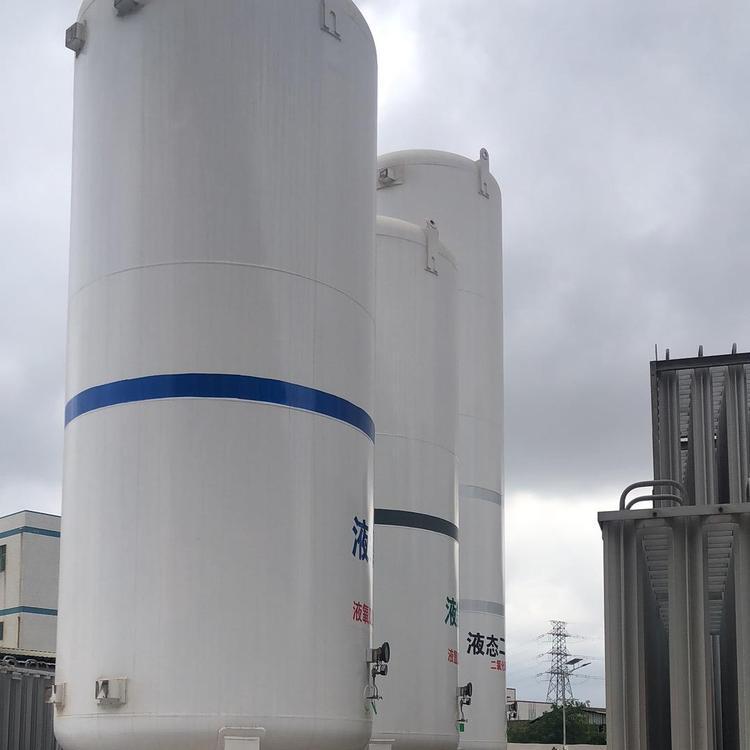
Here are some common protection techniques for carbon dioxide storage tanks:
Fire and Explosion Prevention Measures: A fire-resistant isolation zone should be set up around the tank, keeping it away from fire sources and flammable materials. The tank itself should implement fire and explosion prevention measures, such as fire-resistant coatings and explosion-proof devices, to prevent fires and explosions.
Leak Detection and Alarm Systems: The tank should be equipped with leak detection and alarm systems to promptly detect and alert of any leaks. Regularly inspect and maintain the leak detection equipment to ensure proper functioning.
Regular Inspections and Maintenance: Regularly check the tank's exterior, valves, fittings, etc., to ensure they are intact. Conduct regular leak detection and pressure tests to ensure the tank's safety performance meets requirements.
Waste Gas Treatment: Treat the waste gases produced by the carbon dioxide storage tank to prevent environmental pollution. Implement appropriate waste gas treatment measures, such as collecting and treating the waste gases.
Static Electricity Protection: Take static electricity protection measures to avoid static accumulation and discharge. Use anti-static equipment and tools to ensure static safety during operations.
Safety Training and Awareness: Conduct safety training for operators to enhance their awareness and ability to safely handle carbon dioxide storage tanks. Regularly hold safety training and drills to respond to emergencies.
Management Records and Documentation: Establish comprehensive management records and documentation, including the tank's usage, inspection, and maintenance records. Regularly review and update management records to ensure safe management and maintenance of the tank.
It should be noted that the above are some common protection techniques, and specific protection methods may vary depending on the type and application of different tanks. When using carbon dioxide storage tanks, operations should be conducted according to relevant specifications and standards, and consult with experts to ensure safety and effectiveness.
Routine inspections and maintenance of CO2 storage tanks can be conducted following these steps:
1. External Inspection: Check for any visible damage, corrosion, or oil leakage on the tank's exterior. Pay attention to any abnormalities in the tank shell, valves, and pipe connections.
2. Internal Inspection: If access is permitted, conduct an internal inspection. Check for corrosion, scaling, or blockages in the inner lining, valves, and pipes.
3. Valve and Pipe Inspection: Verify that the tank's inlet and outlet valves and pipe connections are functioning properly, with no leaks or loose fittings. Ensure valves operate smoothly and reliably.
4. Pressure Relief Device Inspection: Check that the tank's pressure relief device (e.g., safety valve) is functioning correctly. Confirm that the set pressure of the relief device meets requirements.
5. Measurement and Control System Inspection: Ensure the tank's level, pressure, and temperature measurement and control systems are operating normally. Calibrate and test the accuracy of measuring equipment.
6. Cleaning and Drainage: Regularly clean the interior of the tank to remove accumulated impurities and sediments. Also, perform regular drainage to remove liquid and gas impurities from the tank.
7. Maintenance and Repair: Perform necessary maintenance and repair work based on inspection results. Repair damaged components, replace worn-out seals, etc., to ensure the tank operates normally.
8. Documentation and Reporting: Record the inspection and maintenance process, including the date of inspection, contents of the inspection, identified issues, and measures taken. Submit inspection reports to relevant departments or management as needed.
These are general steps for routine inspections and maintenance of CO2 storage tanks. Specific operations should be tailored to the tank's characteristics and requirements. When conducting inspections and maintenance, follow relevant safety operating procedures and have personnel perform the operations.
Carbon dioxide tanks are widely used in many different industries. Here are some common applications:
Food and Beverage Industry: Carbon dioxide tanks are used in the production of carbonated beverages, beer, soda, etc., in the food and beverage industry. Carbon dioxide is injected into the drinks to increase their fizz and taste.
Industry: In the industry, carbon dioxide tanks are used for applications such as anesthesia, respiration, first aid, etc. Liquid carbon dioxide can be used to make refrigerants for freezing and preserving biological samples and tissues.
Fire Extinguishing: Carbon dioxide tanks are used in fire suppression systems in the fire field. Carbon dioxide is released into the fire scene to extinguish flames by suppressing oxygen supply.
Gas Supply: Carbon dioxide tanks are also used to supply carbon dioxide gas in industrial and commercial fields. These gases can be used for welding, gas shielding, semiconductor manufacturing, water treatment, and other applications.
Climate Control: Carbon dioxide tanks are used in greenhouses and indoor planting to control and increase the concentration of carbon dioxide for plant growth.
Additionally, carbon dioxide tanks can be used in other industries, such as the automotive industry (for airbag systems), and industry (for propellants and gas supply).
It is important to note that the requirements and applications for carbon dioxide tanks may vary by industry. When using carbon dioxide tanks, it is necessary to follow relevant regulations and standards and ensure that the design, manufacturing, and use of the tanks meet the corresponding requirements.
Shandong Zhongjie Special Equipment, welcome customers to our factory for business discussions.
5 Cubic Meter Changjiang CO2 Storage Tank, In Stock Supply
