


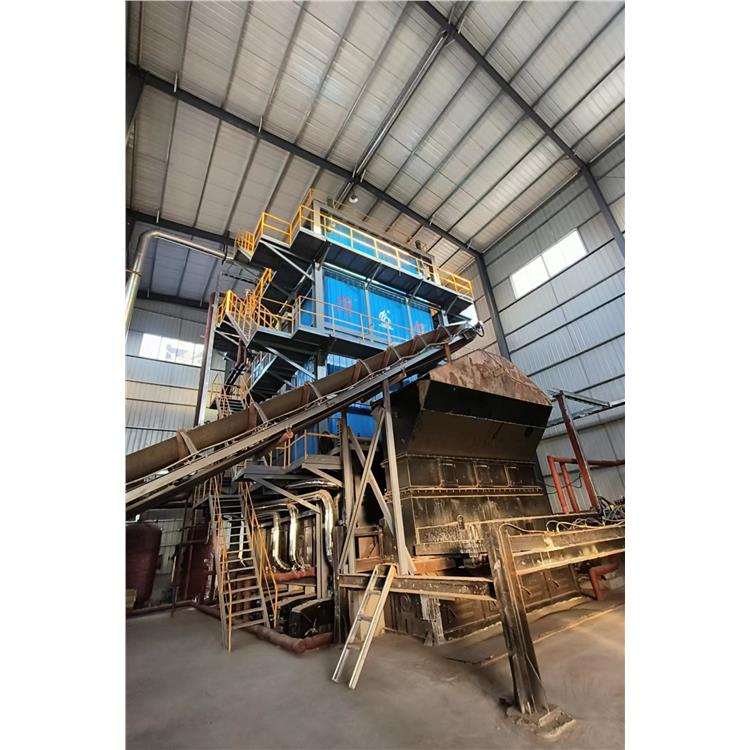

Shandong Zhongjie Special Equipment (formerly Heze Boiler Factory Co., Ltd.) was established in 2001, located at No. 2218 Jinnan Road, Economic and Technological Development Zone, Heze City. With a registered capital of 50 million yuan and total assets of 500 million yuan, the company operates seven business centers: boilers, deep-freezing vessels, pressure vessels, central air conditioning, engineering installation, international trade, and Internet of Things. It has three manufacturing sites on Jinnan Road, East Changjiang Road, and Bohai Road, covering a total area of 200,000 square meters, with the main workshop spanning 83,000 square meters. The company currently employs 710 people, including 247 engineers and technicians and 82 intermediate-level technical personnel. In December 2016, it was recognized as a "High-Tech Enterprise" by the Science and Technology Department. In June 2021, it was named a "Specialized and New Enterprise of Shandong Province" by the Ministry of Industry and Information Technology. In June 2022, it was identified as a "Gazelle Enterprise of Shandong Province," and in August 2022, it was recognized as a "Specialized and New Small Giant Enterprise" by the Ministry of Industry and Information Technology.
During operation, biomass thermal oil heaters are prone to scaling due to the high temperature of the thermal oil and long-term use. To prevent scaling, manufacturers of biomass thermal oil heaters typically take the following measures:
Selecting the appropriate thermal oil: Manufacturers choose thermal oils with good thermal stability and antioxidant properties to minimize scale formation. The selection of thermal oil should be reasonably matched based on actual operating conditions and usage requirements.
Control oil temperature and flow rate: Manufacturers will reasonably control the temperature and flow rate of the thermal oil based on its properties and working requirements. Excessive temperature and rapid flow can easily lead to scale formation, thus appropriate adjustments are necessary.
Regular Cleaning and Maintenance: Manufacturers recommend users to regularly clean and maintain the biomass thermal oil boiler to remove scale buildup. Cleaning agents and equipment that can be used during the cleaning process, as well as the scale, can restore the normal operation of the boiler.
Install Filters and Descaling Devices: Manufacturers may install filters and descaling devices in biomass thermal oil boilers to filter out impurities and scale from the thermal oil. These devices effectively prevent scale formation, extending the service life of the thermal oil boiler.
Regular monitoring and analysis: Manufacturers may advise users to regularly monitor and analyze the properties and quality of thermal oil, to detect any anomalies promptly and take appropriate actions.
To enhance the thermal efficiency of biomass boilers, consider the following approaches:
Optimize the combustion system: Reasonably adjust the biomass boiler's combustion system, including parameters such as combustion air volume, combustion temperature, and combustion time, to achieve complete combustion and utilization of the fuel. Combustion technologies such as fluidized bed combustion and gasification combustion can enhance combustion efficiency.
Regulate Excessive Airflow: Reasonably control the air supply during the combustion process of biomass boilers to prevent excessive air from entering the furnace, thereby reducing fuel oxidation and heat loss. Adjust the combustion air volume and distribution to achieve optimal fuel-air mixture, enhancing combustion efficiency.
Enhanced waste heat recovery: The flue gas produced by biomass boiler combustion contains a significant amount of heat energy. This heat can be recovered and utilized through devices like economical air preheaters and economizers, thereby improving the boiler's thermal efficiency.
Optimize boiler operating parameters: Reasonably adjust the operating parameters of biomass boilers, such as boiler water temperature and steam pressure, to enhance thermal efficiency. Adjust the boiler operating mode based on actual demand and load changes, to prevent over-supply or under-supply of heat, and improve energy utilization efficiency.
Regular cleaning and maintenance: Regularly clean and maintain biomass boilers to remove ash and soot from the furnace chamber, ensuring efficient heat exchange and reducing thermal resistance and losses.
Utilize equipment and materials: Select biomass boiler equipment and materials, such as burners, heat exchangers, etc., to enhance thermal conduction and heat exchange efficiency.
By integrating these measures, the thermal efficiency of biomass boilers can be significantly improved, achieving energy utilization.
Biomass steam boilers offer several advantages:
Renewable Energy: Biomass steam boilers utilize biomass fuels such as wood chips, straw, and husks, which are renewable. Compared to traditional fossil fuels, these fuels offer lower carbon emissions and environmental friendliness.
Diverse fuel options: Biomass steam boilers are suitable for various biomass fuels, such as wood chips, straw, husks, etc., offering strong fuel adaptability. This allows biomass steam boilers to be widely used in different regions and industries.
Energy Utilization: The biomass steam boiler employs advanced combustion technology and heat recovery systems, achieving high energy utilization efficiency. By optimizing the combustion process and heat recovery, energy utilization efficiency can be maximized, and energy consumption can be minimized.
Flexible operation modes: Biomass steam boilers can be operated flexibly according to actual needs, such as manual control, automatic control, or remote monitoring, etc. This allows biomass steam boilers to meet requirements in various scenarios and provide a stable steam supply.
Superior environmental performance: Biomass steam boilers produce relatively fewer emissions during the combustion process, with less environmental impact. Through reasonable combustion control and flue gas treatment devices, the content of emissions can be further reduced to meet higher environmental protection standards.
Replace Traditional Boilers: Biomass steam boilers can replace traditional coal or oil-fired boilers, reducing dependence on fossil fuels and lowering energy costs and carbon emissions. This is of great significance for achieving sustainable development and reducing greenhouse gas emissions.
In summary, biomass steam boilers offer renewable energy and diversity.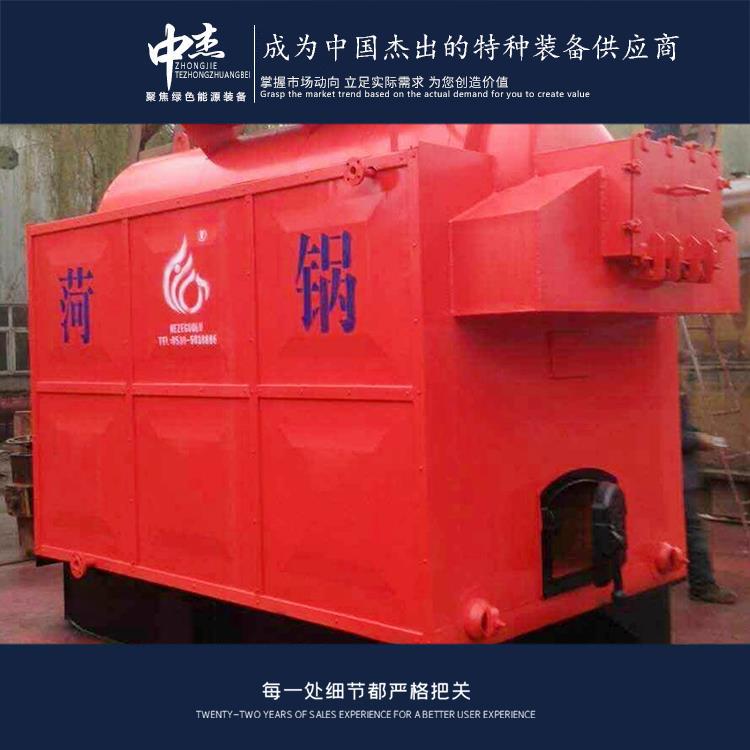
Biomass boilers possess certain features that give them an edge in energy conservation and environmental protection:
Renewable Energy: Fuel for biomass boilers is derived from renewable sources, such as wood chips, straw, and waste materials. Using biomass fuel instead of fossil fuels can reduce dependence on finite resources and lower energy consumption.
Low carbon emissions: The amount of carbon dioxide released during the combustion of biomass fuel is roughly equivalent to the amount absorbed during its growth, creating a closed carbon cycle. Compared to the combustion of fossil fuels, biomass boilers have lower carbon emissions, contributing significantly to the reduction of greenhouse gases.
Combustion: The biomass boiler employs advanced combustion technology and control systems to facilitate combustion. By optimizing the combustion process, it enhances the utilization of thermal energy and reduces energy waste.
Waste Utilization: Biomass boilers can use waste materials as fuel, such as crop straw and wood waste.
Zhongjie Special Equipment adheres to the great vision of "realizing employee dreams, creating customer value, and striving for the prosperity and strength of our motherland," and is dedicated to the development of the green energy equipment industry. We offer society products and services with high cost-performance!
Jining 45-ton biomass boiler, made of 304 stainless steel
