


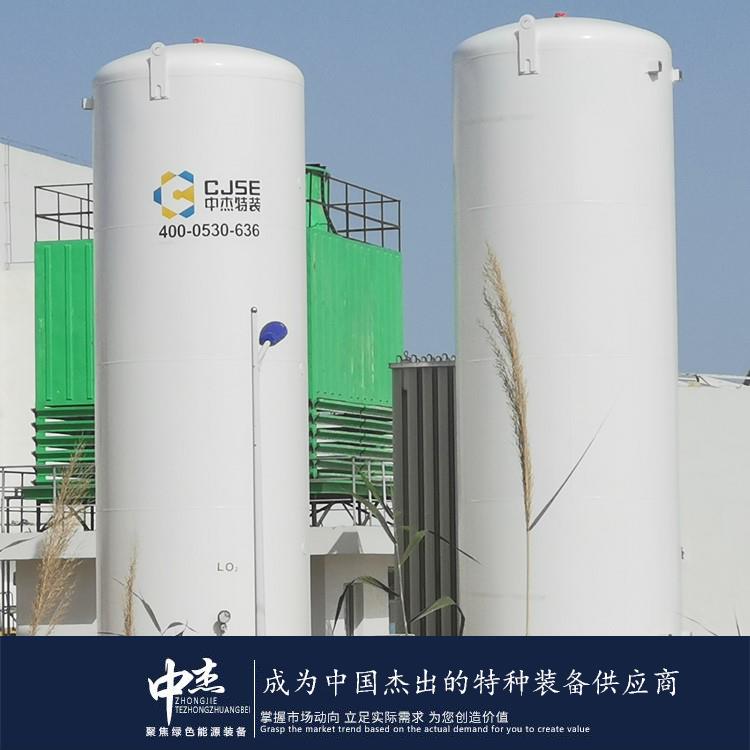
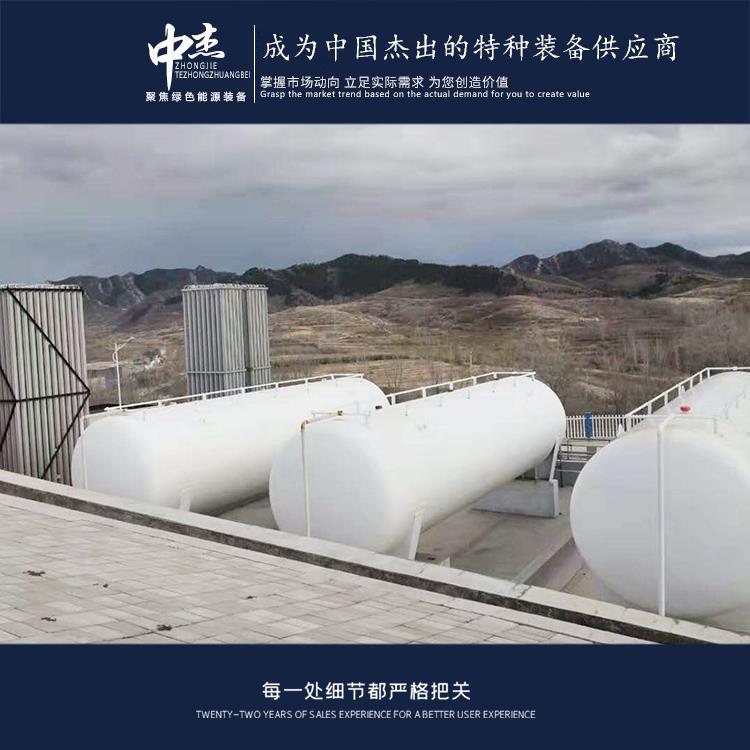

Shandong Zhongjie Special Equipment (formerly Heze Boiler Factory Co., Ltd.) holds an A-grade boiler manufacturing license, an A2-grade pressure vessel manufacturing license, an A2-grade pressure vessel design license, a B-grade boiler installation license, and GB2/Class, GC2/Class pressure pipeline installation licenses, as well as a mechanical and electrical equipment installation contracting qualification. It is a member of the China Boiler and Water Treatment Association, the China Chemical Equipment Association, and the理事 unit of the Shandong Equipment Manufacturing Association. The company has also passed the ISO9001 Quality Management System, ISO14001 Environmental Management System, OHSAS18001 Occupational Health and Safety Management System certifications, and the American ASME/U2 certification.
In recent years, the expansion of low-temperature liquid storage tanks has reached its peak for several reasons:
1. Increased energy demand: As the economy grows and the population expands, there's a rising need for energy. Low-temperature liquid storage tanks are primarily used for storing liquefied natural gas (LNG), liquefied oxygen (LOX), liquefied nitrogen (LIN), and other low-temperature liquid energy sources to meet the growing energy needs.
2. Greenhouse gas emissions reduction: These tanks can store and transport liquid carbon dioxide (CO2) for carbon capture and storage (CCS) technologies, helping to reduce greenhouse gas emissions. With growing concerns for environmental protection and climate change, the demand for low-temperature liquid storage tanks in the CCS field has also increased.
3. Industrial development requirements: The application of low-temperature liquid storage tanks in the industrial sector is also on the rise. For instance, in industries such as chemicals, pharmaceuticals, food and beverages, there's a need to store and transport low-temperature liquid raw materials or products like liquid nitrogen, liquid oxygen, and liquid ethylene. As these industries develop, so does the demand for low-temperature liquid storage tanks.
4. Technological advancement and innovation: In recent years, there have been continuous advancements and innovations in the design, manufacturing, and transportation of low-temperature liquid storage tanks. The application of new materials, optimization of tank structures, and improvements in safety control systems have made these tanks safer and more reliable, further propelling their expansion to a peak.
In summary, factors such as increased energy demand, greenhouse gas emissions reduction, industrial development requirements, and technological advancement and innovation have collectively driven the expansion of low-temperature liquid storage tanks to a peak in recent years. As related industries develop and technology advances,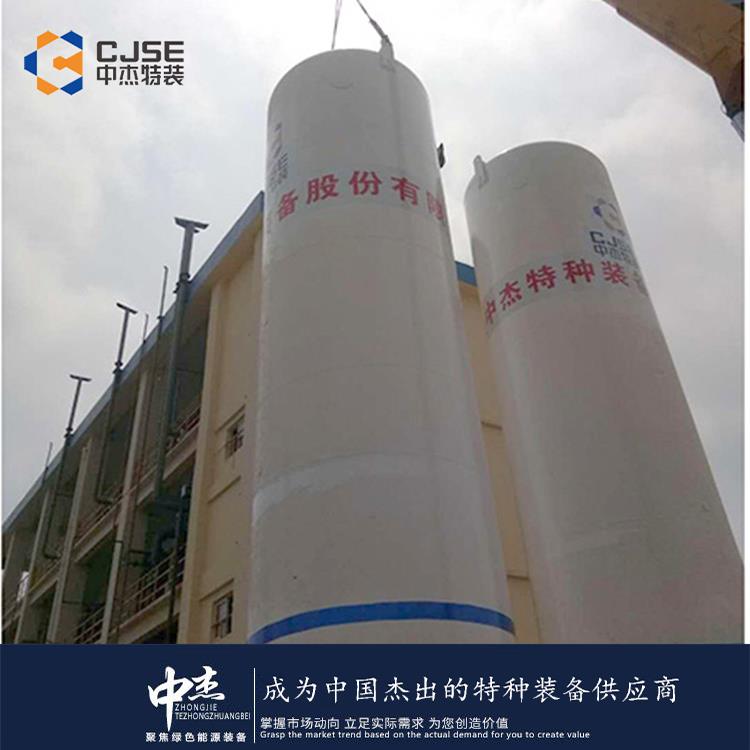
The liquid level of a CO2 storage tank varies based on specific design and operational requirements. Generally, the liquid CO2 tank's level is maintained between 80% and 95%. There are several reasons for keeping the tank level within this range:
- Space retention: Maintaining a certain liquid level provides steam space inside the tank, preventing over-pressurization and the risk of tank explosion.
- Storage capacity: Keeping a higher level maximizes the tank's capacity, allowing for more CO2 storage.
- Stable supply: Maintaining an appropriate level ensures a stable CO2 supply to meet operational needs.
However, specific level requirements may vary depending on different applications and industries. When using a CO2 storage tank, follow the manufacturer's recommendations and relevant regulations and standards to ensure the tank's level is controlled within a safe and appropriate range.
Dry ice is a frozen agent formed by directly converting carbon dioxide gas into a solid under high pressure. It has several applications:
1. Frozen Food and Pharmaceuticals: Dry ice is widely used for the transportation and storage of frozen food and pharmaceuticals. Its low temperature and rapid cooling speed effectively maintain the freshness and quality of food and medicines.
2. Special Effects and Stage Performances: Dry ice is also extensively used in special effects and stage performances. When it comes into contact with the environment's heat, it quickly turns into gas, producing a large amount of white smoke, creating a mysterious and dramatic atmosphere.
3. Cleaning and Disinfection: Dry ice can also be used for cleaning and disinfection. When it comes into contact with surfaces, the low temperature and physical impact of the vaporization process effectively remove dirt, bacteria, and viruses without leaving residues.
4. Laboratories and Scientific Research: Dry ice is also applied in laboratories and scientific research. It can be used to freeze samples, prepare low-temperature experimental environments, and create cold traps and condensers, among others.
It should be noted that safety must be observed when using dry ice to avoid direct contact with skin and eyes, and to prevent use in enclosed spaces to avoid oxygen depletion due to carbon dioxide accumulation.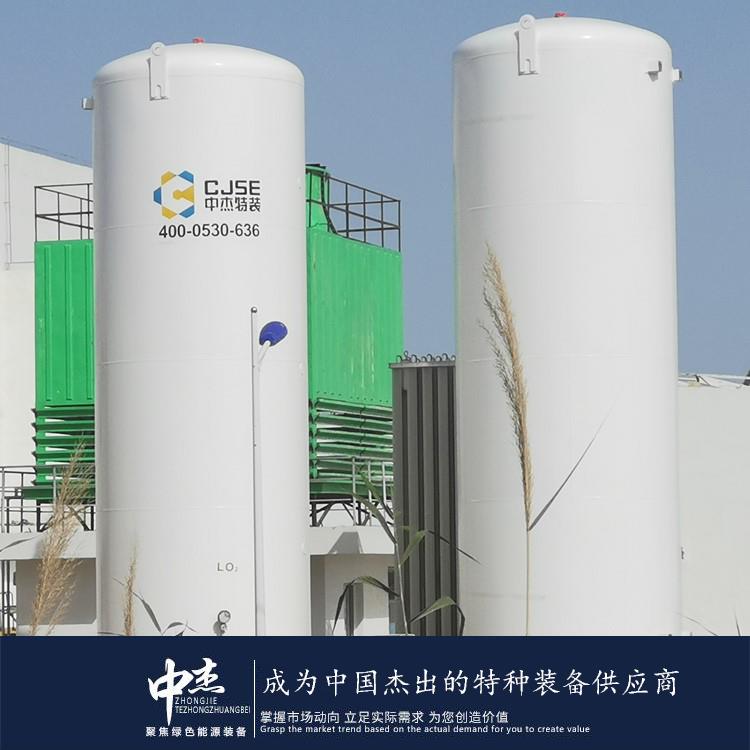
Key measures to ensure the quality of CO2 storage tanks include the following aspects:
1. Selecting Qualified Suppliers: Choose suppliers with a good reputation and experience, ensuring that the tanks they provide meet relevant quality standards and regulations. This can be achieved by evaluating the supplier's qualifications, referencing customer reviews, and conducting on-site inspections to select the appropriate supplier.
2. Rigorous Quality Control: Implement strict quality control measures during the manufacturing process of the tanks. This includes selecting and inspecting raw materials, controlling production processes, monitoring process parameters, and conducting product testing and inspections to ensure the tanks meet quality requirements.
3. Compliance with Standards and Regulations: The design, manufacturing, and installation of the tanks should comply with relevant standards and regulations, such as industry standards and specifications. These standards and regulations encompass aspects like structural design, material selection, welding processes, corrosion protection measures, and the configuration of safety valves and pressure sensors.
4. Regular Inspections and Maintenance: Regular inspections and maintenance of the tanks are necessary during use to ensure safety and reliability. This involves checking the tank's appearance, seals, valves, and pipeline connections, conducting pressure tests and leak detection regularly, and addressing abnormal situations promptly.
5. Establishing a Quality Management System: Establish a comprehensive quality management system, including quality control procedures, documentation, quality training, and internal audits. By establishing a quality management system, tank quality control and continuous improvement can be ensured.
6. Third-party Testing and Certification: Entrust third-party agencies to conduct testing and certification of the tanks to verify their quality and compliance. Third-party testing and certification agencies typically offer objectivity and reliability, providing impartial assessments and certification results.
7. By implementing these measures, the quality of CO2 storage tanks can be effectively ensured, enhancing their safety and reliability.
Our company places great emphasis on technological innovation and research and development, boasting one municipal-level enterprise technology center in Heze City. We have established testing facilities for non-destructive testing, physical and chemical testing, welding testing, hydrostatic testing, etc., and are equipped with over 600 pieces of various equipment such as CNC machine tools, X-ray flaw detectors, digital ultrasonic flaw detectors, mechanical property testing machines, chemical analyzers, spectrometers, tensile testing machines, and plasma welding machines. The key products and technologies we have developed, such as temperature and pressure vessel welding, biomass boiler emission reduction, and waste heat utilization, have successively been shortlisted for multiple Shandong Provincial Department of Industry and Information Technology Science and Technology Innovation Projects, Shandong Provincial Key Projects, and Heze City Innovation and Excellence Projects. We have cumulatively obtained 27 authorized utility model patents, 16 authorized invention patents, participated in drafting 2 standards, 2 industry standards, and registered 15 trademarks. Our technical team, in collaboration with Professor Li Yajiang of Shandong University, has developed deep cryogenic container processing technology using the internationally recognized plasma arc + filler wire tungsten inert gas arc welding (PAW-GTAW) technology, which has been appraised as reaching international standards in the field of deep cryogenic container manufacturing at the provincial level. Choose Zhongjie Special Equipment, and let's create brilliance together!
Cangzhou Carbon Dioxide Storage Tank Pricing - Available for Custom Orders
