


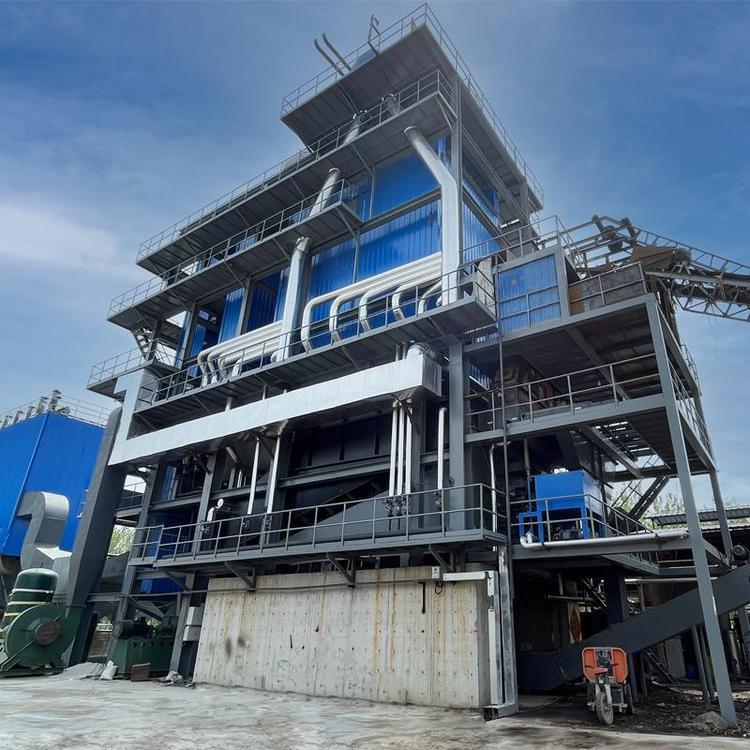

Shandong Zhongjie Special Equipment's main products include: fuel (gas) boilers, organic heat carrier boilers, biomass boilers, waste heat boilers, and other boiler products; vacuum insulation cryogenic pressure vessels such as LNG tanks, oxygen/nitrogen/argon tanks, CO2 tanks; pressure vessel products like denitrification engineering equipment, heat storage and energy storage equipment, complete chemical equipment sets; central air conditioning and HVAC equipment such as ground (water) source heat pumps, air source units, water-cooled screw units, and air-cooled modular units. Planned products include large-scale energy centers, LNG transport vehicles, LNG tank containers, and other green energy equipment.
Biomass boilers can be categorized according to various classification criteria. Here are some common methods of classification:
By combustion method classification:
Direct Combustion Boiler: Directly burns biomass fuel to generate heat energy.
Gasification Boiler: Converts biomass fuel into combustible gas, which is then burned.
Pyrolysis Boiler: Converts biomass fuel into combustible gases and solid carbon through pyrolysis, then burns them.
By fuel type:
Wood Biomass Boiler: Utilizes wood chips, wood shavings, cassava waste, and other wood-based fuels.
Cereal Biomass Boilers: Utilizing crop residues such as straw, rice husks, and wheat straw as fuel.
Industrial waste biomass boiler: Utilizes industrial waste materials such as sawdust and pulp sludge as fuel.
Categorized by boiler type:
Water-tube biomass boiler: The combustion chamber is equipped with water pipes, transferring heat through them.
Fire-tube biomass boiler: The combustion chamber is equipped with fire tubes, which transfer heat energy.
Hybrid biomass boiler: Combines the features of water-tube and fire-tube designs, featuring both water tubes and fire tubes.
By power scale classification:
Small biomass boilers: Power typically ranges from 1 to 10 MW, suitable for small buildings and rural heating.
Medium-sized biomass boiler: Power typically ranges from 10 to 50 MW, suitable for medium-sized industrial plants and large buildings.
Large biomass boilers: Power over 50MW, suitable for large industrial buildings and centralized heating.
These categorization methods merely provide a general overview of biomass boilers; in reality, there are more detailed and combined forms. Different types of biomass boilers may vary in their application scenarios and technical features.
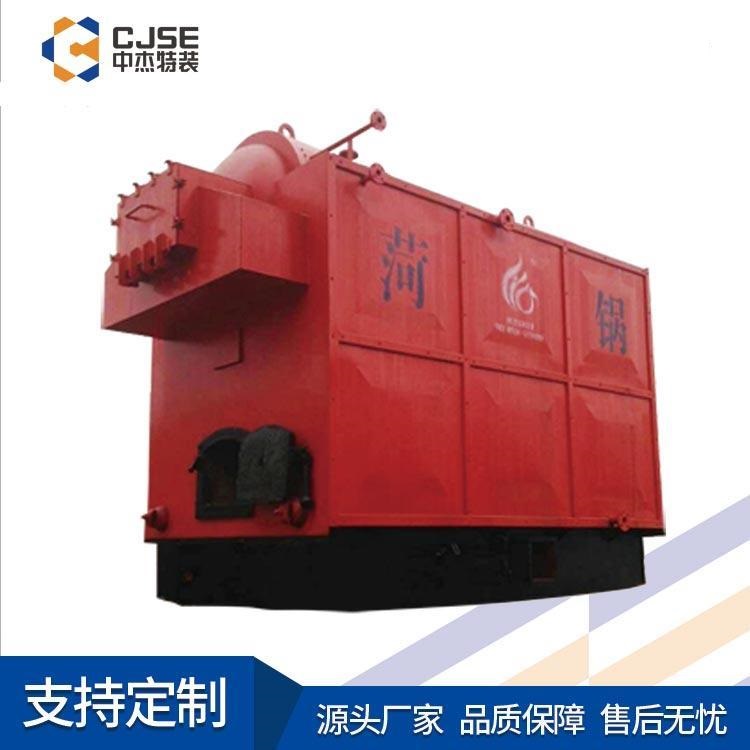
The DZH steam boiler is a manually fired solid fuel boiler featuring the following technical characteristics:
Fuel Combustion Method: The DZH steam boiler utilizes a manual combustion method, where the operator manually feeds fuel and adjusts the combustion process. This method is relatively simple and flexible, suitable for small to medium-sized applications.
Multiple Fuel Adaptability: The DZH steam boiler boasts strong fuel adaptability, capable of burning solid fuels such as wood chips and straw. This feature allows the DZH steam boiler to be widely used in various regions and under different fuel resource conditions.
Furnace Structure: The DZH steam boiler features a double-chamber furnace structure, with a partition between the combustion chambers. This design enhances the temperature and combustion efficiency of the chambers, thereby improving thermal efficiency.
Flue Channels: The flue channels of the DZH steam boiler feature a spiral flue tube design, which increases the contact area between flue gas and water, enhancing heat exchange efficiency. Additionally, a flue gas reversal chamber is incorporated within the flue channel, allowing the flue gas to circulate multiple times within the furnace, thereby increasing the flue gas residence time and improving combustion efficiency.
Safety Protection: The DZH steam boiler is equipped with various safety devices, such as pressure controllers, water level controllers, and overheat protectors, ensuring safe operation of the boiler.
Compact Structure: The DZH steam boiler features a compact design, occupying minimal floor space, making it suitable for installation in areas with limited space.
Overall, the DZH steam boiler boasts strong fuel adaptability, flexible operation, and high thermal efficiency, making it suitable for small to medium-sized solid fuel steam demand scenarios.
Several advantages come with choosing biomass boilers:
Renewable Energy: Fuel for biomass boilers comes from organic matter such as plants, animals, and microorganisms, making it a renewable energy source. Compared to traditional fossil fuels, biomass fuel has lower carbon emissions and environmental impact, helping to reduce greenhouse gas emissions and is more environmentally friendly.
Diverse Fuel Sources: Biomass fuel sources are widespread, including wood, straw, waste crops, food scraps, and municipal solid waste. This diversity in fuel sources allows biomass boilers to be flexible and adaptable, utilizing waste and by-products from plants and animals, thereby reducing resource waste.
Environmental Friendliness: The carbon dioxide emitted during the combustion process of biomass boilers can be absorbed by plants, forming a cycle that reduces air pollution. Additionally, the emissions and ash produced by biomass boilers are relatively low, resulting in minimal environmental impact.
Energy Security: Biomass, as a local renewable energy source, can reduce dependence on imported energy and enhance energy security. In regions with scarce resources, the use of biomass boilers can provide a reliable energy supply.
Economic Efficiency: Biomass fuel is relatively cost-effective and can reduce energy costs. Moreover, the technology and equipment for biomass boilers are continuously evolving and maturing, making them even more economically viable.
To burn biomass pellets and avoid coking issues, the following measures can be taken:
Appropriate Particle Size: The size of biomass particles is crucial for combustion efficiency. Particle size should be controlled within an appropriate range, typically 3-5 mm. Larger particles can lead to incomplete combustion, while smaller ones are prone to flying off and clogging.
Sufficient Oxygen Supply: Adequate oxygen supply is required for combustion to ensure a complete reaction. Biomass boilers should ensure ample oxygen supply in the combustion chamber, which can be achieved by adjusting the ventilation system and operating parameters of the burners.
Optimal Combustion Temperature: The combustion temperature of biomass pellets is also a significant factor affecting combustion efficiency. A low combustion temperature leads to incomplete combustion, while a high temperature can easily cause slagging. Biomass boilers should adjust the combustion temperature to an appropriate range based on the fuel characteristics and combustion requirements.
Appropriate Combustion Time: The combustion time of biomass pellets should also be properly controlled. Too short a combustion time leads to incomplete combustion, while too long a combustion time may cause coking. Biomass boilers should adjust the combustion time according to the fuel characteristics and combustion requirements, to an appropriate range.
Regular cleaning and maintenance: Biomass boilers require regular cleaning and maintenance to keep the combustion chamber and flue passages clear. Regularly cleaning the ash and carbon buildup inside the combustion chamber, as well as the flue and heat exchanger, helps prevent coking issues.
Be mindful that biomass fuels and biomass boilers of different types may vary; specific operations and adjustments should be made based on the actual situation. When making adjustments and
Shandong Zhongjie Special Equipment, welcome customers to our factory for business discussions.
Luoyang 4-ton biomass boiler, made of 304 stainless steel
