


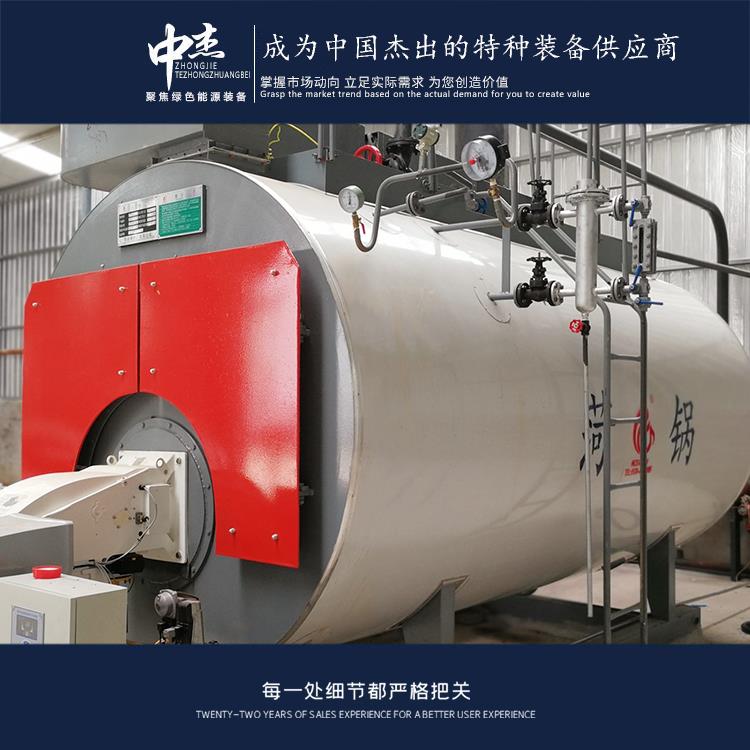

Shandong Zhongjie Special Equipment (formerly Heze Boiler Factory Co., Ltd.) was established in 2001, located at No. 2218 Jinnan Road, Economic and Technological Development Zone, Heze City. With a registered capital of 50 million yuan and total assets of 500 million yuan, the company has 7 business centers: boilers, deep-freeze containers, pressure vessels, central air conditioning, engineering installation, international trade, and Internet of Things. It has three factory sites on Jinnan Road, East Changjiang Road, and Bohai Road, covering a total area of 200,000 square meters, with the main workshop spanning 83,000 square meters. It currently employs 710 staff, including 247 engineers and technicians, and 82 intermediate-level technicians. In December 2016, it was recognized as a "High-Tech Enterprise" by the Science and Technology Department. In June 2021, it was identified as a "Specialized and New Enterprise in Shandong Province" by the Ministry of Industry and Information Technology. In June 2022, it was named a "Gazelle Enterprise in Shandong Province," and in August 2022, it was recognized as a "Specialized and New Small Giant Enterprise" by the Ministry of Industry and Information Technology.
Regular inspections of industrial boilers are crucial for ensuring safe operation, improving efficiency, and extending their service life. Here are the importance of regular inspections for industrial boilers:
Safety Assurance: Industrial boilers are high-temperature, high-pressure equipment. Without regular inspections, there may be safety hazards. Regular inspections can identify and eliminate potential issues within the boiler, such as combustion system failures, water level control malfunctions, and safety valve failures, ensuring safe boiler operation.
Efficiency Enhancement: Regular inspections can uncover dirt and deposits inside the boiler, maintaining the cleanliness of heat exchangers and thermal conductivity efficiency, thus improving the boiler's thermal and energy efficiency. This helps reduce energy consumption and operating costs.
Extended Service Life: Regular inspections can detect and address issues like corrosion, wear, and fatigue within the boiler early on, preventing further damage and faults, and extending the boiler's service life. Regular maintenance and care can also prevent and reduce boiler damage and faults.
Legal and Regulatory Requirements: Many regions have established laws, regulations, and standards for boiler safety management, requiring regular inspections and maintenance of industrial boilers. Regular inspections are a critical aspect of complying with legal and regulatory requirements.
Insurance Requirements: Some insurance companies have specific requirements for industrial boiler insurance, mandating regular inspections and maintenance. Regular inspections can meet insurance company requirements and protect the insurance rights of the enterprise.
In summary, regular inspections of industrial boilers are important for ensuring safety, improving efficiency, extending service life, complying with legal and regulatory requirements, and meeting insurance requirements. Regular inspections should be conducted by qualified institutions or individuals, following relevant laws, regulations, and standards. Timely inspections and maintenance can ensure the safe operation of industrial boilers.
Industrial Boiler Thermal Deoxygenation is a common deoxygenation method, featuring:
- Deoxygenation: Thermal deoxygenation releases dissolved oxygen from water in the boiler by heating the feed water. As the water temperature rises during the process, the solubility of oxygen decreases, allowing for the effective removal of oxygen from the water.
- No Chemicals Required: Unlike other deoxygenation methods, thermal deoxygenation does not require chemicals, thus avoiding environmental pollution and equipment corrosion. It also reduces operational costs and complexity.
- Automated Control: Thermal deoxygenation can be achieved through an automated control system, which adjusts the feed water temperature and flow rate based on the boiler's operating status and water quality to achieve optimal deoxygenation results.
- Wide Application Range: Thermal deoxygenation is suitable for various types of industrial boilers, including coal-fired, gas-fired, and oil-fired boilers. Both small and large boilers can utilize thermal deoxygenation for deoxygenation treatment.
- Enhanced Boiler Efficiency: Removing dissolved oxygen from the water reduces corrosion and oxidation reactions within the boiler, extending its lifespan. Additionally, reducing oxygen content can improve the boiler's thermal efficiency and reduce energy consumption.
- Note: While thermal deoxygenation effectively removes oxygen from the water, other water quality issues like hardness and alkalinity may require additional water treatment methods. Therefore, in practical applications, it is essential to consider the water quality characteristics and boiler requirements to select the appropriate deoxygenation method.
Gas boiler temperature control methods usually include:
1. Manual Control: Adjust the temperature of the gas boiler by manually operating valves or regulators. Adjust the valve opening or regulator settings as needed to achieve the desired temperature.
2. Automatic Control: Gas boilers can be equipped with an automatic control system that uses sensors and controllers for automatic temperature regulation. Sensors detect the boiler temperature and send signals to the controller, which then automatically adjusts the gas supply and burner status within a set temperature range to maintain the desired temperature.
3. Proportional Control: The temperature regulation of gas boilers can also be done through proportional control. Adjust the valve or regulator opening based on temperature changes to maintain a certain proportional relationship between gas supply and burner status.
4. PID Control: PID control is a commonly used temperature regulation method. The PID controller adjusts the gas supply and burner status based on temperature deviations, rates of change, and integral values to achieve temperature control.
It's important to note that different gas boilers may use different temperature control methods, and the specific method and operation should be determined according to the boiler model and control system. When adjusting the temperature, follow safety operation procedures to ensure normal and safe boiler operation.
If there is an issue with the thermal oil furnace circulating pump, the following steps can be taken to address it:
1. Shutdown and inspection: First, stop the thermal oil furnace operation and disconnect the power. Check for any obvious signs of failure in the pump, such as unusual noises, oil leaks, or seepage. Inspect if the pump motor is running normally and if there's any abnormal heat generation.
2. Clean the pump body: If sediment or impurities are found in the pump body, clean them. Use appropriate tools and cleaning agents to remove dirt and obstructions from within the pump. Exercise caution to avoid damaging the pump body.
3. Check the pump connections: Inspect the pump connections, including inlet and outlet pipes, valves, and seals. Ensure they are securely fastened, valves operate smoothly, and seals are intact. Repair or replace immediately if there are any loose or damaged parts.
4. Inspect the pump motor: Check if the pump motor is operating normally and if there are any abnormal sounds or overheating. Inspect the power lines and control system of the motor to ensure a normal power supply and correct control signals.
5. Check the pump's lubrication and cooling system: Ensure the pump's lubrication and cooling system are functioning properly. Check the supply of lubricating oil or grease, and the circulation and temperature control of cooling water or coolant.
6. Adjust pump parameters: Depending on the situation, you may need to adjust the pump parameters, such as flow rate and head. Adjust the pump speed or valve opening according to the equipment requirements and operating conditions to meet the thermal energy needs of the furnace.
7. Seek repair if necessary: If the above steps do not resolve the issue or if more extensive maintenance and inspection are required, it is recommended to seek repair services. Contact a repair technician or manufacturer's technical support for further troubleshooting and repair.
It is crucial to exercise safety when dealing with thermal oil furnace circulating pump issues and follow relevant operational procedures and safety requirements. If unsure how to proceed or if there are safety hazards, seek assistance immediately.
Our company attaches great importance to technological innovation and research and development. We have 1 city-level enterprise technology center in Heze City, with testing facilities for non-destructive testing, physical and chemical testing, welding testing, hydrostatic testing, etc. We are equipped with over 600 types of instruments and equipment, including CNC machine tools, X-ray flaw detectors, digital ultrasonic flaw detectors, mechanical property testing machines, chemical analyzers, spectrometers, tensile testing machines, plasma welding machines, and more. The key products and technologies we have developed, such as welding of temperature and pressure vessels, emission reduction of biomass boilers, and waste heat utilization, have successively been selected for multiple Shandong Provincial Department of Industry and Information Technology scientific and technological innovation projects, key provincial projects, and Heze City innovative excellence projects. We have accumulated 27 authorized utility model patents, 16 authorized invention patents, participated in drafting 2 standards, 2 industry standards, and registered 15 trademarks. The technical team of our company, in collaboration with Professor Li Yajiang of Shandong University, has developed deep cryogenic vessel processing technology using the international plasma arc + filler wire tungsten inert gas arc combination welding (PAW-GTAW) technology. The provincial technological achievement evaluation has confirmed that the technology level in the field of deep cryogenic vessel manufacturing has reached international standards.
Choose ZJET Customized Solutions, let's join hands to create brilliance!
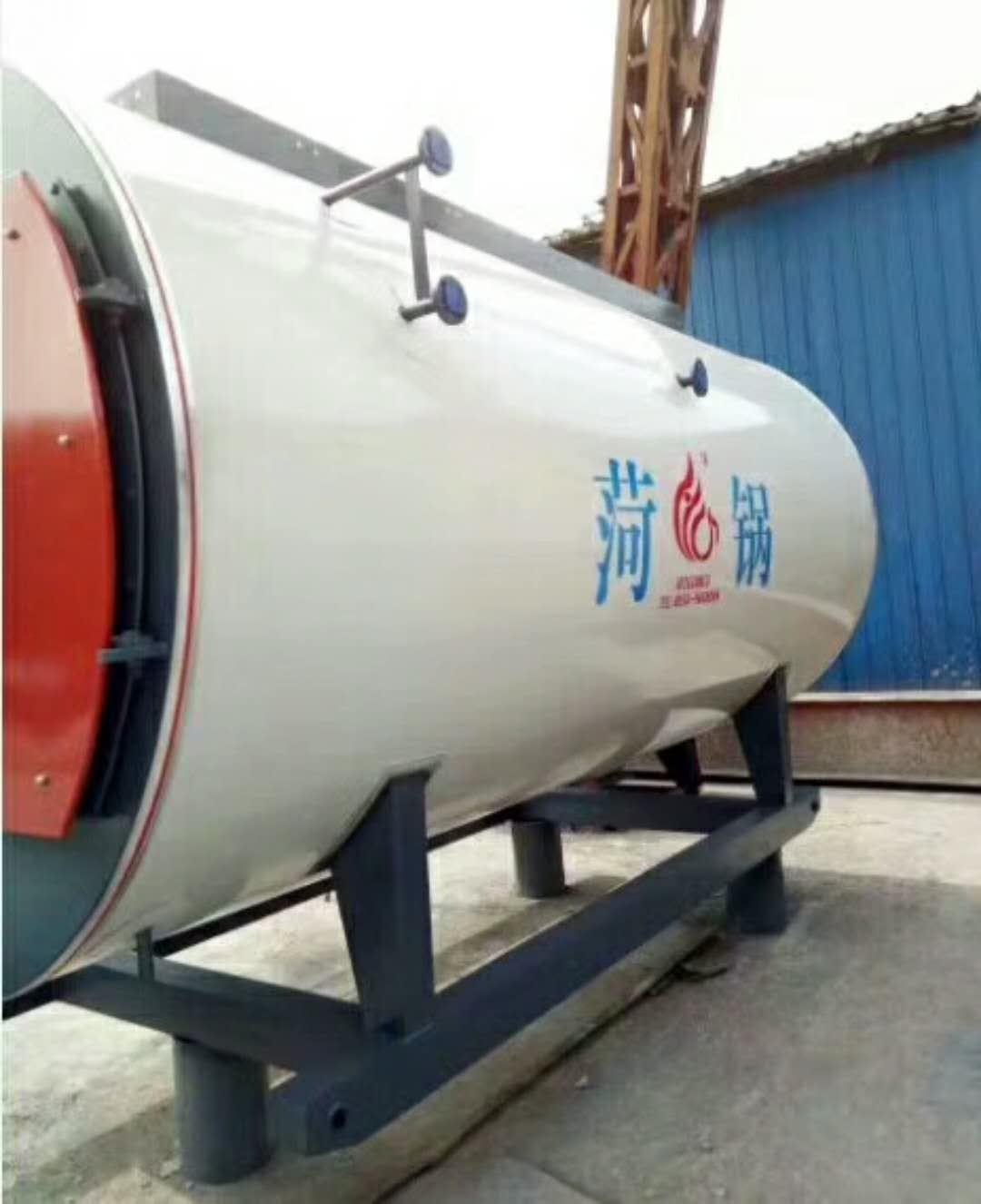
Changdu 3-ton gas boiler
