


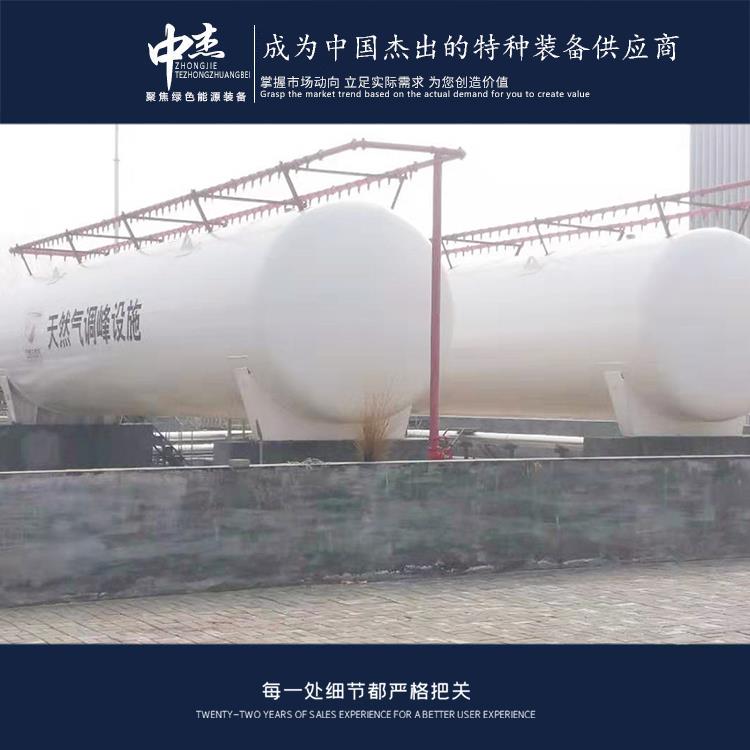
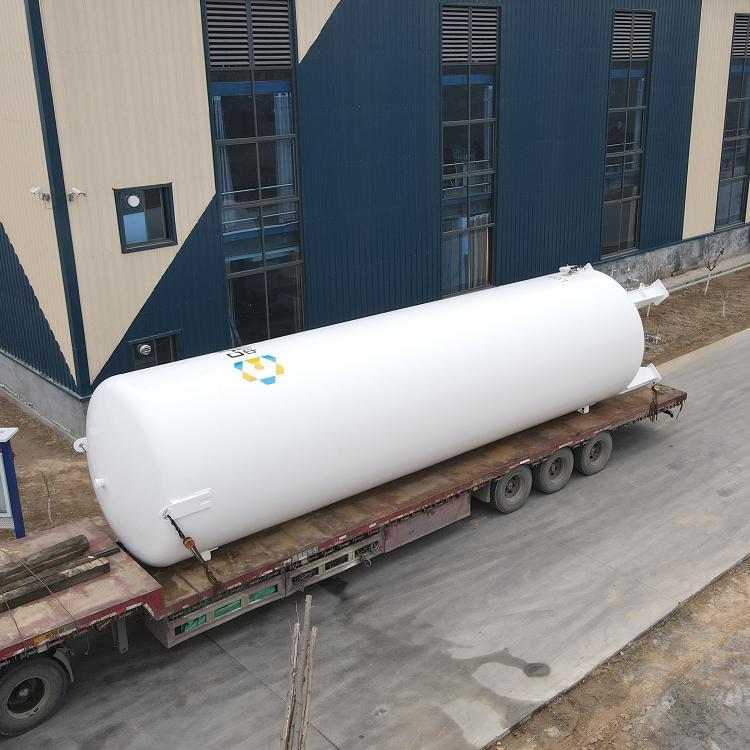
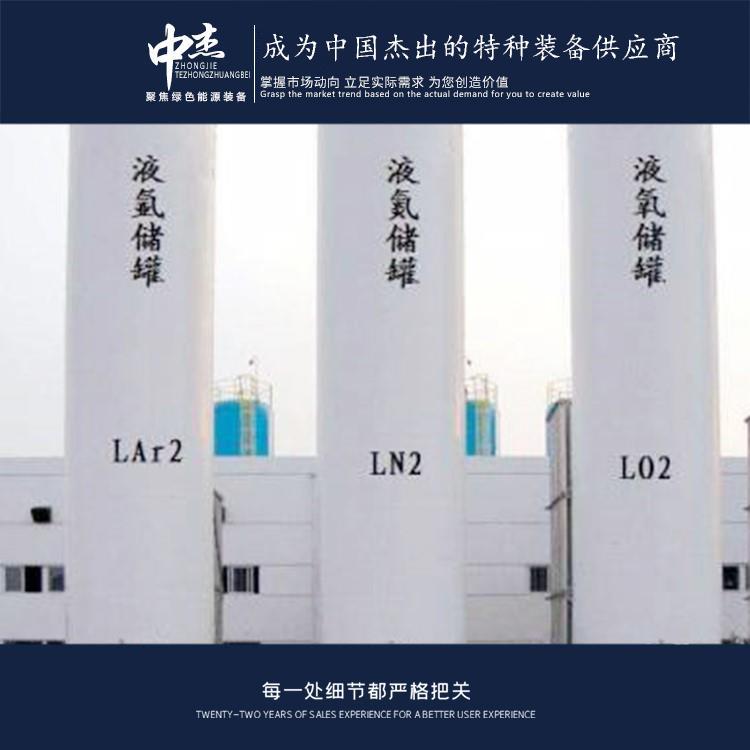
Shandong Zhongjie Special Equipment's main products include: fuel (gas) boilers, organic heat carrier boilers, biomass boilers, waste heat recovery boilers, and other boiler products; vacuum insulation cryogenic pressure vessels such as LNG tanks, oxygen/nitrogen/argon tanks, CO2 tanks; pressure vessel products such as denitrification engineering equipment, heat storage and energy storage equipment, complete chemical equipment sets; central air conditioning and ventilation equipment such as ground (water) source heat pumps, air source units, water-cooled screw units, and air-cooled modular units. Planned products include large-scale energy centers, LNG transport vehicles, LNG tank containers, and other green energy equipment.
The recent surge in the development of low-temperature liquid storage tanks can be attributed to several factors: increasing energy demand due to economic growth and population expansion, with these tanks primarily used for storing liquid gases (LNG), liquid oxygen (LOX), and liquid nitrogen (LIN) to meet the rising energy needs. Greenhouse gas reduction: These tanks can store and transport liquid CO2 for carbon capture and storage (CCS) technologies, reducing greenhouse gas emissions. As environmental protection and climate change awareness grows, the demand for low-temperature liquid storage tanks in the CCS field also increases. Industrial development needs: The application of low-temperature liquid storage tanks in the industrial sector is also on the rise. For instance, in industries such as chemicals, pharmaceuticals, food and beverages, there is a need to store and transport low-temperature liquid raw materials or products, like liquid nitrogen, liquid oxygen, and liquid ethylene. With the development of these industries, the demand for low-temperature liquid storage tanks also grows. Technological advancement and innovation: In recent years, there has been continuous progress and innovation in the design, manufacturing, and transportation of low-temperature liquid storage tanks. The application of new materials, optimization of tank structures, and improvements in safety control systems have made these tanks safer and more reliable, further propelling their peak development. In summary, factors such as increasing energy demand, greenhouse gas reduction, industrial development needs, and technological advancement and innovation have collectively driven the peak development of low-temperature liquid storage tanks in recent years. As related industries develop and technology advances,
Carbon dioxide storage tanks offer the following advantages:
High storage density: Carbon dioxide storage tanks can compress CO2 gas into a liquid state, significantly increasing storage density. Compared to storing in its gaseous form, liquid CO2 can be stored in smaller tanks, saving space and costs.
Environmental friendly and renewable: Carbon dioxide is an eco-friendly gas, and its increased concentration in the atmosphere contributes to warming and climate change. By storing and utilizing CO2, we can reduce its emissions into the atmosphere, promoting environmental protection and sustainable development.
Multiple application fields: Carbon dioxide storage tanks are widely used in various industries, including food and beverage, manufacturing, fire suppression, and gas supply. CO2 can serve as a preservative, carbonation agent, gas, and extinguishing agent, among other uses, with broad applications and market demand.
Safe and reliable: During design and manufacturing, carbon dioxide storage tanks typically use high-strength materials (such as carbon steel or stainless steel) for excellent pressure resistance and safety. The tanks are usually equipped with safety valves, pressure gauges, level indicators, and other accessories to ensure safe operation. Moreover, CO2 is a non-flammable and non-explosive gas, making it relatively safe.
These advantages make carbon dioxide storage tanks a crucial storage and supply equipment, widely applied across multiple industries. However, it is still necessary to follow relevant safety operation procedures and standards when using carbon dioxide storage tanks to ensure safe operation and usage.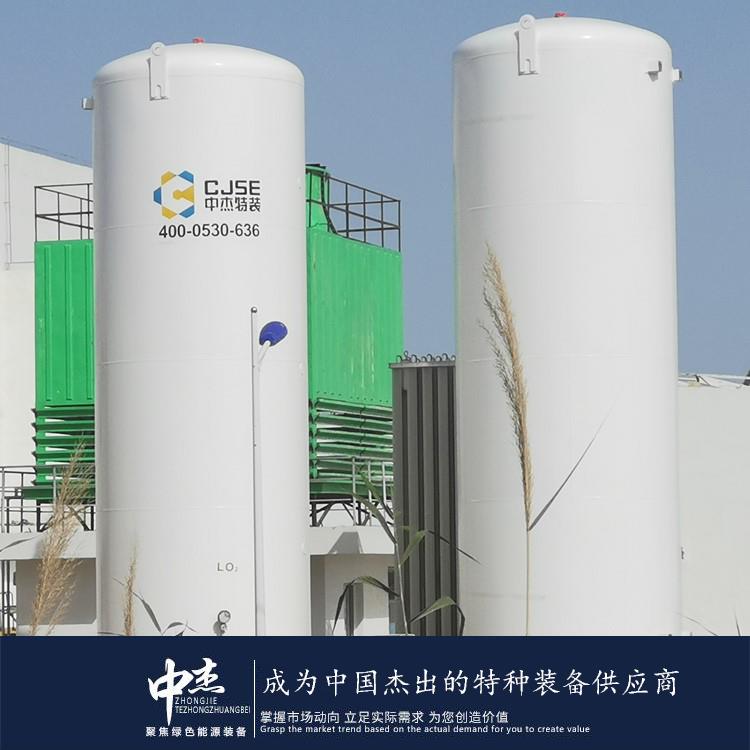
Carbon dioxide cylinder hydrostatic testing is a common quality inspection method used to verify the cylinder's sealing and pressure resistance. Below are the general steps for conducting hydrostatic testing on a carbon dioxide cylinder:
Preparation: Ensure the cylinder's interior is clean and the cylinder is emptied. Check the cylinder's valves, pipes, and joints to ensure they are well-sealed.
Fill with Water: Fill the cylinder with water, using tap water or another clean source. Ensure the water is evenly filled, avoiding bubbles or dead spots.
Apply Pressure: Use a pressure pump or other pressure device to gradually increase the water pressure until it reaches the predetermined test pressure. The test pressure is typically determined based on the cylinder's design requirements and relevant standards.
Maintain Pressure: After reaching the test pressure, hold it for a period, usually 15-30 minutes. During this time, observe for any leakage and check the valves and joints for leaks.
Release Pressure: Release the water pressure inside the cylinder, ensuring it is done slowly and evenly to avoid sudden pressure release causing shock.
Inspection and Assessment: After pressure release, inspect the cylinder's exterior and interior for any leakage. Assess the test results to ensure the cylinder's sealing and pressure resistance meet requirements.
Note: When conducting hydrostatic testing, follow relevant safety operation procedures and standards to ensure safety and reliability during the process. Additionally, based on the cylinder's design and usage requirements, other types of tests can be conducted, such as pneumatic testing and ultrasonic testing, to comprehensively evaluate the cylinder's quality and performance. Seek advice and guidance from a consultant.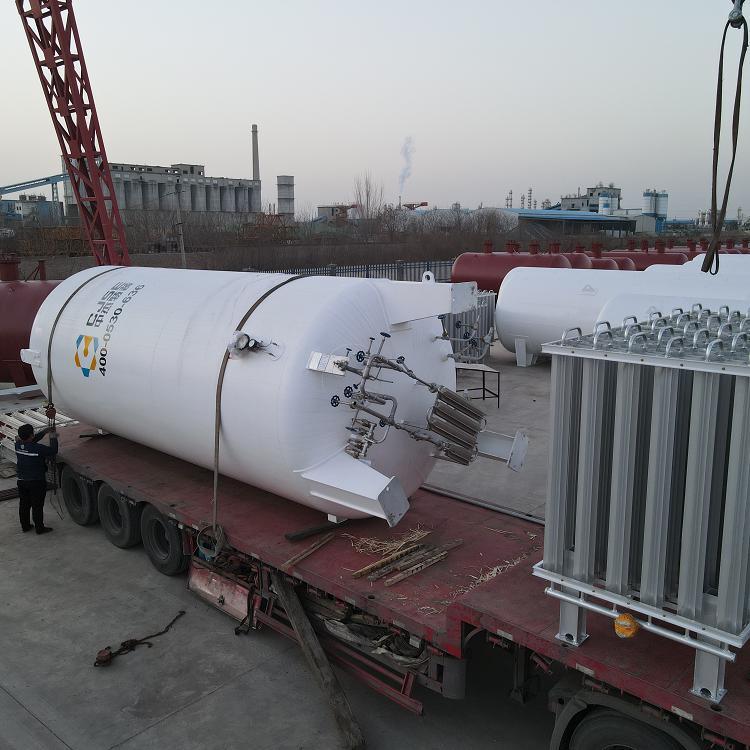
Carbon dioxide level gauges are devices used for measuring and monitoring the liquid level of CO2 within storage tanks. Depending on different working principles and application requirements, common types of CO2 level gauges include the following:
- Buoy Level Gauge: Uses the buoyancy of a float to indicate the liquid level, measured either through a mechanical linkage or an electrical signal sensor connected to the gauge.
- Pressure Level Gauge: Measures level by utilizing the relationship between liquid pressure and the level. It calculates the liquid level height by measuring the pressure changes on a pressure sensor.
- Ultrasonic Level Gauge: Measures level using the propagation time of ultrasonic waves. An ultrasonic transmitter emits waves, and when the beam encounters the liquid surface, some of the waves are reflected back. The liquid level height is then calculated by measuring the reflection time.
- Capillary Level Gauge: Utilizes the capillary principle to measure level. By inserting a thin tube into the liquid, the liquid rises within it, and the liquid level height is calculated based on the rise.
- Level Gauge: Measures level by reflecting waves. The transmitter emits waves, and when the beam encounters the liquid surface, some of the waves are reflected back. The liquid level height is calculated by measuring the reflection time.
These level gauges can be selected for use in CO2 storage tanks based on specific needs and tank design. When selecting and installing a level gauge, factors such as liquid properties, working environment, and precision requirements must be considered, and it must be ensured that it is compatible with the tank's safe operation and monitoring system.
Zhongjie Special Equipment upholds the grand vision of "realizing employees' dreams, creating value for customers, and striving for the prosperity and strength of our motherland," and is dedicated to the development of the green energy equipment industry. We commit to society with high-quality, cost-effective products and services!
Shenzhen 15-cubic CO2 Storage Tank - High Performance-to-Price Ratio
