


Shandong Zhongjie Special Equipment (formerly Heze Boiler Factory Co., Ltd.) was established in 2001, located at No. 2218 Jinnan Road, Development Zone, Heze City. With a registered capital of 50 million yuan and total assets of 500 million yuan, the company has 7 business centers: boilers, deep-freezing vessels, pressure vessels, central air conditioning, engineering installation, international trade, and the Internet of Things. It has three manufacturing sites on Jinnan Road, East Changjiang Road, and Bohai Road, covering a total area of 200,000 square meters, with the main workshop spanning 83,000 square meters. It currently employs 710 people, including 247 engineers and technicians and 82 intermediate-level technicians. In December 2016, it was recognized as a "High-Tech Enterprise" by the Science and Technology Department. In June 2021, it was identified as a "Specialized and New Enterprise in Shandong Province" by the Ministry of Industry and Information Technology. In June 2022, it was recognized as a "Deer Enterprise in Shandong Province" and in August 2022, it was identified as a "Specialized and New Small Giant Enterprise" by the Ministry of Industry and Information Technology.
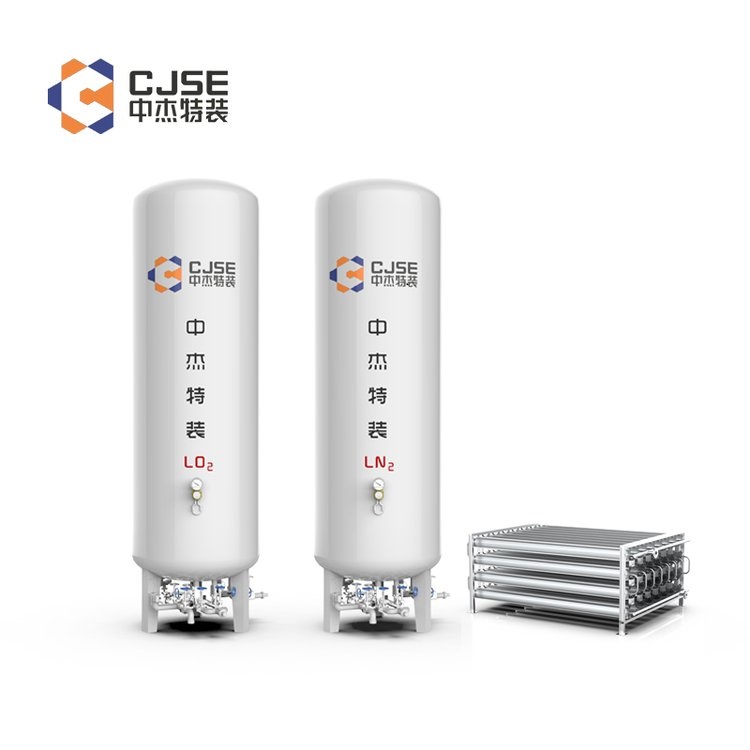
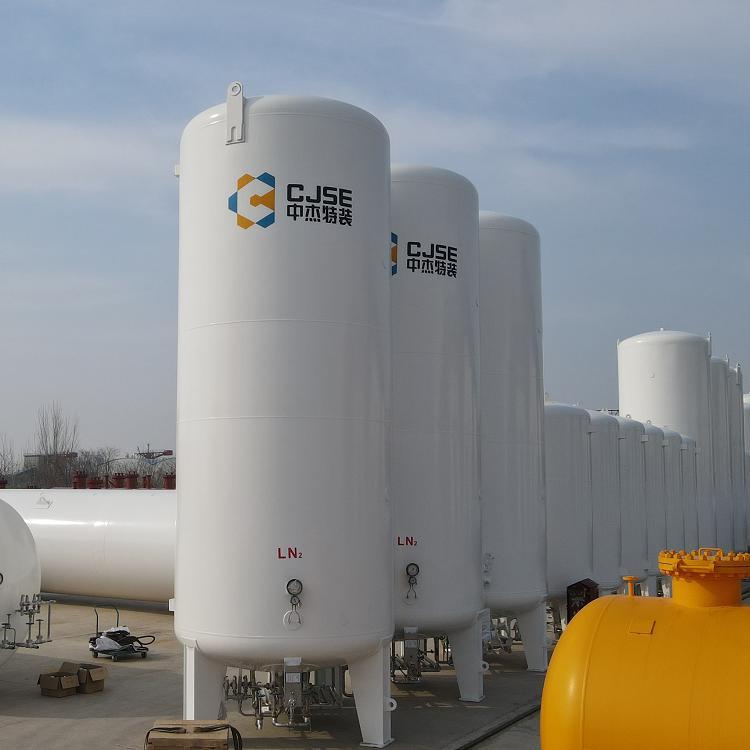
A 50 cubic meter liquid oxygen tank refers to a storage tank with a capacity of 50 cubic meters. Liquid oxygen tanks are commonly used for storing and supplying liquid oxygen, for applications such as research, experiments, and more.
Key features and configurations of a 50 cubic meter liquid oxygen storage tank may include the following aspects:
Volume: A 50-cubic-meter liquid oxygen tank has a capacity of 50 cubic meters and can store a large quantity of liquid oxygen.
Structure: Liquid oxygen tanks are typically designed with a double or multi-layered structure, filled with insulating material in between to minimize heat transfer and evaporation of the liquid oxygen. The tank material is usually stainless steel or aluminum alloy, offering excellent corrosion and low-temperature resistance.
Insulation Layer: The insulation layer of liquid oxygen storage tanks typically employs multi-layered insulation materials, such as polyethylene foam, glass fiber, and vacuum layers, to reduce heat transfer and the evaporation of liquid oxygen.
Thermal Control System: Liquid oxygen tanks are typically equipped with a thermal control system to regulate the tank's temperature, maintaining the low-temperature state of the liquid oxygen.
Safety Equipment: Liquid oxygen tanks are typically equipped with safety devices such as pressure sensors, temperature sensors, and safety valves to ensure the safe operation of the tank.
It is important to note that the use of liquid oxygen tanks must strictly adhere to relevant safety regulations and operational guidelines to ensure safe operation and usage. Liquid oxygen is highly flammable, so fire prevention measures must be taken when using liquid oxygen tanks, and it must be ensured that there are no ignition sources nearby.
The temperature difference between the interior and exterior of a low-temperature liquid storage tank depends on various factors, including the tank's design, insulation properties, the temperature of the liquid, and the external environmental temperature. Generally, the temperature inside the low-temperature liquid storage tank will be significantly lower than that of the external environment.
Low-temperature liquid storage tanks are commonly used for storing liquefied nitrogen, oxygen, argon, and other low-temperature liquids. These liquids have very low boiling points, usually below -100 degrees Celsius. To maintain the low temperature of the liquids, the tanks need to have excellent insulation properties to minimize heat transfer and evaporation loss.
Low-temperature liquid storage tanks typically offer a smaller temperature variance. Generally, the internal temperature of the tank can be maintained near the boiling point of the liquid, usually several dozen degrees lower than the ambient temperature. The specific temperature variance depends on the tank's design and insulation properties, as well as the characteristics of the liquid.
Note that the temperature differences in low-temperature liquid storage tanks may change over time. As time progresses, the insulating material's performance may be affected by wear or aging, leading to an increase in temperature differences. Therefore, regular inspection and maintenance of the tank's insulating layer are crucial to ensure its effective and stable insulating performance.
To safely operate a liquid oxygen storage tank, attention should be paid to the following aspects:
Training: Personnel operating liquid oxygen tanks must undergo training to understand the properties of liquid oxygen, safety operating procedures, and emergency response measures. Only trained personnel are authorized to operate liquid oxygen tanks.
Safety Operating Procedures: Establish and adhere to safe operating procedures for liquid oxygen tanks, including proper operational procedures, protective measures, and emergency response plans. Ensure operators follow the procedures to minimize accident risks.
Equipment Inspection and Maintenance: Regularly inspect the condition of liquid oxygen tanks and related equipment, including valves, pipes, pressure gauges, etc. Ensure the equipment is in perfect condition and promptly repair or replace any damaged parts.
Leak Control: Equipped with leak detection and alarm systems to promptly identify and control leaks in liquid oxygen storage tanks. Upon detection of a leak, immediate measures should be taken to contain the source and initiate repairs.
Fire Prevention Measures: Liquid oxygen contains a high oxygen content, which is prone to causing fires. Measures such as setting up fire barriers around liquid oxygen storage tanks and using fire-retardant coatings are taken to prevent fires from occurring and spreading.
Static protection: Electrostatic buildup in liquid oxygen tanks may cause sparks, increasing the risk of fire. Measures such as using conductive materials and anti-static equipment should be taken to reduce the accumulation and release of static electricity.
Ventilation Requirements: Ensure adequate ventilation within the enclosed space of the liquid oxygen storage tank to expel gases produced by the evaporation of liquid oxygen. Avoid excessive oxygen concentration and minimize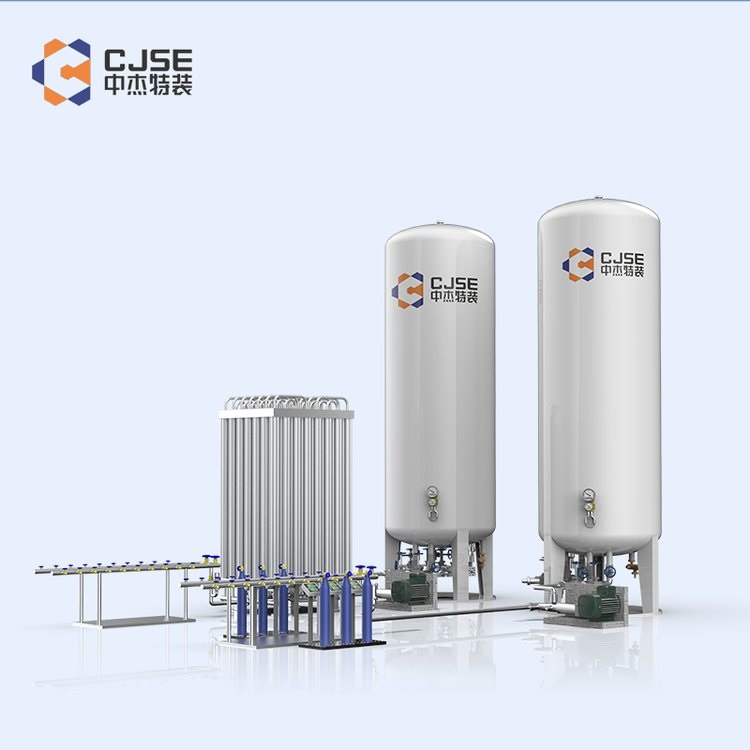
Liquid Oxygen Low-Temperature Storage Tanks are primarily used for storing and supplying liquid oxygen, with their application methods varying according to specific needs and scenarios. Here are some common application methods for liquid oxygen low-temperature storage tanks:
Applications: Liquid Oxygen Low-Temperature Storage Tanks are widely used in the field for cryogenic preservation of biological samples, cells, tissues, and vaccines. Institutions such as biopharmaceutical research organizations and biobanks utilize these tanks to store and protect these biological materials.
Experimental Research: Liquid Oxygen Low-Temperature Storage Tanks are used in scientific research and laboratories to provide low-temperature environments for cryogenic preservation and experiments. These tanks play a crucial role in experimental research across fields such as physics, chemistry, biology, and materials science.
Industrial Application: Liquid Oxygen Low-Temperature Storage Tanks are used in industrial sectors for providing low-temperature cooling in processes such as metalworking, welding, and heat treatment. These tanks can achieve low temperatures, ensuring the required hardness and toughness of metals during processing.
Food Industry: Liquid oxygen low-temperature storage tanks are used in the food industry for freezing and refrigerating food products, such as frozen meats, frozen fruits, and frozen seafood. The low temperature of liquid oxygen can quickly freeze the food, preserving its freshness and quality.
Liquid Oxygen cryogenic storage tanks are used in the field for storing and supplying liquid oxygen as fuel. Liquid oxygen, as a high-energy fuel, is widely used in the propulsion systems of engines and vehicles.
During the operation of liquid oxygen low-temperature storage tanks, strict adherence to relevant safety regulations and operational guidelines is necessary to ensure safe operation and use of the tanks. Liquid oxygen is highly flammable, so fire prevention measures must be implemented when using liquid oxygen low-temperature storage tanks, and fire sources must be kept away from the storage tanks.
Shandong Zhongjie Special Equipment, welcome customers to our factory for negotiations and cooperation.
Ankang Low-Temperature Liquid Nitrogen Storage Tank, High Cost-Performance Ratio
