



Shandong Zhongjie Special Equipment (formerly Heze Boiler Factory Co., Ltd.) was established in 2001, located at No. 2218 Jinan Road, Development Zone, Heze City, with a registered capital of 50 million yuan and total assets of 500 million yuan. The company has 7 business centers: boilers, cryogenic containers, pressure vessels, central air conditioning, engineering installation, international trade, and the Internet of Things. It operates three factory areas on Jinan Road, East Changjiang Road, and Bohai Road, covering a total of 200,000 square meters. The main workshop spans 83,000 square meters. Currently, there are 710 employees, including 247 engineers and technicians, and 82 intermediate-level technical personnel. In December 2016, it was recognized as a "High-Tech Enterprise" by the Science and Technology Department. In June 2021, it was identified as a "Specialized and New Enterprise of Shandong Province" by the Industry and Information Technology Department. In June 2022, it was recognized as a "Gazelle Enterprise of Shandong Province," and in August 2022, it was identified as a "Specialized and New Small Giant Enterprise" by the Ministry of Industry and Information Technology.
Biomass boilers produce nitrogen oxides (NOx) during the combustion process, which are harmful emissions to the environment. Therefore, controlling the NOx emissions from biomass boilers is an important challenge. The following are some difficulties in NOx control for biomass boilers:
Fuel Characteristics: The composition and properties of biomass fuels vary widely, containing different nitrogen contents and volatiles. This makes it difficult to accurately predict and control NOx emissions during the combustion process in biomass boilers.
Combustion Temperature: The generation of NOx is closely related to combustion temperature, with both excessively high and low temperatures increasing NOx formation. The combustion temperature of biomass boilers is influenced by various factors, such as fuel moisture and oxygen supply, making it challenging to control the combustion temperature for effective NOx emissions control.
Proper combustion air supply is crucial for controlling NOx emissions, but either too much or too little air supply can affect combustion efficiency and NOx emissions. The combustion air supply for biomass boilers must be adjusted rationally based on the fuel characteristics and combustion conditions, which places certain requirements on the operators and control personnel.
Combustion System Design: The design of the combustion system in biomass boilers also has an impact on NOx emissions control. For instance, the adopted combustion technology and burner design, such as low NOx combustion technology and optimized combustion chamber structure, can effectively reduce NOx emissions.
Operation and Maintenance: Proper operation and regular maintenance of biomass boilers are crucial for controlling NOx emissions. Rational operation and scheduled maintenance ensure the normal operation and combustion of the combustion system, thereby reducing the generation of NOx.
In summary, the challenges in NOx control for biomass boilers mainly include fuel characteristics.
Fully automatic biomass boiler systems commonly use a make-up water pump for pressure maintenance, which is a standard water supply method. The specific working principle is as follows:
Make-up Water Pump: The fully automatic biomass boiler is equipped with a make-up water pump, which is used to pump water from the water source (such as a water tank or municipal water supply) into the boiler's water supply system.
Pressure Regulation: The feed water pump operates on a constant pressure system, which involves installing a pressure sensor or controller in the boiler water supply system to monitor the pressure. When the pressure in the water supply system falls below the set value, the feed water pump automatically starts to replenish water into the system, thereby increasing the system pressure.
Pressure Control: The feed pump will control the pressure based on the set pressure range. When the system pressure reaches the set value, the feed pump will stop working to prevent excessive pressure.
Automation Control: The water supply system of an automatic biomass boiler is typically equipped with an automation control system that can intelligently manage according to the boiler's operational status and requirements. For instance, when the boiler needs to replenish water, the control system automatically activates the feedwater pump to ensure the stable operation of the water supply system.
By utilizing a constant pressure supply pump method, the fully automatic biomass boiler can achieve automated control of the water supply system and stable water supply, ensuring the normal operation and safety of the boiler. This method can be adjusted and optimized according to actual needs, enhancing water supply and energy utilization efficiency.
Slagging in biomass boilers refers to the solid residue formed by ash and other impurities in the fuel during the combustion process at high temperatures. Slagging is a common issue in the operation of biomass boilers, which may affect the boiler's heat transfer and combustion efficiency. Here is a brief discussion on slagging in biomass boilers:
Coking Causes: The biomass fuel contains a high ash content, and the ash may include some sticky substances that melt and adhere to the boiler's heat exchange surface at high temperatures, forming coking. Additionally, certain elements in the biomass fuel, such as calcium, can also promote the formation of coking.
Slagging Effects: Slagging impedes heat transfer in boilers, reduces combustion efficiency, and increases energy consumption. It can also raise the temperature of the boiler, accelerate corrosion of metallic materials, and shorten the lifespan of the boiler.
Preventive and corrective measures: To prevent and address slagging issues in biomass boilers, the following measures can be taken:
Fuel Pretreatment: Pre-treat biomass fuel through processes such as drying, sieving, and decontamination to reduce ash and salt content in the fuel, and minimize the risk of slagging.
Control combustion conditions: Reasonably control parameters such as the temperature, oxygen content, and combustion rate of biomass combustion to avoid excessive temperatures and oxygen levels, and reduce slagging.
Cleaning and Maintenance: Regularly clean the boiler's interior of accumulated dust and dirt to maintain its cleanliness. During the cleaning process, use appropriate cleaning agents and tools to remove interior dirt, preventing slag formation.
Biomass refers to renewable energy derived from organic matter such as plants, animals, and microorganisms. It includes wood, straw, waste crops, food scraps, and municipal solid waste. Biomass has a wide range of sources and types, serving as a renewable alternative to fossil fuels.
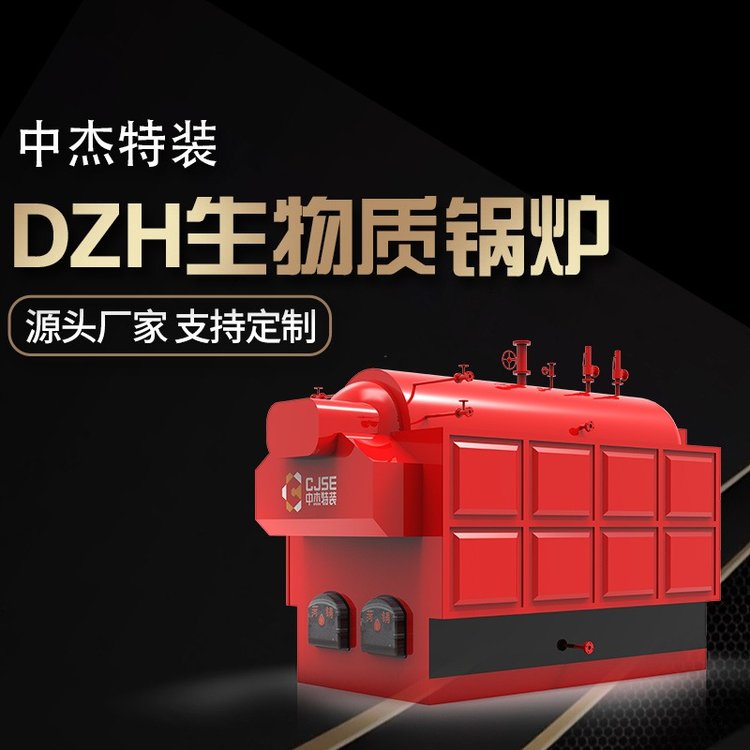
A biomass boiler is a specialized equipment designed for burning biomass fuels. It combusts biomass fuels to produce high-temperature, high-pressure thermal energy, which is used for heating, power generation, or other industrial processes. Biomass boilers typically use granular, pelletized, or shredded biomass fuels, releasing thermal energy through the combustion process.
The advantages of biomass boilers include:
Renewable Energy: Biomass is a renewable energy source with lower carbon emissions and environmental impact compared to fossil fuels.
Diversity: A wide variety of biomass fuels are available, utilizing waste and by-products from plants and animals to enhance resource utilization efficiency.
Environmental Friendliness: The carbon dioxide produced during biomass combustion can be absorbed by plants, forming a cycle that reduces atmospheric pollution.
Economic Efficiency: Biomass fuel is relatively more economical.
Zhongjie Special Equipment upholds the grand vision of "realizing employees' dreams, creating customer value, and striving for the prosperity and strength of our motherland," and is dedicated to the development of the green energy equipment industry. We commit to society with high-quality, cost-effective products and services!
Yangquan 30-ton biomass boiler, manufacturer
