


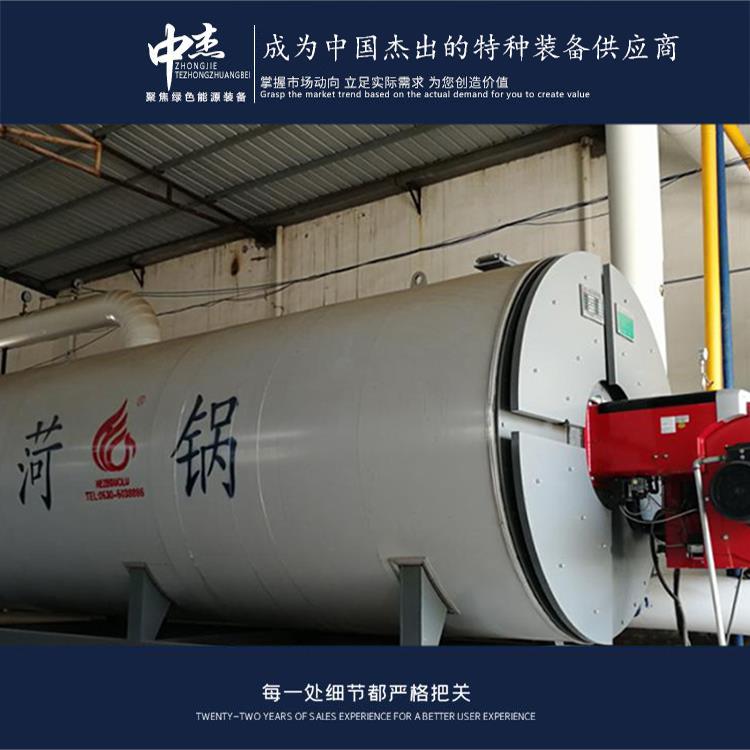


Shandong Zhongjie Special Equipment's main products include: fuel (gas) boilers, organic heat carrier boilers, biomass boilers, waste heat boilers, and other boiler products; vacuum insulation cryogenic pressure vessels such as LNG tanks, oxygen/nitrogen/argon tanks, and CO2 tanks; pressure vessel products such as denitrification engineering equipment, heat storage and energy storage equipment, and complete chemical equipment; central air conditioning and HVAC equipment such as ground (water) source heat pumps, air source units, water-cooled screw units, and air-cooled modular units. Planned products include large-scale energy centers, LNG transport vehicles, LNG tank containers, and other green energy equipment.
Yes, thermal oil boilers typically come with some self-protection features to ensure safe operation and extend their service life. Here are some common self-protection functions: Overheat Protection: Thermal oil boilers are equipped with overheat protection devices that automatically shut off the burner's gas supply when the thermal oil temperature exceeds the set safe range, preventing overheating of the thermal oil and avoiding equipment damage and safety accidents. Overpressure Protection: The boilers also have overpressure protection devices that automatically shut off the burner's gas supply when the thermal oil pressure exceeds the set safe range, preventing explosions or leaks in the thermal oil system. Burner Automatic Control: The burners of thermal oil boilers are usually equipped with automatic control systems that can automatically adjust the gas supply and combustion effect based on set operating parameters, maintaining a stable combustion state and avoiding incomplete or excessive combustion. Temperature Control and Adjustment: Thermal oil boilers are typically equipped with temperature control and adjustment devices that can automatically regulate the circulation and heating of the thermal oil based on the set working temperature, maintaining a stable operating temperature and avoiding both high and low temperatures. Water Level Protection: Some thermal oil boilers, especially water tube boilers, also have water level protection devices that monitor the levels of thermal oil and water. When the levels are abnormal, the protection devices automatically shut off the burner's gas supply to prevent dry burning and thermal oil leakage. It's important to note that although thermal oil boilers have self-protection features, they still require regular inspections and maintenance to ensure the normal operation and reliability of these protection devices. Additionally, operators need to understand and master the working principles and operation methods of these self-protection functions to ensure safe operation.
When installing a gas boiler unit, the following points should be noted:
Safety: A gas boiler is a device that uses gas as fuel, so safety must be ensured during installation. First, select an appropriate installation location, away from flammable materials and combustible gases, and ensure good ventilation. Second, install according to relevant safety regulations, including the connection of gas pipes and the installation of gas valves.
Pipe Connection: A gas boiler requires connection to the gas pipeline to ensure a smooth gas supply. During the connection process, use suitable pipes and joints to ensure a secure connection and prevent gas leaks. Additionally, conduct a leak test to ensure no leaks occur.
Exhaust Duct: During combustion, a gas boiler produces exhaust gases, requiring an appropriate exhaust duct. The exhaust duct must be kept clear to prevent the accumulation of exhaust gases indoors, which can pose safety hazards and air pollution.
Electrical Connection: Gas boilers typically require electrical power, so electrical connections must be made during installation. Ensure the electrical connections are correct and secure to avoid circuit shorts or other electrical issues.
Water System: Gas boilers usually need to be connected to the water system, including water supply and drainage pipes. During the connection process, ensure the water pipes are securely connected to prevent leaks or unstable water pressure.
Commissioning and Testing: After installation, commissioning and testing of the gas boiler should be carried out. This includes ignition tests, combustion efficiency tests, and temperature control tests to ensure the boiler operates normally and is safe and reliable.
It is recommended to follow relevant installation specifications and requirements when installing a gas boiler unit. If you do not possess the necessary technical knowledge, it is best to have a qualified installer perform the operation to ensure the installation process is safe and reliable.
Steam boiler blowdown devices mainly include the following types: Blowdown Valve: A blowdown valve is commonly installed on steam boilers to discharge wastewater and impurities from within the boiler. Typically located at the bottom or side of the boiler, opening the valve allows for the removal of wastewater, maintaining the cleanliness of the boiler interior. Blowdown Pump: For large steam boilers or situations requiring long-distance wastewater discharge, a blowdown pump may be used. The pump can extract wastewater from the boiler and transport it through pipes to designated discharge points. Automatic Blowdown System: Some steam boilers may be equipped with an automatic blowdown system. These systems can automatically discharge wastewater from the boiler based on set time intervals or wastewater concentration, enhancing the efficiency and accuracy of blowdown. Wastewater Treatment Equipment: In certain special cases, steam boilers may require wastewater treatment equipment. These devices can process the discharged wastewater, removing impurities and pollutants to meet environmental protection requirements. It is important to note that the selection and use of steam boiler blowdown devices should be determined based on the specific type, scale, and operating environment of the boiler. When using blowdown devices, it is essential to follow relevant operational procedures and safety requirements to ensure a safe and effective blowdown process.
Hot water boilers and steam boilers are two common types of boilers, differing in their working principles, application scenarios, and operating parameters:
- Working Principle: Hot water boilers provide heat by heating water and then circulating it through the heating system. Steam boilers generate steam by heating water and then transporting the steam through the heating system.
- Operating Temperature and Pressure: Hot water boilers typically operate at temperatures between 60°C and 100°C with lower pressures. Steam boilers operate at temperatures between 100°C and 200°C with higher pressures, usually between 0.7MPa and 2.5MPa.
- Heating Method: Hot water boilers circulate hot water through the system using a circulating pump, primarily through conduction and convection. Steam boilers transport steam through pipelines to the heating system, primarily through steam conduction.
- Application Scenarios: Hot water boilers are suitable for heating, bathing, swimming pool heating, and other scenarios where hot water is needed in industrial production processes. Steam boilers are used in industrial settings requiring steam, such as power plants, chemical factories, and textile mills.
- Equipment Structure: Hot water boilers are generally simpler and have a smaller structure with less floor space. Steam boilers are typically more complex, with a larger structure and more floor space.
- Note: In some special application scenarios, hot water and steam boilers may overlap, such as in industrial processes that require both hot water and steam. Therefore, when selecting a boiler type, it is necessary to consider specific needs and application scenarios.
Shandong Zhongjie Special Equipment, welcome customers to visit our factory for business discussions.
Zhejiang 10-ton gas boiler
