


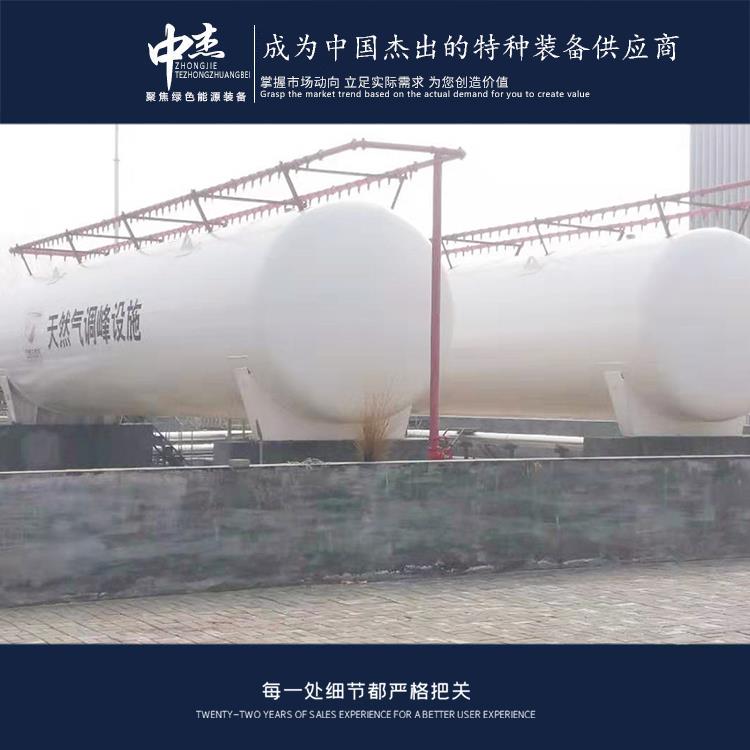
Shandong Zhongjie Special Equipment (formerly Heze Boiler Factory Co., Ltd.) holds an A-grade boiler manufacturing license and A2-grade pressure vessel manufacturing license, A2-grade pressure vessel design license, B-grade boiler installation and GB2, GC2-grade pressure pipeline installation license, as well as equipment and machinery installation contracting qualifications. It is a member of the China Boiler and Water Treatment Association, the China Chemical Equipment Association, and a board member unit of the Shandong Equipment Manufacturing Association. The company has also passed certifications for the ISO9001 Quality Management System, ISO14001 Environmental Management System, OHSAS18001 Occupational Health and Safety Management System, and the U.S. ASME/U2 certification.
When cleaning low-temperature liquid storage tanks, the following steps should be taken:
Safety Preparations: Before cleaning, ensure the tank is free of any remaining liquids or gases, and that it has been properly emptied and vented. Wear appropriate personal protective equipment, such as protective suits, gloves, and safety shoes.
Cleaning Agent Selection: Choose a cleaner suitable for low-temperature environments and liquid storage tank materials. Common cleaners include acidic and alkaline solutions, organic solvents, or specialized cleaning agents. Select the appropriate cleaner based on the tank material and the nature of the contaminants.
Cleaning Process: Inject the cleaning agent into the tank and clean the inner walls using appropriate tools (such as a sprayer, brush, or high-pressure water). Multiple cleanings can be performed as needed to ensure contamination is removed.
Washing and Discharging: After cleaning, rinse with fresh water or an appropriate solvent to thoroughly remove cleaning agents and residues. Ensure the tank is dry internally, and discharge the rinse water into a suitable treatment system.
Inspection and Verification: After cleaning, inspect the tank to ensure no residual contaminants remain inside. Appropriate detection equipment or methods, such as optical inspection, chemical analysis, or ultrasonic testing, can be used to verify the cleaning effectiveness.
It is crucial to follow relevant safety standards and operational guidelines when cleaning low-temperature liquid storage tanks. Liquid storage tanks typically have high flammability and low-temperature characteristics, so operators must strictly adhere to safety procedures to ensure the safety of personnel and equipment. During the cleaning process, attention should be given to prevent leaks of cleaning agents and contaminants, and appropriate measures should be taken for disposal and handling.
Nitrogen flushing in liquid nitrogen storage tanks refers to the process of injecting nitrogen gas into the tank to increase the nitrogen concentration and pressure inside, in order to meet certain safety requirements and operational objectives. Here are some precautions to consider when nitrogen flushing liquid nitrogen storage tanks:
Safe Operation: Prior to nitrogen charging operations on liquid nitrogen tanks, it is mandatory to ensure that operators possess relevant safety knowledge and skills. Operators should wear appropriate personal protective equipment, such as safety goggles, gloves, and protective clothing.
Nitrogen Quality: High purity nitrogen is used for inerting operations to ensure the quality and purity of the nitrogen. Nitrogen with low purity may contain impurities or oxygen, which could adversely affect the liquid nitrogen within the tank.
Nitrogen flushing speed control: During the nitrogen flushing process, the speed of flushing should be controlled to avoid being too fast or too slow. Too fast a flushing speed can lead to excessive internal pressure within the storage tank, while too slow a flushing speed can result in an extended flushing time.
Pressure Monitoring: During the nitrogen charging process, the internal pressure of the tank should be regularly monitored. Ensure the internal pressure of the tank remains within the safe range and adjust as necessary.
Temperature Control: During the nitrogen blanketing process, attention should be given to controlling the temperature of the storage tank. The low temperature of liquid nitrogen can lead to condensation and dew formation on the tank and pipelines. Appropriate measures such as heating or insulation should be taken to prevent condensation and dew formation.
Post-nitrogen flushing treatment: After the nitrogen flushing operation is completed, the flushing device should be promptly turned off, and the tank should be inspected and cleaned. Ensure that there is no residual nitrogen or impurities inside the tank.
It is important to note that nitrogen filling operations for liquid nitrogen tanks must strictly adhere to relevant safety standards.
Liquefied Oxygen Low-Temperature Storage Tanks are primarily used for storing and supplying liquid oxygen, and their application methods can vary based on specific needs and scenarios. Below are some common applications of Liquefied Oxygen Low-Temperature Storage Tanks:
Application: Liquid Oxygen Low-Temperature Storage Tanks are widely used in the field for cryogenic preservation of biological samples, cells, tissues, and vaccines. Institutions such as biopharmaceutical research organizations and biobanks utilize these tanks to store and protect these biological materials.
Experimental Research: Liquid Oxygen Low-Temperature Storage Tanks are used in scientific research and laboratories to provide low-temperature environments, for cryogenic preservation and experiments. These tanks play a crucial role in experimental research across various fields, including physics, chemistry, biology, and materials science.
Industrial Applications: Liquid Oxygen Low-Temperature Storage Tanks are used in the industrial field for low-temperature cooling, serving processes such as metal processing, welding, and heat treatment. These tanks provide low temperatures, enabling metals to achieve the required hardness and toughness during processing.
The food industry: Liquid Oxygen Low-Temperature Storage Tanks are used in the food industry for freezing and refrigeration of food items such as frozen meats, frozen fruits, and frozen seafood. The low temperature of liquid oxygen can quickly freeze the food, preserving its freshness and quality.
Liquid oxygen cryogenic storage tanks are used in the field for storing and supplying liquid oxygen as fuel. Liquid oxygen, as a high-energy fuel, is widely used in the propulsion systems of engines and vessels.
During the operation of liquid oxygen low-temperature storage tanks, strict adherence to relevant safety regulations and operational guidelines is essential to ensure the safe operation and use of the tanks. Liquid oxygen is highly flammable, so fire prevention measures must be taken when using low-temperature storage tanks for liquid oxygen, and fire sources must be kept away from the surrounding area.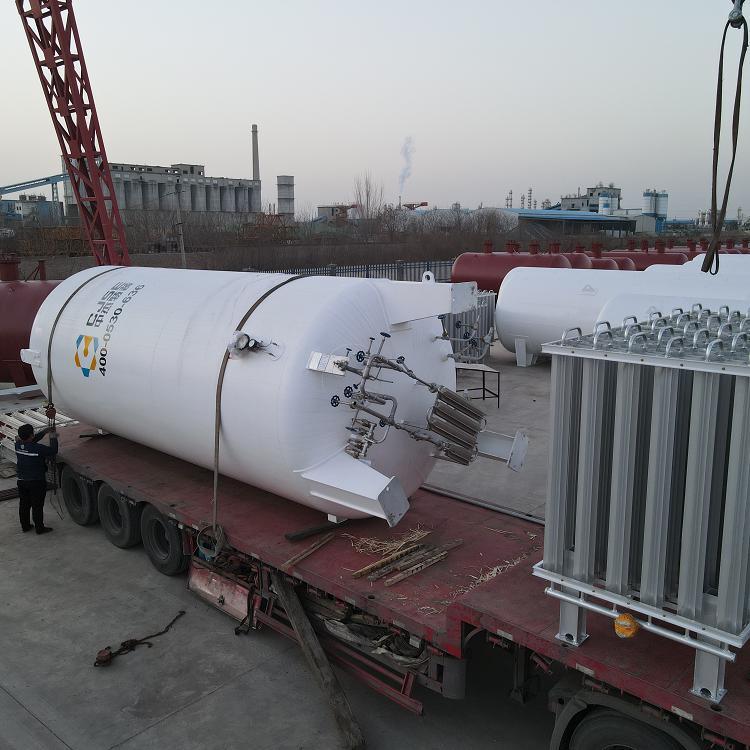
Zhongjie Special Equipment Co., Ltd. is a company specializing in the manufacturing of low-temperature liquid storage tanks. They offer a range of tanks in various specifications and capacities, including liquid nitrogen, liquid oxygen, and liquid argon storage tanks.
The Zhongjie liquid storage tank is constructed with high-quality materials and advanced manufacturing techniques to ensure strength and sealing integrity. The interior features special insulation materials and structural design, effectively reducing evaporation losses of the liquid.
The Zhongjie liquid storage tank for low-temperature applications features the following characteristics:
High safety: Tanks are made of materials with excellent pressure resistance and sealing properties, capable of safely storing low-temperature liquids.
Low evaporation loss: Insulation materials and structural design inside the tank effectively reduce the evaporation loss of the liquid, enhancing the tank's economic efficiency.
Multiple specification and capacity options: Zhongjie offers a variety of specifications and capacities for low-temperature liquid storage tanks to meet different customer needs.
Customized Design: According to the specific requirements of our clients, ZJET can offer customized design and manufacturing services to cater to various application scenarios.
Quantity Manufacturing Process: Zhong Jie's equipped manufacturing facilities and technical team ensure the quality and performance of the storage tanks.
In summary, Zhongjie's custom-made low-temperature liquid storage tanks offer high safety, low evaporation loss, and a wide range of specifications, making them suitable for storage and transportation needs of low-temperature liquids.
Our company attaches great importance to technological innovation and R&D design. We have one municipal-level enterprise technology center in Heze City, equipped with testing facilities for non-destructive testing, physical and chemical testing, welding testing, hydrostatic testing, etc. We have over 600 various instruments and equipment, including CNC machine tools, X-ray flaw detectors, digital ultrasonic flaw detectors, mechanical property testing machines, chemical analyzers, spectrometers, tensile testing machines, plasma welding machines, and more. The key products and technologies we have developed, such as welding for temperature and pressure vessels, biomass boiler emission reduction, and waste heat utilization, have successively been shortlisted for multiple Shandong Provincial Department of Industry and Information Technology scientific and technological innovation projects, key projects in Shandong Province, and Heze City innovative and excellent projects. We have accumulated a total of 27 authorized utility models, 16 authorized inventions, participated in drafting 2 standards, 2 industry standards, and registered 15 trademarks. The technical team of our company, in collaboration with Professor Yajiang Li from Shandong University, has jointly developed deep cryogenic container processing technology, which adopts the international plasma arc + filler wire tungsten inert gas arc welding (PAW-GTAW) technology. After being appraised as a provincial-level scientific and technological achievement, the technology level has reached an international standard in the field of deep cryogenic container manufacturing. Choose Zhongjie Special Equipment, and let's create brilliance together!
Liaoyang Liquid Nitrogen Storage Tank - High Cost-Performance Ratio
