


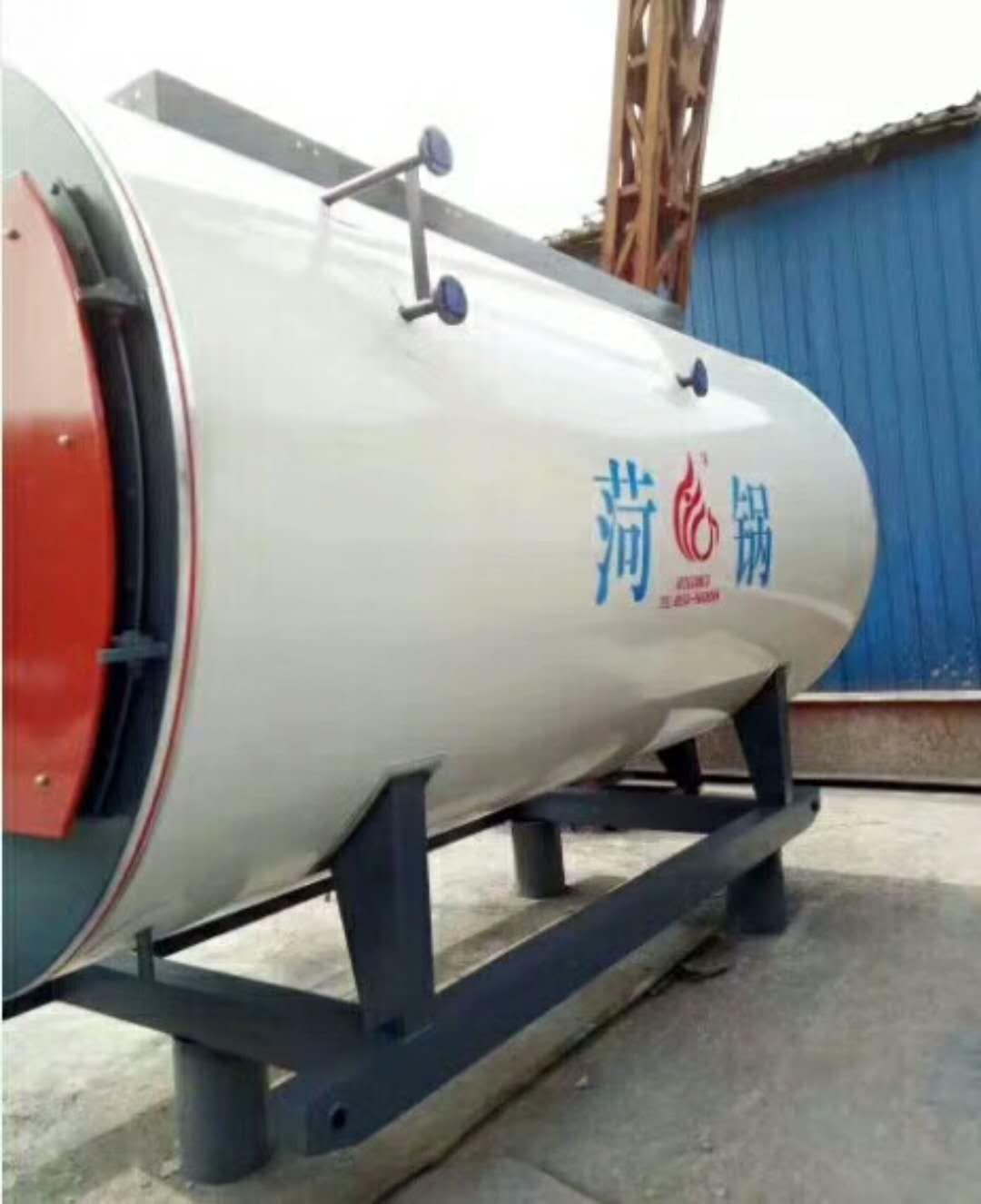

Shandong Zhongjie Special Equipment (formerly Heze Boiler Factory Co., Ltd.) holds an A-grade boiler manufacturing license, A2-grade pressure vessel manufacturing license, A2-grade pressure vessel design license, B-grade boiler installation, and GB2/Class, GC2/Class pressure pipeline installation licenses, as well as a mechanical and electrical equipment installation contracting qualification. It is a member of the China Boiler and Water Treatment Association, the China Chemical Equipment Association, and the director unit of the Shandong Equipment Manufacturing Association. The company has also passed the ISO9001 Quality Management System, ISO14001 Environmental Management System, OHSAS18001 Occupational Health and Safety Management System certifications, and the American ASME/U2 certification.
In pressure vessel design, several common "thickness" parameters must be considered:
Wall Thickness: Refers to the actual thickness of the pressure vessel wall, i.e., the thickness of the container wall. The selection of wall thickness should consider factors such as the design pressure of the container, the strength of the material, and its corrosion resistance, to ensure the strength and safety of the container.
Bend Allowance: The bend allowance refers to the additional thickness added to the wall thickness during the manufacturing process to ensure the strength and shape of the container's bending sections. The calculation and selection of the bend allowance must consider factors such as the container's bending radius and the material's bendability.
Corrosion Allowance: The corrosion allowance refers to the additional thickness added to the wall to counteract the corrosive effects on either the inside or outside of the container. The selection of the corrosion allowance must consider the working environment of the container and the corrosive properties of the medium to ensure the container can withstand corrosion throughout its service life.
These "thickness" parameters play a crucial role in pressure vessel design, affecting the container's strength, corrosion resistance, and safety. During the design process, it is necessary to select and calculate these thickness parameters reasonably, based on relevant standards and specifications, in conjunction with the container's usage conditions and requirements, to ensure that the design and manufacturing meet the standards.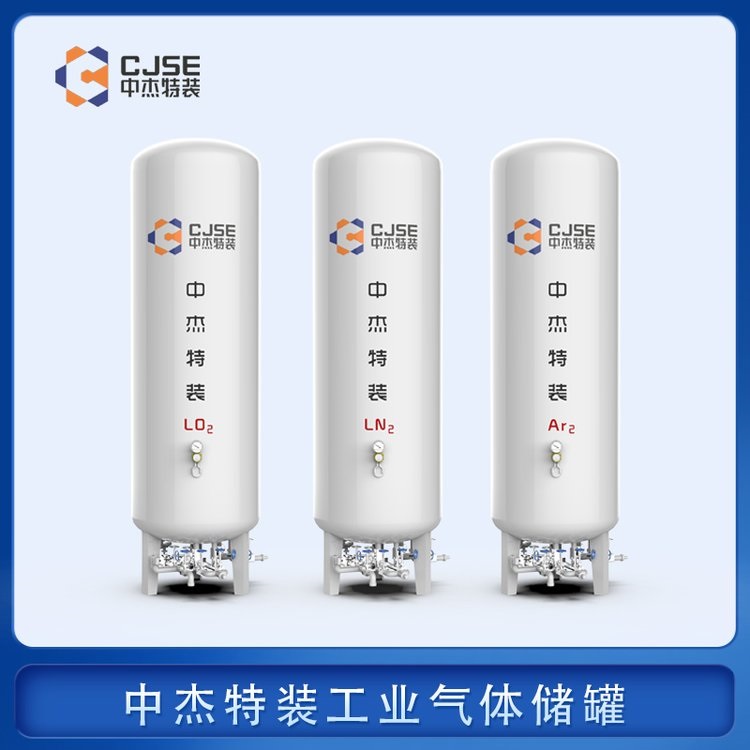
When storing liquid nitrogen in low-temperature storage tanks, be mindful of the following points:
Protective Gear: When operating low-temperature storage tanks, it is mandatory to wear appropriate protective gear, including gloves, protective clothing, and non-slip shoes. This gear helps protect the skin from the low temperatures of liquid nitrogen and other hazards.
Avoid direct contact: Liquid nitrogen is extremely cold and can cause chilling. Therefore, avoid direct contact with liquid nitrogen, especially with the skin. Use tools or equipment for handling to prevent direct hand contact with liquid nitrogen.
Ventilation Requirements: In the operation area of low-temperature storage tanks, adequate ventilation must be ensured to expel gases produced by the evaporation of liquid nitrogen. Maintain air circulation to avoid excessive oxygen concentration, and reduce the risk of fire and explosion.
Prevent Leaks: Regularly inspect the low-temperature storage tanks for leaks and equip with leak detectors and alarm systems. In case of a leak, take immediate action to control and repair it. Avoid the hazards of liquid nitrogen leaks to personnel and the environment.
Fire Prevention Measures: Liquid nitrogen has a low boiling and freezing point, which is prone to causing fires. Measures such as setting up fire barriers around low-temperature storage tanks and using fire-resistant coatings are taken to prevent fires from occurring and spreading.
Static protection: Electrostatic buildup in low-temperature tanks can cause sparks, increasing the risk of fire. Measures such as using conductive materials and static dissipative equipment are taken to reduce the accumulation and release of static electricity.
Regular inspections and maintenance: Conduct regular checks on the condition of low-temperature storage tanks and related equipment, including valves, pipes, pressure gauges, etc. Ensure that the equipment is in perfect condition, and promptly repair or replace any damaged parts.
Waste Gas Treatment: Low-temperature storage tanks produce waste gas during operation, which requires appropriate waste gas treatment measures to minimize environmental impact.
Above are the precautions to be taken when storing liquid nitrogen in a low-temperature tank, ensuring operational safety and the normal operation of the tank. During operation, strict adherence to relevant operational procedures and safety requirements is mandatory to avoid accidents.
A low-temperature liquid storage tank is a device used for storing low-temperature liquids, commonly employed for storing liquid oxygen, nitrogen, argon, and other low-temperature liquids. These liquids exist in a gaseous state at room temperature but are cooled to a liquid state at low temperatures for better storage and use. Low-temperature liquid storage tanks are typically made of high-strength materials such as stainless steel or aluminum alloy to withstand low temperatures and high pressures. The interior of the tank usually features an insulating layer to reduce evaporation and maintain the low-temperature state. Applications of low-temperature liquid storage tanks include but are not limited to the following areas: They are widely used in rocket fuel and propulsion systems, such as liquid oxygen, nitrogen, and hydrogen tanks, for storing and supplying low-temperature liquids as fuel and oxidizers to propel rockets. Industrial Production: These tanks are used in industrial production for storing and supplying low-temperature liquids like liquid oxygen, nitrogen, and argon, which serve as coolants, raw materials for gas separation, and reactants in chemical reactions. Medical Applications: Low-temperature liquid storage tanks are used in the medical field to store and supply liquid oxygen for oxygen therapy, inhalation therapy, and operating rooms. Laboratory Research: In scientific research and laboratories, these tanks provide low-temperature liquids as coolants and refrigerants, used for cooling laboratory equipment, material research, superconductivity, and low-temperature physics. In summary, low-temperature liquid storage tanks are extensively applied in aerospace, industrial production, and laboratory research, for storing and supplying low-temperature liquids to meet the needs of various fields.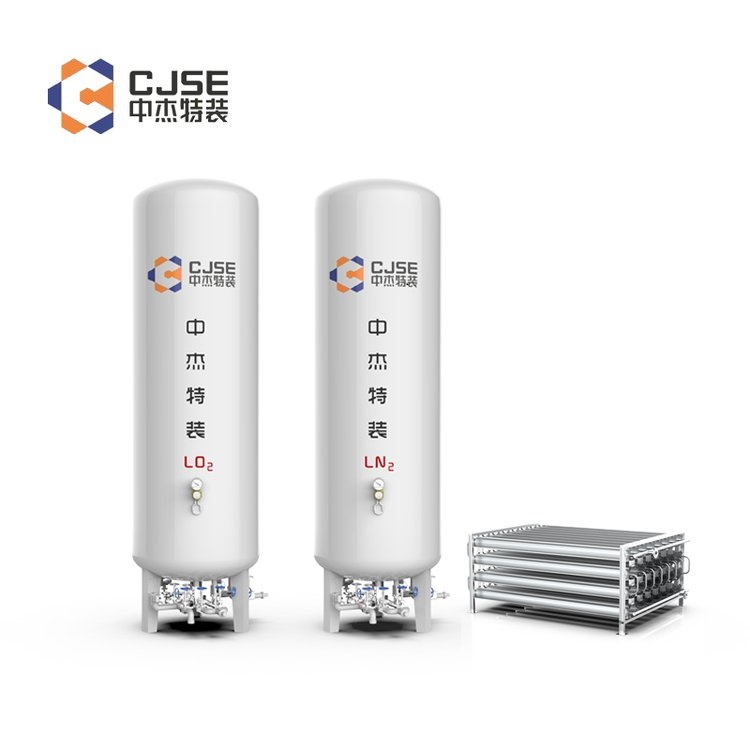
A 50-cubic-meter liquid oxygen tank refers to a storage tank with a capacity of 50 cubic meters. Liquid oxygen tanks are commonly used for storing and supplying liquid oxygen, for applications such as laboratory research, etc.
Key features and configurations of a 50 cubic meter liquid oxygen storage tank may include the following aspects:
Volume: The 50 cubic meter liquid oxygen tank can store a large quantity of liquid oxygen.
Structure: Liquid oxygen tanks typically feature a double or multi-layered design, filled with insulating material in between to minimize heat transfer and evaporation of the liquid oxygen. The tank material is usually stainless steel or aluminum alloy, offering excellent corrosion and low-temperature resistance.
Insulation Layer: The insulation layer of liquid oxygen tanks typically employs multi-layer insulation materials, such as polyethylene foam, glass fiber, and vacuum layers, to reduce heat transfer and the evaporation of liquid oxygen.
Temperature Control System: Liquid oxygen tanks are typically equipped with a temperature control system to regulate the tank's temperature and maintain the low-temperature state of the liquid oxygen.
Safety Equipment: Liquid oxygen tanks are typically equipped with safety devices such as pressure sensors, temperature sensors, and safety valves to ensure safe operation of the tank.
It is essential to strictly adhere to the relevant safety regulations and operational guidelines when using liquid oxygen tanks to ensure their safe operation and use. Liquid oxygen is highly flammable, so fire prevention measures must be taken when using liquid oxygen tanks, and it must be ensured that there are no sources of fire around the tank.
Our company attaches great importance to technological innovation and R&D design. We have 1 city-level enterprise technology center in Heze City, with testing facilities for non-destructive testing, physical and chemical testing, welding testing, hydrostatic testing, etc. We are equipped with over 600 instruments and equipment, including CNC machine tools, X-ray flaw detectors, digital ultrasonic flaw detectors, mechanical property testing machines, chemical analyzers, spectrometers, tensile testing machines, plasma welding machines, and more. The key products we have developed, such as welding for temperature and pressure vessels, emission reduction of biomass boilers, and waste heat utilization, have successively been selected for multiple Shandong Provincial Department of Industry and Information Technology science and technology innovation projects, key projects of Shandong Province, and Heze City innovation and excellence projects. We have accumulated 27 authorized utility model patents, 16 authorized invention patents, participated in drafting 2 standards, 2 industry standards, and registered 15 trademarks. Our technical team, in collaboration with Professor Yajiang Li of Shandong University, has developed deep cryogenic container processing technology using the internationally recognized plasma arc + filler wire tungsten inert gas arc welding (PAW-GTAW) technology. The provincial scientific and technological achievement evaluation has determined that our technology level in deep cryogenic container manufacturing has reached an international standard. Choose Zhongjie Special Equipment, and let's create brilliance together!
Dingxi Liquid Nitrogen Storage Tank, On-Site Installation
