


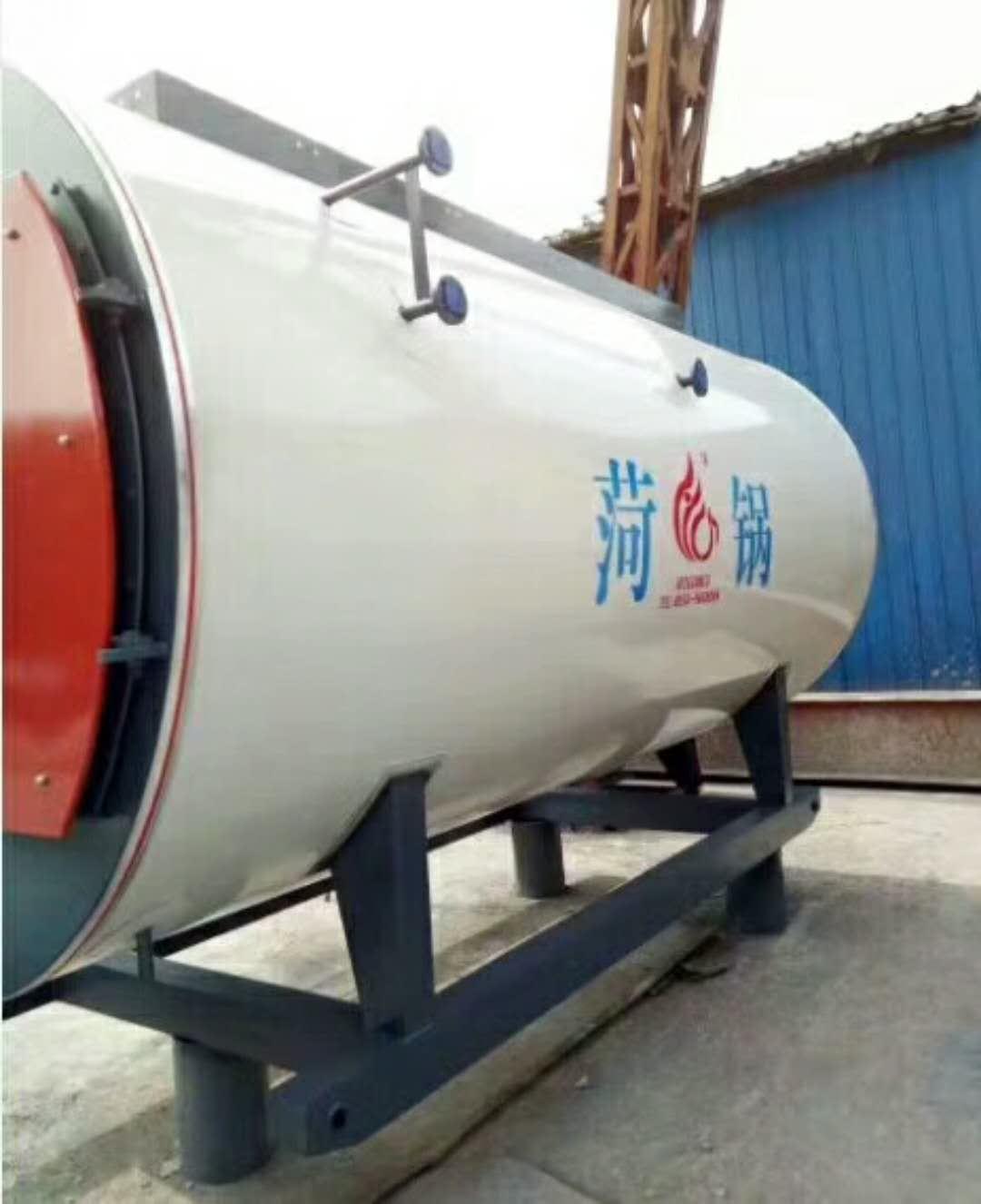


Shandong Zhongjie Special Equipment's main products include: fuel (gas) boilers, organic heat carrier boilers, biomass boilers, waste heat boilers, and other boiler products; vacuum insulation cryogenic pressure vessels such as LNG storage tanks, oxygen-nitrogenargon storage tanks, and CO2 storage tanks; pressure vessel products like denitration engineering equipment, heat storage and energy storage equipment, and complete chemical equipment sets; central air conditioning and HVAC equipment such as ground (water) source heat pumps, air source units, water-cooled screw units, and air-cooled modular units. Planned products include large-scale energy centers, LNG transport vehicles, LNG tank containers, and other green energy equipment.
The cooling process for carbon dioxide storage tanks can vary depending on specific application requirements and process design. Here is an example of a general cooling process for carbon dioxide storage tanks: Initial Cooling: When carbon dioxide enters the tank, it is typically cooled initially to lower its temperature. This can be achieved by passing the carbon dioxide through a condenser or cooler. The cooling medium can be cold water or refrigerant. Tank Cooling: After carbon dioxide enters the tank, it is necessary to continue cooling the tank itself to maintain the liquid state of the carbon dioxide. This can be done by setting up coolers or cooling pipes externally and circulating the cooling medium (such as cold water or refrigerant). Temperature Control: During the tank cooling process, the temperature inside the tank needs to be controlled to ensure that the carbon dioxide remains within an appropriate temperature range. This can be achieved through temperature sensors and control systems, which automatically control the temperature based on the set range. Insulation: To reduce heat transfer and energy loss, the tank is usually insulated. This can be done by setting up insulating materials (such as polyester foam or glass wool) externally to reduce heat conduction. Regular Inspection and Maintenance: In the cooling process of the tank, regular inspection and maintenance of cooling equipment and insulating materials are required to ensure their proper operation and effectiveness. This includes cleaning coolers, checking the integrity and effectiveness of insulating materials, etc. It should be noted that the specific cooling process for carbon dioxide storage tanks may vary depending on different application scenarios and process requirements. In actual practice, process design and operation should be based on specific conditions to ensure the safety and performance of the tank. Consult engineers or storage specialists for more information.
Carbon Dioxide Storage Tank Commissioning typically involves the following steps and contents:
- Tank Installation Inspection: Check if the tank's installation location, foundation, and support structure meet design requirements, ensuring stability and safety.
- Pipeline Connection Inspection: Verify the tank's connections to inlet and outlet pipelines are secure, and that valves and pipelines open and close properly, ensuring the integrity and operation of the pipeline system.
- Tank Cleaning and Emptying: Before commissioning, clean and empty the tank to ensure there are no impurities or residues, as well as no other gases or liquids inside.
- Tank Pressure Test: Conduct pressure tests on the tank, including static pressure tests and leak tests. Static pressure tests involve increasing pressure to check the tank's sealing and pressure resistance. Leak tests check for any leakage in the tank and pipeline system.
- Control System Commissioning: Calibrate and adjust the tank's control system, including pressure, temperature, and level sensors, to ensure accuracy and reliability.
- Safety System Testing: Test the tank's safety system, including safety valves, pressure gauges, and level indicators, to ensure proper operation and response.
- Operating Parameter Adjustment: Adjust the tank's operating parameters, such as pressure, temperature, and level, based on actual needs and process requirements to meet process specifications and safe operation.
- Documentation and Reporting: Record and organize data, test results, and operational records during commissioning, generate a commissioning report for future reference and management.
The above outlines the general steps and contents of carbon dioxide storage tank commissioning. Specific commissioning activities may vary depending on the tank's design requirements and application scenarios. During commissioning, strictly adhere to relevant safety operation procedures and standards to ensure safety and effectiveness of the process.
Before using a CO2 storage tank, certain inspection and filling points must be addressed. Here are some common precautions:
- Inspect the tank exterior: Check for any visible damage, corrosion, or leakage signs. Ensure the tank shell is intact.
- Check valves and fittings: Verify that the tank's valves and fittings are securely fastened and there are no leaks. Ensure proper operation.
- Inspect the pressure gauge: Confirm that the pressure gauge on the tank is functioning correctly and readings are accurate. Replace or repair as needed.
- Check the level indicator: Ensure the tank's level indicator is working properly and accurately displays the level. Repair or replace if abnormal.
- Inspect the pressure relief device: Check that the tank's pressure relief device (e.g., safety valve) is functioning correctly and set to the required pressure. Repair or replace if abnormal.
- Inspect filling equipment: Verify that the filling equipment (e.g., filling pipes, pumps) is operating correctly with no leaks or blockages. Ensure safety and reliability.
- Filling operations: During the filling process, note the following points:
- Control the filling rate to avoid too fast or too slow.
- Control the filling pressure to prevent exceeding the tank's rated pressure.
- Monitor the level to ensure proper filling.
- Regularly check filling equipment and valves to ensure they are functioning correctly.
- Safety measures: Adhere to relevant safety regulations and procedures during the filling process. Operators should wear appropriate protective gear, such as static-dissipative clothing, gloves, etc.
- Note that specific inspection and filling points may vary depending on the type of tank and application. Before using a CO2 storage tank, inspect and operate according to relevant specifications and standards, and consult with experts to ensure safety and effectiveness.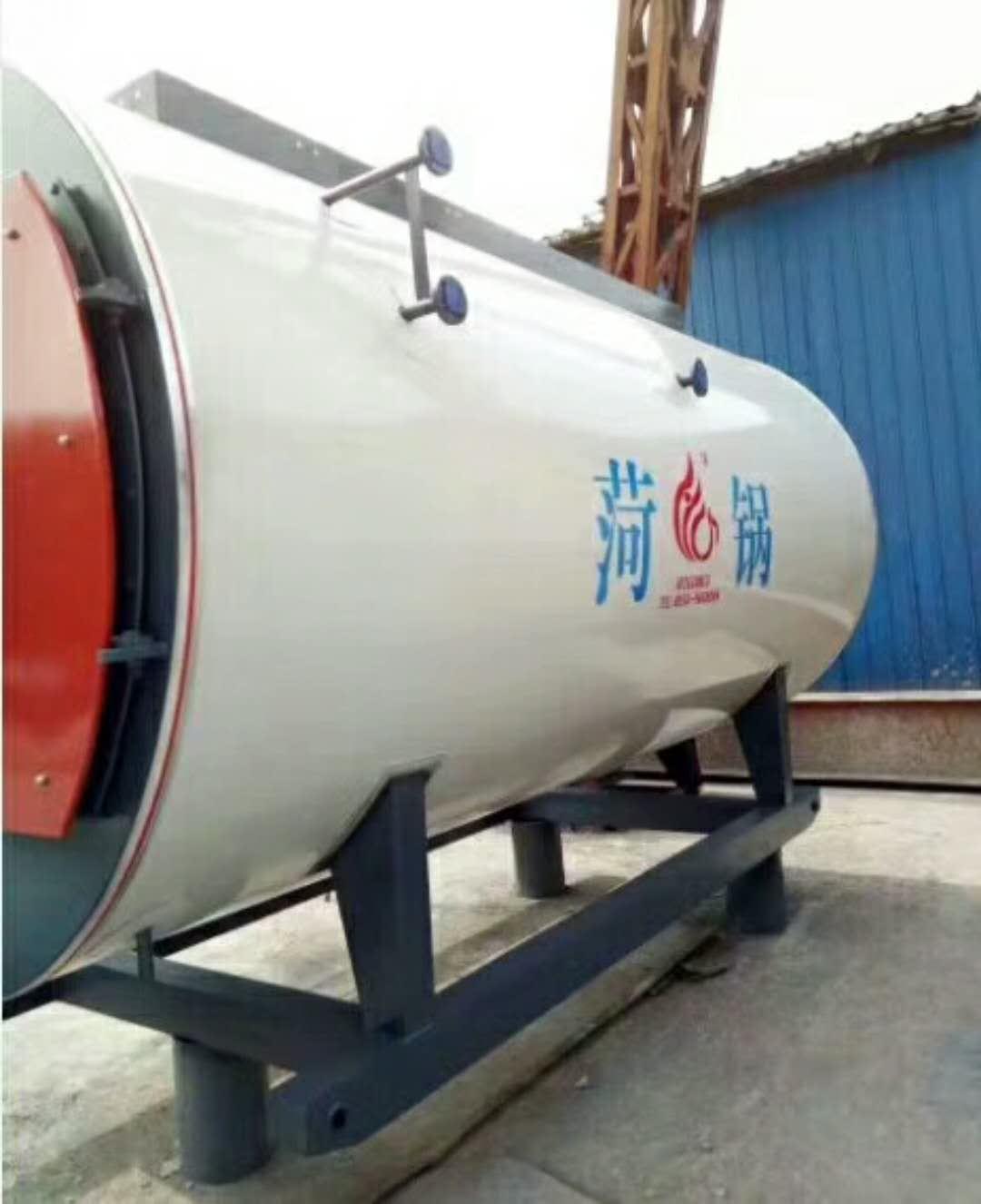
Technical specifications for carbon dioxide storage tanks can be formulated based on different application fields and/or regional standards. Below are some common technical specifications and standards for reference:
ASME Standards: The American Society of Mechanical Engineers (ASME) has issued a series of standards for pressure vessels, including specifications for carbon dioxide storage tanks, such as ASME BPVC Section VIII Division 1 and ASME BPVC Section VIII Division 2.
ISO Standards: The International Organization for Standardization (ISO) has published some standards related to pressure vessels, like ISO 9809-1 and ISO 9809-2, covering design, manufacturing, and inspection requirements for steel gas cylinders.
GB Standards: The China National Bureau of Standards has issued a series of standards related to pressure vessels, such as GB 150 "Pressure Vessels" and GB 5099 "Steel Gas Cylinders," including design, manufacturing, and inspection requirements for carbon dioxide storage tanks.
DOT Standards: The United States Department of Transportation (DOT) has issued some standards related to pressure vessels and cylinders, such as DOT-3AA and DOT-4BA, covering design, manufacturing, and transportation requirements for liquefied gas storage tanks.
EN Standards: The European Committee for Standardization (CEN) has published some standards related to pressure vessels, like EN 13445 and EN 14382, covering design, manufacturing, and inspection requirements for liquefied gas storage tanks.
Additionally, other industry standards and specifications may apply to carbon dioxide storage tanks based on specific application needs, such as standards related to the food and beverage industry or specific industry standards.
When using carbon dioxide storage tanks, appropriate technical specifications should be chosen based on specific application requirements and local regulatory requirements, ensuring that the design, manufacturing, and use of the tanks comply with the relevant standards and specifications.
Our company attaches great importance to technological innovation and R&D design. We have one municipal-level enterprise technology center in Heze City, equipped with non-destructive testing, physical and chemical testing, welding testing, hydrostatic testing, and other testing facilities. We have over 600 various instruments and equipment, including CNC machine tools, X-ray flaw detectors, digital ultrasonic flaw detectors, mechanical property testing machines, chemical analyzers, spectrometers, tensile testing machines, plasma welding machines, etc. The key products and technologies we have developed, such as temperature and pressure vessel welding, biomass boiler emission reduction, and waste heat utilization, have successively been selected for multiple Shandong Province Ministry of Industry and Information Technology science and technology innovation projects, Shandong Province key projects, and Heze City innovation and excellence projects. We have accumulated 27 authorized utility models, 16 authorized inventions, participated in drafting 2 standards, 2 industry standards, and registered 15 trademarks. The technical team of our company, in collaboration with Professor Li Yajiang of Shandong University, has developed deep cryogenic container processing technology using the international plasma arc + filler wire tungsten inert gas arc welding (PAW-GTAW) technology. After the provincial-level scientific and technological achievement evaluation, the technical level has reached an international standard in the field of deep cryogenic container manufacturing. Choose Zhongjie Special Equipment, let's create brilliance together!
Yichun 30 cubic CO2 storage tank, on-site installation
