


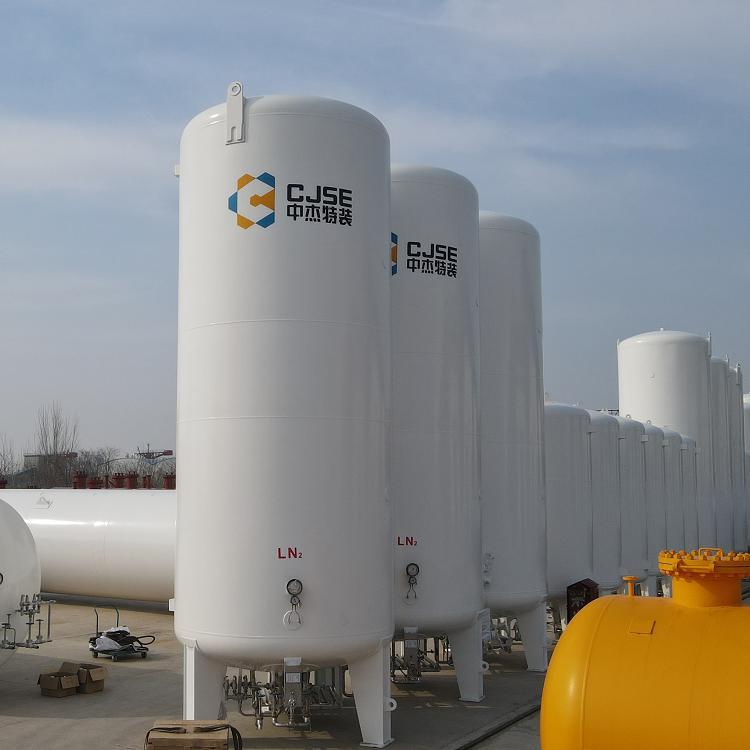
Shandong Zhongjie Special Equipment (formerly Heze Boiler Factory Co., Ltd.) was established in 2001, located at No. 2218 Jinnan Road, Economic and Technological Development Zone, Heze City. With a registered capital of 50 million yuan and total assets of 500 million yuan, the company has 7 business centers: boilers, deep-freezing containers, pressure vessels, central air conditioning, engineering installation, international trade, and Internet of Things. It has three factory sites on Jinnan Road, East Changjiang Road, and Bohai Road, covering a total area of 200,000 square meters, with the main workshop spanning 83,000 square meters. The company currently employs 710 people, including 247 engineering and technical staff and 82 intermediate-level technicians. In December 2016, it was recognized as a "High-Tech Enterprise" by the Science and Technology Department. In June 2021, it was identified as a "Specialized and New Enterprise in Shandong Province" by the Ministry of Industry and Information Technology. In June 2022, it was recognized as a "Gazelle Enterprise in Shandong Province" and in August 2022, as a "Specialized and New Small Giant Enterprise" by the Ministry of Industry and Information Technology.
When handling CO2 storage tanks, static electricity is a safety issue that needs attention. Here are some methods to avoid static electricity:
- Grounding: Ensure that the tank and related equipment are properly grounded. Grounding releases static electricity to the ground, reducing the likelihood of static buildup. Use specialized grounding devices and cables to ensure reliable grounding.
- Antistatic Equipment: Use antistatic equipment such as antistatic clothing, shoes, and gloves. These devices help eliminate or reduce static buildup and protect the safety of operators.
- Avoid Friction: Prevent friction during operation, especially when in contact with substances or flammable gases. Friction generates static electricity, increasing the risk of fire or explosion.
- Control Humidity: Maintain an appropriate humidity level in the operating environment. Higher humidity can reduce the generation and accumulation of static electricity. Use humidifiers or other humidity control devices to adjust the environmental humidity.
- Avoid Plastic or Rubber Materials: Plastic and rubber materials are prone to static electricity, so try to avoid using these materials during operation. Choose materials with better antistatic properties for handling.
- Static Eliminators: Use static eliminators to eliminate or reduce static buildup. Static eliminators neutralize static by releasing charges, reducing the danger of static electricity.
- Tank Cleaning: Regularly clean the interior of the tank to remove accumulated impurities and dirt. Be cautious to prevent the generation and accumulation of static electricity during the cleaning process.
Note that the methods to avoid static electricity should be determined based on the specific operational environment and tank characteristics. During operation, follow relevant safety regulations and standards, and consult with experts if necessary.
In recent years, the peak development of low-temperature liquid storage tanks can be attributed to the following reasons:
1. Increased energy demand: With economic growth and population expansion, there's a rising need for energy. Low-temperature liquid storage tanks are primarily used for storing liquefied natural gas (LNG), liquid oxygen (LOX), liquid nitrogen (LIN), and other low-temperature liquid energy sources to meet the growing energy demand.
2. Greenhouse gas emission reduction: These tanks can store and transport liquid carbon dioxide (CO2) for carbon capture and storage (CCS) technology, reducing greenhouse gas emissions. As environmental protection and climate change concerns rise, the demand for low-temperature liquid storage tanks in the CCS field is also increasing.
3. Industrial development needs: The application of low-temperature liquid storage tanks in the industrial sector is also expanding. For instance, in chemical, pharmaceutical, food and beverage industries, there's a need to store and transport low-temperature liquid raw materials or products like liquid nitrogen, liquid oxygen, and liquid ethylene. With the development of these industries, the demand for low-temperature liquid storage tanks is also rising.
4. Technological advancement and innovation: In recent years, there have been continuous advancements and innovations in the design, manufacturing, and transportation of low-temperature liquid storage tanks. The application of new materials, optimization of tank structures, and improvements in safety control systems have made these tanks safer and more reliable, further driving the peak development.
In summary, factors such as increased energy demand, greenhouse gas emission reduction, industrial development needs, and technological advancement and innovation have collectively propelled the peak development of low-temperature liquid storage tanks in recent years. As related industries and technologies continue to evolve, the demand for these tanks is expected to grow.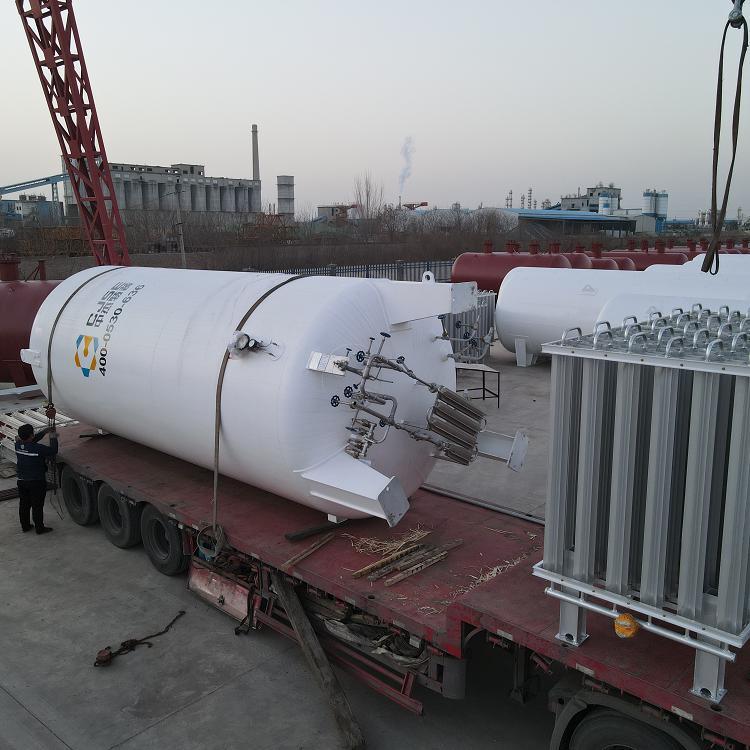
Carbon dioxide tank level gauges are devices used for measuring and monitoring the liquid level of CO2 within the tank. Depending on different working principles and application requirements, common types of CO2 tank level gauges include the following:
- Buoy Level Gauges: Use the buoyancy of a float to indicate liquid level highs and lows, measured through a mechanical device or electrical signal sensor connected to the float.
- Pressure Level Gauges: Measure the level by utilizing the relationship between liquid pressure and level. The liquid's pressure change on the pressure sensor is used to calculate the level height.
- Ultrasonic Level Gauges: Measure the level using the propagation time of ultrasound. An ultrasonic transmitter emits waves, and when they encounter the liquid surface, some are reflected back. The liquid level height is calculated by measuring the reflection time.
- Capillary Level Gauges: Utilize the capillary principle to measure the level. By inserting a thin tube into the liquid, the liquid rises within it, and the level height is calculated based on the rise.
- Level Gauges: Measure the level by reflecting waves. The transmitter emits waves, and when they meet the liquid surface, some are reflected back. The level height is calculated by measuring the reflection time.
The application of these level gauges in CO2 tanks can be selected based on specific needs and tank design. When selecting and installing level gauges, factors such as liquid properties, working environment, and precision requirements must be considered, ensuring compatibility with the tank's safe operation and monitoring system.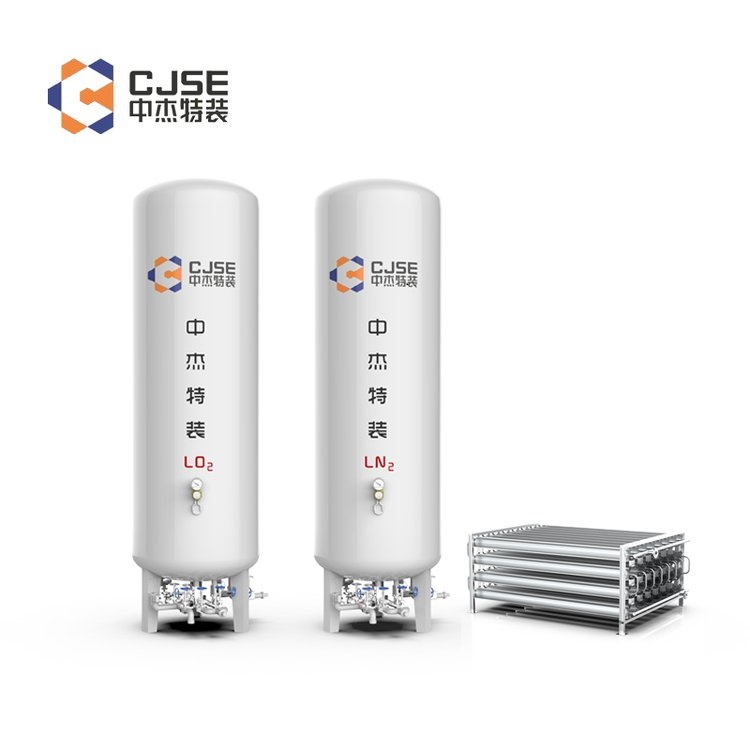
The application standards for liquid carbon dioxide storage tanks mainly include the following aspects:
ZJ Special Equipment adheres to the grand vision of "realizing employees' dreams, creating value for customers, and striving for the prosperity and strength of our motherland," focusing solely on the development of green energy equipment. We dedicate high-value products and services to society!
Zhejiang Carbon Dioxide Storage Tanks, Years of Industry Experience
