



Shandong Zhongjie Special Equipment (formerly Heze Boiler Factory Co., Ltd.) was established in 2001, located at No. 2218 Jinnan Road, Development Zone, Heze City, with a registered capital of 50 million yuan and total assets of 500 million yuan. The company has 7 business centers: boilers, deep-freezing containers, pressure vessels, central air conditioning, engineering installation, international trade, and the Internet of Things. It has three factory areas on Jinnan Road, East Changjiang Road, and Bohai Road, covering a total area of 200,000 square meters, with the main workshop spanning 83,000 square meters. It currently employs 710 people, including 247 engineering and technical staff and 82 intermediate-level technicians. In December 2016, it was recognized as a "High-tech Enterprise" by the Science and Technology Department. In June 2021, it was identified as a "Specialized, Focused, and New Enterprise in Shandong" by the Industrial and Information Technology Department. In June 2022, it was recognized as a "Shandong Antelope Enterprise," and in August 2022, it was identified as a "Specialized, Focused, and New Small Giant Enterprise" by the Ministry of Industry and Information Technology.
Carbon dioxide is widely used as a shielding gas in metal welding processes. The following are the main applications of carbon dioxide in welding:
1. Gas Metal Arc Welding (GMAW): Carbon dioxide is commonly used as a shielding gas in the GMAW welding process. During GMAW welding, the arc generates high temperatures in the welding area, which can also cause oxidation reactions with oxygen and water vapor, leading to reduced weld quality. By injecting carbon dioxide gas into the welding area, a protective atmosphere is formed, preventing oxygen and water vapor from entering, thereby improving the quality and strength of the weld.
2. Mixed Gas Shielding Welding (GMAW): Carbon dioxide is also often mixed with other gases (such as argon) to form a mixed gas shielding welding. The use of mixed gases can adjust the arc stability, molten pool formation, and weld quality during the welding process, enhancing the welding performance.
3. Gas Shielded Brazing: Carbon dioxide can also be used in the gas shielded brazing process. During brazing, the carbon dioxide gas provides a protective atmosphere, preventing oxidation and contamination in the brazing area, ensuring the quality of the brazed joint.
4. Gas Shielded Cutting: Carbon dioxide can also be used in the gas shielded cutting process. In gas shielded cutting, by injecting carbon dioxide gas into the cutting area, a protective atmosphere is formed, preventing oxidation and contamination in the cutting area, improving the quality and speed of the cut.
It is important to note that the application of carbon dioxide in welding should be adjusted and optimized according to specific welding materials, methods, and requirements. When using carbon dioxide for welding, it is necessary to follow relevant safety operation procedures and guidelines to ensure the safety and quality of the welding process.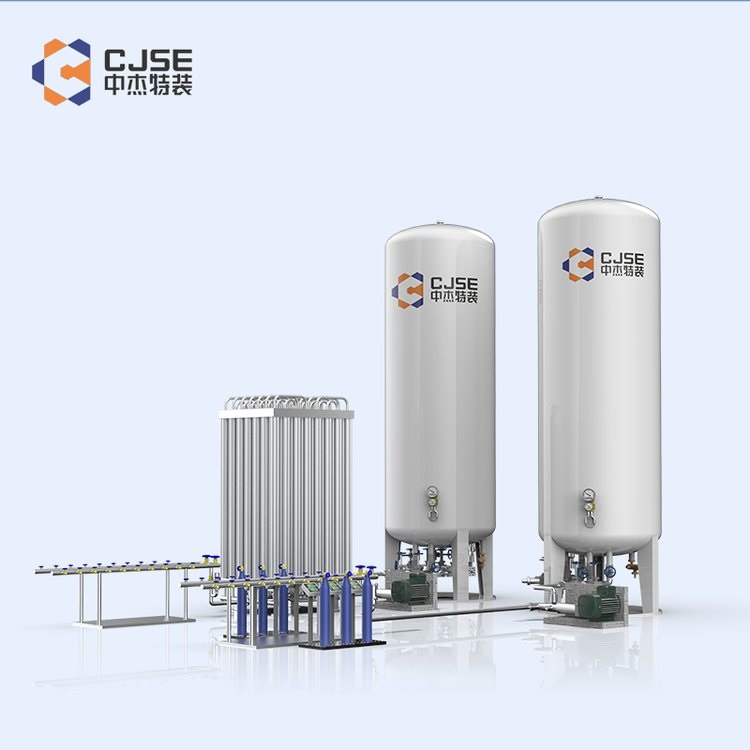
Technical specifications for carbon dioxide storage tanks can be formulated based on different application fields and/or regional standards. The following are some common technical specifications and standards for reference: ASME Standards: The American Society of Mechanical Engineers (ASME) has issued a series of standards for pressure vessels, including specifications for carbon dioxide storage tanks such as ASME BPVC Section VIII Division 1 and ASME BPVC Section VIII Division 2. ISO Standards: The International Organization for Standardization (ISO) has published some standards related to pressure vessels, such as ISO 9809-1 and ISO 9809-2, covering design, manufacturing, and inspection requirements for steel gas cylinders. GB Standards: The China National Bureau of Standards has issued a series of standards related to pressure vessels, such as GB 150 "Pressure Vessels" and GB 5099 "Steel Gas Cylinders," including design, manufacturing, and inspection requirements for carbon dioxide storage tanks. DOT Standards: The United States Department of Transportation (DOT) has issued some standards related to pressure vessels and gas cylinders, such as DOT-3AA and DOT-4BA, covering design, manufacturing, and transportation requirements for liquefied gas storage tanks. EN Standards: The European Committee for Standardization (CEN) has published some standards related to pressure vessels, such as EN 13445 and EN 14382, covering design, manufacturing, and inspection requirements for liquefied gas storage tanks. Additionally, other industry standards and specifications may apply to carbon dioxide storage tanks based on specific application needs, such as standards related to the food and beverage industry and specific industry standards. When using carbon dioxide storage tanks, appropriate technical specifications should be chosen based on specific application requirements and local regulatory requirements, ensuring that the design, manufacturing, and use of the tanks comply with the relevant standards and specifications.
Carbon dioxide storage tanks may have varying standard specifications based on different design and application requirements. Here are some common standard parameters:
- Storage Capacity: The capacity of carbon dioxide tanks is typically expressed in kiloliters (L) or cubic meters (m). Common capacity ranges vary from a few thousand to tens of thousands of liters.
- Working Pressure: The working pressure of carbon dioxide tanks is usually around 20 to 25 MPa (megapascals) at room temperature, with the specific pressure determined by application needs and design standards.
- Design Temperature: The design temperature for carbon dioxide tanks is generally in the low-temperature range, typically between -40°C and -60°C, to accommodate the liquefaction and storage requirements of carbon dioxide.
- Material: Carbon dioxide tanks are commonly made of high-strength steel or alloy materials to withstand the stresses and loads under high pressure and low-temperature environments.
- Insulation: The tanks are internally insulated to reduce heat transfer and liquid evaporation. Insulation is usually a multi-layered structure, including thermal insulation materials and an external protective layer.
- Safety Valve and Pressure Relief Devices: Tanks are equipped with safety valves and pressure relief devices to control internal pressure and prevent overpressure and explosion.
- Level Monitoring and Control: Tanks are fitted with level monitoring devices to monitor the liquid level inside. Timely monitoring and control of the level ensure that the liquid storage within the tank remains within a safe range.
It should be noted that specific standard parameters for carbon dioxide storage tanks may vary due to different design standards, application requirements, and manufacturers. When selecting and using carbon dioxide storage tanks, it is important to consider these factors.
Carbon dioxide synthesis is a chemical reaction that utilizes carbon dioxide to produce various compounds. This process has several applications:
Fertilizer production: It is an essential raw material for manufacturing fertilizers, and carbon dioxide synthesis represents a sustainable production method. By reacting with carbon dioxide, it can synthesize compounds used in nitrogen fertilizers, such as urea, thereby reducing reliance on fossil fuels used in traditional production methods and lowering greenhouse gas emissions.
Energy storage: Carbon dioxide synthesis can also serve as a form of energy storage. By converting carbon dioxide into compounds through reaction, energy can be stored in the form of chemical bonds. When energy is needed, the stored energy can be released by reversing the reaction into carbon dioxide and the original compounds.
Fuel cells: It can be used as a clean fuel in fuel cells. By synthesizing carbon dioxide into compounds suitable for fuel cells, electricity can be generated, with only water and nitrogen as byproducts, thus reducing environmental pollution.
Chemical synthesis: It is a crucial raw material for the synthesis of many chemicals. Carbon dioxide synthesis can provide a sustainable supply for the chemical industry, used to synthesize other chemicals, such as etc.
The development of carbon dioxide synthesis technology aims to reduce reliance on fossil fuels used in traditional production methods, lower greenhouse gas emissions, and promote the development of sustainable energy and the chemical industry. However, this technology is still in continuous development and research, requiring further technological breakthroughs and practical verification to achieve large-scale application.
Our company places great importance on technological innovation and R&D design. We possess 1 municipal-level enterprise technology center in Heze City, equipped with non-destructive testing, physical and chemical testing, welding testing, hydrostatic testing, and other testing facilities. We have over 600 various instruments and equipment, including CNC machine tools, X-ray flaw detectors, digital ultrasonic flaw detectors, mechanical property testing machines, chemical analyzers, spectrometers, tensile testing machines, plasma welding machines, etc. The key products and technologies we have developed, such as temperature and pressure vessel welding, biomass boiler emissions reduction, and waste heat utilization, have successively been included in multiple Shandong Provincial Department of Industry and Information Technology science and technology innovation projects, Shandong Provincial key projects, and Heze City innovation and excellence projects. We have accumulated a total of 27 authorized utility model patents, 16 authorized invention patents, participated in drafting 2 standards, 2 industry standards, and registered 15 trademarks. The technical team of our company, in collaboration with Professor Yajiang Li from Shandong University, has jointly developed deep cryogenic vessel processing technology, utilizing the international plasma arc + filler wire tungsten inert gas (PAW-GTAW) welding technology. The provincial-level scientific and technological achievement identification confirms that our technology level in deep cryogenic vessel manufacturing has reached an international standard. Choose Zhongjie Special Equipment, and let's join hands to create brilliance together!
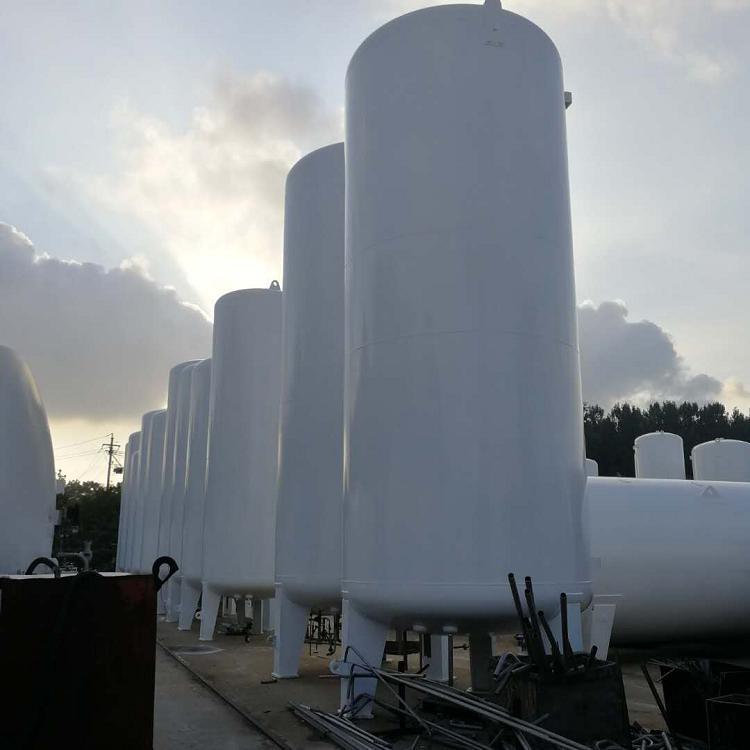
Guangzhou 200 Cubic CO2 Storage Tank, On-Site Installation
