


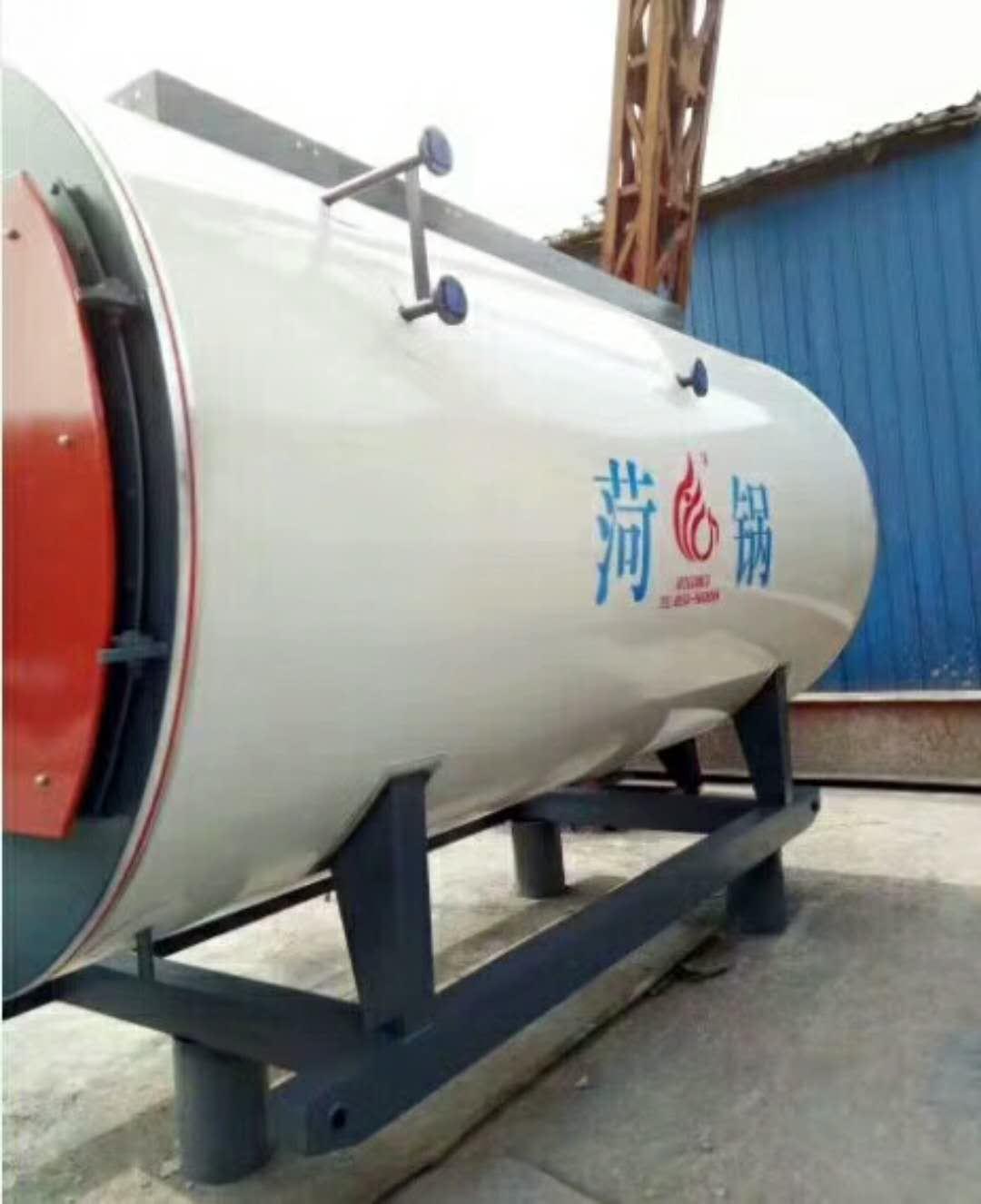
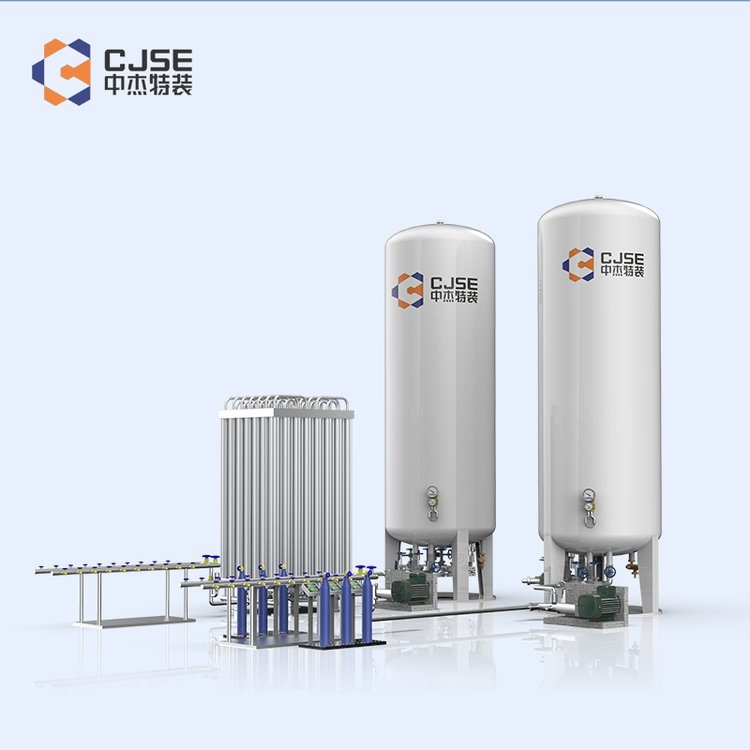
Shandong Zhongjie Special Equipment's main products include: fuel (gas) boilers, organic heat carrier boilers, biomass boilers, waste heat boilers, and other boiler products; vacuum insulated cryogenic pressure vessels such as LNG storage tanks, oxygen-nitrogen-argon storage tanks, CO2 storage tanks, etc.; pressure vessel products such as denitrification engineering equipment, heat storage and energy storage equipment, complete chemical equipment sets, etc.; central air conditioning and heating ventilation equipment such as ground (water) source heat pumps, air source units, water-cooled screw units, and air-cooled modules. Planned products include large-scale energy centers, LNG transport vehicles, LNG tank containers, and other green energy equipment.
Liquid oxygen storage tanks have the following characteristics:
High Purity: The liquid oxygen tanks store high purity liquid oxygen, typically achieving purity above 99.5%. This makes liquid oxygen tanks essential for applications requiring high purity oxygen, such as medical, aerospace, and research fields.
Low Temperature: Since the boiling point of liquid oxygen is -183°C, the liquid oxygen storage tank must have excellent insulation properties to maintain its low temperature. Tanks are typically designed with double or multi-layer structures, filled with insulating material in between to minimize heat transfer and evaporation of liquid oxygen.
High Pressure: Liquid oxygen tanks typically need to withstand high pressure to maintain their liquid state. The design and material selection of the tank must consider the pressure requirements of liquid oxygen to ensure the tank's safety and reliability.
Flammability: Liquid oxygen is highly flammable and can support combustion. Therefore, fire prevention measures must be implemented in the design and use of liquid oxygen storage tanks, ensuring there are no ignition sources in the vicinity and appropriate fire extinguishing equipment is available.
High Density: Liquid oxygen has a higher density than gaseous oxygen, allowing liquid oxygen tanks to store more oxygen. This gives liquid oxygen tanks an advantage in applications requiring large amounts of oxygen supply, such as in the field of and .
Corrosiveness: Liquid oxygen has certain...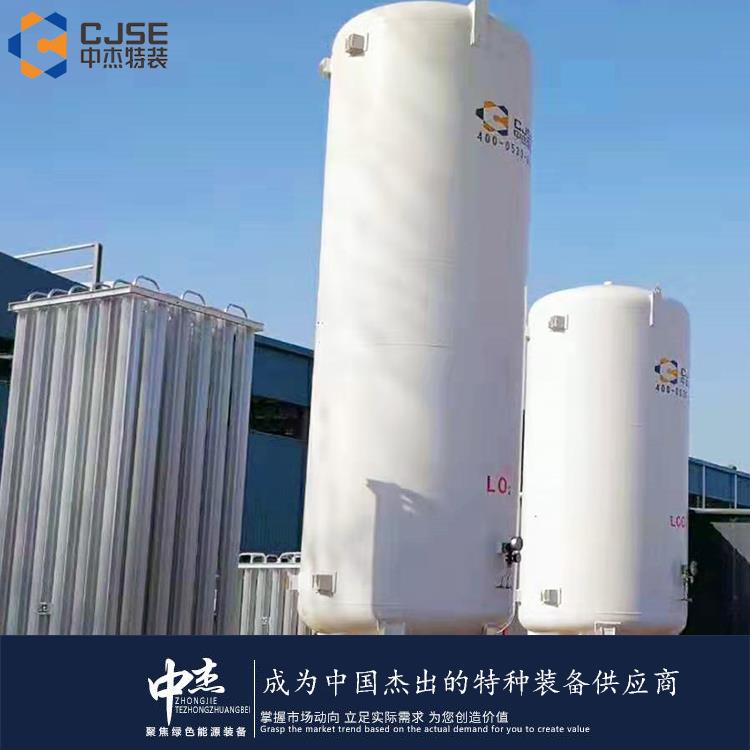
When cleaning a low-temperature liquid storage tank, the following steps should be taken:
Safety Preparations: Prior to cleaning, ensure there are no remaining liquids or gases inside the tank, and that the tank has been emptied and vented. Wear appropriate personal protective equipment, such as protective suits, gloves, and safety shoes.
Cleaning Agent Selection: Choose a cleaning agent suitable for low-temperature environments and liquid storage tank materials. Common cleaning agents include acidic and alkaline solutions, organic solvents, or specialized cleaners. Select the appropriate cleaning agent based on the tank material and the nature of the contaminants.
Cleaning Process: Inject the cleaning agent into the tank and clean the inner walls using appropriate tools (such as a sprayer, brush, or high-pressure water). Multiple cleanings can be performed as needed to ensure contamination removal.
Washing and Discharging: After cleaning, rinse with clean water or an appropriate solvent to remove all cleaning agents and residues. Ensure the tank is dry inside and discharge the rinse water into an appropriate treatment system.
Inspection and Verification: After cleaning, inspect the tank to ensure no residual contaminants remain inside. Appropriate detection equipment or methods, such as optical inspection, chemical analysis, or ultrasonic testing, can be used to verify the cleaning effectiveness.
Be mindful that when cleaning low-temperature liquid storage tanks, it's crucial to adhere to relevant safety regulations and operational guidelines. Liquid storage tanks typically possess high flammability and low-temperature characteristics, so operators must strictly follow safety procedures to ensure the safety of personnel and equipment. During the cleaning process, attention should be given to prevent leaks of cleaning agents and contaminants, and appropriate measures should be taken for handling and disposal.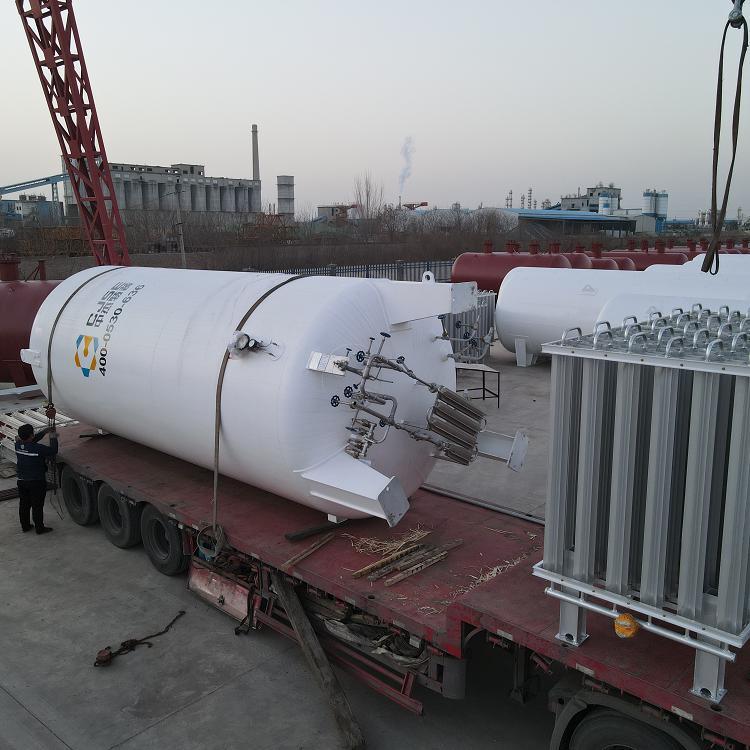
Carbon dioxide storage tanks and liquid oxygen storage tanks are containers used for storing different gases; they have some distinct physical properties:
Physical State: Carbon dioxide is a gas at room temperature and pressure, requiring low temperatures and high pressures to convert to a liquid state. Liquid oxygen is a liquid at room temperature, but it must be at low temperatures to solidify.
Boiling and freezing points: The boiling point of carbon dioxide is -78.5°C, and the freezing point is -56.6°C. The boiling point of liquid oxygen is -183°C, and the freezing point is -218.8°C. The boiling and freezing points of liquid oxygen are significantly lower than those of carbon dioxide.
Density: The density of liquid oxygen is high, approximately 1.14 grams per cubic centimeter. Carbon dioxide has a lower density, about 0.00198 grams per cubic centimeter. The density of liquid oxygen is about 570 times that of carbon dioxide.
Pressure: Liquid oxygen has a higher pressure, typically ranging from tens to hundreds of MPa (Megapascals). Carbon dioxide has a lower pressure, usually within a few MPa (Megapascals).
Safety: Liquid oxygen contains a high concentration of oxygen, which is prone to cause fires and explosions. Carbon dioxide also poses asphyxiation and asphyxiating hazards at certain concentrations.
Note that carbon dioxide and liquid oxygen are highly flammable and explosive substances. They must be stored and used in strict accordance with relevant safety operation procedures and standards, and necessary safety measures must be taken to ensure the safety and stability of the storage tanks.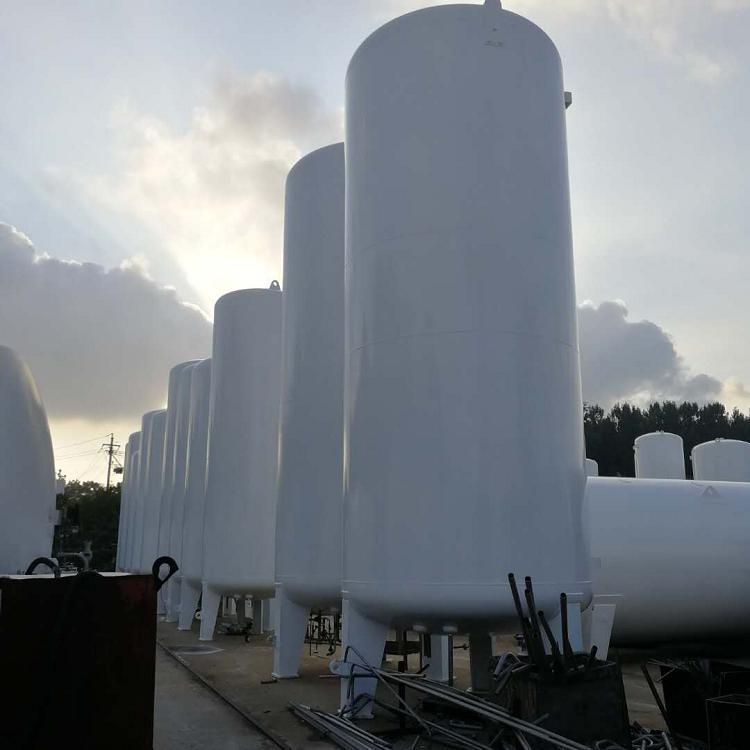
The use of liquid oxygen storage tanks requires special attention to the following safety issues:
Training: Operators of liquid oxygen tanks must undergo training to understand the properties of liquid oxygen, safety operating procedures, and emergency response measures. Only trained personnel are authorized to operate liquid oxygen tanks.
Safety Operating Procedures: Establish and adhere to safe operating procedures for liquid oxygen tanks, including proper operational procedures, protective measures, and emergency response plans. Ensure operators follow the procedures to minimize accident risks.
Protection Measures: When using liquid oxygen tanks, necessary protective measures must be taken, such as wearing protective gloves and suits. Avoid direct contact with liquid oxygen to prevent frostbite.
Leakage Control: Conduct regular inspections of liquid oxygen tanks for leaks, equip with leak detectors and alarm systems. In case of a leak, take immediate measures to control it and carry out repairs.
Fire Prevention Measures: Liquid oxygen has a high oxygen content and is prone to causing fires. Measures such as setting up firewalls around liquid oxygen storage tanks and using fire-resistant coatings are implemented to prevent fires from occurring and spreading.
Electrostatic Protection: The electrostatic buildup in liquid oxygen tanks can cause sparks, increasing the risk of fire. Measures such as using electrostatic conductive materials and anti-static equipment are taken to reduce the accumulation and release of static electricity.
Ventilation Requirements: Ensure adequate ventilation within the enclosed space of the liquid oxygen storage tank to expel vapors produced by the evaporation of liquid oxygen.
Shandong Zhongjie Special Equipment, welcome customers to visit our factory for business discussions.
Baishan 5 cubic meter liquid argon tank, high product safety.
