



Shandong Zhongjie Special Equipment (formerly Heze Boiler Factory Co., Ltd.) holds an A-grade boiler manufacturing license, an A2-grade pressure vessel manufacturing license, an A2-grade pressure vessel design license, a B-grade boiler installation license, and GB2/Class, GC2/Class pressure pipeline installation licenses, as well as a mechanical and electrical equipment installation contracting qualification. It is a member of the China Boiler and Water Treatment Association, the China Chemical Equipment Association, and the director unit of the Shandong Equipment Manufacturing Association. The company has also passed the ISO9001 Quality Management System, ISO14001 Environmental Management System, OHSAS18001 Occupational Health and Safety Management System certifications, and the American ASME/U2 certification.
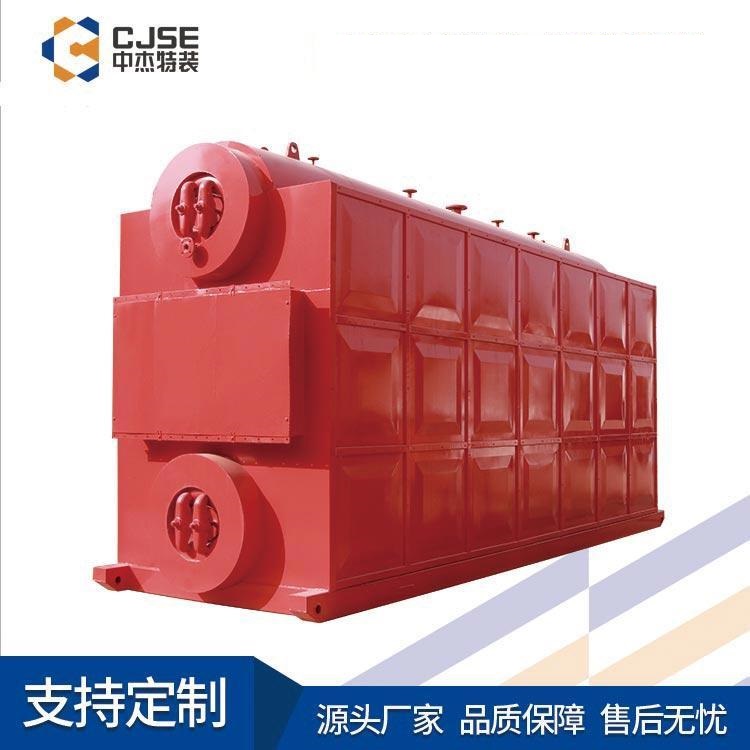
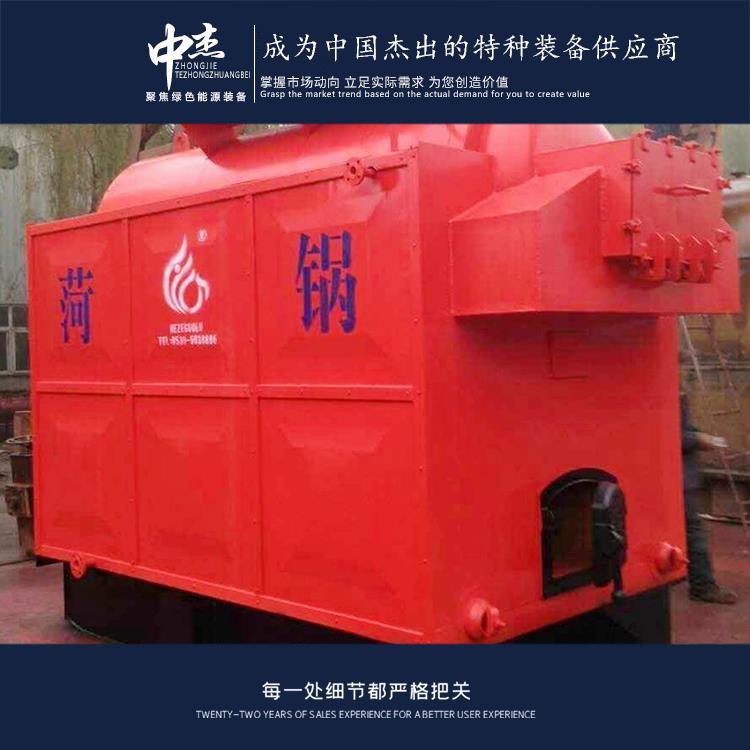
The SZL biomass chain grate steam boiler is a specific type of biomass boiler that utilizes chain grate technology to burn biomass fuel and produce steam. The following are some features and characteristics of the SZL biomass chain grate steam boiler:
Briquette Design: The SZL biomass chain grate steam boiler employs a chain grate design, where fuel is progressively pushed through the grate layers for a continuous combustion process. The chain grate offers ample combustion space and extended burn time, enabling thorough combustion of biomass fuel.
Multi-fuel Adaptability: The SZL biomass chain-type steam boiler is suitable for various biomass fuels such as wood chips, straw, rice husk, etc. It boasts strong fuel adaptability and can choose the appropriate fuel for combustion based on actual conditions.
Heat Exchanger: The heat exchanger equipped with the SZL biomass chain steam boiler maximizes the heat energy in flue gas, enhancing thermal efficiency. The design and material selection of the heat exchanger have been optimized to achieve effective heat conduction and exchange.
The control system: The control system of the SZL biomass chain grate steam boiler is capable of accurately controlling and adjusting parameters such as temperature, pressure, and fuel supply. The control system is equipped with safety protection functions, such as overheat protection and low water level protection, ensuring the safe operation of the boiler.
Environmental-friendly Low Emission: SZL Biomass Chain Steam Boiler utilizes
Before using biomass boilers, the following measures can be taken:
Safety Inspection: Conduct a safety check on biomass boilers to ensure the proper operation of all components and equipment. Inspect the condition of the boiler's burners, valves, sensors, etc., for any signs of damage or leaks.
Clean combustion chamber: Clean the combustion chamber of biomass boilers of ash and dirt produced during the combustion process. Use appropriate tools and cleaning agents for cleaning to ensure the chamber is unobstructed and clean.
Inspect fuel supply system: Verify that the fuel supply system of the biomass boiler is clear and unobstructed, and ensure an adequate fuel supply in the storage containers. Additionally, check the fuel quality to ensure it meets specifications, free from impurities or moisture.
Inspect Water Quality: Check the water supply for the boiler to ensure it meets the required standards. Water quality tests can be conducted to measure hardness, pH levels, and other indicators, and appropriate water treatment measures can be taken based on the test results.
Ensure good ventilation: Biomass boilers produce flue gas during combustion, so it's crucial to maintain adequate ventilation around the boiler to exhaust smoke and heat. You can install ventilation equipment or ensure the room housing the boiler has sufficient ventilation openings.
Training and Operation Guidance: Provide training and operation guidance to personnel using biomass boilers to ensure they are knowledgeable about the boiler's operation, safety precautions, and emergency response procedures.
These measures help ensure the safety and proper operation of biomass boilers before use, reducing the occurrence of malfunctions and accidents. Additionally, regular maintenance and upkeep are crucial for the long-term stable operation of biomass boilers.
Dust removal technology for coal-fired boilers is designed to reduce particulate emissions during the combustion process, protecting the environment and improving air quality. Here are several common dust removal techniques for coal-fired boilers:
Mechanical Dust Collectors: Mechanical dust collectors are common dust removal equipment that separates particulate matter from flue gas through physical principles. Common types include gravity dust collectors, inertial dust collectors, and bag dust collectors. The working principle of mechanical dust collectors is to utilize the inertia, gravity, or filtration of particles to separate them from the flue gas.
Electrostatic Precipitator: An electrostatic precipitator utilizes the force of an electric field to charge particles in flue gas, then collects the charged particles by the action of the electric field. There are two types of electrostatic precipitators: dry and wet. Dry electrostatic precipitators are suitable for high-temperature flue gas, while wet electrostatic precipitators are suitable for flue gas with high humidity.
Wet Dust Collectors: Wet dust collectors wet the particulates in flue gas using spray water or other liquids, then separate the wetted particulates from the flue gas through gravity or inertia. Suitable for treating flue gas with high humidity and sticky particulates.
Electrostatic Precipitator: An electrostatic precipitator charges particulates in flue gas using an electric field, then collects the charged particles through the force of the electric field. It is suitable for treating high-temperature flue gas and fine particulates.
Integrated dedusting technology: The integrated dedusting technology combines the two processes of desulfurization and dedusting, achieving integrated treatment by sharing equipment and jointly processing flue gas. This technology can reduce the land area required for equipment, lower investment and operational costs.
Above are common coal-fired boiler dust removal technologies. Different dust removal technologies are suitable for different flue gas and particulate matter characteristics. In practical applications, a suitable combination of dust removal technologies can be selected based on specific circumstances to achieve the goal of reducing particulate matter emissions.
The control of water level during the operation of biomass boilers is crucial, mainly to ensure the safe and normal operation of the boiler. The following are general water level control methods:
Water Level Gauge Monitoring: Biomass boilers typically feature water level gauges to monitor the water level inside the boiler. These gauges can be glass tube, electrical, or pressure gauges, among others. Readings from the water level gauge provide real-time insights into the water level status within the boiler.
Water Level Controller: Biomass boilers are typically equipped with a water level controller for automatic water level regulation. The controller adjusts the water level inside the boiler by controlling the operation of devices such as feedwater pumps or drain valves, based on the set water level range.
Water Supply Control: When the boiler water level is too low, the water level controller sends a signal to start the feed pump, replenishing water into the boiler to maintain the water level within a safe range. Water supply control needs to be adjusted according to the actual requirements of the boiler and the changes in water level.
Wastewater Control: When the boiler water level is too high, the water level controller sends a signal to activate the drain valve, expelling excess water to maintain the level within a safe range. The wastewater control also needs to be adjusted according to the actual needs of the boiler and changes in water level.
Alarm Protection: If the boiler water level exceeds the high limit or falls below the low limit, the water level controller will emit an alarm signal to remind the operator to take action. Additionally, the boiler should be equipped with a water level protection device that automatically cuts off the fuel gas supply to the burner when an abnormal water level is detected, ensuring the safety of the boiler.
Be mindful that the control of water level must be based on the specific design of the boiler and the operation manual to ensure proper and safe operation. Additionally, regularly inspect and maintain the water level gauge, water level controller, and other equipment to ensure their normal operation and accuracy.
Zhongjie Special Equipment upholds the great vision of "realizing employees' dreams, creating value for customers, and striving for the prosperity and strength of our motherland," and is dedicated to the development of the green energy equipment industry. We offer society products and services with high cost-performance!
Guangdong 25-ton biomass boiler, in stock supply
