


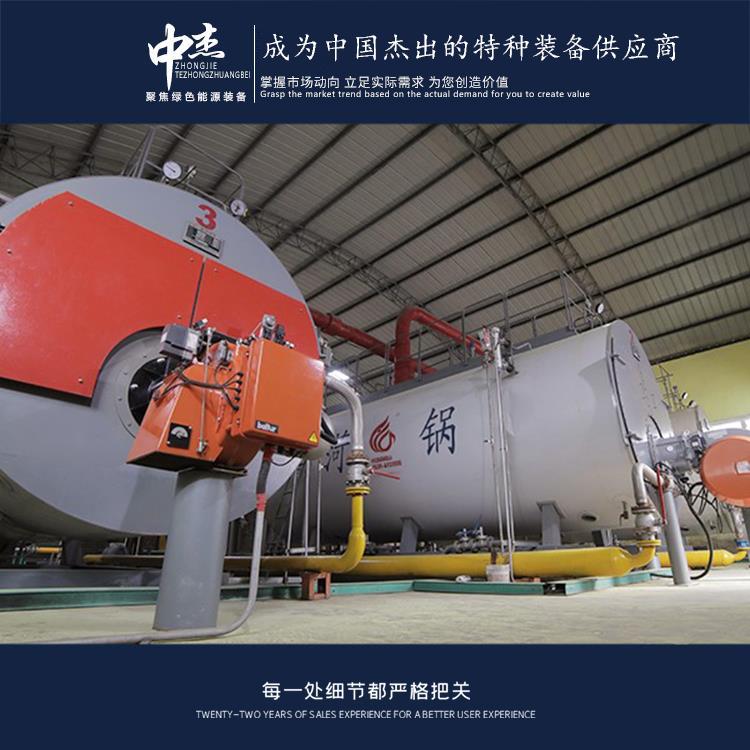
Shandong Zhongjie Special Equipment (formerly Heze Boiler Factory Co., Ltd.) holds an A-grade boiler manufacturing license, A2-grade pressure vessel manufacturing license, A2-grade pressure vessel design license, B-grade boiler installation, and GB2/Class, GC2/Class pressure pipeline installation licenses, as well as equipment and machinery installation contracting qualifications. It is a member of the China Boiler and Water Treatment Association, the China Chemical Equipment Association, and the director unit of the Shandong Equipment Manufacturing Association. The company has also passed the ISO9001 Quality Management System, ISO14001 Environmental Management System, OHSAS18001 Occupational Health and Safety Management System certifications, and the American ASME/U2 certification.
In textile processing factories, common types of boilers include the following:
Steam Boilers: Steam boilers are one of the most commonly used types of boilers in textile processing. They produce high-pressure, high-temperature steam, which is used for thermal treatment, dyeing, boiling, and other processes in the textile manufacturing process. Steam boilers offer advantages such as rapid heating, high efficiency, and good stability.
Hot Water Boilers: Hot water boilers are suitable for low-temperature textile processing techniques like washing and drying. They provide a stable supply of hot water with high temperature control accuracy and low energy consumption.
Hot Air Furnaces: Hot air furnaces are used for drying processes in textile manufacturing. They transfer heat energy to textiles through the hot air produced by combustion, achieving quick drying. Hot air furnaces have the benefits of fast heating and high thermal efficiency.
When selecting the appropriate boiler type for a textile processing factory, consider the following factors:
Processing Requirements: Determine the required heat medium (steam, hot water, hot air) and parameters such as working temperature and pressure based on the specific processing needs of the textile factory.
Energy Costs and Efficiency: Consider the energy consumption and efficiency of different boiler types, choosing one that meets processing requirements and has high energy utilization efficiency.
Environmental Requirements: Pay attention to the emission standards and environmental performance of the boilers, selecting a type that meets environmental requirements.
Maintenance
Yes, thermal oil boilers typically come with some self-protection features to ensure safe operation and extend their service life. Here are some common self-protection functions: Overheat Protection: Thermal oil boilers are equipped with overheat protection devices that automatically shut off the burner's gas supply when the thermal oil temperature exceeds the set safe range, preventing overheating of the thermal oil and avoiding equipment damage and safety accidents. Overpressure Protection: Thermal oil boilers also have overpressure protection devices that automatically cut off the burner's gas supply when the thermal oil pressure exceeds the set safe range, preventing the thermal oil system from exploding or leaking. Burner Automatic Control: The burners of thermal oil boilers usually come with an automatic control system that adjusts the gas supply and combustion effect based on set working parameters, maintaining a stable combustion state and avoiding incomplete combustion or excessive combustion. Temperature Control and Adjustment: Thermal oil boilers typically have temperature control and adjustment devices that automatically regulate the circulation and heating of the thermal oil based on the set working temperature, maintaining a stable working temperature and avoiding both high and low temperatures. Water Level Protection: For some thermal oil boilers, especially water tube thermal oil boilers, water level protection devices are also equipped to monitor the water level of the thermal oil and water. When the water level is abnormal, the protection device automatically cuts off the burner's gas supply, preventing dry burning and oil leakage. It's important to note that although thermal oil boilers have self-protection features, they still require regular inspections and maintenance to ensure the normal operation and reliability of these protection devices. Moreover, operators need to understand and master the working principles and operation methods of these self-protection functions to ensure safe operation.
Switching from a standard boiler to a gas boiler can significantly enhance energy utilization efficiency and energy-saving effects. Here's some insight into the energy-saving efficiency of switching to a gas boiler:
- High combustion efficiency: Gas boilers use gas as fuel and typically have higher combustion efficiency. Compared to traditional coal-fired or oil-fired boilers, gas boilers can achieve a higher combustion efficiency, reducing energy waste.
- Low emissions: Gas boilers produce relatively fewer exhaust emissions during combustion, causing less environmental pollution. The combustion technology and emission control devices used in gas boilers can effectively reduce the emissions of harmful substances like nitrogen oxides.
- Fast start and stop: Gas boilers can start and stop quickly, allowing for flexible adjustments based on actual needs. Compared to coal-fired boilers, gas boilers have shorter start and stop times, avoiding prolonged preheating and cooling processes, and reducing energy waste.
- High thermal efficiency: Gas boilers generally have higher thermal efficiency, achieving a higher conversion efficiency of thermal energy. The heat exchange technology and energy-saving design used in gas boilers maximize the utilization of the heat energy from gas, improving heating performance.
- Intelligent control and management: Gas boilers are often equipped with intelligent control systems that can automatically adjust operating states based on actual needs. Through control and regulation, gas boilers can achieve stable heating and avoid unnecessary energy waste.
- It is important to note that switching to a gas boiler requires considering the reliability and safety of the gas supply, as well as the suitability and installation requirements of the gas boiler. It is recommended to consult with engineers or relevant agencies before making the conversion to ensure
Regular inspections of industrial boilers are crucial for ensuring safe operation, improving efficiency, and extending service life. Here are the key reasons for the importance of regular industrial boiler inspections:
Safety Assurance: Industrial boilers are high-temperature, high-pressure equipment. Without regular inspections, there may be safety hazards. Regular inspections can identify and rectify potential issues within the boiler, such as malfunctioning combustion systems, failed water level control, and inoperable safety valves, ensuring safe boiler operation.
Efficiency Enhancement: Regular inspections can identify dirt and deposits within the boiler, maintain the cleanliness of heat exchangers, and enhance thermal conduction efficiency, improving the boiler's thermal and energy utilization efficiency. This helps to reduce energy consumption and operating costs.
Extended Service Life: Regular inspections allow for timely detection and treatment of corrosion, wear, and fatigue issues within the boiler, preventing further damage and malfunctions, thus extending the boiler's service life. Regular maintenance and care can also prevent and reduce boiler damage and malfunctions.
Legal and Regulatory Requirements: Many regions have enacted laws, regulations, and standards for boiler safety management, requiring regular inspections and maintenance of industrial boilers. Regular inspections are a critical component of fulfilling legal and regulatory requirements.
Insurance Requirements: Some insurance companies have specified insurance requirements for industrial boilers, mandating regular inspections and maintenance. Regular inspections can meet insurance company requirements and safeguard the enterprise's insurance rights.
In summary, regular inspections of industrial boilers are essential for ensuring safety, improving efficiency, extending service life, complying with laws and regulations, and meeting insurance requirements. Regular inspections should be conducted by qualified entities or individuals, following relevant laws, regulations, and standards. Timely inspections and maintenance can ensure the safe operation of industrial boilers.
Shandong Zhongjie Special Equipment, welcome customers for factory discussions and collaborations.
Yingkou Gas Boiler Prices
