


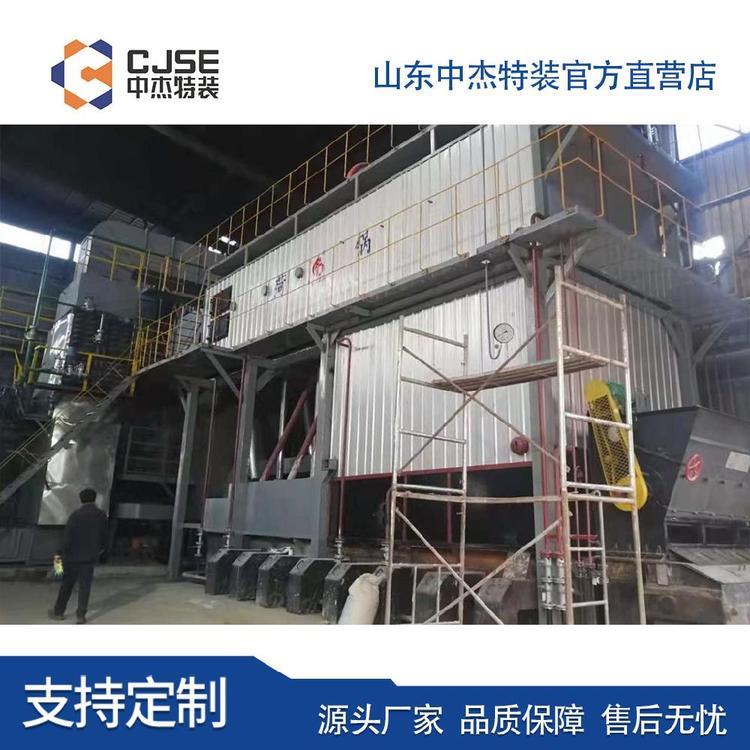


Shandong Zhongjie Special Equipment (formerly Heze Boiler Factory Co., Ltd.) holds an A-grade boiler manufacturing license, A2-grade pressure vessel manufacturing license, A2-grade pressure vessel design license, B-grade boiler installation license, and GB2/Class, GC2/Class pressure pipeline installation license, as well as an equipment and machinery installation contracting license. It is a member of the China Boiler and Water Treatment Association, the China Chemical Equipment Association, and the director unit of the Shandong Equipment Manufacturing Association. The company has also passed certifications for the ISO9001 Quality Management System, ISO14001 Environmental Management System, OHSAS18001 Occupational Health and Safety Management System, and the U.S. ASME/U2 certification.
The DZL type quick-assembly biomass boiler is a common model of biomass boiler, featuring the following characteristics:
Rapid Installation: The DZL type quick-install biomass boiler features modular design, with the boiler body and equipment pre-assembled in the factory. On-site, only simple connections and adjustments are required, significantly reducing installation time and project duration.
High combustion efficiency: Utilizes a special combustion chamber design and system, ensuring complete combustion of biomass fuel within the furnace, resulting in high thermal efficiency. Additionally, equipped with an economizer and flue gas recirculation unit to further enhance thermal efficiency.
Automation Control: The DZL type quick-install biomass boiler is equipped with an automated control system, enabling the control and monitoring of the combustion process. With a PLC controller and a touch screen, parameters such as fuel supply, air supply, and combustion temperature can be adjusted, ensuring the stable operation of the boiler.
Multiple Fuel Compatibility: The DZL type quick assembly biomass boiler is suitable for various biomass fuels such as sawdust, straw, etc. Different fuels can be chosen based on actual conditions to enhance fuel substitutability and flexibility.
Environmental Protection & Energy-Saving: The DZL type quick-install biomass boiler uses biomass fuel, resulting in relatively low emissions of flue gas and waste slag during combustion, with low pollution content in the emissions. The biomass fuel itself has the characteristics of low sulfur and low nitrogen, and the waste slag after combustion can be reused as organic fertilizer or biomass fuel, reducing environmental pollution.
Tightly structured: DZL type quick-assembly biomass boiler
Biomass fuel boilers may encounter the following issues during operation:
Fuel quality inconsistency: The quality of biomass fuel is affected by factors such as raw material source, processing methods, and storage conditions, leading to inconsistent fuel quality. Inconsistent fuel quality may impact combustion efficiency and the stable operation of boilers.
Ash disposal issue: Biomass fuel produces a large amount of ash during combustion, including waste, ash content, and unburned materials. The handling and disposal of ash may lead to environmental pollution and increased costs.
High-Temperature Corrosion: Ash and elements like chlorine in biomass fuels tend to cause corrosion at high temperatures, damaging the metal components of boilers. Appropriate measures must be taken to protect and address high-temperature corrosion issues.
Low combustion efficiency: Biomass fuel has different combustion characteristics from traditional fossil fuels, potentially leading to lower combustion efficiency. Optimization of the combustion system and control strategies is required to enhance combustion efficiency and reduce energy waste.
Gases Emitted from Combustion: The combustion of biomass fuel produces certain gas emissions, such as carbon dioxide, nitrogen oxides, and particulate matter. These emissions have an impact on the environment and air quality, necessitating appropriate control measures.
Transportation and Storage Costs: The transportation and storage costs for biomass fuels are high, especially for areas far from the source of supply. This may increase the operating costs for biomass fuel boilers.
In summary, biomass fuel boilers face issues such as inconsistent fuel quality, ash and slag disposal, and high temperatures.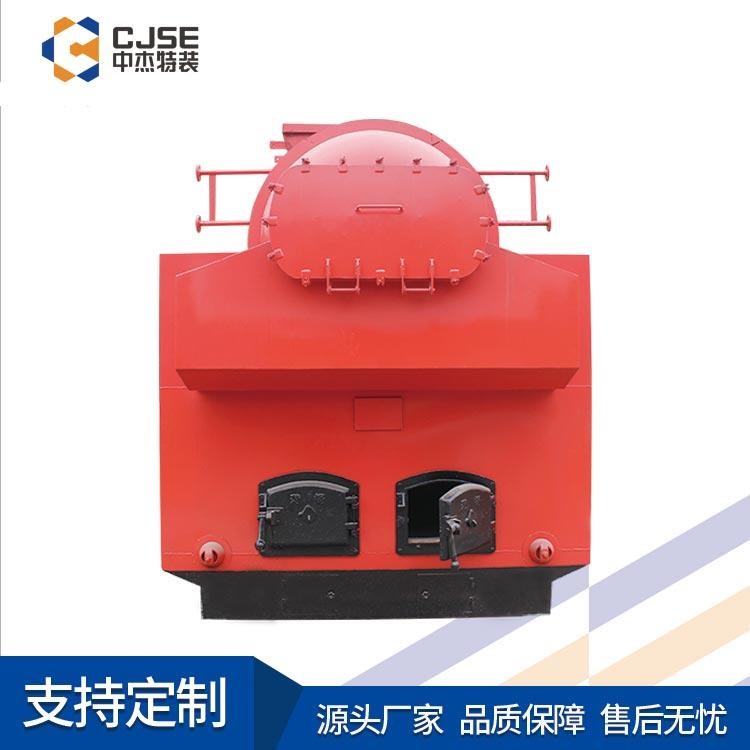
Several advantages come with choosing biomass boilers:
Renewable Energy: Fuel for biomass boilers comes from organic matter such as plants, animals, and microorganisms, making it a renewable energy source. Compared to traditional fossil fuels, biomass fuel has lower carbon emissions and environmental impact, helping to reduce greenhouse gas emissions and is more environmentally friendly.
Diverse Fuel Sources: Biomass fuel sources are extensive, including wood, straw, waste crops, food scraps, and municipal solid waste. This diversity in fuel sources allows biomass boilers to be flexible and adaptable, utilizing waste and by-products from plants and animals, thereby reducing resource waste.
Environmental friendliness: The carbon dioxide produced during the combustion process of biomass boilers can be absorbed by plants, forming a cycle to reduce air pollution. Additionally, the emissions and ash produced by the combustion process of biomass boilers are relatively low, resulting in minimal environmental impact.
Energy Security: As a domestic renewable energy source, biomass can reduce dependence on imported energy and enhance energy security. In regions with scarce resources, the use of biomass boilers can provide a reliable energy supply.
Economic Efficiency: Biomass fuel is relatively cost-effective, helping to reduce energy costs. Moreover, the technology and equipment for biomass boilers are continuously evolving and maturing, making them even more economically viable.
Coking in biomass boilers refers to the phenomenon where ash and other impurities in the fuel deposit and form slag inside the furnace during the combustion process. Coking can adversely affect the normal operation and thermal efficiency of biomass boilers. Below are the hazards of coking and corresponding measures:
Reducing thermal efficiency: Coking leads to carbon accumulation on the inner walls of the furnace and the heat exchange area, increasing thermal resistance and reducing the efficiency of heat conduction, thereby lowering the boiler's thermal efficiency. A decrease in thermal efficiency results in energy waste and an increase in operating costs.
Measures: Regularly clean the slag and accumulated carbon from the furnace chamber, maintain the cleanliness of the inner wall of the furnace chamber, and enhance the heat exchange efficiency.
Impact on combustion stability: Coking can lead to unevenness during the combustion process, reducing combustion stability and potentially causing incomplete combustion and unstable flames.
Measures: Reasonably adjust combustion parameters such as combustion temperature and air flow to maintain stability in the combustion process.
Increased equipment wear and maintenance costs: Coking leads to carbon accumulation on the inner walls of the furnace and flue pipes, thereby increasing the wear and maintenance costs of the equipment.
Measures: Regularly clean and maintain boiler equipment to prevent the formation of slagging and carbon accumulation.
Increased environmental pollution: Coking can lead to an increase in pollutant emissions during the combustion process, affecting the environment.
Measures: Reasonably control the combustion process to ensure complete and thorough combustion, reducing emissions of pollutants.
In summary, measures to prevent biomass boiler slagging include regular cleaning and maintenance of equipment, reasonable adjustment of combustion parameters, and control
Zhongjie Special Equipment upholds the grand vision of "realizing employees' dreams, creating value for customers, and striving for the prosperity and strength of our motherland," and is dedicated to the development of the green energy equipment industry. We offer society products and services with high cost-performance!
Linyi 4-ton biomass boiler, available for customization
