


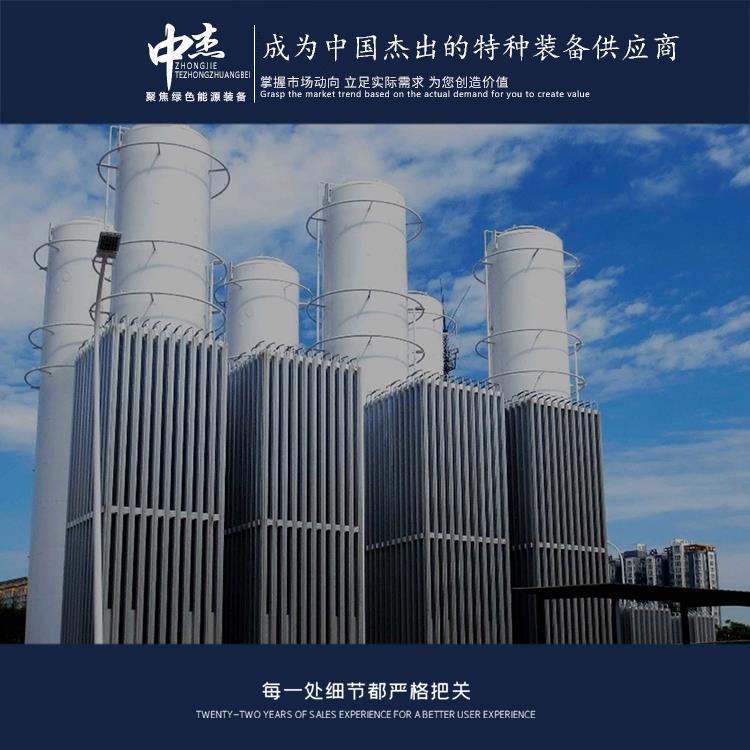
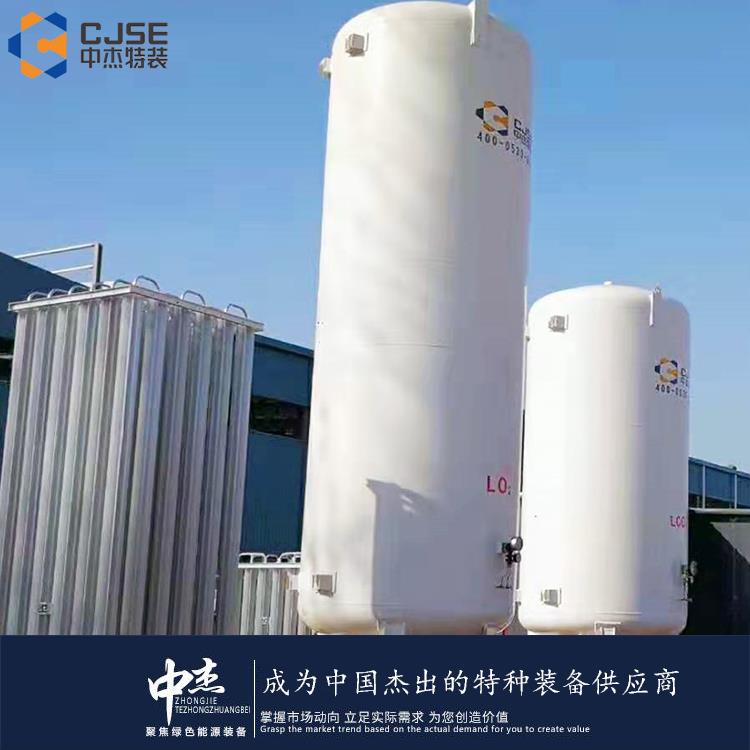
Shandong Zhongjie Special Equipment (formerly Heze Boiler Factory Co., Ltd.) was established in 2001, located at No. 2218 Jinnan Road, Development Zone, Heze City, with a registered capital of 50 million yuan and total assets of 500 million yuan. The company has 7 business centers: boilers, deep-freeze containers, pressure vessels, central air conditioning, engineering installation, international trade, and Internet of Things. It has three factory sites on Jinnan Road, East Changjiang Road, and Bohai Road, covering a total of 200,000 square meters, with the main workshop spanning 83,000 square meters. It currently employs 710 people, including 247 engineers and technicians and 82 intermediate-level technicians. In December 2016, it was recognized as a "High-tech Enterprise" by the Science and Technology Department. In June 2021, it was identified as a "Specialized and New Enterprise in Shandong Province" by the Ministry of Industry and Information Technology. In June 2022, it was recognized as a "Gazelle Enterprise in Shandong Province" and in August 2022, as a "Specialized and New Small Giant Enterprise" by the Ministry of Industry and Information Technology.
Prior to filling the liquid nitrogen tank, the following checks must be conducted:
Tank exterior inspection: Check for any visible damage, deformation, corrosion, etc. on the tank's exterior, including the tank wall, valves, pipes, and joints.
Sealability Inspection: Check the tank's sealing performance, including inspecting for any leakage at valves and pipe connections, to ensure the tank maintains good sealing integrity.
Pressure Check: Verify that the storage tank's pressure gauge is functioning properly and that the pressure is within the normal range to ensure the tank operates normally.
Level Check: Inspect the liquid level in the tank to ensure it is within the normal range, avoiding issues caused by excessively high or low levels.
Insulation Layer Inspection: Check for any damage or detachment in the tank's insulation layer to ensure effective insulation and reduce evaporation losses of liquid nitrogen.
Leak Inspection: Check for signs of liquid nitrogen leakage around the storage tank, including frost, ice, or liquid nitrogen stains on the ground.
Safety Equipment Inspection: Verify that the storage tank's safety equipment, such as leak detectors, alarm systems, and safety valves, are functioning properly to ensure the tank's safety.
Clean Inspection: Ensure the interior of the tank is clean, removing accumulated impurities and dirt to maintain the tank's cleanliness and hygiene.
The above lists the checks required prior to filling the liquid nitrogen tank, ensuring the safe operation of the tank and the proper storage of liquid nitrogen. During the inspection, strict adherence to the relevant operational procedures and safety guidelines is mandatory to ensure operational safety.
Low-temperature liquid storage tanks (such as liquid nitrogen, liquid oxygen, liquid argon, etc.) possess several advantages:
High-Density Storage: Low-temperature liquid storage tanks can convert gases into liquids, significantly increasing storage density. Compared to gas storage, liquid storage can accommodate more material in a relatively smaller space, enhancing storage efficiency.
Low-Temperature Retention: The low-temperature liquid storage tank has excellent insulation properties, effectively maintaining the低温 state of the liquid. The design and construction of the insulation layer can reduce heat conduction and heat loss, preserving the liquid's低温 and minimizing evaporation and waste.
Supply: Low-temperature liquid storage tanks offer stable and consistent liquid supply. Through internal pressure control and pipeline system design, precise liquid supply is achievable, catering to industrial production and experimental requirements.
Safety: Low-temperature liquid storage tanks offer high safety. Compared to gas storage, liquid storage reduces the risk of gas leakage and explosion. Tanks are typically equipped with safety devices such as pressure relief valves and liquid level alarms to ensure timely measures can be taken in abnormal situations, safeguarding the tank's safety.
Versatile Applications: Low-temperature liquid storage tanks are widely used in various fields such as industrial production and scientific research. Cryogenic liquids like liquid nitrogen and liquid oxygen are suitable for applications such as freezing, refrigeration, and gas supply, meeting diverse industrial needs.
In summary, low-temperature liquid storage tanks offer advantages such as high-density storage, temperature retention, supply, safety, and multi-functional applications, providing reliable liquid storage and supply solutions across various industries.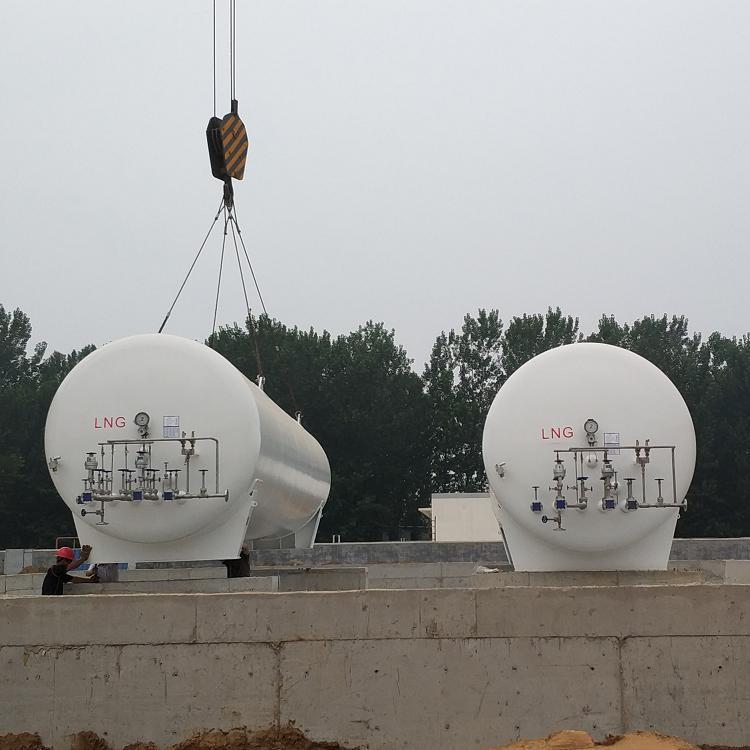
Tanks are specialized storage equipment, and to ensure their safe operation, regular inspections and maintenance are required. Here are common inspection methods for tanks:
Appearance Inspection: Regularly inspect the tank's exterior for leaks, corrosion, deformation, cracks, and other issues. Pay special attention to the integrity of the tank's joints, welds, and valves.
Pressure Testing: Conduct pressure tests to check the tank's sealing performance and pressure resistance. Use a pressure gauge or pressure sensor to test the tank's pressure, ensuring it can withstand the designed pressure.
Ultrasonic Inspection: Ultrasonic inspection is used to detect corrosion and cracks in tank walls. By scanning the tank with ultrasonic detection equipment, potential defects and issues are identified.
Magnetic Particle Inspection: Magnetic particle inspection is used to detect cracks in tank walls and the quality of welds. By applying magnetic particles to the tank surface and then observing with a magnetic particle inspection device for any accumulation of particles, one can determine the presence of cracks or welding defects.
Environmental Monitoring: Regularly conduct environmental monitoring around the storage tanks, including checking gas concentrations and temperatures, to ensure the safety of the surrounding environment.
It's important to note that tank inspections should be conducted by authorized inspection agencies or certified inspectors. The frequency and methods of inspection should be determined based on the tank's usage, scale, and relevant regulations. Regular inspections and maintenance can help identify potential issues early on, ensuring safe operation of the tank.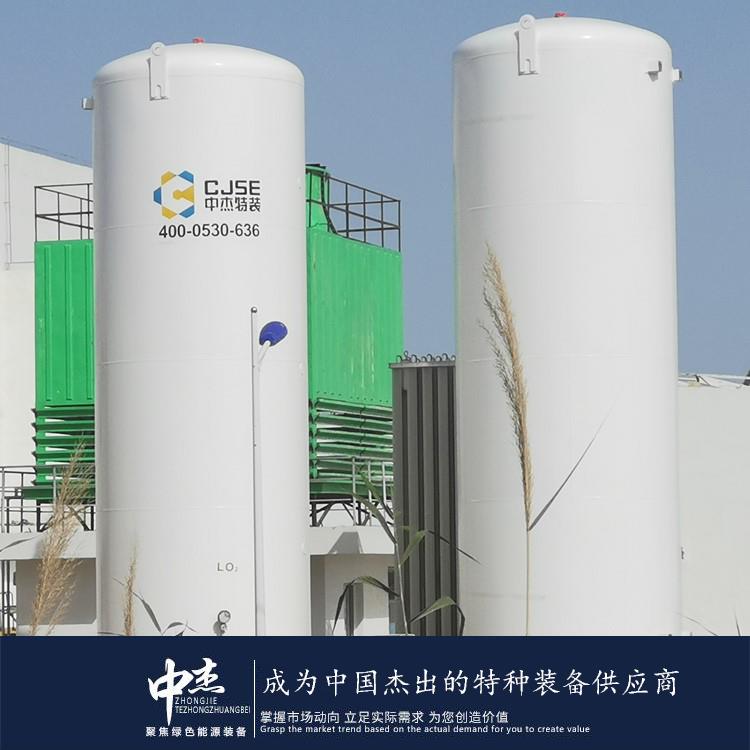
Liquid oxygen low-temperature storage tanks are primarily used for storing and supplying liquid oxygen, with their application methods varying based on specific needs and scenarios. Here are some common applications of liquid oxygen low-temperature storage tanks:
Applications: Liquid oxygen low-temperature storage tanks are widely used in the field for cryogenic preservation of biological samples, cells, tissues, and vaccines. Institutions such as biopharmaceutical research organizations and biobanks utilize liquid oxygen low-temperature storage tanks to store and protect these biological materials.
Experimental Research: Liquid Oxygen Low-Temperature Storage Tanks are used to provide low-temperature environments in scientific research and laboratories for cryogenic preservation and experimental purposes. These tanks play a crucial role in experimental research across various fields such as physics, chemistry, biology, and materials science.
Industrial Applications: Liquid Oxygen Low-Temperature Storage Tanks are used in industrial sectors for providing low-temperature cooling in processes such as metalworking, welding, and heat treatment. These tanks offer low temperatures to achieve the required hardness and toughness of metals during processing.
Food Industry: Liquid oxygen low-temperature storage tanks are used in the food industry for freezing and refrigeration of food products such as frozen meats, frozen fruits, and frozen seafood. The low temperature of liquid oxygen can quickly freeze the food, preserving its freshness and quality.
Liquid Oxygen cryogenic storage tanks are used in the field for storing and supplying liquid oxygen as fuel. Liquid oxygen, as a high-energy fuel, is widely used in the propulsion systems of engines and devices.
During the operation of liquid oxygen low-temperature storage tanks, it is essential to strictly adhere to relevant safety regulations and operational guidelines to ensure the safe operation and use of the tanks. Liquid oxygen is highly flammable, so fire prevention measures must be taken when using liquid oxygen low-temperature storage tanks, and it must be ensured that there are no sources of fire around the tanks.
Zhong Jie Special Equipment upholds the grand vision of "realizing employees' dreams, creating customer value, and striving for the prosperity and strength of our motherland," focusing solely on the development of green energy equipment industry, and dedicating high-value products and services to society!
Zibo Liquid Nitrogen Storage Tank - On-Site Installation
