


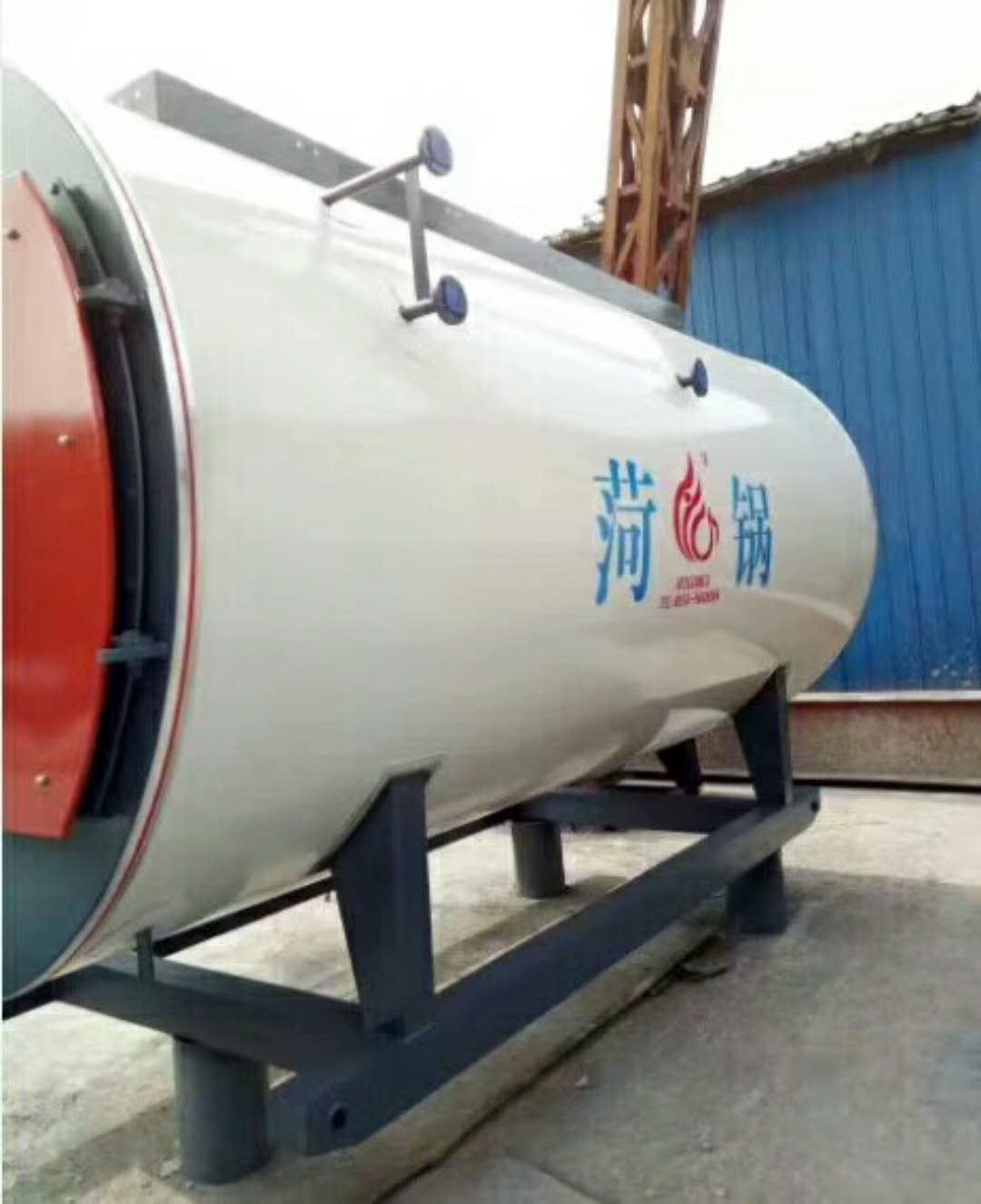
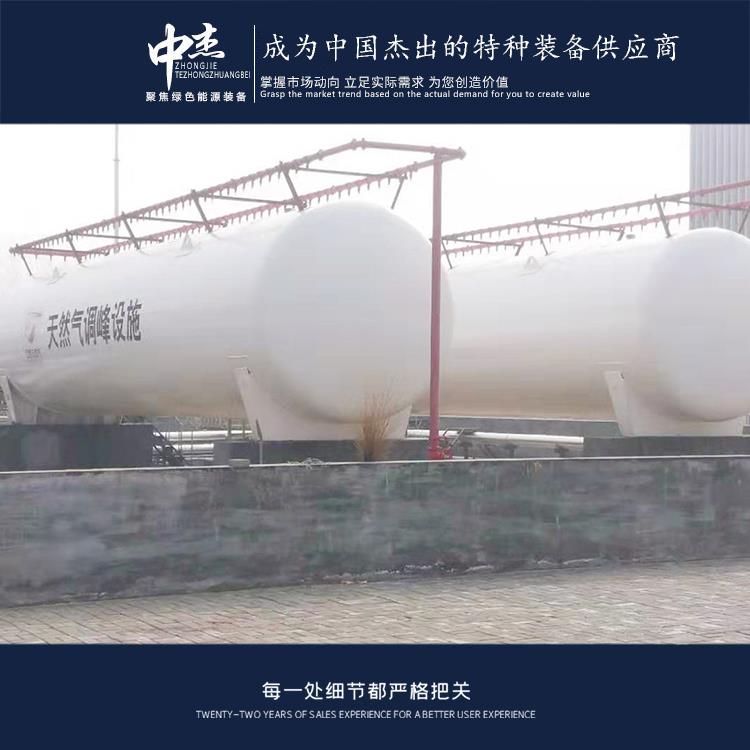
Shandong Zhongjie Special Equipment (formerly Heze Boiler Factory Co., Ltd.) was established in 2001, located at No. 2218 Jinnan Road, Economic and Technological Development Zone, Heze City, with a registered capital of 50 million yuan and total assets of 500 million yuan. The company has 7 business centers: boilers, deep-freezing vessels, pressure vessels, central air conditioning, engineering installation, international trade, and the Internet of Things. It has three factory sites on Jinnan Road, East Changjiang Road, and Bohai Road, covering a total area of 200,000 square meters, with the main workshop spanning 83,000 square meters. It currently employs 710 staff, including 247 engineers and technicians and 82 intermediate-level technicians. In December 2016, it was recognized as a "High-Tech Enterprise" by the Science and Technology Department. In June 2021, it was identified as a "Specialized and New Enterprise in Shandong Province" by the Department of Industry and Information Technology. In June 2022, it was recognized as a "Gazelle Enterprise in Shandong Province" and in August 2022, as a "Specialized and New Small Giant Enterprise" by the Ministry of Industry and Information Technology.
To extend the service life of low-temperature liquid storage tanks, the following measures can be taken:
Regular Inspections and Maintenance: Conduct periodic visual inspections of the tank, including the shell, welds, valves, and fittings. Check for any abnormalities such as cracks, corrosion, or deformation, and promptly repair or replace damaged parts.
Maintain Insulation: Insulation is crucial for the thermal preservation of low-temperature liquid storage tanks. Regularly inspect the integrity and insulating properties of the insulation, repair or replace damaged insulation materials to ensure the tank's insulating effectiveness.
Control temperature and pressure: The temperature and pressure of low-temperature liquid storage tanks should be maintained within a safe range. Avoid excessive or low temperatures and pressures that may damage the tank. Implement appropriate cooling or heating measures to ensure stable temperature and pressure of the liquid.
Corrosion Protection: The exterior shell and internal structure of the storage tank should be protected against corrosion and oxidation. Regular inspections and maintenance of the protective coating are essential to ensure its integrity.
Avoid excessive pressure and overfilling: Prevent the internal pressure of the tank from being too high or too low, as well as overfilling with liquid. Excessive pressure and overfilling can lead to structural破裂 or damage to the tank.
Regular cleaning and waste discharge: Regularly clean the interior of the tank to remove accumulated impurities and dirt. Conduct regular waste discharge to prevent damage to the tank from杂质 and sediments in the liquid.
Safety Operation and Training: Ensure operators are knowledgeable and skilled in the safe handling of cryogenic liquid storage tanks. Enhance safety training to boost operator awareness and emergency response capabilities.
Manage records and documents: Establish comprehensive management records and documentation, including the usage of tanks.
The reasons for not leaving liquid oxygen tanks empty for extended periods are mainly as follows:
Evaporation loss of liquid oxygen: Due to its low boiling point, liquid oxygen will continuously evaporate if left empty for extended periods, resulting in a loss of liquid oxygen within the storage tank. The evaporation rate of liquid oxygen is relatively fast, with daily evaporation amounts potentially reaching several hundredths of the tank's capacity. Prolonged empty storage can lead to waste of liquid oxygen.
Safety Risk: Liquid oxygen is a strong oxidizer with high flammability and explosive properties. Prolonged storage without use increases the likelihood of liquid oxygen coming into contact with the surrounding environment, thereby raising the risk of accidental fires and explosions.
Risk of Tank Damage: Long-term emptying of liquid oxygen tanks can lead to internal oxidation reactions, accelerating corrosion and damage to the tank. Tank damage can affect its sealing performance and structural integrity, increasing the risk of leaks and safety accidents.
Therefore, to ensure the safe storage and effective utilization of liquid oxygen, the liquid oxygen storage tank should be regularly maintained and serviced to avoid long-term disuse. When the tank is not in use, appropriate measures should be taken, such as sealing the tank and reducing oxygen evaporation, to minimize liquid oxygen loss and safety risks.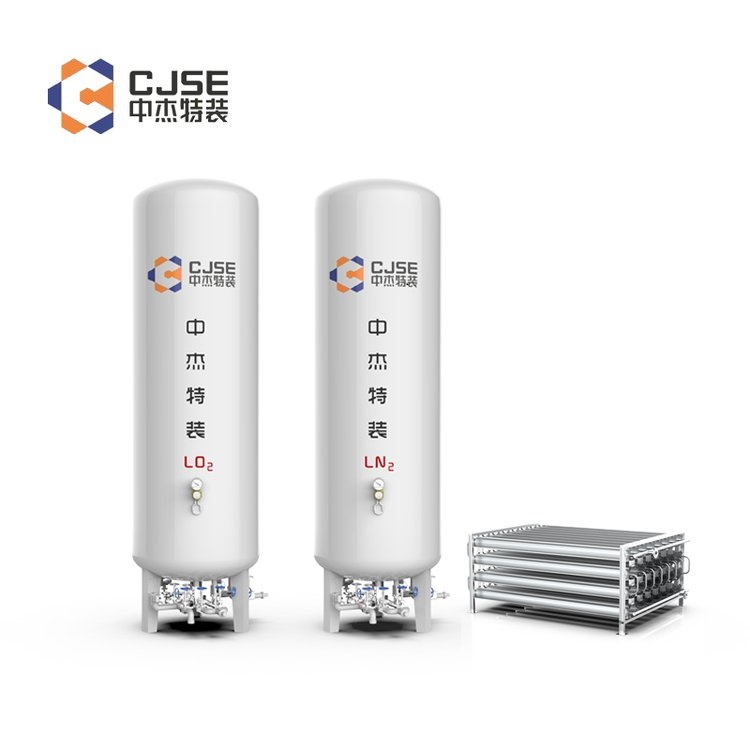
The reason for occasional venting of liquid oxygen tanks is primarily to maintain the safe pressure range within the tank and prevent excessive pressure buildup. Here are several situations where liquid oxygen tanks may be vented occasionally:
Pressure Control: During operation, the pressure inside a liquid oxygen tank can change due to evaporation of the liquid oxygen and temperature variations. To maintain a safe pressure range within the tank, regular venting is required to control the tank's pressure within the safe limits.
Prevent Overpressure Accumulation: During oxygen filling or usage, external factors or operational errors may cause the pressure inside the liquid oxygen tank to exceed the safe limit. To prevent overpressure accumulation, timely venting is required to alleviate the pressure within the tank.
Prevent Gas Accumulation: There may be some gas impurities in the liquid oxygen storage tank, such as air and water vapor. These gases will condense into liquid or solid at the low temperature of liquid oxygen, blocking pipes or affecting the normal operation of the tank. Regular venting can expel these impurities, maintaining the tank's cleanliness and unobstructed flow.
It is essential that the venting operation of liquid oxygen be performed by trained personnel and strictly adhere to the relevant operational procedures and safety measures. During the venting process, precautions should be taken to prevent leaks of liquid oxygen and contact with it, ensuring the safety and reliability of the operation.
Low-temperature liquid storage tanks (such as liquid nitrogen, liquid oxygen, liquid argon, etc.) offer several advantages:
High-Density Storage: Low-temperature liquid storage tanks can convert gases into liquids, significantly enhancing storage density. Compared to gas storage, liquid storage can hold more material in a relatively smaller space, thereby improving storage efficiency.
Low Temperature Retention: Low-temperature liquid storage tanks are equipped with excellent insulation properties, effectively maintaining the low temperature state of the liquid. The design and construction of the insulation layer reduce heat conduction and thermal loss, keeping the liquid at low temperature and minimizing evaporation and loss.
Supply: Low-temperature liquid storage tanks ensure stable and precise liquid supply. Through internal pressure control and pipeline system design, they can accurately deliver liquids to meet industrial production and laboratory requirements.
Safety: Low-temperature liquid storage tanks offer a high level of safety. Compared to gas storage, liquid storage reduces the risk of gas leaks and explosions. Tanks are typically equipped with safety devices such as pressure relief valves and level alarms to ensure timely measures can be taken in abnormal situations, safeguarding the tank's safety.
Versatile Applications: Low-temperature liquid storage tanks are widely used in various fields such as industrial production and scientific research. Liquids like liquid nitrogen and liquid oxygen can be utilized for freezing, refrigeration, gas supply, and more, meeting diverse industrial needs.
Overall, low-temperature liquid storage tanks offer advantages such as high-density storage, temperature maintenance, supply, safety, and versatile applications, providing reliable liquid storage and supply solutions for various industries.
ZJ Special Equipment adheres to the grand vision of "realizing employees' dreams, creating customer value, and striving for the prosperity and strength of our motherland," focusing on the development of green energy equipment industry. We dedicate high-quality products and services with competitive pricing to society!
Fuxin Nitrogen Storage Tank - High Cost-Performance Ratio
