


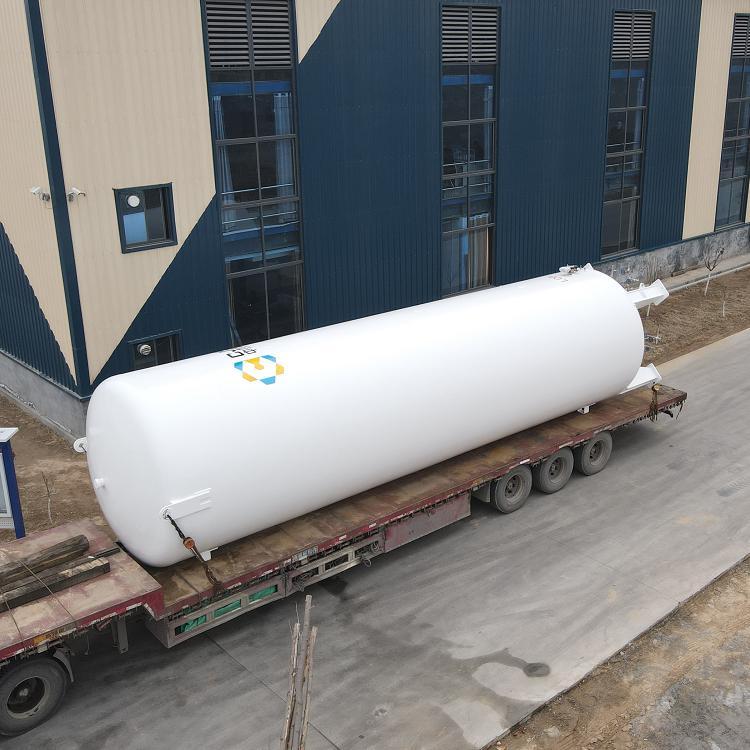
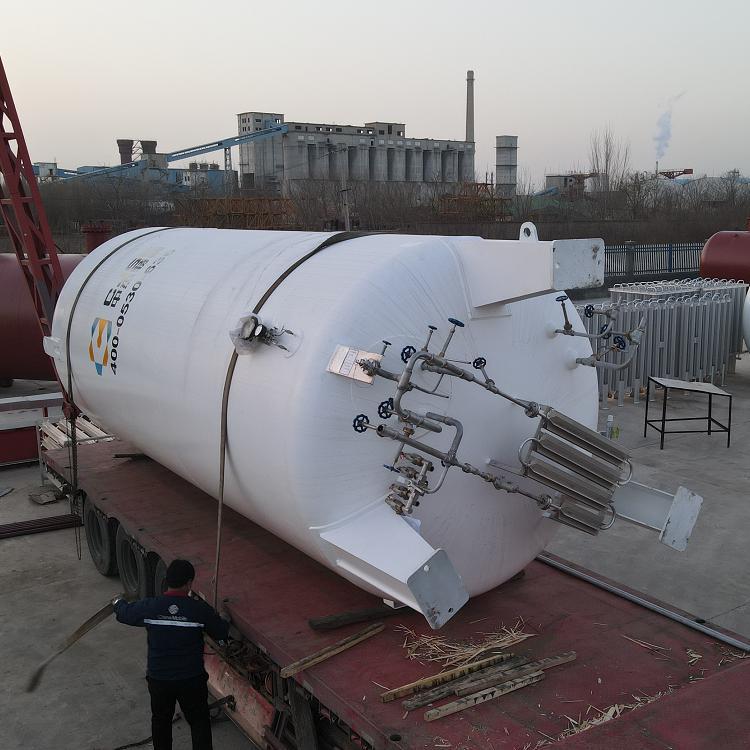
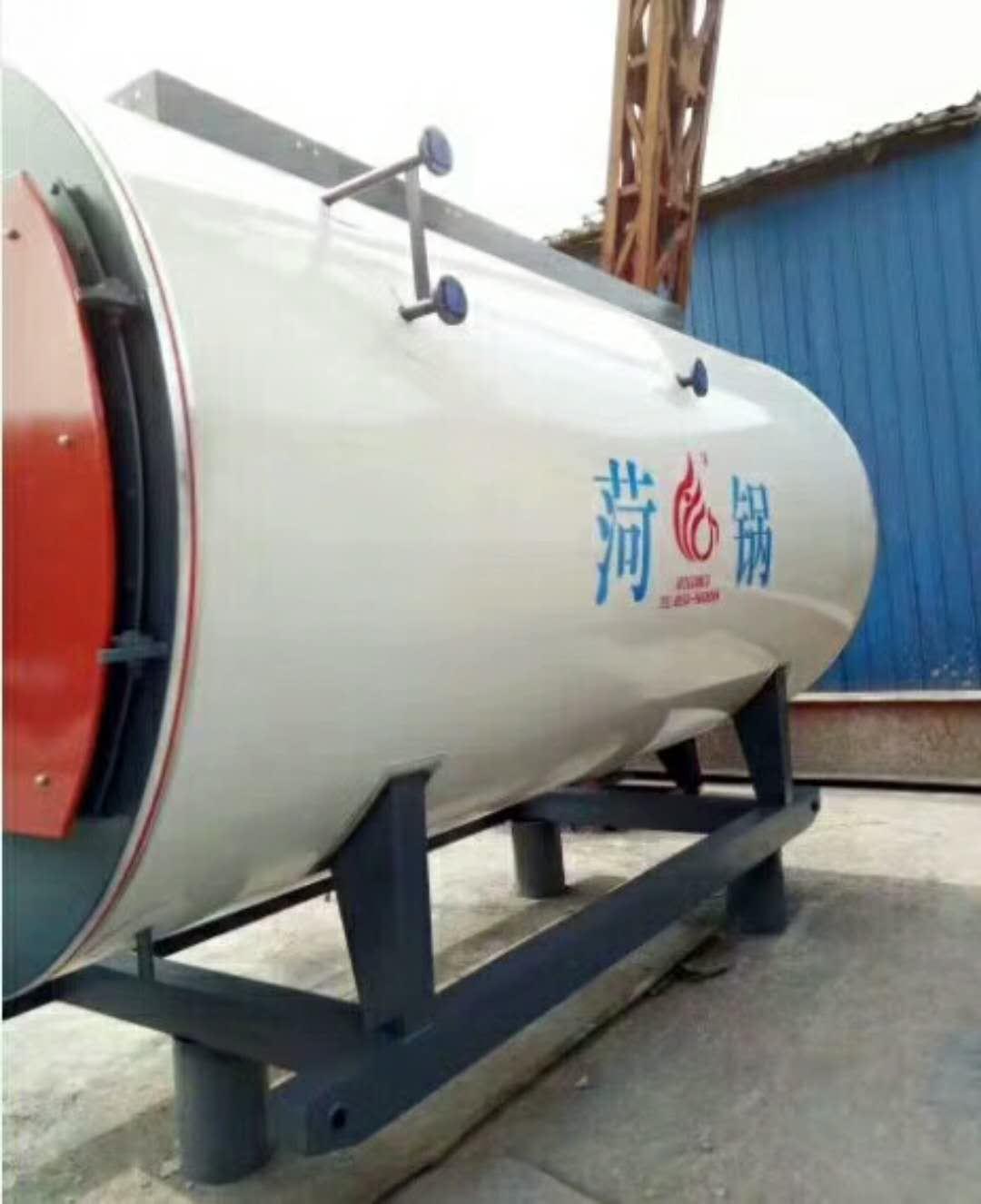
Shandong Zhongjie Special Equipment (formerly Heze Boiler Factory Co., Ltd.) was established in 2001, located at No. 2218 Jinnan Road, Economic and Technological Development Zone, Heze City. With a registered capital of 50 million yuan and total assets of 500 million yuan, the company has 7 business centers: boilers, deep-freezing vessels, pressure vessels, central air conditioning, engineering installation, international trade, and the Internet of Things. It operates three factory sites on Jinnan Road, East Changjiang Road, and Bohai Road, covering a total area of 200,000 square meters, with the main workshop spanning 83,000 square meters. The company currently employs 710 staff, including 247 engineers and technicians, and 82 intermediate-level technical personnel. In December 2016, it was recognized as a "High-Tech Enterprise" by the Science and Technology Department. In June 2021, it was identified as a "Specialized and New Enterprise in Shandong Province" by the Ministry of Industry and Information Technology. In June 2022, it was recognized as a "Gazelle Enterprise in Shandong Province" and in August 2022, as a "Specialized and New Small Giant Enterprise" by the Ministry of Industry and Information Technology.
Before using the CO2 storage tank, the following preparations must be made:
Safety Inspection: Conduct a safety check of the tank before use to ensure there are no visible damages, corrosion, or leaks. Inspect the tank's exterior, valves, and connecting pipes to ensure they are intact.
Tank Cleaning: Ensure the tank is clean both internally and externally. Remove any debris, dirt, and residues inside the tank to ensure no substances could affect the quality or safety of the CO2.
Connection Pipes: Check the connection between the tank and the related pipes to ensure they are securely and tightly sealed. Verify the status of the valves and pipes' openings to ensure they are in the correct position.
Pressure Check: Inspect the tank's pressure to ensure it's within a safe range. Use a pressure gauge or other pressure detection equipment if necessary.
Ventilation and Safety Measures: Ensure adequate ventilation around the tank to prevent the accumulation of CO2. During operation, follow relevant safety operating procedures and measures, such as wearing personal protective equipment and avoiding open flames.
Tank Labeling: Label the tank with relevant information, such as the type of stored gas, pressure rating, and capacity. This helps operators identify and handle the tank correctly.
Note: The above preparations may vary depending on the specific tank type and usage scenario. Before using the CO2 storage tank, it is recommended to refer to the relevant safety operation manuals and guidelines to ensure safe and correct operation.
The application standards for liquid carbon dioxide storage tanks mainly include the following aspects:
The liquid level of a carbon dioxide tank will vary depending on specific design and usage requirements. Generally, the liquid level in a liquid carbon dioxide tank is typically maintained between 80% and 95%. There are several reasons to keep the tank level within this range:
- Space Reserve: Maintaining a certain level of liquid provides steam space inside the tank, preventing overpressure and the risk of tank explosion.
- Storage Capacity: Keeping a higher level maximizes the tank's capacity, allowing for more carbon dioxide storage.
- Stable Supply: Maintaining an appropriate level ensures a stable supply of carbon dioxide to meet usage needs.
However, specific level requirements may vary depending on different applications and industries. When using a carbon dioxide tank, follow the manufacturer's recommendations and relevant regulations and standards to ensure the tank's level is controlled within a safe and appropriate range.
Technical specifications for carbon dioxide storage tanks can be formulated based on different application fields and/or regional standards. The following are some common technical specifications and standards for reference:
ASME Standards: The American Society of Mechanical Engineers (ASME) has issued a series of standards for pressure vessels, including specifications for carbon dioxide storage tanks such as ASME BPVC Section VIII Division 1 and ASME BPVC Section VIII Division 2.
ISO Standards: The International Organization for Standardization (ISO) has published some standards related to pressure vessels, such as ISO 9809-1 and ISO 9809-2, covering the design, manufacturing, and inspection requirements for steel gas cylinders.
GB Standards: The China National Standards Administration has issued a series of standards related to pressure vessels, such as GB 150 "Pressure Vessels" and GB 5099 "Steel Gas Cylinders," including design, manufacturing, and inspection requirements for carbon dioxide storage tanks.
DOT Standards: The United States Department of Transportation (DOT) has issued some standards related to pressure vessels and cylinders, such as DOT-3AA and DOT-4BA, covering the design, manufacturing, and transportation requirements for liquefied gas storage tanks.
EN Standards: The European Committee for Standardization (CEN) has published some standards related to pressure vessels, such as EN 13445 and EN 14382, covering the design, manufacturing, and inspection requirements for liquefied gas storage tanks.
Additionally, based on specific application needs, there may be other industry standards and specifications applicable to carbon dioxide storage tanks, such as standards related to the food and beverage industry and specific industry standards.
When using carbon dioxide storage tanks, one should select applicable technical specifications based on specific application requirements and local regulatory requirements, and ensure that the tank's design, manufacturing, and use comply with the corresponding standards and specifications.
Our company places great emphasis on technological innovation and R&D design. We have one municipal-level enterprise technology center in Heze City, equipped with non-destructive testing, physical and chemical testing, welding testing, hydrostatic testing, and other testing facilities. We have over 600 various equipment and instruments, including CNC machine tools, X-ray flaw detectors, digital ultrasonic flaw detectors, mechanical property testing machines, chemical analyzers, spectrometers, tensile testing machines, plasma welding machines, etc. The key products we have developed, such as temperature and pressure vessel welding, biomass boiler emission reduction, and waste heat utilization, have successively been shortlisted for multiple Shandong Provincial Department of Industry and Information Technology Science and Technology Innovation Projects, Shandong Provincial Key Projects, and Heze City Innovation and Excellence Projects. We have cumulatively obtained 27 authorized utility models, 16 authorized inventions, participated in drafting 2 standards, 2 industry standards, and registered 15 trademarks. Our technical team, in collaboration with Professor Yajiang Li from Shandong University, has developed deep cryogenic container processing technology using the international plasma arc + wire filling tungsten inert gas arc welding (PAW-GTAW) technology. The provincial-level scientific and technological achievement appraisal has determined that our technology level in deep cryogenic container manufacturing has reached an international standard. Choose Zhongjie Special Equipment, let's create brilliance together!
Wuzhong Carbon Dioxide Storage Tank - Trustworthy
