


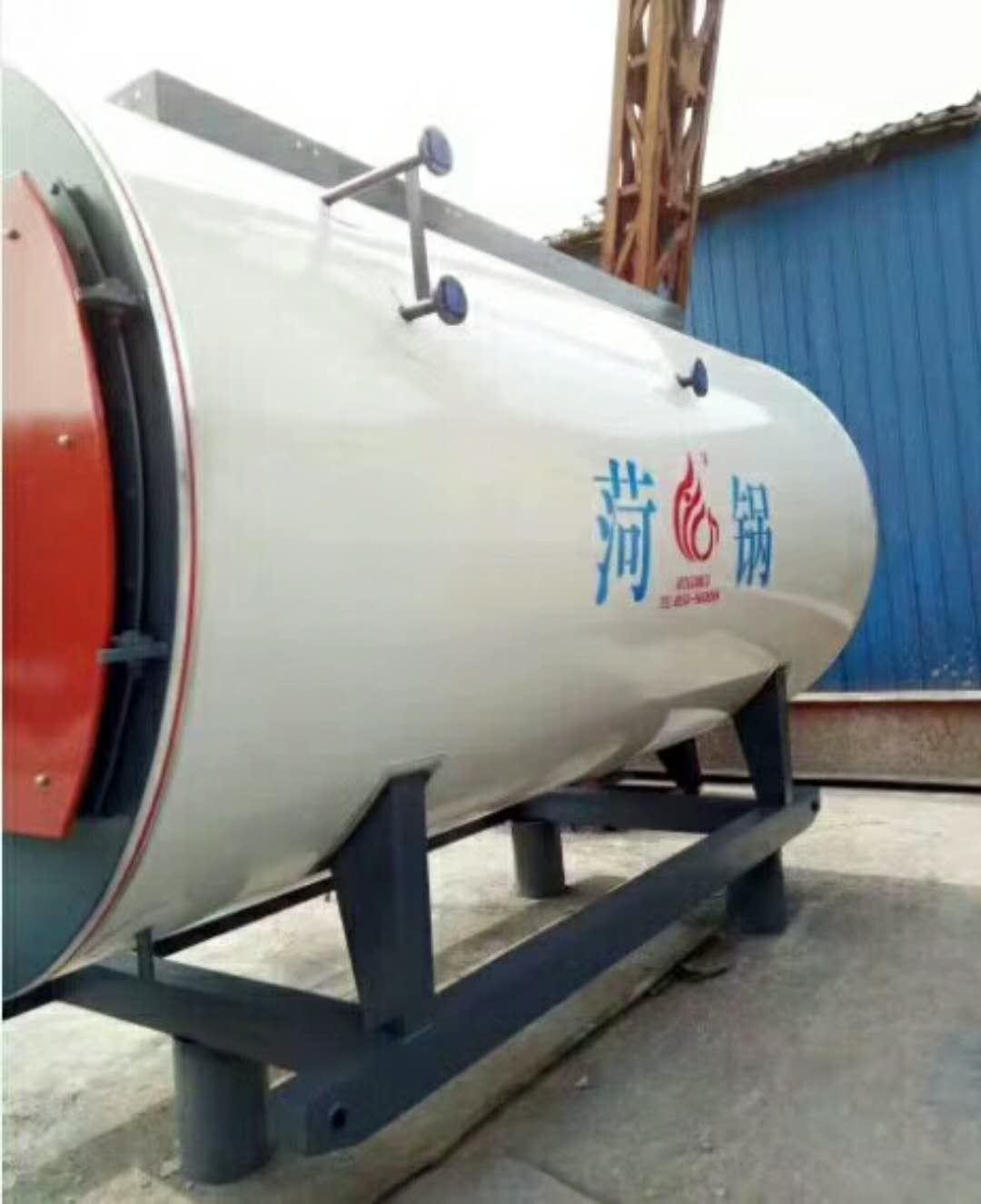

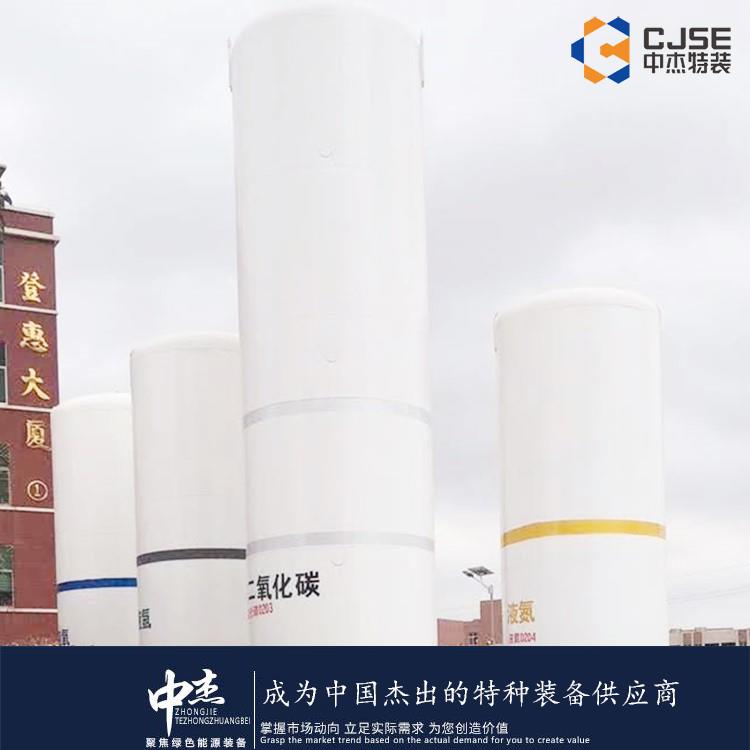
Shandong Zhongjie Special Equipment's main products include: fuel (gas) boilers, organic heat carrier boilers, biomass boilers, waste heat boilers, and other boiler products; vacuum insulation cryogenic pressure vessels such as LNG tanks, oxygen/nitrogen/argon tanks, and CO2 tanks; pressure vessel products such as denitrification engineering equipment, heat storage and energy storage equipment, and complete chemical equipment; central air conditioning and HVAC equipment such as ground (water) source heat pumps, air source units, water-cooled screw units, and air-cooled modules. Planned products include large-scale energy centers, LNG transport vehicles, LNG tank containers, and other green energy equipment.
Nitrogen charging in a liquid nitrogen tank refers to the process of injecting nitrogen gas into the tank to increase the concentration and pressure of nitrogen inside, in order to meet certain safety requirements and operational objectives. Here are some precautions to consider when nitrogen charging in a liquid nitrogen tank:
Safe Operation: Prior to conducting nitrogen purge operations on liquid nitrogen tanks, it is mandatory that operators possess relevant safety knowledge and operational skills. Operators should wear appropriate personal protective equipment, such as safety goggles, gloves, and protective clothing.
Nitrogen Quality: Utilize high-purity nitrogen for inerting operations to ensure the quality and purity of the nitrogen. Low-purity nitrogen may contain impurities or oxygen, which could adversely affect the liquid nitrogen within the storage tank.
Nitrogen Flush Rate Control: During the nitrogen flushing process, the flush rate should be controlled to avoid being too fast or too slow. Excessive speed may cause the internal pressure of the tank to rise too high, while a slow speed may lead to extended flushing time.
Pressure Monitoring: During the nitrogen charging process, the internal pressure of the tank should be monitored regularly. Ensure the internal pressure of the tank remains within a safe range and adjust as necessary.
Temperature Control: During the nitrogen charging process, attention should be paid to controlling the temperature of the storage tank. The low temperature of liquid nitrogen can lead to condensation and frost formation on the storage tank and pipelines. Appropriate measures such as heating or insulation should be taken to prevent condensation and frost formation.
Post-nitrogen flushing treatment: After the nitrogen flushing operation is completed, the flushing device should be promptly turned off, and the tank should be inspected and cleaned. Ensure that there is no residual nitrogen or impurities inside the tank.
Note that nitrogen charging operations for liquid nitrogen tanks must be strictly adhered to the relevant safety standards.
Several factors need to be considered when determining the design pressure and calculated pressure of a liquid oxygen storage tank:
Design Pressure: Design pressure refers to the maximum pressure a tank can withstand under normal operating conditions. When determining the design pressure, factors such as the working pressure range of liquid oxygen, the tank's material strength, and safety factors must be considered. Generally, the design pressure should be slightly higher than the liquid oxygen's high working pressure to ensure the tank's safety and reliability within the normal operating range.
Calculation Pressure: The calculation pressure refers to the actual working pressure of the tank under the design pressure. The calculation pressure is determined based on factors such as the characteristics of liquid oxygen, the geometric shape of the tank, and material strength. The calculation pressure should consider factors like the expansion coefficient of liquid oxygen, temperature changes, and pressure fluctuations to ensure the safety and stability of the tank under actual operating conditions.
Determining the design pressure and calculation pressure of liquid oxygen storage tanks typically requires referencing relevant standards and specifications, such as Standard GB150 "Steel Pressure Vessels" and GB18442 "Technical Conditions for Storage Tanks of Liquid Oxygen, Liquid Nitrogen, and Liquid Argon." These standards and specifications provide detailed design and calculation methods to ensure the safety and reliability of the tanks.
In practical applications, the design pressure and calculated pressure of liquid oxygen storage tanks should be calculated and determined by pressure vessel designers. They will consider factors such as specific engineering requirements, tank dimensions, and materials, among others, to ensure that the tank's design and use comply with relevant safety standards and regulations.
When initially using a liquid nitrogen tank, there are several precautions to consider for safe and effective operation. Here are some suggested points to keep in mind:
Safe Operation: Liquid nitrogen is a cryogenic liquid with strong refrigerating and asphyxiating effects. When handling liquid nitrogen tanks, it is essential to wear appropriate personal protective equipment, such as insulated gloves and protective suits. Avoid direct contact with liquid nitrogen to prevent injury or other harm.
Ventilation Environment: Liquid nitrogen evaporation produces a large amount of gas, which may displace other gases, leading to a decrease in oxygen content in the air. Therefore, when using liquid nitrogen tanks, it is essential to ensure proper ventilation in the operating area to prevent oxygen deficiency.
Tank Inspection: Before the initial use of a liquid nitrogen tank, it should be thoroughly inspected for appearance and seal integrity. Ensure there are no visible damages, leaks, or other safety hazards. If any issues are found, they should be addressed promptly by repairing or replacing the tank.
Filling the Storage Tank: Prior to the initial use of a liquid nitrogen storage tank, it is necessary to fill it with liquid nitrogen. During the filling process, adhere to the correct operational procedures and safety protocols to ensure the process is safe and reliable. Additionally, pay attention to controlling the filling speed and pressure to avoid excessive tank pressure and temperature rise.
Identification and Record Keeping: Prior to the first use of the liquid nitrogen tank, relevant information should be labeled on the tank, such as the stored medium, capacity, manufacturing date, etc. It is also recommended to establish a tank usage record, including filling dates, filling quantities, usage details, etc., for future traceability and management.
Note that the use of liquid nitrogen tanks involves safety risks such as low temperatures and high pressures. Operators should receive training and strictly adhere to the relevant operating procedures and safety measures. If unfamiliar with the operation or have doubts, it is recommended to consult experts or relevant institutions for guidance.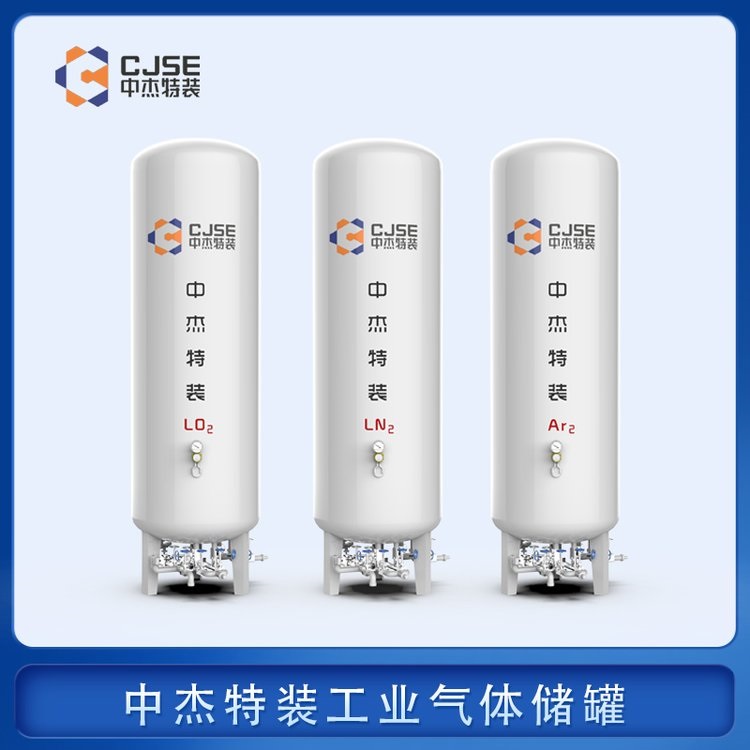
A 50 cubic meter liquid oxygen tank refers to a storage tank with a capacity of 50 cubic meters. Liquid oxygen tanks are commonly used for storing and supplying liquid oxygen, for applications such as research, experiments, and more.
Key features and configurations of a 50 cubic meter liquid oxygen storage tank may include the following aspects:
Volume: The 50 cubic meter liquid oxygen tank has a capacity of 50 cubic meters, allowing for the storage of a large quantity of liquid oxygen.
Structure: Liquid oxygen tanks are typically designed with double or multi-layer construction, filled with insulating material in between to minimize heat transfer and evaporation of the liquid oxygen. The tank material is usually stainless steel or aluminum alloy, offering excellent corrosion and low-temperature resistance.
Insulation Layer: The insulation layer of liquid oxygen storage tanks commonly uses multi-layered insulating materials such as polyethylene foam, glass fiber, and vacuum layers to reduce heat transfer and the evaporation of liquid oxygen.
Thermal Control System: Liquid oxygen tanks are typically equipped with a thermal control system to regulate the tank's temperature, maintaining the low-temperature state of the liquid oxygen.
Safety Equipment: Liquid oxygen storage tanks are typically equipped with safety devices, such as pressure and temperature sensors, safety valves, etc., to ensure the safe operation of the tank.
Note that the use of liquid oxygen storage tanks must strictly adhere to relevant safety regulations and operational guidelines to ensure safe operation and use. Liquid oxygen is highly flammable, so fire prevention measures must be taken when using liquid oxygen storage tanks, and fire sources must be kept clear of the tank area.
Shandong Zhongjie Special Equipment, welcome customers to our factory for business discussions.
Fushun Low-Temperature Liquid Argon Storage Tank - Trustworthy
