


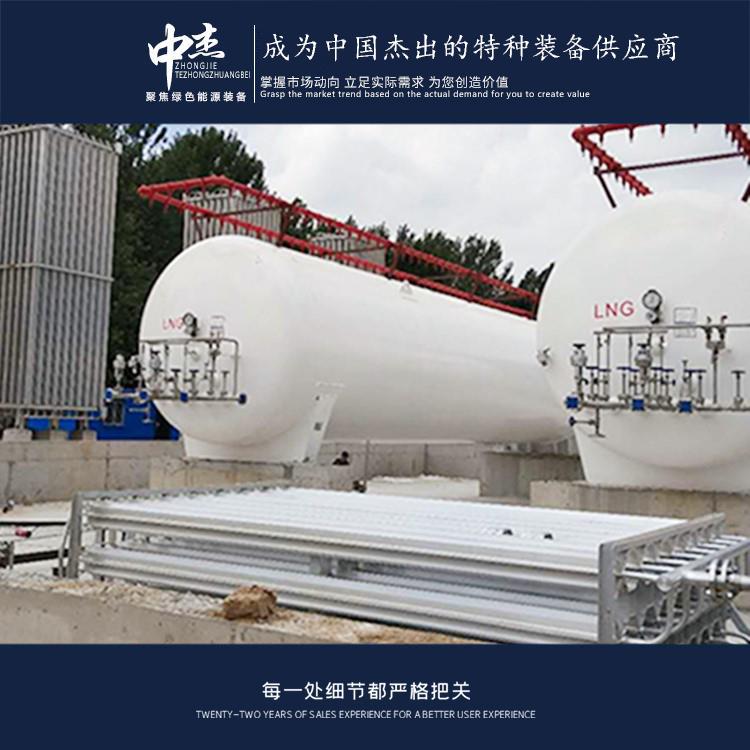
Shandong Zhongjie Special Equipment (formerly Heze Boiler Factory Co., Ltd.) holds an A-grade boiler manufacturing license, an A2-grade pressure vessel manufacturing license, an A2-grade pressure vessel design license, a B-grade boiler installation license, and GB2/Class, GC2/Class pressure pipeline installation licenses, as well as an electromechanical equipment installation contracting qualification. It is a member of the China Boiler and Water Treatment Association, the China Chemical Equipment Association, and the council member of the Shandong Equipment Manufacturing Association. The company has also passed the ISO9001 Quality Management System, ISO14001 Environmental Management System, OHSAS18001 Occupational Health and Safety Management System certifications, and the American ASME/U2 certification.
Maintenance and upkeep are crucial for ensuring the safety of low-temperature storage tanks. Here are some common maintenance measures:
Regular Inspections: Conduct regular inspections of low-temperature storage tanks, including checks of the exterior, internal structure, and corrosion-resistant coatings. Look for cracks, corrosion, wear, and other issues, and identify and repair potential safety hazards in a timely manner.
Cleaning and Deicing: Regularly clean the exterior and internal structure of the low-temperature storage tank to remove accumulated dirt and ice layers. The buildup of ice can lead to structural damage and corrosion; cleaning and deicing can extend the lifespan of the tank.
Level Monitoring: Regularly monitor the liquid level in low-temperature storage tanks to ensure it remains within a safe range. Excessive or low levels can lead to overpressure or over-vacuum in the tank, increasing safety risks.
Leak Detection: Install a leak detection system to regularly check for leaks in low-temperature storage tanks. Leaks can lead to the release and evaporation of liquids or gases, increasing safety risks.
Corrosion Prevention Measures: Implement appropriate corrosion prevention measures, such as coating protection and corrosion-resistant paints, to safeguard the metallic structure of low-temperature storage tanks from corrosion.
Emergency Fault Handling: Establish an emergency fault handling mechanism to promptly address and repair issues with low-temperature storage tanks to prevent accidents from occurring or escalating.
Training and Development: Train and develop operations and maintenance personnel to ensure they possess relevant knowledge and skills for proper operation and maintenance of low-temperature storage tanks.
Be mindful that maintenance and care should be tailored to the specific type of tank and operating conditions, adhering to relevant local regulations, standards, and specifications. During the maintenance process, it is advisable to consult with engineers or guidance from relevant institutions to ensure the tank's safety and reliability.
The application of strain-hardening in austenitic stainless steel on low-temperature pressure vessels is a common method, which can enhance the material's strength and durability. Here is some information regarding the application of strain-hardening in austenitic stainless steel on low-temperature pressure vessels:
Principle of Strain Hardening: Strain hardening is achieved by introducing plastic deformation into the material, altering the crystal structure and thereby enhancing the material's strength. In Austenitic stainless steel, strain can be introduced through cold working methods (such as cold rolling, cold drawing, etc.) or heat treatment processes (such as solution treatment and cold deformation), which cause dislocations and grain boundary sliding in the crystal structure, thereby increasing the material's strength.
Low Temperature Application Advantages: Austenitic stainless steel exhibits excellent corrosion resistance and low-temperature toughness in cold environments. Strain hardening can further enhance the strength and durability of austenitic stainless steel, enabling it to perform in low-temperature pressure vessels. Under low-temperature conditions, strain hardening effectively resists plastic deformation and fracture, improving the material's tensile strength and impact resistance.
Application Cases: The strain-hardened Austenitic stainless steel is widely used in low-temperature pressure vessels. For instance, in liquid nitrogen, oxygen, and argon storage tanks, strain-hardened Austenitic stainless steel is commonly used as structural material. These vessels need to withstand high pressure and impact loads at low temperatures. Strain-hardening enhances the material's strength and durability, ensuring the safe operation of the containers.
It should be noted that the strain hardening of austenitic stainless steel must be conducted at the appropriate temperature and deformation conditions to avoid excessive deformation and material embrittlement. When designing and manufacturing low-temperature pressure vessels, it is necessary to reasonably select and apply the strain hardening of austenitic stainless steel based on specific engineering requirements and material characteristics.
Liquid Argon Storage Tanks are equipment used for storing and transporting liquid argon, with the following scope and characteristics:
Application Scope:
Industrial Applications: Liquid argon storage tanks are widely used in various industrial fields, such as metal processing, electronic manufacturing, semiconductor production, and more.
Application: Liquid argon tanks are used in the field for cryogenic preservation of biological samples, cells, tissues, and vaccines.
Lab Applications: Liquid argon tanks are used in scientific research laboratories for low-temperature experiments, cryopreservation, and sample processing, etc.
Features:
Low-temperature Performance: As the boiling point of liquid argon is -185.7°C, the liquid argon storage tank must have excellent low-temperature insulation properties to maintain the low-temperature state of the liquid argon.
High-sealed integrity: Liquid argon storage tanks must have excellent sealing performance to prevent evaporation loss of liquid argon and the entry of external air.
Safety: Liquid argon is a flammable and explosive substance; therefore, liquid argon storage tanks must be equipped with safety valves, leak detectors, and other safety devices to ensure safe operation.
Large Capacity: The capacity of liquid argon tanks ranges from a few liters to thousands of liters, allowing you to choose the appropriate size based on your needs.
Cautionary Notes:
Protective Gear: When operating liquid argon tanks, it is mandatory to wear appropriate protective gear, including gloves, protective clothing, and non-slip shoes, to safeguard against the low temperatures of liquid argon and other hazards.
Ventilation Requirements: Please specify
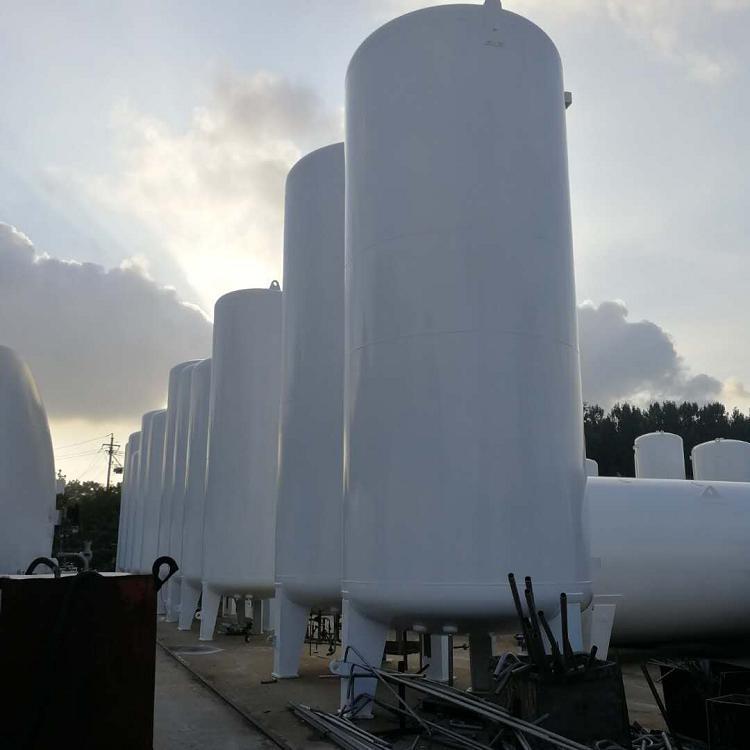
The low-temperature storage tank boasts several advantages:
Storage: Low-temperature storage tanks can maintain liquid low-temperature substances (such as liquid nitrogen, liquid oxygen, etc.) at low temperatures, preserving their liquid state. Compared to gas storage, liquid storage significantly increases storage density and saves space.
Long-term Storage: Low-temperature storage tanks are suitable for long-term storage of low-temperature substances, extending their service life. By controlling the temperature inside the tank and the performance of the insulation layer, the evaporation and oxidation of the liquid substances can be slowed down, maintaining their stability and purity.
Safety: The low-temperature storage tank boasts excellent safety performance. The tank is made of special materials and designed with a structural layout that can withstand low temperatures and high pressure environments. Additionally, the tank is equipped with safety devices such as pressure relief valves and liquid level alarms to ensure safe operation and use.
Versatile Applications: Low-temperature storage tanks are widely used in various fields. They can be used for storing liquid oxygen and providing oxygen supply; in industrial sectors, they are suitable for storing liquefied natural gas (LNG) and liquid nitrogen, among other process gases; and in scientific research, they are ideal for storing low-temperature experimental samples.
Environmental Protection and Energy Saving: Low-temperature storage tanks enable effective storage and utilization of low-temperature materials, reducing energy waste and environmental pollution. During the storage and transportation of liquid substances, energy loss is minimized, leading to improved energy utilization efficiency.
In summary, low-temperature storage tanks offer advantages such as storage, long-term storage, safety, multi-field applications, and environmental protection and energy saving. This makes low-temperature storage tanks an essential equipment for storing and supplying low-temperature materials, playing a crucial role in various fields.
Our company highly values technological innovation and R&D, boasting 1 municipal enterprise technology center in Heze City. We have established testing facilities for non-destructive testing, physical and chemical testing, welding testing, hydrostatic testing, and more. Equipped with over 600 instruments and equipment including CNC machine tools, X-ray flaw detectors, digital ultrasonic flaw detectors, mechanical property testing machines, chemical analyzers, spectrometers, tensile testing machines, plasma welding machines, and more. The key products we have developed, such as welding technology for temperature and pressure vessels, biomass boiler emissions reduction, and waste heat utilization, have successively been selected for multiple Shandong Provincial Department of Industry and Information Technology innovation projects, key projects in Shandong Province, and Heze City innovation and excellence projects. We have accumulated 27 authorized utility models, 16 authorized inventions, participated in drafting 2 standards, 2 industry standards, and registered 15 trademarks. The technical team of our company, in collaboration with Professor Li Yajiang of Shandong University, has developed deep cryogenic container processing technology using the international plasma arc + wire filling tungsten inert gas arc welding (PAW-GTAW) technology. This technology has been appraised as reaching international standards in the field of deep cryogenic container manufacturing at the provincial level. Choose Zhongjie Special Equipment, and let's create brilliance together!
Guest Low Temperature Liquid Argon Storage Tank, Custom Orders Available
