


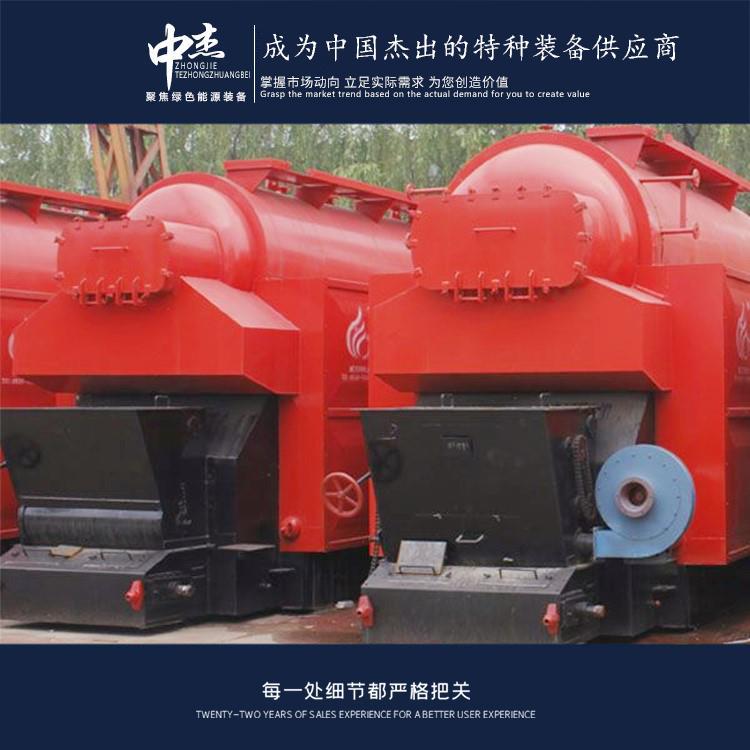
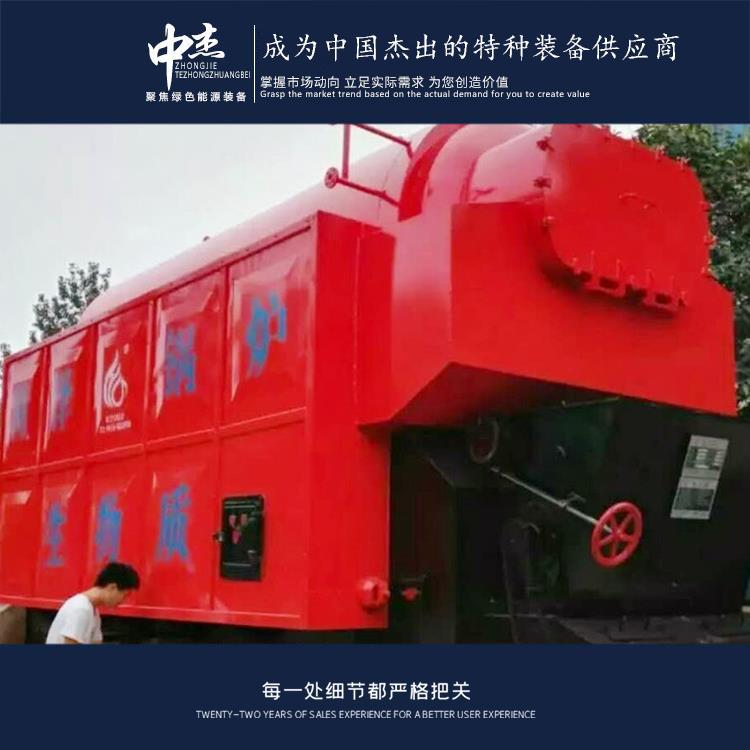
Shandong Zhongjie Special Equipment specializes in: fuel (gas) boilers, organic heat carrier boilers, biomass boilers, waste heat recovery boilers, and other boiler products; vacuum insulation cryogenic pressure vessels such as LNG tanks, oxygen/nitrogen/argon tanks, CO2 tanks; pressure vessel products including denitrification engineering equipment, heat storage and energy storage equipment, complete chemical equipment sets; central air conditioning and ventilation equipment such as ground (water) source heat pumps, air source units, water-cooled screw units, and air-cooled modular units. Planned products include large-scale energy centers, LNG transport vehicles, LNG tank containers, and other green energy equipment.
The utilization of waste heat from biomass boilers is a crucial method for enhancing energy efficiency and reducing energy consumption and emissions. Below are some common applications and analyses of waste heat utilization technologies in biomass boilers:
Economical Air Preheater: Biomass boiler combustion generates flue gas with a high amount of heat energy. The economical air preheater can recover and utilize the waste heat from the flue gas, preheat the air entering the boiler, and improve combustion efficiency. Through waste heat recovery, fuel consumption can be reduced and flue gas emissions can be minimized.
Economizer: An economizer is a device used to recover waste heat from flue gases by transferring the heat to the boiler feed water, thus increasing the water temperature and reducing fuel consumption. The application of an economizer can effectively lower the flue gas temperature of the boiler and improve its thermal efficiency.
Waste Heat Boiler from Biomass Boiler Flue Gas: This equipment utilizes the waste heat from the flue gas of biomass boilers to generate steam or hot water. By converting the waste heat in the flue gas into usable thermal energy, it achieves the reuse of energy and improves the energy utilization efficiency.
Direct烟气Utilization: The waste heat from biomass boiler flue gas can be directly used for heating or drying processes, reducing the demand for other energy sources. For instance, the flue gas can be transported through chimneys or pipelines to the locations requiring heating, where its thermal energy is directly utilized.
Flue Gas Heat Recovery System: The flue gas heat recovery system recovers and utilizes the excess heat from biomass boiler flue gases, supplying it to other equipment or systems such as air conditioning, heating, and hot water. This enables comprehensive energy utilization, enhancing overall energy efficiency.
As a renewable energy boiler, biomass boilers offer several advantages:
Environmental Protection and Energy Saving: Biomass boilers utilize biomass fuels such as wood chips, straw, and husks, which are renewable. Compared to traditional fossil fuels, these fuels offer lower carbon emissions and environmental friendliness. The emissions from the combustion process of biomass boilers are relatively minimal, causing less environmental impact. Furthermore, through optimizing the combustion process and heat recovery, biomass boilers can achieve high energy utilization efficiency, conserving energy.
Diverse fuel options: Biomass boilers are suitable for various biomass fuels such as wood chips, straw, and husks, demonstrating strong fuel adaptability. This allows biomass boilers to be widely used in different regions and industries. Additionally, the supply of biomass fuel is relatively stable, unaffected by international oil price fluctuations and other factors.
Flexible operation: Biomass boilers can be adjusted to meet actual demand
Biomass steam boilers offer several advantages:
Renewable Energy: Biomass steam boilers utilize biomass fuels such as wood chips, straw, and husks. These fuels are renewable and, compared to traditional fossil fuels, have lower carbon emissions and are more environmentally friendly.
Diverse fuel options: Biomass steam boilers are suitable for various biomass fuels such as wood chips, straw, and husks, demonstrating strong fuel adaptability. This allows for widespread application of biomass steam boilers in different regions and industries.
Energy Utilization: Biomass steam boilers utilize advanced combustion technology and heat recovery systems, achieving high energy utilization efficiency. By optimizing the combustion process and heat recovery, energy efficiency can be maximized, significantly reducing energy consumption.
Flexible operating modes: The biomass steam boiler can be operated flexibly according to actual needs, such as manual control, automatic control, or remote monitoring, etc. This allows the biomass steam boiler to meet requirements in various scenarios and provide a stable steam supply.
Superior Environmental Performance: Biomass steam boilers produce relatively fewer emissions during combustion, resulting in minimal environmental impact. Through reasonable combustion control and flue gas treatment devices, the emission content can be further reduced to meet higher environmental protection standards.
Replace Traditional Boilers: Biomass steam boilers can replace traditional coal or oil-fired boilers, reducing reliance on fossil fuels, lowering energy costs, and cutting carbon emissions. This is significant for achieving sustainable development and reducing greenhouse gas emissions.
In summary, biomass steam boilers offer renewable energy and diversity.
Energy-saving methods for biomass hot water boilers mainly include the following aspects:
Fuel Selection: Choose biomass fuels in specified quantities, such as wood chips, straw, etc., ensuring the moisture content and particle size meet the boiler's requirements. Low moisture content and appropriate particle size in the fuel can enhance combustion efficiency and reduce energy waste.
Combustion Optimization: Enhance combustion efficiency by optimizing the combustion process. Adjust parameters such as combustion temperature and duration to achieve more complete combustion and minimize fuel waste.
Heat Recovery Utilization: Recovers waste heat from flue gas and utilizes it for other thermal energy needs such as heating and hot water, enhancing energy efficiency through the installation of flue gas waste heat recovery systems.
Boiler Insulation: Enhance the insulation of the boiler to minimize heat loss. Insulate the boiler shell and pipelines to reduce heat dissipation and improve the thermal efficiency of the boiler.
Control System Optimization: Optimize the boiler control system to achieve temperature and pressure control. By employing reasonable control strategies, reduce energy waste and enhance the boiler's operational efficiency.
Regular Maintenance: Perform regular maintenance on biomass hot water boilers to ensure their normal operation. Clean the combustion chamber, heat exchangers, and other components, inspect and replace worn parts, and ensure the boiler's operation.
Energy Management: Establish a scientific energy management system, monitor and analyze energy consumption, and formulate reasonable energy-saving measures. Continuously optimize the operation of boilers through energy management methods to achieve energy-saving goals.
By utilizing the comprehensive application of these energy-saving methods, the energy utilization efficiency of biomass hot water boilers can be enhanced, energy waste reduced, and the goal of energy conservation and environmental protection achieved.
Our company places great importance on technological innovation and research and development, boasting 1 city-level enterprise technology center in Heze City. We have established testing facilities for non-destructive testing, physical and chemical testing, welding testing, hydrostatic testing, and more. We are equipped with over 600 types of instruments and equipment, including CNC machine tools, X-ray flaw detectors, digital ultrasonic flaw detectors, mechanical property testing machines, chemical analyzers, spectrometers, tensile testing machines, plasma welding machines, and others. Our key products and technologies, such as thermal pressure vessel welding, biomass boiler emission reduction, and waste heat utilization, have successively been shortlisted for multiple Shandong Provincial Department of Industry and Information Technology science and technology projects, key projects in Shandong Province, and Heze City innovative and excellent projects. We have accumulated 27 authorized utility model patents, 16 authorized invention patents, participated in drafting 2 standards, 2 industry standards, and registered 15 trademarks. The technical team of our company, in collaboration with Professor Li Yajiang of Shandong University, has jointly developed deep cryogenic container processing technology using the internationally recognized plasma arc + filler wire tungsten inert gas arc welding (PAW-GTAW) technology. The provincial scientific and technological achievement appraisal has confirmed that the technology level in deep cryogenic container manufacturing has reached an international standard. Choose Zhongjietong, and let's create brilliance together!
Hami Biomass Boiler Price, Factory Direct Supply
