


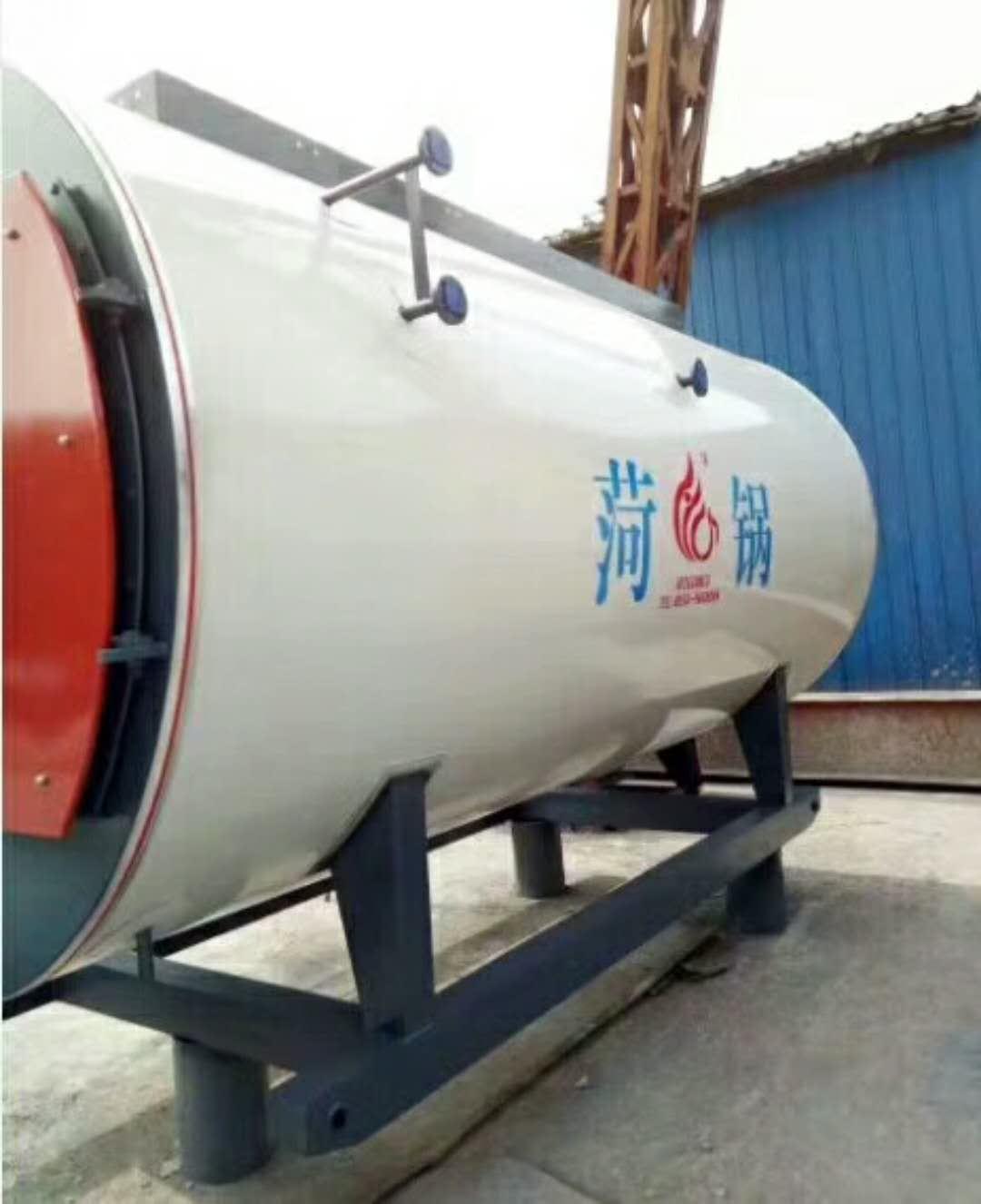


Shandong Zhongjie Special Equipment (formerly Heze Boiler Factory Co., Ltd.) was established in 2001, located at No. 2218 Jinan Road, Economic and Technological Development Zone, Heze City. With a registered capital of 50 million yuan and total assets of 500 million yuan, the company has 7 business centers: boilers, deep-freezing containers, pressure vessels, central air conditioning, engineering installation, international trade, and the Internet of Things. It operates three factory sites on Jinan Road, East Changjiang Road, and Bohai Road, covering a total area of 200,000 square meters, with the main workshop spanning 83,000 square meters. The company currently employs 710 staff, including 247 engineering and technical personnel and 82 intermediate-level technicians. In December 2016, it was recognized as a "High-tech Enterprise" by the Science and Technology Department. In June 2021, it was identified as a "Specialized and New Enterprise in Shandong Province" by the Ministry of Industry and Information Technology. In June 2022, it was recognized as a "Gazelle Enterprise in Shandong Province" and in August 2022, as a "Specialized and New Small Giant Enterprise" by the Ministry of Industry and Information Technology.
Key measures to ensure the quality of CO2 storage tanks include the following aspects:
1. Selecting qualified suppliers: Choose suppliers with a good reputation and experience, ensuring their tanks meet relevant quality standards and regulations. This can be achieved by assessing supplier qualifications, referencing customer reviews, and conducting on-site inspections to select suitable suppliers.
2. Strict quality control: Implement rigorous quality control measures during the manufacturing process of the tanks. This involves selecting and inspecting raw materials, controlling production processes, monitoring process parameters, conducting product testing and inspections to ensure the tanks meet quality requirements.
3. Compliance with standards and regulations: The design, manufacturing, and installation of the tanks should comply with relevant standards and regulations, such as industry standards and specifications. These include structural design, material selection, welding processes, corrosion prevention measures, and the configuration of safety valves and pressure sensors.
4. Regular inspections and maintenance: Tanks in use require regular inspections and maintenance to ensure safety and reliability. This includes checking the tank's appearance, sealing, valves, and pipe connections, conducting pressure tests and leak detection regularly, and promptly addressing any anomalies.
5. Establishing a quality management system: Set up a comprehensive quality management system, including quality control processes, documentation, quality training, and internal audits. By establishing a quality management system, tank quality control and continuous improvement can be ensured.
6. Third-party testing and certification: Entrust third-party agencies to conduct testing and certification of the tanks to verify their quality and compliance. Third-party testing and certification bodies typically offer impartial assessments and certification results.
By implementing these measures, the quality of CO2 storage tanks can be effectively ensured, enhancing their safety and reliability.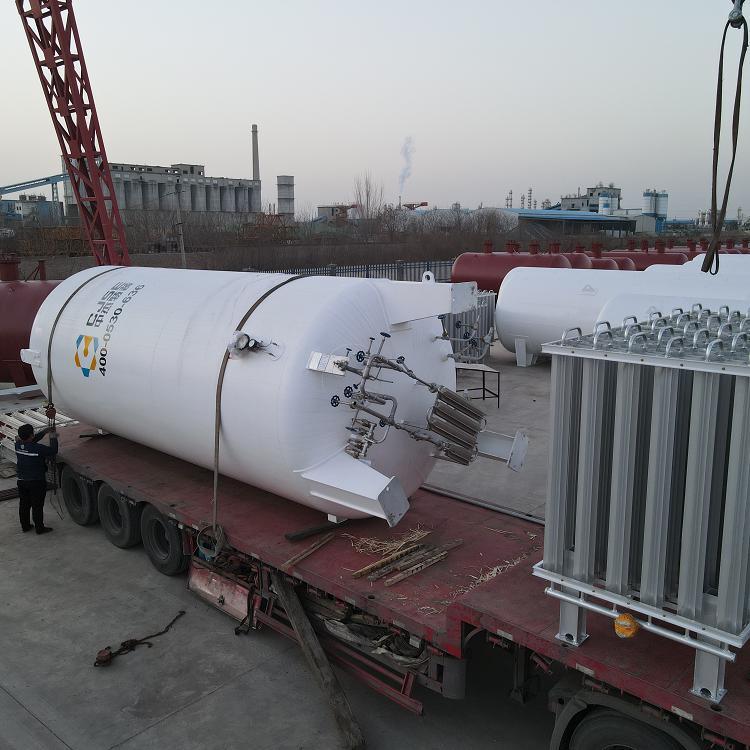
Additionally, the use of liquid carbon dioxide tanks must comply with specific industry standards and regulations based on the industry and application scenario. For instance, when using liquid carbon dioxide tanks in the food and beverage industry, relevant food safety and hygiene standards must be adhered to. It's important to note that different regions may have varying standards and regulations applicable to the use of liquid carbon dioxide tanks. Therefore, operations and usage should be conducted according to local laws and standards.
Carbon dioxide tank level gauges are devices used for measuring and monitoring the liquid level of CO2 within storage tanks. Depending on different working principles and application requirements, common types of CO2 tank level gauges include the following:
- Buoy Level Gauges: Use the floating and sinking of a buoy to reflect the liquid level, measured by a mechanical device or electrical signal sensor connected to the gauge.
- Pressure Level Gauges: Measure the level by utilizing the relationship between liquid pressure and level. The level height is calculated by measuring the pressure change on a pressure sensor.
- Ultrasonic Level Gauges: Measure the level using the propagation time of ultrasound. An ultrasonic transmitter emits waves, and when the beam encounters the liquid surface, part of it is reflected back. The level height is calculated by measuring the reflection time.
- Capillary Level Gauges: Utilize the capillary principle to measure the level. The liquid rises in a thin tube when inserted into the liquid, and the level height is calculated based on the liquid's rise.
- Level Gauges: Measure the level by reflecting waves. A transmitter emits waves, and when the beam hits the liquid surface, part of it is reflected back. The level height is calculated by measuring the reflection time.
The application of these level gauges in CO2 tanks can be selected based on specific needs and tank design. When selecting and installing level gauges, factors such as liquid properties, working environment, and precision requirements should be considered, ensuring they are compatible with the tank's safe operation and monitoring system.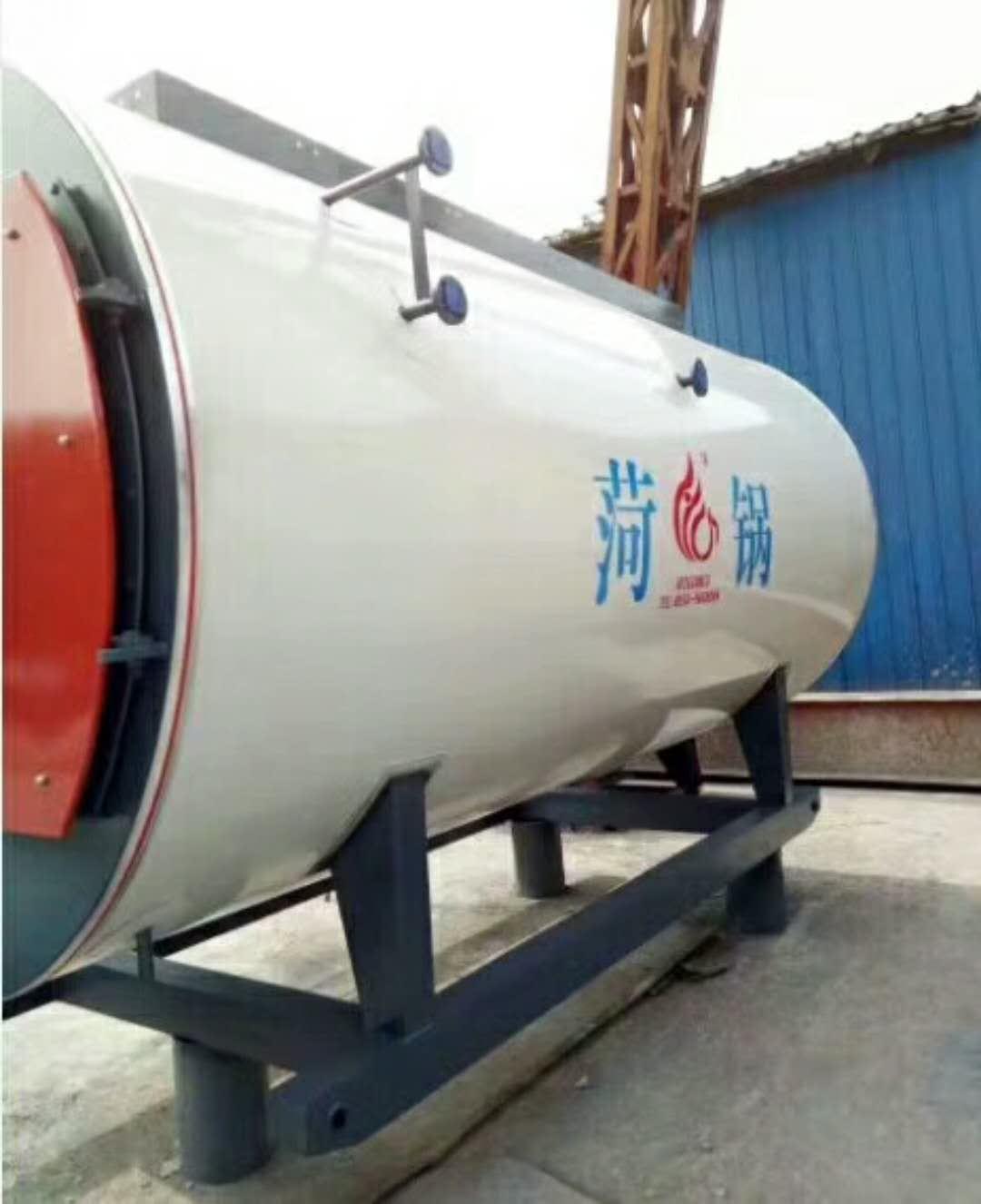
Carbon dioxide tanks are widely used across various industries. Here are some common sectors with examples of carbon dioxide tank usage:
- Beverage and Food Industry: Carbon dioxide is used as a carbonating agent for beverages and foods, such as soda, beer, and soft drinks. Tanks are used to store and supply carbon dioxide to meet production line needs.
- Industry: Carbon dioxide has multiple applications in industries, including anesthesia, respiration, and tissue freezing. Tanks are used to store and supply medical-grade carbon dioxide to meet facility requirements.
- Fire Suppression: Carbon dioxide is extensively used in fire suppression systems, particularly for electrical and sensitive equipment. Tanks are used to store and supply carbon dioxide for fire suppression purposes.
- Gas Industry: Carbon dioxide is also a significant product in the gas industry, used in the production of chemicals, metalworking, welding, and gas shielding. Tanks are used to store and supply industrial-grade carbon dioxide.
- Greenhouse Agriculture: Carbon dioxide can be used to promote plant growth in greenhouses, providing additional carbon dioxide concentration. Tanks are used to supply the required carbon dioxide for greenhouse needs.
- Automotive Industry: Carbon dioxide is used for tire inflation and airbag systems in vehicles. Tanks are used to store and supply carbon dioxide to meet the needs of vehicle manufacturing and maintenance.
These are just a few examples of common industries. In reality, carbon dioxide tanks have extensive applications in many other sectors, such as chemicals and frozen food. Specific usage can vary based on industry demands and application scenarios.
Our company attaches great importance to technological innovation and R&D design, boasting 1 municipal-level enterprise technology center in Heze City. We have established testing facilities for non-destructive testing, physical and chemical testing, welding testing, hydrostatic testing, and more. Equipped with over 600 various instruments and equipment, including CNC machine tools, X-ray flaw detectors, digital ultrasonic flaw detectors, mechanical property testing machines, chemical analyzers, spectrometers, tensile testing machines, plasma welding machines, and more, our key products such as temperature and pressure vessel welding, biomass boiler emissions reduction, and waste heat utilization have successively been selected for multiple Shandong Provincial Department of Industry and Information Technology science and technology innovation projects, Shandong Provincial key projects, and Heze City innovative and excellent projects. We have cumulatively obtained 27 authorized utility models, 16 authorized inventions, participated in drafting 2 standards, 2 industry standards, and registered 15 trademarks. The technical team, in collaboration with Professor Li Yajiang of Shandong University, has developed deep cryogenic container processing technology using the internationally recognized plasma arc + wire feeding argon arc welding (PAW-GTAW) technology, which has been appraised as internationally competitive at the provincial level for its technological level in deep cryogenic container manufacturing. Choose Zhongjie Special Equipment, and let's create brilliance together!
Ningde 80-cubic CO2 storage tank, various models available
