


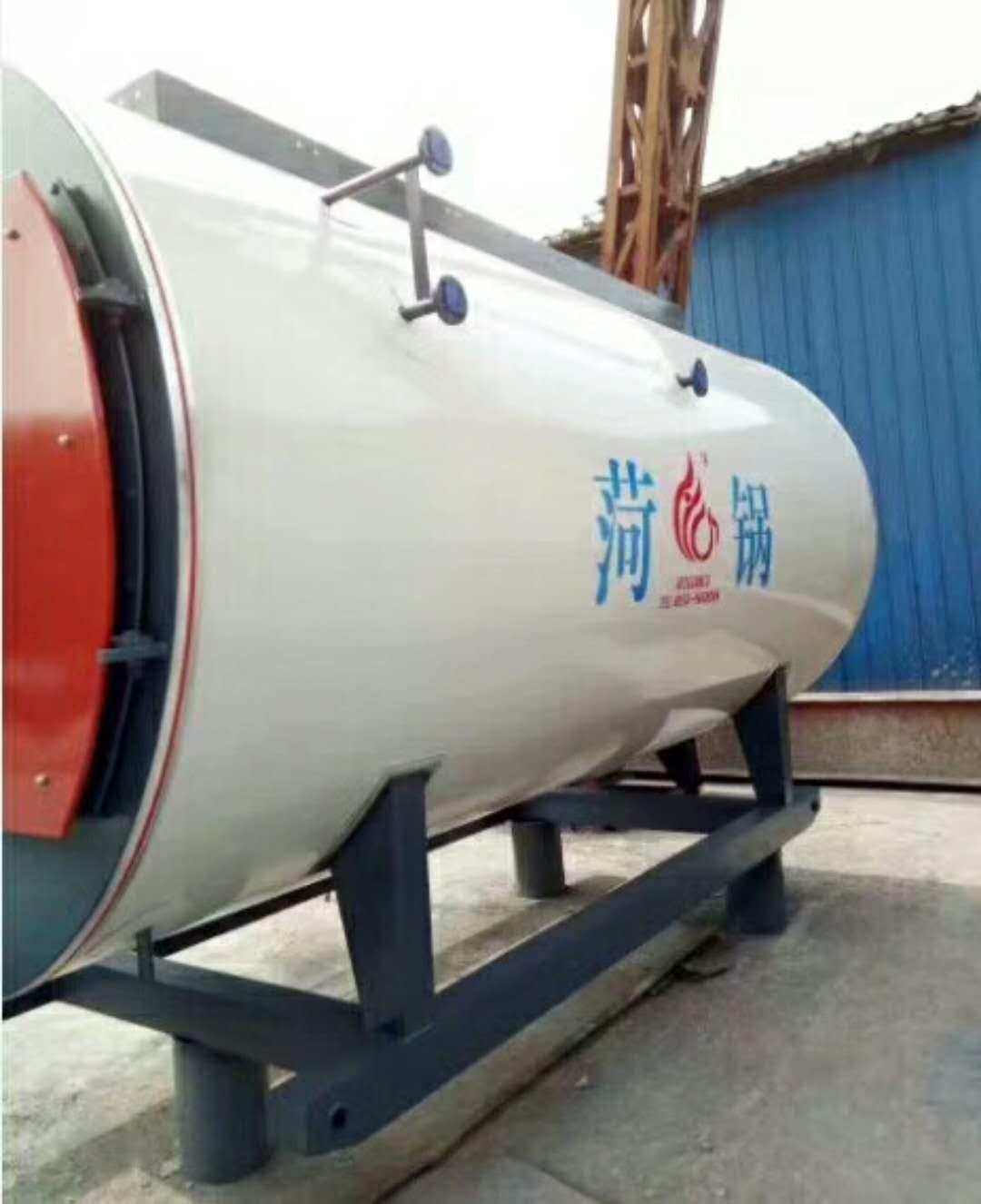

Shandong Zhongjie Special Equipment (formerly Heze Boiler Factory Co., Ltd.) was established in 2001, located at No. 2218 Jinnan Road, Development Zone, Heze City. With a registered capital of 50 million yuan and total assets of 500 million yuan, the company has 7 business centers: boiler, deep-freezing container, pressure vessel, central air conditioning, engineering installation, international trade, and Internet of Things. It operates three factory sites on Jinnan Road, East Changjiang Road, and Bohai Road, covering a total of 200,000 square meters, with the main workshop spanning 83,000 square meters. The company currently employs 710 people, including 247 engineers and technicians, and 82 intermediate-level technicians. In December 2016, it was recognized as a "High-Tech Enterprise" by the Science and Technology Department. In June 2021, it was identified as a "Specialized and New Enterprise in Shandong" by the Department of Industry and Information Technology. In June 2022, it was recognized as a "Gazelle Enterprise in Shandong" and in August 2022, as a "Specialized and New Small Giant Enterprise" by the Ministry of Industry and Information Technology.
The cooling process for carbon dioxide storage tanks can vary depending on specific application requirements and design. Here is an example of a general cooling process for carbon dioxide storage tanks: Initial Cooling: When carbon dioxide enters the tank, it is typically initially cooled to lower its temperature. This can be achieved by passing the carbon dioxide through a condenser or cooler. The cooling medium can be chilled water or refrigerant. Tank Cooling: After carbon dioxide enters the tank, it is necessary to continue cooling the tank itself to maintain the liquid state of the carbon dioxide. This can be done by installing coolers or cooling pipes externally and circulating the cooling medium (such as chilled water or refrigerant). Temperature Control: During the tank cooling process, the temperature inside the tank needs to be controlled to ensure the carbon dioxide remains within an appropriate temperature range. This can be achieved through temperature sensors and control systems that automatically regulate based on the set temperature range. Insulation: To minimize heat transfer and energy loss, the tank is usually insulated. This can be done by installing insulating materials (such as polyester foam or glass wool) externally to reduce heat conduction. Regular Inspection and Maintenance: In the cooling process of the tank, regular inspection and maintenance of cooling equipment and insulating materials are required to ensure their proper operation and effectiveness. This includes cleaning coolers and checking the integrity and effectiveness of the insulating materials. It should be noted that the specific cooling process for carbon dioxide storage tanks may vary due to different application scenarios and process requirements. In practice, process design and operation should be based on specific conditions to ensure the safety and performance of the tank. Consult with engineers or storage experts.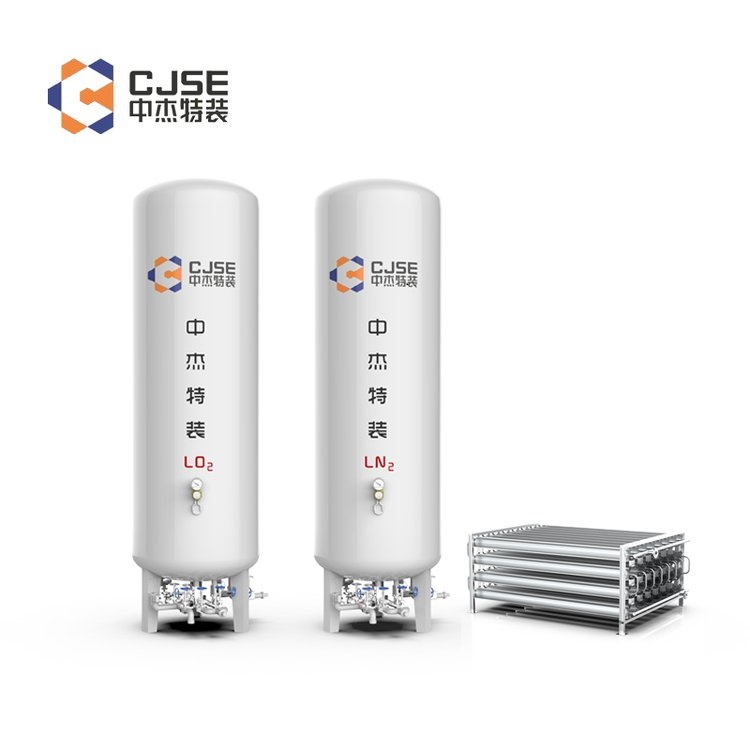
Daily inspections and maintenance of CO2 storage tanks can be carried out following these steps:
**Visual Inspection:** Check for any obvious damage, corrosion, or oil leakage on the tank's exterior. Pay attention to any abnormalities in the tank shell, valves, and pipeline connections.
**Internal Inspection:** If access is permitted, conduct an internal inspection. Check for corrosion, scaling, or blockages in the lining, valves, and pipelines.
**Valve and Pipeline Inspection:** Verify that the tank's inlets and outlets, as well as pipeline connections, are functioning normally without leaks or loose fittings. Ensure valves operate smoothly and reliably.
**Relief Device Inspection:** Check that the tank's relief device (e.g., safety valve) is functioning correctly. Confirm that the relief device's set pressure meets requirements.
**Measurement and Control System Inspection:** Ensure the tank's level, pressure, and temperature measurement and control systems are working properly. Calibrate and test the accuracy of measurement equipment.
**Cleaning and Draining:** Regularly clean the interior of the tank to remove accumulated impurities and sediments. Also, regularly drain the tank to remove liquid and gas impurities.
**Maintenance and Repairs:** Based on inspection results, perform necessary maintenance and repair work. This may include repairing damaged parts, replacing worn seals, etc., to ensure normal tank operation.
**Documentation and Reporting:** Record the inspection and maintenance process, including the inspection date, contents, identified issues, and measures taken. Submit inspection reports to relevant departments or management as needed.
The above are general steps for daily inspections and maintenance of CO2 storage tanks. Specific procedures should be tailored to the tank's characteristics and requirements. When conducting inspections and maintenance, follow relevant safety operating procedures and have them performed by qualified personnel.
Common defects in carbon dioxide storage tanks during use may include deformation. Here are some causes that can lead to tank deformation: Overpressure: When the internal pressure of the tank exceeds its design pressure, deformation may occur. This could be due to operational errors, system failures, or other reasons. Temperature Changes: Carbon dioxide storage tanks expand and contract with temperature changes, and if the temperature changes are too great or too rapid, deformation may occur. Internal Corrosion: If there is internal corrosion in the tank, it can damage the structural integrity of the tank, leading to deformation. External Damage: External impacts, compressions, or other physical damages can cause the tank to deform. Incorrect Installation or Use: Incorrect installation or usage methods can cause uneven stress on the tank, leading to deformation. Tank deformation can reduce the structural integrity of the tank and even pose risks of leakage or rupture. Therefore, regular inspections and maintenance of the tank's integrity are important, as well as adhering to proper operational and installation procedures. If tank deformation or other defects are suspected, use of the tank should be immediately stopped, and professional assistance should be sought for inspection and repair. Do not attempt to repair or continue using a defective tank to ensure operational safety.
When using CO2 storage tanks, the following safety protocols must be adhered to ensure safety:
- Tank Operator Training: All operators must undergo training to understand the characteristics, operational requirements, and safety measures of CO2 storage tanks. Training should include safe tank operation, leak handling, and emergency procedures.
- Safety Operating Procedures: Establish and comply with relevant safety operating procedures, including start-up, shutdown, inspection, and maintenance of the tank. Operators must follow procedures to ensure the safe operation of the tank.
- Leak Handling: Develop a leak handling program including leak alarms, emergency shutdown, and source isolation. Operators should be familiar with the leak handling program and capable of responding promptly and correctly to leak incidents.
- Fire Prevention Measures: CO2 is flammable, so fire prevention measures must be observed when in use. Smoking, open flames, or flammable materials are prohibited near the tank. Ensure fire safety equipment is in good condition around the tank and that fire drills are conducted regularly.
- Waste Emission: Properly discharge waste gases produced during the use of CO2 storage tanks to avoid CO2 buildup in confined spaces, which could lead to asphyxiation and safety risks. Ensure the waste emission system is unobstructed and operating normally.
- Regular Inspection and Maintenance: Conduct regular inspections of the tank's exterior, seals, valves, and pipe connections. Promptly repair or replace any abnormalities or damage. Also, regularly inspect and maintain the tank's safety valves and pressure sensors.
- Emergency Response Plan: Develop and implement an emergency response plan including the handling of leaks, evacuation procedures, and first aid measures. Operators should be familiar with the emergency response plan and conduct drills regularly.
- Monitoring and Alarm Systems: Install and maintain monitoring and alarm systems for the storage tanks.
Shandong Zhongjie Special Equipment, welcome customers to visit our factory for business discussions.
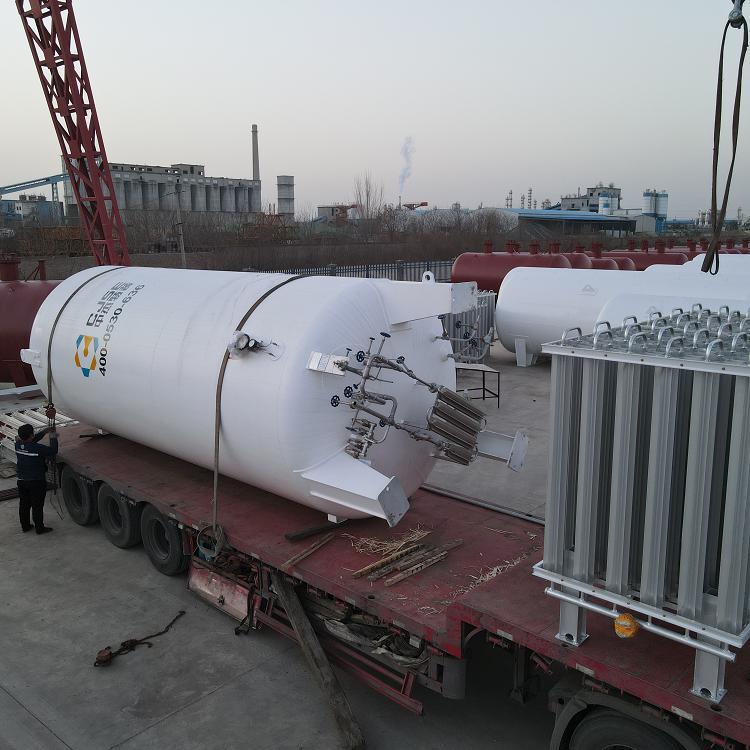
Anshun 15 Cubic CO2 Storage Tank, Factory Direct Supply
