


Shandong Zhongjie Special Equipment Co., Ltd. specializes in the following main products: fuel (gas) boilers, organic heat carrier boilers, biomass boilers, waste heat recovery boilers, and other boiler products; vacuum insulated cryogenic pressure vessels such as LNG storage tanks, oxygen/nitrogen/argon storage tanks, and CO2 storage tanks; pressure vessel products including denitrification engineering equipment, heat storage and energy storage equipment, and complete chemical equipment; central air conditioning and HVAC equipment such as ground (water) source heat pumps, air source units, water-cooled screw units, and air-cooled modular units. Planned products include large-scale energy centers, LNG transport vehicles, LNG tank containers, and other green energy equipment.
According to China's "Regulations for the Safe Supervision of Pressure Vessel Technology," carbon dioxide storage tanks are classified as Category II pressure vessels. The regulations categorize pressure vessels as follows:
- Category I pressure vessels: Those with working pressures of 10 MPa (megapascals) or more, such as steam boilers and pressure vessels.
- Category II pressure vessels: Those with working pressures of 0.1 MPa or more but less than 10 MPa, such as air compressors and liquefied gas storage tanks.
- Category III pressure vessels: Those with working pressures of 0.05 MPa or more but less than 0.1 MPa, such as storage tanks.
- Category IV pressure vessels: Those with working pressures of less than 0.05 MPa, such as gas cylinders.
Based on this classification, carbon dioxide storage tanks typically have working pressures above 0.1 MPa, thus falling into Category II pressure vessels. It's important to note that specific classification criteria may vary depending on different regions' regulations and standards. When using and managing carbon dioxide storage tanks, it is necessary to comply with the corresponding regulatory and standard requirements.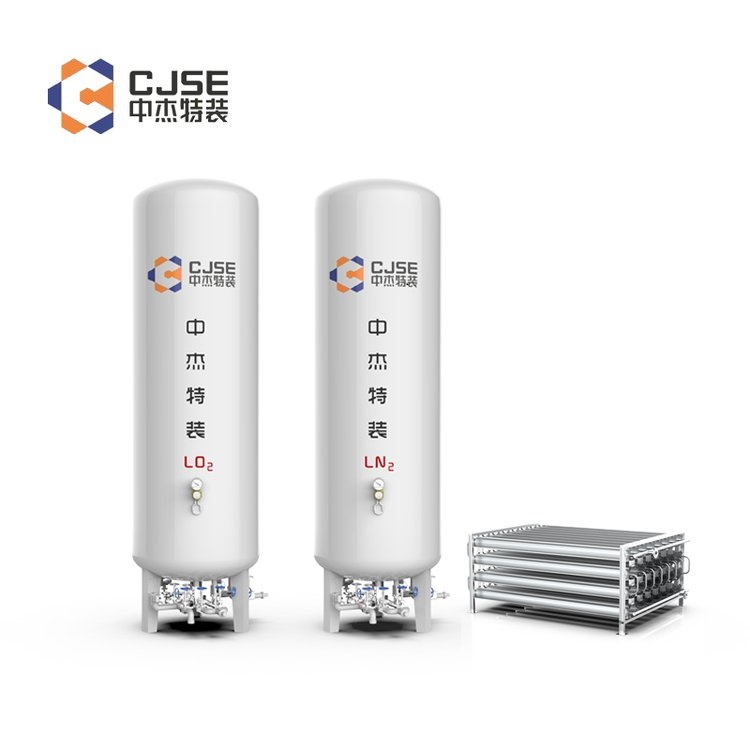
Carbon dioxide storage tanks offer the following features and advantages: High storage density: These tanks can compress carbon dioxide gas into a liquid state, significantly increasing storage density. Compared to storing in gas form, liquid carbon dioxide can hold more CO2 in a smaller tank, saving space and costs. Multiple application fields: Carbon dioxide storage tanks are widely used in various industries, including food and beverage, industrial, fire suppression, and gas supply. CO2 serves as a preservative, beverage effervescent agent, gas, and fire extinguisher, with broad applications and market demand. Environmental friendly and renewable: Carbon dioxide is an eco-friendly gas, and its increased concentration in the atmosphere contributes to warming and climate change. By storing and utilizing CO2, we can reduce its emissions into the atmosphere, achieving environmental protection and sustainable development. Safe and reliable: During design and manufacturing, carbon dioxide tanks typically use high-strength materials (such as carbon steel or stainless steel) with excellent pressure resistance and safety. The tanks are usually equipped with safety valves, pressure gauges, level indicators, and other accessories to ensure safe operation. Moreover, CO2 is a non-flammable and non-explosive gas, making it relatively safe. Supply: Carbon dioxide storage tanks provide a stable supply of CO2. Through tank design and control systems, precise measurement and supply of CO2 can be achieved, meeting the needs of various industries and applications. In summary, carbon dioxide storage tanks have features and advantages such as high storage density, multiple application fields, environmental friendliness, renewable energy, safety, reliability, and supply. This makes them an important storage and supply equipment, widely used in numerous industries. However, when using carbon dioxide storage tanks, it is still necessary to follow relevant safety operating procedures.
For the maintenance of CO2 storage tanks, here are some recommended methods:
Regular Inspections: Regularly inspect the tank's exterior and interior for signs of corrosion, cracks, or leaks. Non-destructive testing methods, such as ultrasonic testing, can be used to assess the tank's integrity.
Cleaning and Corrosion Protection: Regularly clean the tank's exterior to remove dirt and debris. For tanks coated with corrosion-resistant paint, regularly check the coating's condition and repair or recoat as needed to protect against corrosion.
Leak Detection: Conduct regular leak inspections to ensure there are no leakage issues. Use gas detectors or leak detectors for the inspection, or perform pressure tests to evaluate the tank's sealing performance.
Safety Valve Check: Regularly inspect and test the functionality of safety valves to ensure they operate normally under overpressure conditions. Adjust and test according to the specifications and requirements of the safety valves.
Pipe and Valve Maintenance: Regularly inspect and maintain the pipes and valves connected to the tank to ensure proper operation and sealing performance. Clean and lubricate valves, and check for leaks at pipe connections.
Documentation: Record the dates, contents, and results of maintenance, establishing a maintenance record for the tank. Retain relevant documents and reports for future reference and review.
Please note that for the maintenance of CO2 storage tanks, it is recommended to follow relevant safety operating procedures and standards. If you do not have the necessary knowledge and experience, it is advisable to consult personnel or manufacturers for maintenance work.
The testing and maintenance of liquid oxygen storage tanks are crucial for ensuring safe operation and extending their service life. Below is a general breakdown of the testing and maintenance procedures for liquid oxygen storage tanks:
- Visual Inspection: Regularly inspect the liquid oxygen storage tanks externally, checking for corrosion, wear, cracks, and other issues on the tank surface. Promptly repair or replace any abnormalities found.
- Internal Cleaning: Regularly clean the interior of the liquid oxygen storage tanks to remove accumulated impurities and dirt. Pay attention to using appropriate cleaning agents and tools to avoid damaging the tank.
- Level Measurement: Regularly measure the level of liquid oxygen in the storage tank to ensure it remains within a safe range. Use a level gauge or other measurement equipment, and record the results.
- Pressure Testing: Regularly conduct pressure tests to verify the tank's pressure-bearing capabilities. Control pressure and time during testing to ensure safety and accuracy.
- Leak Detection: Regularly perform leak detection to ensure the tank's sealing integrity. Use leak detection equipment such as gas detectors or foam leak detectors.
- Valve and Pipeline Inspection: Regularly check the valves and pipeline connections of the liquid oxygen storage tank to ensure they are sealed properly with no leakage. Repair or replace any issues found promptly.
- Maintenance Records: Document the testing and maintenance activities for the liquid oxygen storage tanks, including inspection dates, contents, and results. These records help track the tank's maintenance history and issue resolution.
- Scheduled Maintenance: Develop a regular maintenance plan based on the tank's usage and requirements. This includes lubrication, bolting down, and replacing seals to ensure normal operation.
Our company places great emphasis on technological innovation and R&D, boasting 1 municipal-level enterprise technology center in Heze City. We have established testing facilities for non-destructive testing, physical and chemical testing, welding testing, hydrostatic testing, etc. Equipped with over 600 various instruments and equipment such as CNC machine tools, X-ray flaw detectors, digital ultrasonic flaw detectors, mechanical property testing machines, chemical analyzers, spectrometers, tensile testing machines, and plasma welding machines, our developed key products like temperature-pressure vessels welding, biomass boiler emission reduction, and waste heat utilization have successively been selected for multiple Shandong Provincial Department of Industry and Information Technology science and technology projects, Shandong key projects, and Heze City innovation and excellence projects. We have accumulated 27 authorized utility model patents, 16 authorized invention patents, participated in drafting 2 standards, 2 industry standards, and registered 15 trademarks. The technical team, in collaboration with Professor Yajiang Li from Shandong University, has developed deep cryogenic container processing technology using the international plasma arc + filler wire tungsten inert gas (PAW-GTAW) welding technology. After provincial-level scientific and technological achievement identification, the technology level has reached international standards in the field of deep cryogenic container manufacturing. Choose Zhongjie Special Equipment, and let's create brilliance together!
Daqing Carbon Dioxide Storage Tank Prices, Available for Custom Orders
