


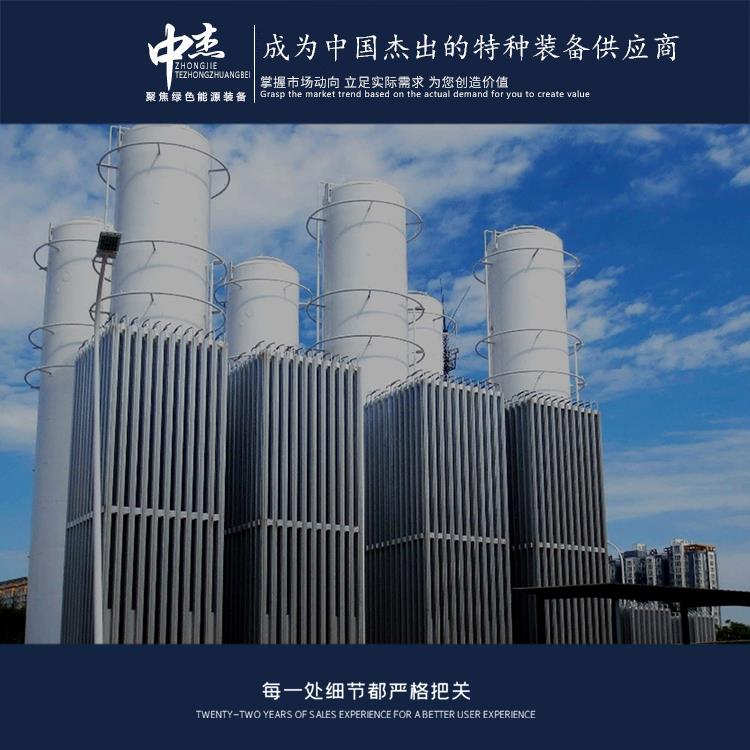

Shandong Zhongjie Special Equipment (formerly Heze Boiler Factory Co., Ltd.) holds an A-grade boiler manufacturing license, A2-grade pressure vessel manufacturing license, A2-grade pressure vessel design license, B-grade boiler installation license, GB2 and GC2 pressure pipeline installation licenses, and equipment and machinery installation contracting qualifications. It is a member of the China Boiler and Water Treatment Association, the China Chemical Equipment Association, and a director unit of the Shandong Equipment Manufacturing Association. The company has also passed certifications for the ISO9001 Quality Management System, ISO14001 Environmental Management System, OHSAS18001 Occupational Health and Safety Management System, and the American ASME/U2 certification.
Liquid oxygen low-temperature storage tanks are primarily used for storing and supplying liquid oxygen, and their application methods can vary depending on specific requirements and scenarios. Here are some common application methods for liquid oxygen low-temperature storage tanks:
Application: Liquid oxygen low-temperature storage tanks are widely used in the field for cryogenic preservation of biological samples, cells, tissues, and vaccines. Institutions such as biomedical research organizations and biobanks utilize these storage tanks to store and protect these biological materials.
Experimental Research: Liquid Oxygen Low-Temperature Storage Tanks are used to provide low-temperature environments in scientific research and laboratories, for freezing preservation and cryogenic experiments. These tanks play a crucial role in experimental research across various fields, including physics, chemistry, biology, and materials science.
Industrial Applications: Liquid Oxygen Low-Temperature Storage Tanks are used in industrial sectors for providing low-temperature cooling, serving processes such as metalworking, welding, and heat treatment. These tanks can achieve low temperatures, enabling metals to reach the required hardness and toughness during processing.
Food Industry: Liquid oxygen low-temperature storage tanks are used in the food industry for freezing and refrigerating food items such as frozen meats, frozen fruits, and frozen seafood. The low temperature of liquid oxygen can quickly freeze food, preserving its freshness and quality.
Liquid oxygen low-temperature storage tanks are used in the field for storing and supplying liquid oxygen as fuel. As a high-energy fuel, liquid oxygen is widely used in the propulsion systems of engines and devices.
During the operation of liquid oxygen low-temperature storage tanks, strict adherence to relevant safety regulations and operational guidelines is necessary to ensure safe operation and use of the tanks. Liquid oxygen is highly flammable, so fire prevention measures must be taken when using liquid oxygen low-temperature storage tanks, and it must be ensured that there are no ignition sources in the vicinity of the tank.
During the operation of low-temperature liquid storage tanks, the following points should be noted:
Protective Gear: When handling low-temperature liquid storage tanks, it is mandatory to wear appropriate protective gear, including gloves, protective suits, and non-slip shoes. This gear protects the skin from harm caused by low-temperature liquids.
Avoid direct contact: Low-temperature liquids can be very cold and cause chills. Therefore, it is essential to avoid direct contact with low-temperature liquids, especially with the skin. Use tools or equipment for handling, and prevent hands from coming into direct contact with the low-temperature liquids.
Ventilation Requirements: In the operational area of low-temperature liquid storage tanks, adequate ventilation must be ensured to expel gases produced by the evaporation of low-temperature liquids. Maintain air circulation to avoid excessive oxygen concentration, and reduce the risk of fire and explosion.
Prevent Leaks: Regularly inspect low-temperature liquid storage tanks for leaks and equip with leak detection and alarm systems. In case of a leak, take immediate action to control and repair it. Avoid hazards to personnel and the environment caused by the leakage of low-temperature liquids.
Fire Prevention Measures: Low-temperature liquids have lower boiling and freezing points, making them prone to fires. To prevent and contain fires, firewalls and fire-retardant coatings should be installed around low-temperature liquid storage tanks.
Static Protection: Handling low-temperature liquids may generate static electricity, increasing the risk of sparks causing fires. Measures such as using static-conductive materials and anti-static equipment should be taken to reduce the accumulation and release of static electricity.
Regular Inspections and Maintenance: Conduct regular checks on the condition of low-temperature liquid storage tanks and related equipment, including valves, pipes, pressure gauges, etc. Ensure that the equipment is in perfect condition, and promptly repair or replace any damaged parts.
Waste Gas Treatment: During the process of using low-temperature liquids, waste gas is produced. Appropriate waste gas treatment measures must be taken to minimize environmental impact.
The above are the precautions to be taken when using low-temperature liquid storage tanks, ensuring safe operation and normal tank function. During operation, it is essential to strictly adhere to the relevant operational procedures and safety requirements.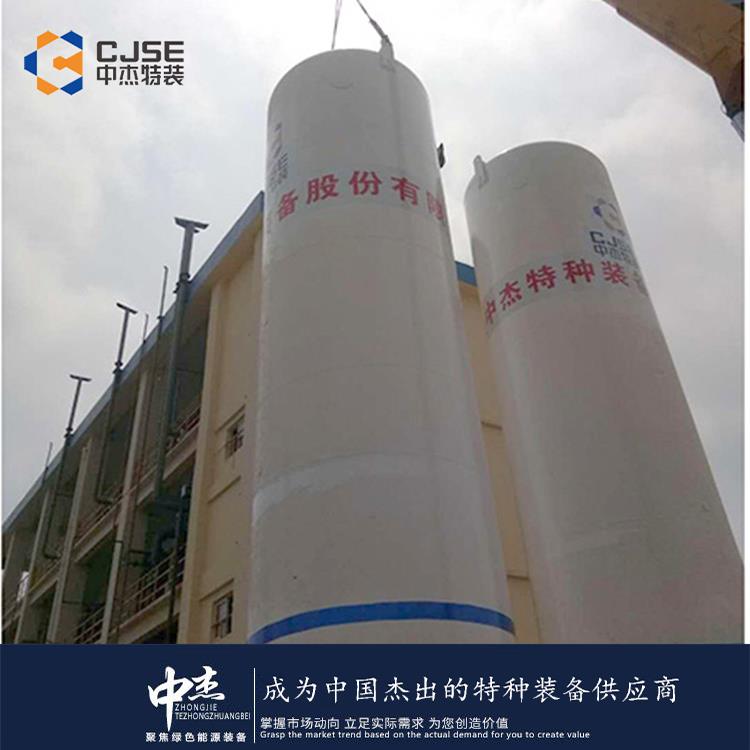
Daily inspections and maintenance of liquid oxygen storage tanks are crucial for their safe operation. Here are general steps for the daily inspections and maintenance of liquid oxygen storage tanks:
Appearance Inspection: Regularly inspect the tank's appearance, including the shell, welds, valves, and fasteners, etc. Pay attention to any abnormal conditions such as cracks, corrosion, or deformation.
Leak Detection: Utilize appropriate leak detection equipment to inspect for leaks in tanks and connection points. Leak detection can be conducted using methods such as gas detectors or liquid oxygen detection agents.
Pressure Testing: Regularly conduct pressure tests to inspect the tank's sealing and pressure resistance. Perform pressure tests according to relevant standards and regulations, and record the test results.
Valve and fitting inspection: Check that the tank's valves and fittings are functioning properly, and there are no loose or damaged conditions. Ensure the valves operate smoothly and reliably.
Insulation Layer Inspection: Check for any damage or detachment in the storage tank's insulation layer. Repair or replace any damaged insulation materials to ensure effective insulation.
Cleaning and Drainage: Regularly clean the interior of the tank to remove accumulated impurities and dirt. Regularly drain to prevent杂质 and sediment in liquid oxygen from damaging the tank.
Safety Equipment Inspection: Check the safety equipment around the storage tanks, such as fire separation zones and alarm systems, to ensure they are functioning properly.
Record and Document Management: Document the results of each inspection and maintenance, including the inspection date, contents, issues found, and corrective actions. Establish comprehensive management records and documents for tracking and managing the tank's operational status.
Note that inspections and maintenance of liquid oxygen tanks should be conducted by trained personnel and in accordance with relevant specifications and standards. Ensure safety during maintenance and operations, and consult with experts for accurate guidance.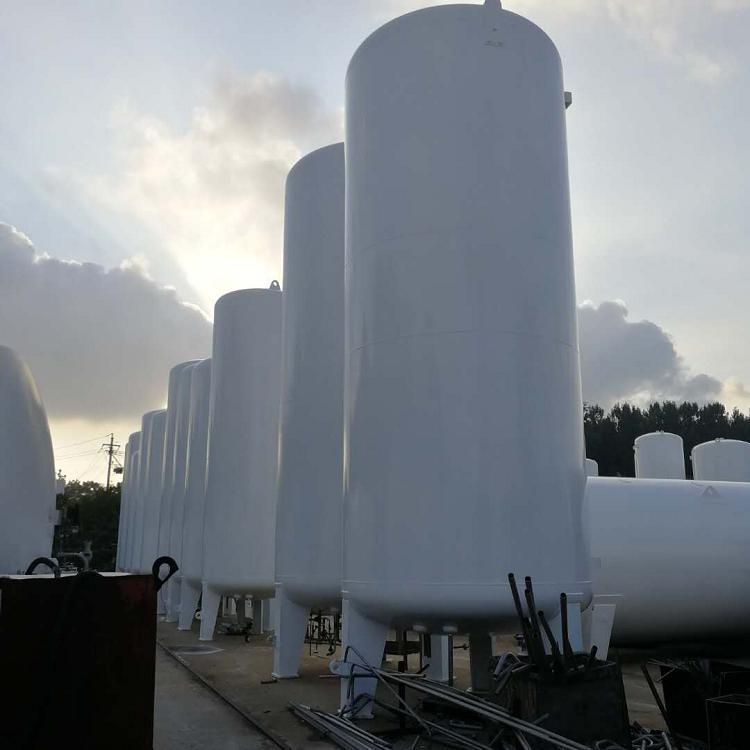
A hydrostatic test of a liquid nitrogen storage tank is a common testing method used to check the tank's sealing and pressure resistance. Below are the general steps for a hydrostatic test of a liquid nitrogen storage tank:
Preparation: Ensure the tank interior is clean and that the tank is empty of gases and liquids. Check the tank's sealing and safety devices for proper operation.
Fill Water: Fill the internal tank with water, ensuring the water level is above the low water mark. Pump or other appropriate methods can be used for filling.
Apply Pressure: Use a pressure pump or other pressure source to gradually increase the water pressure until it reaches the predetermined test pressure. The test pressure is typically 1.1 times the design working pressure of the tank.
Pressure Maintenance: After reaching the test pressure, maintain it for a period (usually 30 minutes to 1 hour), and observe for any abnormal conditions such as leaks or deformation in the tank.
Pressure Release: Gradually release pressure to drain water from the tank until the tank is completely empty.
Inspection and Evaluation: Check the tank's surface and interior for leaks, deformities, or other damage. Evaluate the test results to ensure the tank meets design requirements and safety standards.
需要注意的是,液氮储罐水压试验需要由人员进行操作,并遵循相关的安全操作规程。在进行测试前,应仔细阅读和遵守储罐制造商提供的操作指南和安全注意事项。
Shandong Zhongjie Special Equipment, welcome customers to our factory for business talks.
Texas Nitrogen Storage Tank - Genuine Manufacturer
