


Shandong Zhongjie Special Equipment (formerly Heze Boiler Factory Co., Ltd.) was established in 2001, located at No. 2218 Jinnan Road, Economic and Technological Development Zone, Heze City. With a registered capital of 50 million yuan and total assets of 500 million yuan, the company has seven business centers: boilers, deep-freezing containers, pressure vessels, central air conditioning, engineering installation, international trade, and Internet of Things. It has three factory sites on Jinnan Road, East Changjiang Road, and Bohai Road, covering a total of 200,000 square meters, with the main workshop spanning 83,000 square meters. It currently employs 710 staff, including 247 engineers and technicians and 82 intermediate-level technicians. In December 2016, it was recognized as a "High-tech Enterprise" by the Science and Technology Department. In June 2021, it was identified as a "Specialized and New Enterprise in Shandong Province" by the Ministry of Industry and Information Technology. In June 2022, it was recognized as a "Gazelle Enterprise in Shandong Province" and in August 2022, it was identified as a "Specialized and New Small Giant Enterprise" by the Ministry of Industry and Information Technology.
Hot water boilers and steam boilers are two common types of boilers, differing in their working principles, application scenarios, and operating parameters:
Working Principle: Hot water boilers provide heat by heating water, which is then circulated into the heating system. Steam boilers, on the other hand, produce steam by heating water, which is then sent to the heating system.
Operating Temperature and Pressure: Hot water boilers typically operate at temperatures between 60°C and 100°C with lower pressure. Steam boilers usually operate at temperatures between 100°C and 200°C, with higher pressure, generally between 0.7MPa and 2.5MPa.
Heating Method: Hot water boilers circulate hot water through a pump into the heating system, primarily transferring heat through conduction and convection. Steam boilers deliver steam through steam pipes into the heating system, primarily transferring heat through steam convection.
Application Scenarios: Hot water boilers are suitable for heating, bathing, swimming pool heating, and other scenarios where hot water is needed in industrial production processes. Steam boilers are used in industrial processes requiring steam, such as power plants, chemical factories, and textile mills.
Equipment Structure: Hot water boilers are generally simpler and smaller in structure, occupying less space. Steam boilers are typically more complex, larger in structure, and occupy more space.
It's important to note that hot water and steam boilers may overlap in some special application scenarios, such as industrial processes that require both hot water and steam. Therefore, when selecting a boiler type, it's necessary to consider specific needs and application scenarios.
Steam boiler equipment water treatment refers to the processing of water in steam boilers to ensure normal boiler operation and extend the lifespan of the equipment. Below are the basic knowledge points regarding steam boiler equipment water treatment:
Water Quality Requirements: The water quality in steam boilers is high, usually requiring the removal of impurities, dissolved oxygen, and hard substances. Impurities and hard substances can cause scaling and corrosion on the interior walls of the boiler, while dissolved oxygen can lead to corrosion and the formation of bubbles.
Removal of Impurities: Common methods for removing impurities from water include sedimentation, filtration, and ion exchange. Sedimentation involves adding chemical agents to make impurities settle, filtration removes impurities through filtering media, and ion exchange removes impurities by adsorption and ion exchange with resin.
Adjusting Hardness: The hardness substances in water are mainly salts of calcium and magnesium, which can cause scaling on the interior walls of the boiler. Hardness can be adjusted by adding chemical agents or using water softening equipment to prevent scaling issues.
Removing Dissolved Oxygen: Dissolved oxygen can cause corrosion and the formation of bubbles. It can be removed by adding oxidizing agents or using deaeration equipment.
Controlling pH: The pH of the water in steam boilers affects equipment corrosion and scaling. It is usually necessary to control the water pH within an appropriate range, using buffers or regulators to adjust the pH.
Regular Testing and Maintenance: Regular water quality testing of the steam boiler equipment, including measuring hardness, dissolved oxygen, and pH, is necessary. Corresponding water treatment measures and maintenance should be carried out based on the test results.
Steam boiler equipment water treatment is a critical aspect of ensuring normal boiler operation and extending the lifespan of the equipment. Rational water treatment measures can effectively prevent scaling, corrosion, and malfunctions on the interior walls of the boiler.
During the production welding of thermal oil boilers, the following points should be noted:
- Welder Qualification: Ensure that the welders involved in the welding work have appropriate qualifications and experience, and are familiar with welding processes and operational procedures.
- Welding Material Selection: Choose welding materials suitable for thermal oil boilers, ensuring their compatibility with thermal oil and high-temperature resistance.
- Welding Process Control: Select the appropriate welding process based on the material and design requirements of the thermal oil boiler, such as manual arc welding, gas shielded welding, etc. Control welding parameters like current, voltage, and welding speed to ensure the quality and strength of the weld.
- Welding Area Protection: During the welding process, the welding area must be protected to prevent contamination from thermal oil and welding materials. Use welding barriers, welding shields, and other equipment to ensure the cleanliness and safety of the welding area.
- Post-Welding Treatment: After welding, post-treatment of the weld is required, such as slag removal, grinding, and cleaning, to ensure the flatness and surface quality of the weld.
- Welding Quality Inspection: Conduct welding quality inspections, including visual inspection of the weld, dimensional measurements, and non-destructive testing, to ensure the welding quality meets requirements.
- Safety Measures: Pay attention to safety measures during the welding process, such as wearing protective eyewear, gloves, and fire-resistant clothing, to ensure the safety of welding operations.
- It is important to follow relevant standards and specifications during the welding process to ensure the quality and safety of the welding. If unsure about the welding process or if there are potential safety hazards, seek advice from a welding engineer or consult relevant agencies.
The decline in the consumption of thermal oil boilers can be attributed to several factors:
- Combustion Technology: Modern thermal oil boilers employ advanced combustion technologies such as premixed combustion and afterburning, which ensure complete fuel combustion, enhance thermal energy utilization, and thereby reduce energy consumption.
- Heat Recovery: Thermal oil boilers typically generate a significant amount of excess heat during flue gas emissions. By utilizing heat recovery systems like flue gas heat recovery boilers or flue gas heat exchangers, the excess heat from flue gases can be recovered and reused, improving energy efficiency and reducing consumption.
- Intelligent Control Systems: Contemporary thermal oil boilers are equipped with intelligent control systems capable of real-time monitoring and adjustment of operating parameters such as temperature, pressure, and flow. This ensures optimal boiler operation, preventing unnecessary energy waste and loss.
- Energy-saving Retrofitting and Optimization: Older thermal oil boilers can be retrofitted and optimized for energy savings. This includes installing energy-saving equipment like variable frequency drives and modified burners to enhance energy efficiency. Additionally, optimizing the boiler system, such as improving pipe insulation and reducing leaks, can further reduce energy loss.
- Energy Management and Maintenance: Effective energy management and regular equipment maintenance are crucial factors in reducing energy consumption. Implementing energy management measures such as energy monitoring, metering, and promoting energy-saving awareness can identify and address energy waste issues. Regular equipment maintenance ensures smooth operation and prevents unnecessary energy loss.
In summary, the decline in energy consumption of thermal oil boilers can be achieved through combustion technology, heat recovery, intelligent control, energy-saving retrofitting, and effective energy management.
Our company highly values technological innovation and R&D design. We possess one city-level enterprise technology center in Heze City, equipped with testing facilities for non-destructive testing, physical and chemical testing, welding testing, hydrostatic testing, and more. We have over 600 pieces of equipment, including CNC machine tools, X-ray flaw detectors, digital ultrasonic flaw detectors, mechanical property testing machines, chemical analyzers, spectrometers, tensile testing machines, plasma welding machines, and others. Our R&D in temperature and pressure vessel welding, biomass boiler emissions reduction, and waste heat utilization has been selected for multiple Shandong Provincial Department of Industry and Information Technology scientific and technological innovation projects, Shandong Provincial key projects, and Heze City innovative excellence projects. We have cumulatively obtained 27 authorized utility model patents, 16 authorized invention patents, participated in drafting 2 standards, 2 industry standards, and registered 15 trademarks. Our technical team, in collaboration with Professor Yajiang Li from Shandong University, has developed deep cryogenic vessel processing technology using the international plasma arc + filler wire tungsten inert gas (PAW-GTAW) welding technology. The provincial technological achievement assessment has confirmed that our technology level in deep cryogenic vessel manufacturing has reached an international standard.
Choose ZJET's customized solutions, let's create brilliance together!
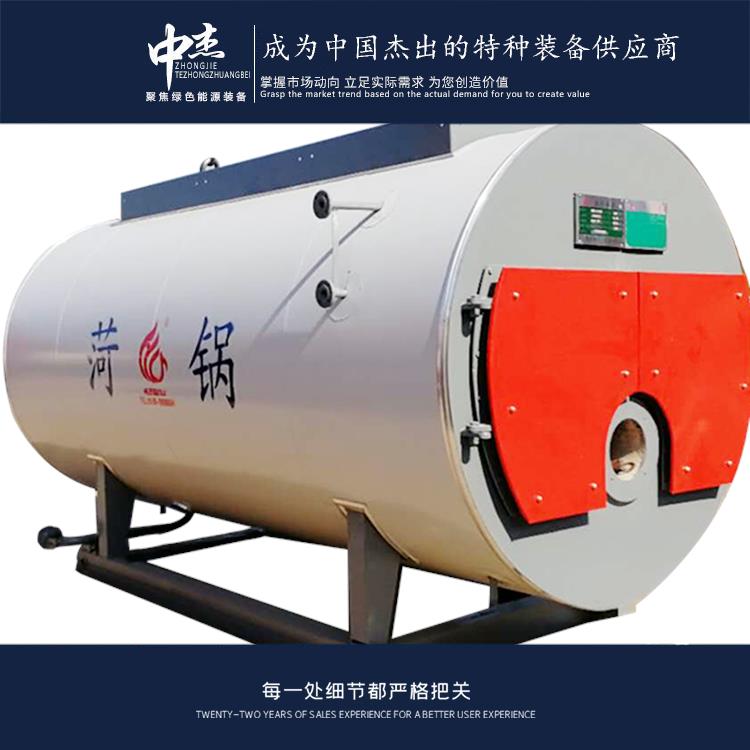
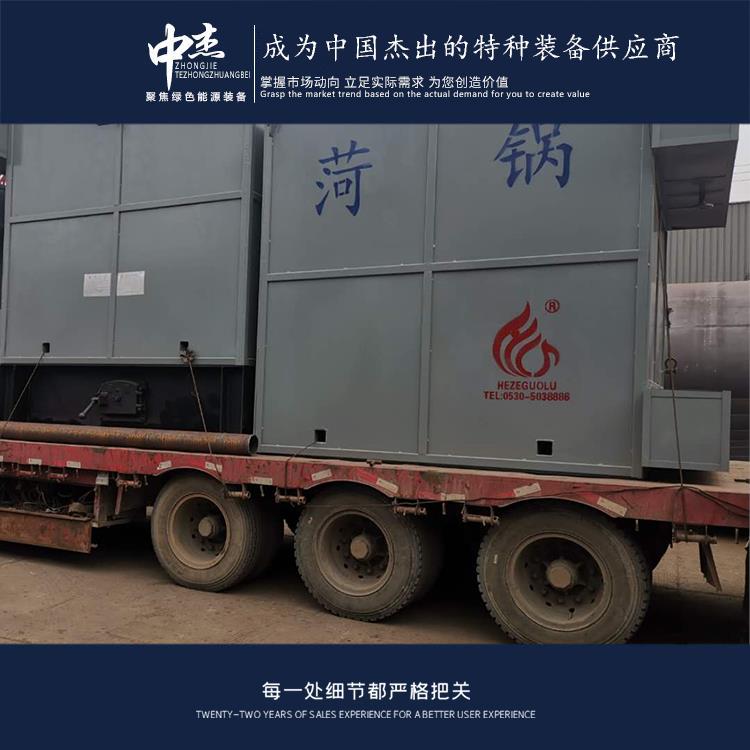
Wenzhou 6-ton gas boiler, customizable as required.
